

More news on this day
Caribbean cruising is on track for a landmark year in 2026, with new forecasts pointing to record passenger volumes across Mexico, the Bahamas and Hawaii as major cruise brands pour ships, marketing and investment into warm‑weather itineraries.
Get the latest news straight to your inbox!
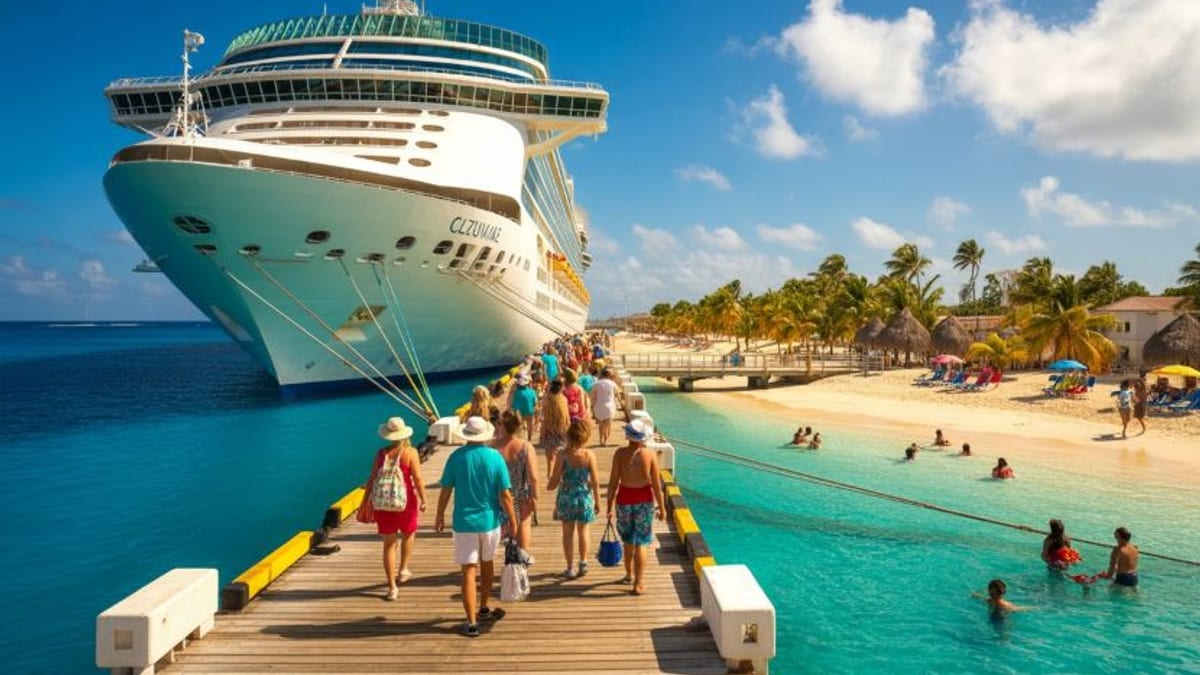
Image by International Cruise News: Latest Cruise Line & Cruise Ship News
Record Passenger Forecasts Signal a Supercharged 2026
Industry data points to cruising entering 2026 with unprecedented momentum. Cruise Lines International Association’s most recent global outlook projects nearly 38 million ocean‑going passengers in 2025, building on back‑to‑back years of growth and setting the stage for further expansion into 2026. Caribbean, Bahamas and Bermuda itineraries remain the top choice for travelers, accounting for a significant share of global deployments and passenger volume.
North American market figures underline that trend. Recent regional reporting from the association shows the Caribbean and Bahamas far outpacing other destinations in passenger counts, with strong double‑digit percentage growth from 2022 to 2024. Hawaii also continues to recover, with volumes now above pre‑pandemic levels and additional capacity planned for the mid‑2020s season, suggesting a firm foundation for record‑setting traffic in 2026.
Consumer demand appears to be keeping pace. A cruise outlook published by AAA and widely cited across travel media projects that around 21.7 million Americans will cruise in 2026, up from already record highs in 2025. Analysts describe the recovery as entering its later innings, but note that new ships, broader itineraries and robust interest from younger and first‑time cruisers are still pushing bookings higher.
Ports in Florida and along the Gulf Coast are budgeting accordingly. Public financial documents from key cruise homeports project new highs in passenger movements through fiscal 2026, reflecting heavier deployment of large vessels on short Caribbean and Bahamas itineraries. That concentration of capacity is expected to filter directly into record arrival numbers at marquee ports in Mexico and the Bahamas.
Mexico and the Bahamas Become Ground Zero for New Capacity
Mexico and the Bahamas are emerging as the primary beneficiaries of this new wave of Caribbean deployment. Recent cruise‑industry planning documents and deployment guides for 2025 to 2026 schedules show a dense pattern of short three to six night sailings from major U.S. homeports to Cozumel and Costa Maya in Mexico, and to Nassau and nearby private islands in the Bahamas. These routes are often operated by the newest and largest ships in each fleet.
Newbuilds are amplifying that effect. The continued rollout of mega‑ships such as Royal Caribbean’s Icon‑class vessels and other large contemporary ships, many carrying more than 5,000 guests at double occupancy, means that even modest increases in sailing frequency can translate into substantial gains in annual visitor numbers. Publicly available deployment summaries indicate that several of these ships will spend significant portions of late 2025 and 2026 on Western Caribbean and Bahamas loops.
Private island investments are further anchoring growth in the Bahamas. Travel trade coverage highlights a wave of upgrades and openings, including new beach club concepts and expanded water‑park experiences on cruise‑line‑owned islands. These projects are designed to absorb higher passenger counts while offering controlled, high‑spend environments, making Bahamas itineraries particularly attractive for both cruise lines and travelers seeking a curated day ashore.
Mexico’s leading Caribbean ports are also preparing for heavier traffic. Government and port‑authority presentations in the region reference strong rebounds in cruise calls to Cozumel and other hubs, supported by infrastructure upgrades and shore‑excursion diversification. With multiple brands assigning more short Caribbean itineraries from U.S. gateways to Mexican ports in 2026, local tourism officials are positioning the year as another step change in visitor volume.
Hawaii Rides a Wave of Post‑Pandemic Recovery
Unlike the Bahamas and Mexico, which lean heavily on short Caribbean circuits, Hawaii’s cruise growth is tied to a mix of inter‑island voyages and longer Pacific itineraries from the U.S. West Coast. Recent North America market reporting from the cruise association shows Hawaii’s passenger numbers rebounding sharply from pandemic‑era lows and edging above pre‑2020 levels by 2024, with further incremental growth projected through 2025.
Those gains are being supported by deployment decisions. Cruise line scheduling materials for 2025 and 2026 point to a steady presence of ships repositioning seasonally between Alaska, Mexico and Hawaii, with more bed‑days allocated to Honolulu and neighbor‑island ports than in the early recovery years. Some premium and luxury lines are also expanding their Hawaii offerings, adding extended voyages that combine the islands with South Pacific or transpacific crossings.
Tourism and health briefings from regional agencies in the Caribbean and wider Americas suggest that cruise demand to warm‑water destinations, including Hawaii, is benefiting from an easing of health‑related travel disruption. While global public‑health alerts remain in place for certain diseases, there are currently no broad cruise‑specific restrictions affecting Hawaii or the Caribbean, and vaccination guidance for travelers has stabilized, supporting planning for 2026 voyages.
For Hawaii’s coastal communities, the outlook is a balance between economic opportunity and capacity management. Public discussions around port calls and environmental safeguards continue, but the overall 2026 deployment picture indicates that cruise lines expect sustained demand for island‑hopping itineraries and are tailoring ship sizes and schedules to fit local port infrastructure.
Stronger Health Protocols and Safety Perceptions Support Bookings
Health and safety perceptions remain central to the cruise sector’s resurgence. In 2025, the U.S. Centers for Disease Control and Prevention logged a notable uptick in reported gastrointestinal outbreaks on cruise ships, reaching the highest annual tally in more than a decade. However, more recent coverage citing CDC data indicates a sharp improvement in early 2026, with illness outbreaks reportedly down by around 88 percent year‑on‑year in Mexico, the United States and the broader Caribbean.
Industry analysts link this improvement to refinements in sanitation protocols, onboard medical capacity and passenger screening processes that have been layered on since the pandemic. Cruise news outlets note that several leading brands have been scoring highly on CDC ship inspections, helping rebuild traveler confidence even as ships sail closer to full capacity.
For travelers considering 2026 departures to the Caribbean and Hawaii, the practical effect is a stronger baseline of health measures, rather than the emergency‑style restrictions of earlier years. Publicly available guidance continues to recommend that passengers stay current on routine vaccinations and practice standard hygiene precautions, but mass testing and complex documentation requirements have largely given way to more streamlined protocols.
Travel insurers and consumer advocates still urge customers to review coverage closely, especially for trips during Atlantic hurricane season or long‑haul itineraries crossing multiple jurisdictions. Nevertheless, the combination of high demand, improved health metrics and relatively predictable entry rules is contributing to the view of 2026 as a favorable window to book warm‑weather cruises.
Capacity Tightness, Pricing Pressures and How Travelers Are Responding
As capacity in Mexico, the Bahamas and Hawaii fills, pricing dynamics are shifting. Commentary from travel agencies and cruise specialists suggests that fares for popular 2026 Caribbean sailings have risen compared with similar itineraries booked for 2024 and 2025, particularly for peak school‑holiday periods and newer ships. Online booking forums are reporting fewer deep‑discount deals on marquee vessels and more instances of cabins selling out months earlier than in previous years.
At the same time, consumer behavior appears to be adjusting. Many repeat cruisers are booking 2026 departures more than a year in advance to lock in specific cabins and itineraries, while newer travelers are opting for shoulder‑season dates or slightly older ships to keep budgets in check. Travel trade reports and agency surveys highlight a growing reliance on cruise‑focused travel advisors, who can navigate frequent price changes, promotional add‑ons and evolving deployment patterns across Caribbean and Hawaii routes.
For the industry, tight pricing and high load factors in 2026 could reinforce the case for additional ship orders and further investment in destination infrastructure across Mexico, the Bahamas and the Hawaiian Islands. Financial presentations from major cruise groups already point to strong Caribbean yields and robust booking curves extending well into 2026, underlining the strategic importance of these tropical markets.
For travelers, the emerging picture is clear: the 2026 Caribbean and Hawaii cruise season is shaping up as a high‑demand, high‑capacity moment, defined by new hardware, fuller ships and increasingly sophisticated destination experiences. Those seeking an ultimate tropical escape may benefit from early planning, flexible dates and careful itinerary selection as the region prepares for what could be a record‑breaking year at sea.