

More news on this day
A once-in-a-century solar eclipse over North Africa is colliding with a high-adrenaline 2027 cruise season in Iceland and Alaska, as lines race to pair rare sky shows with bucket-list sea adventures from Morocco and Tunisia to the Arctic and the Last Frontier.
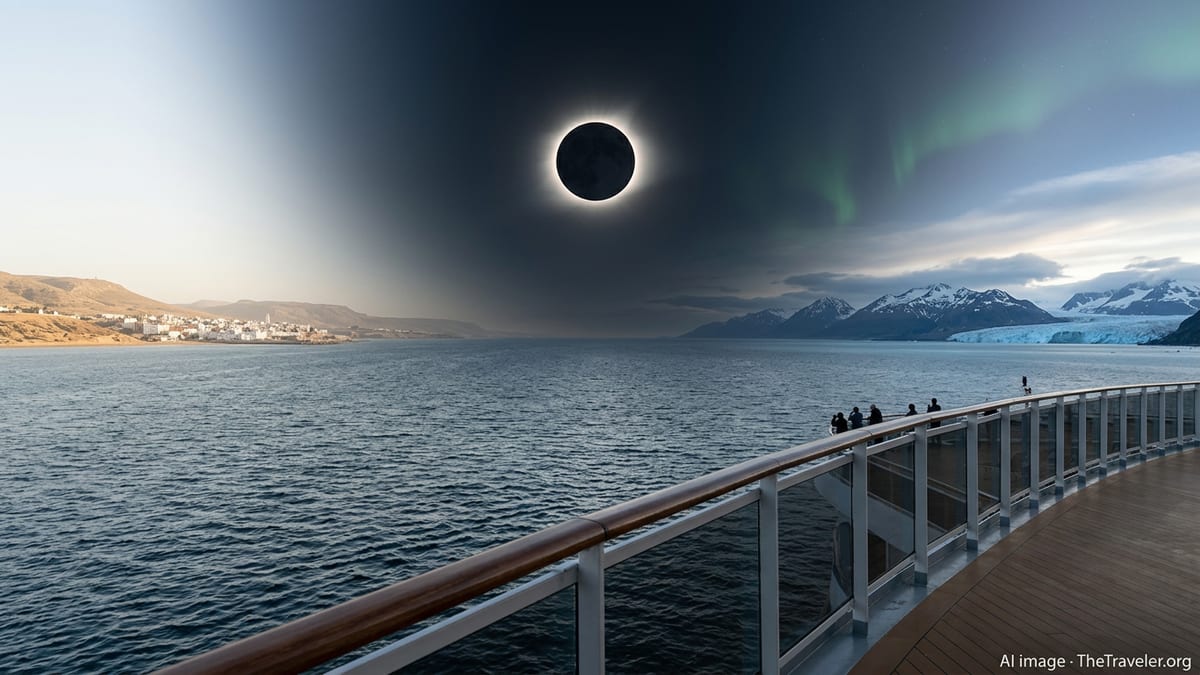
North Africa Prepares for a Midday Eclipse Blackout
On August 2, 2027, a total solar eclipse will carve a path of darkness across North Africa, briefly plunging parts of Morocco and Tunisia into daylight night and setting the stage for one of the most coveted travel moments of the decade. Astronomers note that the event, frequently dubbed the “eclipse of the century,” will deliver up to about six and a half minutes of totality near Luxor in Egypt, making it the longest land-based total eclipse of this century so far and a powerful magnet for eclipse chasers planning complex overland and sea itineraries.
The path of totality is forecast to reach land in northern Morocco before sweeping east across Algeria and central Tunisia, placing coastal cities, desert fringes and ancient medinas squarely in the global spotlight. In Morocco, the shadow is expected to cross close to Tangier and parts of the Rif region, while in Tunisia it will track across central areas and offshore islands in the Gulf of Gabes, giving select beaches and port towns the eerie experience of sudden midday darkness.
With the phenomenon unfolding in mid-summer under typically clear North African skies, tourism officials in both countries are treating the eclipse as a once-in-a-lifetime marketing opportunity. National and regional authorities have begun promoting special packages linking eclipse viewing with desert excursions, coastal stays and cultural touring, while operators fine-tune logistics to move visitors along the narrow corridor where totality will be visible.
Industry observers warn that this slim shadow band is already driving intense competition for hotel rooms, transport and berths in nearby ports. Eclipse specialists urge travelers hoping for a blackout moment in Morocco or Tunisia to secure arrangements early, with flexible backup plans inland or along the coast in case of local cloud cover on the day.
Morocco and Tunisia Position Ports for Cruise Eclipse Calls
Although the 2027 eclipse will primarily be a land-based event for North Africa, cruise lines are quietly weaving it into wider Mediterranean deployment, putting Moroccan and Tunisian gateways on the radar for pre- and post-eclipse touring. The port cities of Tangier, Casablanca and Agadir in Morocco, along with Tunis, Sfax and nearby coastal stops in Tunisia, are being pitched as embarkation and turnaround hubs for itineraries that combine the eclipse with classic Western and Central Mediterranean routes.
In Morocco, tour operators are rolling out dedicated eclipse programs linking coastal ports to inland viewing zones through chartered coaches and overnight stays, often adding Sahara dunes, High Atlas valleys and imperial cities such as Fez and Marrakech. Some are advertising hosted astronomy lectures at sea or ashore, tapping local university experts to brief guests before and after the main event, while port authorities prepare for elevated yacht and expedition ship traffic around late July and early August 2027.
Tunisia, still rebuilding its tourism profile on the international stage, views the eclipse as a chance to showcase its blend of Roman ruins, Saharan gateways and resort-lined coasts to new cruise audiences. Regional tourism boards are working with operators to package day trips from coastal ports into the predicted path of totality, positioning archaeological sites, oases and island beaches as contrasting backdrops to the sudden darkening of the sun.
Analysts expect a measurable though concentrated bump in North African cruise calls for the 2027 summer season, centered on a short window before and after August 2. While few large ships are scheduled to sit directly under the Moon’s shadow off Morocco or Tunisia, the ability to add eclipse-linked excursions to broader Mediterranean sailings is already proving a powerful marketing hook.
Lines Chart Sea-Based Eclipse Viewing Across the Strait
Several major cruise brands have gone a step further, building full itineraries around being at sea for the moment of totality. Carnival Cruise Line has confirmed an 11-day Carnival Journeys sailing aboard Carnival Miracle departing Dover in late July 2027, specifically crafted to place the ship at sea in the eastern Atlantic on eclipse day. The line is promoting the voyage as a rare chance to watch the Moon swallow the sun from open water as the shadow races between southern Spain and North Africa.
Other premium and luxury lines are using the eclipse as a narrative anchor for longer summer programs across Spain, the central Mediterranean, Egypt and the eastern Mediterranean. Some itineraries marketed for 2027 pair eclipse viewing with overnight calls in historic ports such as Valletta, Naples or Alexandria, or with scenic cruising near volcanic landscapes and ancient temple sites, giving guests a prolonged, story-driven arc that stretches beyond the brief minutes of totality.
Travel planners say demand for these astronomy-themed sailings has been brisk despite fares that run higher than comparable non-eclipse cruises. With cabins on eclipse-positioned vessels selling out years in advance, agencies are steering latecomers toward ships calling at Moroccan and Tunisian ports around the event, coupled with charter transfers inland for travelers who still want to experience the blackout from solid ground rather than a moving deck.
The sea-based strategies highlight how heavily cruise lines now lean on highly shareable celestial moments to differentiate crowded summer seasons. Executives view the 2027 eclipse as both a test case and a template for future deployments tied to meteor showers, aurora peaks and future eclipses through the 2030s.
Iceland’s High-Latitude Skies Power Northern Lights Sailings
While the 2027 Mediterranean and North African season revolves around a single dazzling day in August, cruise planners are also looking north to Iceland, where a run of strong aurora forecasts and new Arctic itineraries is shaping a pulse-pounding program in the North Atlantic. Expedition and mid-size ships are extending shoulder seasons around the island nation, betting that travelers will trade balmy beaches for wild weather, volcanic coasts and the chance to see the night sky erupt in pillars of green and violet.
Lines with a history of Iceland calls are layering in more overnight or late-night stays in ports such as Reykjavik, Akureyri and Ísafjörður, combined with scenic cruising along glacier-carved fjords and remote peninsulas. The goal is to keep ships within the auroral oval on as many clear nights as possible, maximizing the odds that guests can watch the northern lights flare above basalt cliffs and black-sand beaches between Zodiac landings and geothermal soaks.
Operators are also leaning into educational programming, bringing onboard astronomers, climate scientists and photographers to help guests decode solar activity, space weather and the fragile polar environment. These Arctic-focused voyages are increasingly marketed as an atmospheric counterpoint to the North African eclipse, promising a season in which travelers can chase darkness in two very different forms: the swift sweep of the Moon’s shadow and the slow, flickering dance of charged particles in the upper atmosphere.
The Iceland deployments tap into a broader appetite for adventures that feel unpredictable and elemental, whether that means navigating sea ice in shoulder seasons or watching clouds race across a sky that can shift from slate gray to aurora-streaked in a matter of hours. For cruise lines, the draw lies in offering an experience that feels less like a packaged holiday and more like front-row seats to a living planet.
Alaska’s Glaciers and Wildlife Anchor an Adrenaline-Fueled Summer
On the other side of the Atlantic, Alaska is shaping up to be the third pillar of a high-intensity 2027 cruise year, with itineraries that foreground glacier encounters, backcountry land extensions and wildlife viewing at the edge of the wilderness. While the state will not see the 2027 eclipse, it remains the most important warm-weather expedition destination for North American travelers, and lines are upgrading hardware and shore programming to keep it that way.
Large mainstream ships are scheduled to return in force to marquee routes through the Inside Passage and the Gulf of Alaska, with heavy emphasis on time near tidewater glaciers such as Hubbard and Glacier Bay’s ice giants. At the same time, a new wave of smaller expedition vessels and premium ships is pushing deeper into less-visited regions, offering kayaking among bergy bits, guided hikes on remote shorelines and extended time on deck listening to the thunderous roar of calving ice.
Tourism officials say they expect strong demand in 2027 from travelers who spent earlier years tied to work-from-anywhere schedules and now want more physically engaging trips. Many Alaska sailings are bundled with pre- or post-cruise rail journeys into the interior, lodge stays near national parks and wildlife safaris focused on bears, whales and bald eagles, turning a week at sea into a broader immersion in the state’s dramatic landscapes.
Taken together, the eclipse over Morocco and Tunisia, the auroral nights over Iceland and the glacier-charged days in Alaska point to a 2027 cruise season built around raw, cinematic natural forces. For travelers willing to plan ahead and lean into a bit of unpredictability, the coming years offer the rare chance to watch the sky darken at noon in North Africa, then follow the arc of the sun north to where ice, ocean and aurora shape the horizon.