

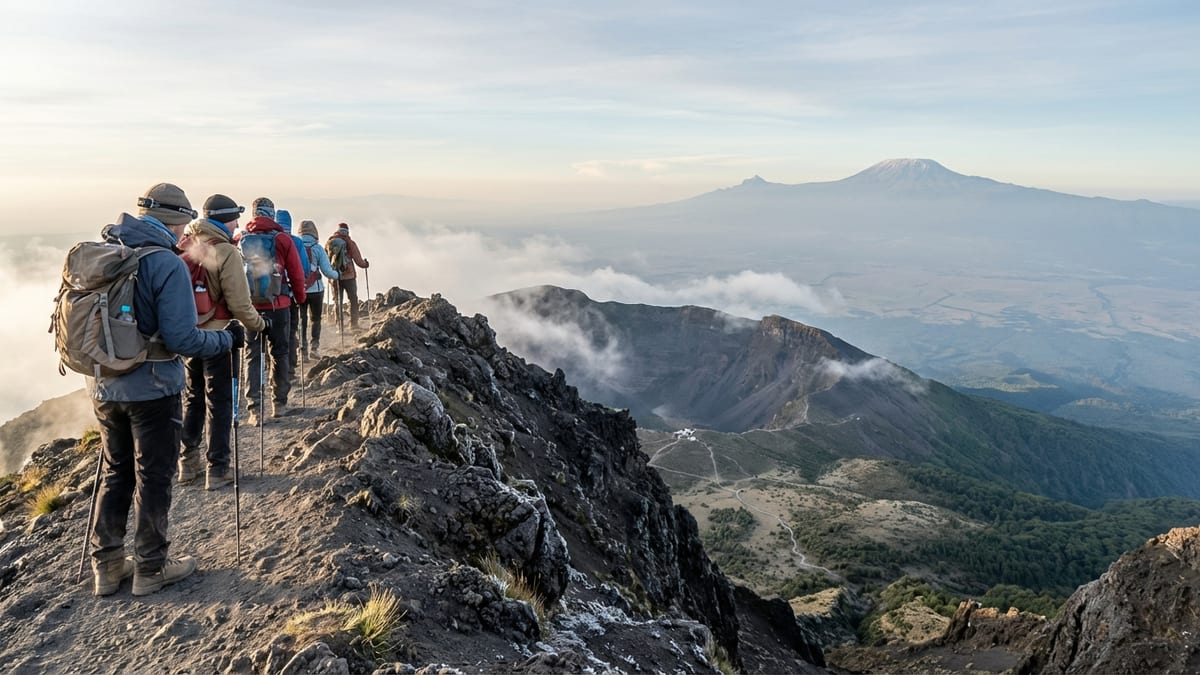
Mount Meru in northern Tanzania is often overshadowed by its taller neighbor, Kilimanjaro, yet it is one of East Africa’s most rewarding high-altitude climbs. Rising to 4,566 meters above sea level, the volcano offers a dramatic horseshoe-shaped crater, knife-edge ridges, and sweeping views over Arusha National Park and across to Kilimanjaro.
Despite being marketed as a “warm-up” or acclimatization peak, Meru is not a simple hill walk. Its combination of altitude, exposure, strict park regulations, and variable weather routinely catches trekkers off guard. Understanding the most common mistakes climbers make on Mount Meru can significantly improve your chances of a safe and successful summit.
Understanding Mount Meru’s Unique Challenges
Before looking at specific errors, it is important to understand what makes Mount Meru different from other trekking peaks. The climb begins deep inside Arusha National Park, with mandatory guides and armed rangers, and quickly ascends through lush forest to open alpine terrain. Many visitors underestimate the mountain because its standard route, the Momella Route, is non-technical and completed in just three or four days. In reality, the rapid altitude gain, exposed summit ridge, and wildlife regulations create a complex environment where small mistakes can escalate quickly.
Climbers who treat Meru with the same seriousness they would apply to a higher Himalayan or Andean peak tend to fare better. This means careful timing of the trip, realistic assessment of fitness, respect for altitude, and close collaboration with local guides and park authorities. The following sections outline five of the most common mistakes that lead to failed summits, unnecessary risks, and disappointing experiences on Mount Meru.
Mistake 1: Underestimating Altitude and Acclimatization
The most widespread error on Mount Meru is assuming that a lower elevation compared with Kilimanjaro means altitude is not a serious concern. In fact, Meru’s itinerary is compressed, and many climbers gain more than 1,000 vertical meters in a day. This rapid ascent gives the body little time to adapt, and symptoms of Acute Mountain Sickness easily appear above 3,000 meters. Even otherwise fit hikers can suffer headaches, nausea, dizziness, and severe fatigue when they push too hard, too fast.
Although success rates on the standard 4-day Meru itinerary are relatively high compared to many peaks, a significant portion of summit failures can be traced to poor acclimatization strategies. Unlike multi-week expeditions, there is little room on Meru to “climb high, sleep low” or add many rest days, so pacing, hydration, and self-awareness become critical.
Starting Too Fast on Lower Slopes
One classic mistake is treating the first day as an easy forest hike and racing up from Momella Gate to Miriakamba Hut. The lower slopes are lush, warm, and scenic, with frequent animal sightings, which can lull climbers into forgetting they are starting a high-altitude ascent. Many push at near sea-level speed, chatting and snapping photos while barely stopping for breaks, only to arrive at the hut with pounding headaches or early signs of altitude stress.
A more sensible approach is to adopt a slow, deliberate pace from the very start. Guides often repeat the mantra “pole pole,” meaning “slowly, slowly,” for a reason. Taking short, frequent rest stops, drinking consistently, and keeping breathing controlled all help the body adjust gradually. This conservative pacing should continue on the second day as you climb toward Saddle Hut, where altitude effects intensify.
Choosing an Overly Compressed Itinerary
A second altitude-related error is opting for the shortest possible schedule, typically a 3-day climb, in order to save time or cost. While three-day ascents are technically possible, they force a very rapid gain in elevation and dramatically reduce the body’s opportunity to acclimatize. Operators and park authorities consistently note higher summit success rates for the 4-day itinerary, which allows one additional night at altitude and more measured daily gains.
Travelers short on time often reason that “it is only 4,566 meters” and assume their fitness will compensate. In practice, physical conditioning does not eliminate the risk of altitude sickness. Selecting a 4-day program, or even using Meru as an acclimatization climb before Kilimanjaro, is generally far safer and more comfortable than compressing the ascent into three days.
Ignoring Early Symptoms of AMS
Another common mistake is failing to acknowledge or report early symptoms of Acute Mountain Sickness. Climbers frequently downplay headaches, nausea, insomnia, or loss of appetite out of fear they will be told to descend. This reluctance can push a mild, manageable problem into something more serious. Although severe altitude complications such as high-altitude pulmonary or cerebral edema are less common on Meru than on very high peaks, they remain possible and can develop quickly if early warning signs are ignored.
A more responsible strategy is to discuss any discomfort openly with your guide, who is trained to recognize altitude issues and adjust the pace accordingly. In some cases, slowing down, drinking more water, or taking a brief rest day at Saddle Hut can salvage a summit attempt. In others, a controlled descent is the only safe option. Listening to your body and respecting altitude is ultimately more important than reaching Socialist Peak at any cost.
Mistake 2: Inadequate Physical Preparation and Summit-Day Readiness
Because Mount Meru does not require technical climbing skills on its standard route, many visitors assume that generic “good shape” is enough. In reality, the summit push from Saddle Hut is a sustained, steep effort at altitude, often lasting 10 to 14 hours round trip. Underestimating the physical demand of this day remains one of the main reasons people turn back short of the summit or arrive exhausted and prone to mistakes on the narrow ridge.
Proper training and realistic expectations about the climb’s difficulty can transform the experience from a punishing ordeal into a challenging but achievable adventure.
Arriving Without Specific Endurance Training
One frequent error is relying on casual fitness, such as occasional gym sessions or short runs, rather than targeted endurance preparation. The typical Meru itinerary involves multiple days of hiking between 6 and 12 hours, often on steep terrain with thin air. Without a base of cardiovascular conditioning and leg strength, climbers quickly fatigue, particularly on summit day where the ascent to Rhino Point and then to Socialist Peak requires sustained effort.
Ideally, preparation should begin 8 to 12 weeks before travel, incorporating long hikes on hilly terrain, stair or hill repeats, and back-to-back walking days to simulate multi-day fatigue. Training with a partially loaded backpack helps the body adapt to carrying water, layers, and snacks over varying gradients. Those who arrive with this type of endurance foundation not only increase their summit chances but also enjoy the journey more.
Underestimating the Summit Push and Turnaround Times
The summit bid typically starts around 1:00 to 2:00 in the morning to reach the ridge in time for sunrise and descent before afternoon clouds or storms. A common mistake is failing to appreciate how long this day will feel. Some climbers set off without a clear plan for pacing, nutrition, or turnaround time, driven by the desire to “just keep going” as long as they can.
Guides generally set conservative turn-back cutoffs to ensure groups have enough time to descend safely, particularly across the exposed sections near Rhino Point and along the crater rim. Pushing past these times or pressuring guides to continue despite slow progress can place the entire team at higher risk, especially if fatigue combines with incoming weather. Understanding and respecting turnaround times is vital, even if it means accepting a high point short of the summit.
Neglecting Strength and Joint Protection
Another preparation mistake is focusing solely on cardio and ignoring strength and joint stability. The steep descents from the summit back to Saddle Hut, and eventually to Miriakamba and Momella Gate, place significant strain on knees and ankles. Without strong quadriceps, glutes, and core muscles, many climbers experience painful joints, unstable footing, and increased risk of slips late in the trek.
A well-rounded pre-trip program should include squats, lunges, step-ups, and core exercises alongside hiking and aerobic work. Trekking poles, often regarded as optional, provide valuable support on both ascent and descent, reducing impact on knees and improving balance on loose or icy terrain. Skipping these elements of preparation is an easily avoidable mistake that can have major consequences during the final hours of the climb.
Mistake 3: Poor Gear Choices and Inadequate Layering
A third recurring problem on Mount Meru is arriving with inappropriate clothing or equipment for the mountain’s broad range of conditions. Climbers begin the journey in warm, humid forest and finish on a cold, windswept ridge where temperatures may drop close to freezing and wind chill can be significant. Misjudging this shift leads to shivering summit attempts, numb hands, and in extreme cases a forced retreat despite otherwise good physical condition.
The huts along the Momella Route provide shelter, but they do not compensate for poor gear decisions. Successful climbers tend to approach Meru with the same seriousness as they would give to other high-altitude treks, assembling a thoughtful layering system and reliable footwear from the outset.
Wearing Inadequate or Unbroken-in Footwear
In an effort to save luggage space or money, some trekkers attempt Meru in lightweight running shoes or brand-new boots straight out of the box. On the lower forest trails, this may feel acceptable, but as the route steepens and surfaces become rockier or slick, the weaknesses become obvious. Insufficient ankle support, poor grip, or emerging blisters inevitably slow progress, sap morale, and increase the risk of falls.
Sturdy, well-broken-in hiking boots with reliable traction are strongly recommended. Ideally, they should be worn for multiple long hikes before the trip to identify pressure points and allow for adjustments in socks or lacing patterns. Investing in proper footwear is one of the simplest ways to avoid painful, preventable problems on the mountain.
Mismanaging Layers on a Highly Variable Mountain
Another frequent mistake is packing without a clear layering strategy. Climbers sometimes bring either overly heavy garments that are too warm for lower slopes, or minimal lightweight clothing that fails to protect against summit winds and cold. This mismatch leads to constant stopping to adjust layers, sweat-soaked clothing that chills quickly as temperatures drop, or, in the worst case, underdressing for the exposed summit ridge.
An effective system usually includes moisture-wicking base layers, an insulating fleece or light down mid-layer, and a windproof, waterproof shell. Add warm hat, buff or neck gaiter, and insulated gloves for summit day, along with spare gloves in case the first pair becomes wet. On the forest sections, lighter trekking clothing works well, but the warmer items must remain easily accessible in the daypack as you gain elevation. Those who master the art of adding and removing layers preemptively typically stay more comfortable and conserve energy.
Skimping on Essential Accessories and Safety Items
Even when main clothing items are adequate, many climbers overlook small accessories that play an outsized role in safety and comfort. Regular omissions include headlamps with fresh batteries, extra socks, sunscreen suitable for high UV levels, and simple blister care supplies. On summit night, a missing or weak headlamp can severely slow a group, increase tripping hazards, or force someone to turn back.
Other items, such as trekking poles and lightweight gaiters, may not be strictly mandatory but can significantly improve the experience. Poles help with balance on rocky or icy sections and preserve knees on the long descent, while gaiters help keep mud and scree out of boots in rainy or shoulder seasons. Climbers who arrive without these essentials often find themselves improvising solutions, borrowing from others, or simply accepting a more difficult climb than necessary.
Mistake 4: Ignoring Seasonal Weather and Park Regulations
Mount Meru sits within a protected area governed by specific entry rules, wildlife protocols, and seasonal weather patterns. A surprisingly common mistake is to plan a climb without regard to these realities. Some travelers assume any month is equally suitable or imagine they can negotiate around gate opening times, ranger requirements, or hut reservations at the last minute. In practice, ignoring official guidelines and regional climate patterns can sharply reduce safety and enjoyment.
The mountain is generally most pleasant and predictable during Tanzania’s drier months, roughly from late June to October and from late December to February. Outside these windows, rain and low cloud can make trails muddy and slick, while views that usually reward the effort are often obscured.
Climbing in Unsuitable Seasons Without Proper Preparation
Although it is possible to climb Meru during the long and short rainy seasons, many climbers underestimate how strongly rain affects conditions. Forest sections quickly become muddy, rocks slippery, and route-finding more complicated in mist and fog. Heavy rain can drain morale, soak clothing and gear, and increase the risk of hypothermia on higher sections, particularly if wind picks up on the crater rim.
Those who must travel during wet months should adjust expectations and packing lists accordingly. Fully waterproof shells, pack covers or dry bags, and extra socks become essential. Trail times may lengthen, and contingency days for weather delays are wise. Ignoring these realities and packing as if for a dry-season climb is a common and avoidable error that can turn an otherwise manageable trek into a miserable experience.
Misunderstanding Park Rules and Mandatory Guides
Arusha National Park requires climbers to be accompanied by a certified guide and an armed ranger on Mount Meru. The ranger’s role is partly to deter or manage encounters with wildlife such as buffalo and elephants on the lower slopes. A mistake some visitors make is to see these regulations as an inconvenience rather than a safety measure, or to seek informal arrangements outside official channels.
Attempting to climb without proper permits, bypassing official guides, or joining unlicensed operators not only violates park rules but can leave climbers without adequate backup in emergencies. Rangers and authorized guides understand the terrain, wildlife behavior, and local weather patterns in ways independent trekkers rarely can. Ignoring their advice on pacing, start times, or route options, or treating guidelines as optional suggestions, significantly increases risk.
Arriving Late at the Gate or Mismanaging Daily Timings
Another timing-related mistake is reaching Momella Gate outside the official entry window or underestimating how long it takes to complete the first day’s hike. Park authorities typically restrict starting times to a defined window, both to protect wildlife and to ensure hikers reach huts before dark. Late arrivals may be denied entry altogether or forced into rushed ascents that compromise acclimatization and safety.
Scenarios where flights, transfers, or gear rentals delay a party’s departure from Arusha or Moshi are common. The solution is straightforward: build buffer time into your arrival day, avoid same-day gate arrivals after long international flights, and listen carefully to your operator’s advice on when to depart. Treating gate times and hut check-ins as flexible targets instead of firm constraints is a simple but serious mistake.
Mistake 5: Poor Communication, Nutrition, and Hydration Choices
The final cluster of common mistakes on Mount Meru involves what climbers put into their bodies and how they communicate with those around them. In the excitement of preparation, many focus on gear and physical training but overlook how central eating, drinking, and speaking up are to high-altitude performance. Even minor lapses in these areas can snowball into fatigue, headaches, or dangerous misunderstandings on the trail.
Meru’s huts provide basic comfort, and reputable operators supply hearty meals. Still, maintaining personal routines for hydration and snacks, and establishing open lines of communication within the group, remain individual responsibilities no guide can fully assume.
Not Drinking Enough or Using a Sensible Hydration Strategy
Dehydration is a quiet but pervasive issue at altitude. The dry air, increased breathing rate, and constant exertion mean the body loses fluid more quickly than at sea level, yet many climbers drink less than they should to avoid frequent bathroom stops or because the cooler air suppresses thirst. As a result, fatigue deepens, headaches worsen, and concentration declines.
An effective strategy is to carry at least two water bottles or a hydration bladder and to sip regularly rather than gulping large amounts infrequently. Some climbers find it helpful to set simple rules, such as finishing a full liter between meals or drinking a certain number of mouthfuls every half hour. Adding electrolyte tablets can also help replace salts lost through sweating and may improve energy levels when appetite is low.
Skipping Meals or Relying on Unfamiliar Foods
Altitude often blunts appetite, especially as you approach Saddle Hut. Combined with unfamiliar dishes or digestive sensitivities, this can lead some climbers to skip meals altogether, relying on a handful of snacks to fuel long days. The result is a steep drop in available energy when it is needed most, particularly on summit day when the body demands steady caloric intake to sustain effort and generate heat.
Travelers can mitigate this by discussing dietary preferences and restrictions with their operator in advance, bringing familiar energy-dense snacks from home, and making a conscious effort to eat small quantities regularly even if full meals are unappealing. Simple foods such as porridge, rice, pasta, or bananas are often easier to tolerate at altitude. Ignoring nutrition until energy levels collapse mid-ascent is a classic and avoidable misstep.
Staying Silent About Discomfort or Concerns
Perhaps the most underestimated mistake on Mount Meru is failing to communicate openly with guides and teammates. Climbers sometimes conceal symptoms of altitude sickness, blister pain, or anxiety about exposed sections because they fear appearing weak or spoiling the group’s chances. Others decline to ask questions about the next day’s route, weather, or timing, assuming they will simply follow along.
The best outcomes occur when communication is proactive. Discuss how you slept, any new symptoms, and how your gear is performing at each hut. Ask guides to clarify technical sections or time estimates. Agree as a group on pacing and rest stops. This information helps leaders adjust plans before issues become emergencies and ensures that decisions, such as whether to continue beyond Rhino Point in gusty wind, are made with everyone fully informed. Silence on a high, narrow ridge benefits no one.
The Takeaway
Mount Meru is far more than a Kilimanjaro warm-up. It is a superb trek in its own right, combining wildlife, crater scenery, and a spectacular summit ridge that rivals many better-known peaks. Yet the same qualities that make it memorable also make it unforgiving when climbers arrive unprepared or dismiss its challenges. The most common mistakes on Meru tend to cluster around underestimating altitude, arriving without proper conditioning, choosing poor gear, ignoring seasonal and regulatory realities, and overlooking the basics of hydration, nutrition, and honest communication.
Approach Meru with humility and respect, and it will reward you with sunrise views over the plains, an intimate sense of East Africa’s volcanic landscapes, and the quiet satisfaction of standing on one of the continent’s finest summits. Plan generous time for acclimatization, train deliberately, invest in appropriate clothing and footwear, work with reputable guides who understand the park’s regulations, and listen closely to both your body and your team. By learning from the mistakes others frequently make, you greatly increase your chances of turning Mount Meru from a merely ambitious objective into a genuinely transformative journey.
FAQ
Q1. How difficult is Mount Meru compared with Kilimanjaro?
Mount Meru is generally considered slightly easier than Kilimanjaro in terms of absolute elevation and total days on the trail, but it is still a serious high-altitude trek. The summit day is steep and exposed in places, and the rapid ascent profile leaves limited time for acclimatization. Fit hikers without technical climbing skills can succeed, but they should not treat Meru as a casual walk.
Q2. How many days should I plan for a Mount Meru climb?
The most commonly recommended option is a 4-day itinerary, which offers better acclimatization and higher summit success rates than a compressed 3-day schedule. The four-day plan usually includes two nights at intermediate altitude before the summit attempt and a more relaxed descent, which improves safety and comfort.
Q3. What is the best time of year to climb Mount Meru?
The most favorable periods are Tanzania’s dry seasons, typically from late June to October and from late December to February. During these months, trails are drier, skies are clearer, and summit views of Kilimanjaro and the surrounding plains are more reliable. Climbing in the long or short rainy seasons is possible but often involves muddy paths, slippery rocks, and limited visibility.
Q4. Do I need a guide or can I climb Mount Meru independently?
You must climb with a certified guide and are normally accompanied by an armed park ranger due to wildlife and safety regulations inside Arusha National Park. Independent, unguided ascents are not permitted. Reputable operators arrange guides, rangers, porters, permits, and hut bookings, which simplifies logistics and significantly improves safety.
Q5. What kind of fitness level is required for Mount Meru?
Climbers should have good cardiovascular fitness, strong leg muscles, and the ability to hike for 6 to 12 hours a day on steep terrain. Prior experience with day hikes and multi-day trekking is very helpful. Training in the months before the trip should include regular aerobic exercise, hill or stair climbing, and practice hikes with a backpack to simulate real conditions.
Q6. How cold does it get on the summit of Mount Meru?
Temperatures near the summit can drop close to or slightly below freezing, especially in the early morning hours when most summit bids take place. Wind chill often makes it feel considerably colder. While conditions are usually not as extreme as on higher Himalayan peaks, proper layering with thermal base layers, an insulating mid-layer, a windproof outer shell, warm gloves, and a hat is essential.
Q7. What gear is absolutely essential for the climb?
Key items include sturdy, broken-in hiking boots with good grip, a reliable layering system for varied temperatures, a warm hat and gloves, a headlamp with spare batteries, trekking poles, a daypack with rain cover, a sleeping bag suitable for hut temperatures if not provided, and personal medications. Sunscreen, sunglasses, and basic blister and first-aid supplies are also critical.
Q8. Is altitude sickness common on Mount Meru?
Altitude sickness is relatively common because the mountain is climbed quickly and reaches 4,566 meters. Many trekkers experience mild symptoms such as headaches, disturbed sleep, or shortness of breath above 3,000 meters. Severe altitude illness is less frequent but still possible. Walking slowly, staying well hydrated, choosing a 4-day itinerary, and communicating any symptoms to your guide are key preventive measures.
Q9. Can I use Mount Meru as acclimatization before climbing Kilimanjaro?
Yes, many climbers deliberately schedule Mount Meru as an acclimatization climb a few days before Kilimanjaro. Spending time at altitude on Meru helps the body adapt and often improves summit success rates on Kilimanjaro. When planned correctly, the two climbs complement each other well, as Meru’s shorter duration prepares you physically and mentally for the longer Kilimanjaro ascent.
Q10. How far in advance should I book my Mount Meru trek?
Booking several months in advance is wise, especially for popular dry-season dates, to secure hut spaces, guides, and rangers. Early planning also allows time to complete a proper training program, sort out visas and vaccinations, and refine your gear list. Last-minute bookings are sometimes possible, but they limit your choice of operators and make it harder to prepare thoroughly for the climb.