

Colorado’s snow-dusted peaks, desert canyons and lively cities draw millions of visitors each year. Yet even seasoned travelers are often surprised by how quickly the state’s altitude, weather and terrain can humble the unprepared. From misjudging mountain roads to underestimating the high-country sun, a handful of recurring mistakes can turn a dream vacation into a stressful scramble. Understanding these pitfalls before you go is one of the simplest ways to stay safe, respect local communities and make the most of your time in the Rockies.
Ignoring the Realities of Altitude
For many visitors, the single biggest shock on arrival in Colorado is not the scenery but the thin, dry air. Denver already sits at about 5,280 feet above sea level, and many popular mountain towns and ski resorts climb well above 8,000 feet. At these elevations, the air holds less oxygen and the body has to work harder, which can lead to headaches, fatigue, nausea and shortness of breath, especially in the first 24 to 48 hours. Tourists who try to power through a packed itinerary immediately after landing are more likely to feel unwell and spend valuable vacation time recovering instead of exploring.
A common mistake is assuming that fitness alone protects against altitude sickness. Even athletes who train at sea level can struggle in Colorado’s high country if they ascend too quickly or fail to rest. Health providers in the state regularly remind visitors to arrive hydrated, avoid heavy drinking on the first nights, and give their bodies time to adjust before heading to the highest passes and peaks. Taking it easy on day one, especially if you fly directly from low elevation, dramatically improves your odds of feeling strong for the rest of the trip.
Another oversight is not recognizing when mild symptoms are sliding into something more serious. Persistent or worsening headaches, vomiting, confusion, or difficulty walking can signal more dangerous forms of altitude illness that require medical evaluation and, most importantly, a move to lower elevation. Visitors sometimes try to tough it out rather than speak up, particularly in group trips where no one wants to be the person who “ruined” the day. In reality, the fastest way to salvage a vacation is to address symptoms early and adjust plans before they escalate.
One of the simplest ways to avoid trouble is to plan your route and lodging around gradual acclimatization. Spending a night or two in a lower-elevation city like Denver or Colorado Springs before heading to higher mountain towns, sipping water regularly, and building in gentle activities early on make a noticeable difference. Recognizing altitude as a real factor in every hike, drive and ski day, not an afterthought, is the key mindset shift that separates comfortable visitors from miserable ones.
Underestimating Colorado’s Extreme and Changeable Weather
Many travelers picture Colorado as endlessly sunny and dry, thanks to statistics that highlight around 300 days of sunshine each year. While the sun is indeed intense, that headline fact often leads visitors to underestimate how quickly conditions can shift, especially in the mountains. A blue-sky morning can turn into a thunderstorm with lightning, hail and rapidly dropping temperatures by early afternoon. In winter and spring, snow squalls and whiteout conditions can arrive with little warning, particularly on high passes and open plateaus.
A frequent mistake is dressing for the weather at the hotel door instead of the highest point of the day’s plans. Shorts and a light shirt may feel comfortable in Denver at midday, but the summit of a nearby trail or scenic byway can be 20 degrees colder with strong wind, even in late spring or early fall. People set off without layers, waterproof shells, gloves or hats, assuming a short outing does not require them. National forest and park officials repeatedly caution that hypothermia and exposure are real risks year-round in the Rockies, not just in the depths of winter.
Another problem is timing outdoor activities poorly relative to common storm patterns. In summer, afternoon thunderstorms are routine in the high country. Hikers and climbers are advised to start early and plan to be below treeline by early afternoon to reduce the risk of lightning strikes, which are a leading weather hazard in Colorado’s mountains. Yet many visitors begin longer hikes late in the morning, aiming for summit photos during prime lightning hours. They often find themselves rushing down exposed ridgelines as thunder builds, or sheltering in unsafe places like isolated trees or shallow overhangs.
Smart planning starts before you leave the parking lot. Check regional forecasts, paying attention to mountain weather rather than only the nearest city report. Pack layers that can handle sun, wind and rain, including a lightweight waterproof jacket even on “nice” days. On the trail, watch the sky and be willing to cut a hike short or turn around if towering clouds build faster than expected. Accepting that Colorado weather can change abruptly is not pessimism; it is simply part of traveling responsibly in a high-elevation state.
Mishandling Mountain Roads and Distance
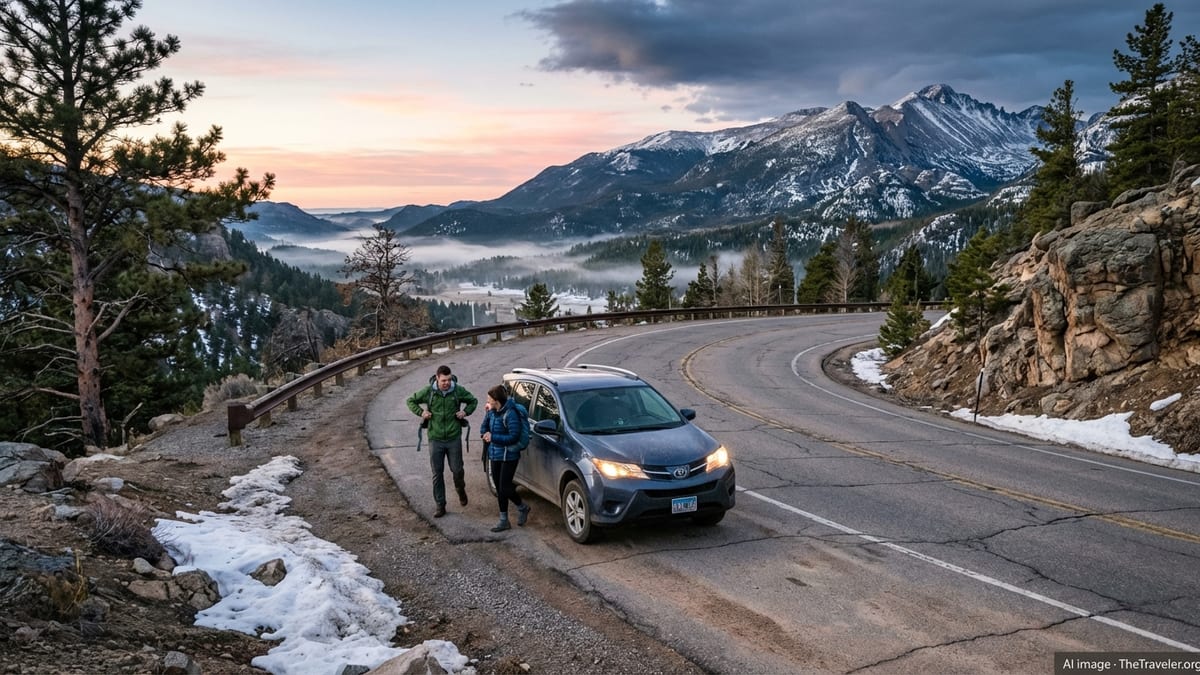
On a map, Colorado road trips can look deceptively simple: a short line between Denver and a mountain town, or a scenic loop through passes and canyons that appears manageable in a day. In reality, steep grades, winding lanes, and sudden storms can turn even modest drives into demanding undertakings. One of the most common visitor mistakes is treating mountain highways like flat interstates, underestimating both driving difficulty and how exhausting constant focus on curves and drop-offs can be.
Colorado transportation and safety officials routinely emphasize that drivers should slow down on steep descents, avoid riding their brakes, and shift to lower gears instead of relying on cruise control. Yet every year, out-of-state visitors are involved in preventable accidents because they are unfamiliar with using engine braking or misjudge how long it takes to stop on icy or gravel-strewn pavement. Add distractions like admiring the views or fiddling with navigation, and the risk climbs quickly. Even in summer, rockfall, wildlife crossing and cyclists sharing narrow shoulders demand full attention.
Another frequent miscalculation involves travel time. Tourists often plan back-to-back activities in different corners of the state, not realizing that a route that looks like two or three hours on a basic map can easily run longer due to construction, congestion near ski areas, weather-related delays or temporary pass closures. Long detours around closed canyons or avalanche zones can add hours. Attempting to squeeze in “just one more” scenic drive at the end of a busy day can leave drivers navigating difficult mountain roads in the dark when fatigue is highest.
Visitors also sometimes underestimate the effect of altitude and stress on the driver. A person who feels slightly dizzy or tired after a day at a high-elevation destination may still volunteer to drive back down unfamiliar switchbacks at night, when reaction time is already compromised. A safer approach is to build buffers into your itinerary, start long drives early, rotate drivers when possible, and accept that in Colorado, the journey itself is often the main activity for the day, not a side note between attractions.
Treating the Outdoors Like an Amusement Park
Colorado’s public lands are some of the most visited in the United States, with national parks, national forests, state parks and open spaces drawing hikers, campers, climbers and sightseers year-round. A recurring problem is that some visitors arrive expecting the landscape to function like a curated theme park, with guardrails, constant cell coverage and staff nearby to address any issue. In reality, large stretches of Colorado’s backcountry are remote and minimally developed, and rescue teams are often volunteer-based and hours away.
Common mistakes range from hiking without sufficient water or sun protection to leaving established trails in search of shortcuts or better photo angles along cliffs, rivers and canyons. Land managers regularly warn that clear, cold water in streams and lakes can harbor parasites that cause serious illness, and that swift currents, waterfalls and snowfields can be more dangerous than they appear from a distance. Yet every season, visitors wade into fast-flowing creeks, climb over fences at overlooks, or step past warning signs for the sake of a picture.
Another oversight is neglecting basic trip planning and communication. Tourists may head out for “a quick hike” without checking the distance or elevation gain, fail to tell anyone their route or expected return time, and carry only a phone that might lose signal within minutes of leaving the trailhead. When something goes wrong, from a twisted ankle to getting caught after dark, that lack of preparation complicates rescue efforts. Search and rescue groups in Colorado consistently encourage visitors to carry simple essentials such as extra layers, a map or downloaded offline navigation, snacks, and more water than they think they will need.
Respecting the landscape also means understanding and following Leave No Trace principles. Colorado’s popularity has magnified problems such as trash along trails, damage to fragile alpine tundra from people stepping off designated paths, and campfire-related wildfires. Treating the mountains as a backdrop for social media posts, rather than a living ecosystem, leads to behaviors that harm wildlife and degrade the experience for everyone. Taking the time to learn local rules about campfires, dispersed camping, drone use and wildlife distance guidelines is part of being a responsible guest.
Misunderstanding Local Laws and Cultural Norms
Since Colorado was an early adopter of legal recreational cannabis, many visitors arrive with strong assumptions about what is allowed. One of the most frequent legal missteps is assuming that marijuana can be used anywhere, or that public consumption rules mirror those in a home state or country. In fact, statewide law prohibits public use in streets and parks, and most hotels, rental cars and public lands also ban smoking or vaping. Violating these rules can result in fines or other consequences, and can put local businesses in difficult positions with their own licensing requirements.
Alcohol can also trip up visitors. At altitude, drinks have a stronger and faster effect, and tourists often underestimate how quickly impairment sets in. That has real implications for both safety and legality when it comes to driving. Law enforcement agencies in Colorado stress that driving under the influence of alcohol, cannabis or other drugs is treated seriously, and enforcement campaigns often focus on tourist-heavy corridors and resort towns, particularly during peak seasons and major events.
Beyond formal laws, there are unwritten norms that shape how locals expect visitors to behave. Coloradans often mix a laid-back personal style with strong feelings about environmental stewardship and outdoor etiquette. Letting dogs run off-leash on trails where they are required to be leashed, crowding wildlife for photographs, blocking narrow road pullouts for extended photo sessions, or leaving trash and pet waste behind are sure ways to frustrate residents. These behaviors contribute to tensions over crowding and can lead to new restrictions that affect future visitors.
Taking a few minutes to read posted signs at trailheads, trail maps, transit stops and ski area bases provides crucial context. So does asking staff at visitor centers, hotels and outdoor shops about local expectations, from parking rules to wildfire restrictions. Understanding that you are participating in shared community spaces, not private playgrounds, goes a long way toward avoiding misunderstandings and showing respect for the people who call Colorado home.
Overpacking Itineraries and Chasing Too Many “Must-Sees”
Colorado’s diversity is one of its greatest strengths. In a single trip you might catch a baseball game in Denver, soak in hot springs, drive a historic byway, hike in the alpine and sample craft breweries. Yet trying to fit every highlight into a few days is one of the most common and counterproductive visitor mistakes. Packed itineraries that look efficient on paper often collapse under the weight of distance, altitude, traffic and fatigue, leaving travelers stressed and disappointed.
Visitors frequently underestimate the time it takes to move between regions, especially when they stack iconic sites that are far apart. Attempting to see Rocky Mountain National Park, the sand dunes, Mesa Verde and multiple ski towns in one short trip can mean spending far more time in the car than enjoying any one place. High elevation also slows people down more than they expect. Hikes take longer, stairs feel steeper, and simple chores like hauling luggage up a condo staircase can be surprisingly tiring in thinner air.
An overstuffed schedule also leaves little room for the weather, road closures or personal needs to dictate a change of plans. When every hour is spoken for, a closed pass, unexpected snowstorm or bout of altitude-related fatigue can throw the entire trip into chaos. Families with children or older travelers feel this strain particularly acutely, as different members of the group may adapt to the climate and exertion at very different speeds. The result is often frayed tempers in settings that are meant to be relaxing.
A better approach is to choose one or two regions as a base and dig deeper there, allowing side trips only when time and energy truly permit. Build in unscheduled blocks for resting, wandering around town, or lingering at a viewpoint longer than planned. Colorado’s appeal lies as much in the slower moments of watching alpenglow on the peaks, chatting with locals at a café, or reading in a riverside park as it does in ticking through a checklist of attractions. Leaving some “must-sees” for a future visit is not a failure; it is an investment in a more enjoyable experience now and a reason to return later.
The Takeaway
Traveling in Colorado rewards those who show the same respect for the environment, weather and communities that locals have learned through experience. The state’s high altitude, volatile conditions and rugged terrain are part of what make it so compelling, but they also demand a thoughtful approach. Visitors who assume that the rules of sea-level cities automatically apply in the Rockies are the ones most likely to run into trouble, whether that appears as altitude illness, a tense roadside moment on a mountain pass or a conflict over local norms.
Avoiding the most common mistakes largely comes down to a few themes: slow down, prepare realistically, and stay curious. Build time into your plans for acclimatization and rest, check the forecast and road conditions, drive conservatively, and treat public lands and urban spaces with care. Ask questions when you are unsure about local regulations, from cannabis use to fire restrictions. In doing so, you not only protect your own health and safety, you also help ensure that Colorado’s landscapes and communities remain vibrant for the people who live there and for future travelers.
If you approach the state with humility and flexibility, Colorado tends to repay you generously. The same mountains that can look intimidating from a stormy pass feel welcoming and unforgettable when you experience them at the right pace, with the right preparation. By sidestepping a handful of predictable missteps, you give yourself the best chance to remember your trip for alpine sunsets, quiet trails and lively neighborhoods, not avoidable stress.
FAQ
Q1. How can I reduce my risk of altitude sickness when visiting Colorado?
Arrive well hydrated, avoid heavy drinking the first nights, build in at least a day of lighter activity at moderate elevation, and listen carefully to early symptoms like headaches or unusual fatigue.
Q2. Is it safe to drink water directly from Colorado streams and lakes?
No. Even clear mountain water can carry parasites that cause serious gastrointestinal illness, so always use treated, filtered or tap water instead.
Q3. What should I wear for a day of hiking in Colorado’s mountains?
Dress in layers, including a moisture-wicking base layer, an insulating layer and a lightweight waterproof shell, plus sturdy footwear, sunhat and sunglasses.
Q4. How early should I start my hike to avoid storms in summer?
In many mountain areas, starting around sunrise and aiming to be off exposed ridges or summits by early afternoon helps you avoid typical afternoon thunderstorms.
Q5. Are Colorado’s mountain roads safe for drivers who are not used to them?
Yes, if you drive slowly, avoid cruise control on steep grades, use lower gears on descents, watch the weather, and give yourself ample time rather than rushing tight connections.
Q6. Can I use recreational cannabis in public places while visiting Colorado?
Generally no. Statewide rules prohibit public consumption, and most accommodations, vehicles and public lands also do not allow smoking or vaping.
Q7. What basic safety gear should I bring for easy day hikes?
Carry more water than you think you need, snacks, sun protection, a light jacket, a small first-aid kit, a map or offline navigation and a fully charged phone.
Q8. How much driving can I realistically plan in one Colorado vacation day?
It is wise to cap focused driving at four to five hours in a day, especially on mountain routes, and to allow extra time for traffic, weather and photo stops.
Q9. Are there cultural norms I should know about when visiting Colorado’s outdoor areas?
Locals value environmental stewardship, so staying on trails, packing out all trash, keeping dogs under control and giving wildlife space are strongly expected.
Q10. What is the best way to build flexibility into a Colorado itinerary?
Choose one or two base areas rather than crisscrossing the state, include unscheduled blocks in your days, and have backup indoor or lower-elevation activities in mind.