

For many travelers planning a Prairie Canada itinerary through Manitoba, Saskatchewan, and Alberta, Winnipeg starts as a dot on the map between bigger-name destinations. Yet those who give the Manitoba capital even two or three days often end up calling it the highlight of their trip.
Anchored by deep Indigenous roots and layered immigration stories, Winnipeg combines major national attractions with a creative food scene, distinctive neighbourhoods, and easy access to prairie and lake landscapes.
It is also a practical gateway, with good road and air connections that fit neatly into a wider prairie road trip. Here are seven compelling reasons more travelers are building Winnipeg into their Prairie Canada journeys.
1. A Historic Meeting Place at The Forks
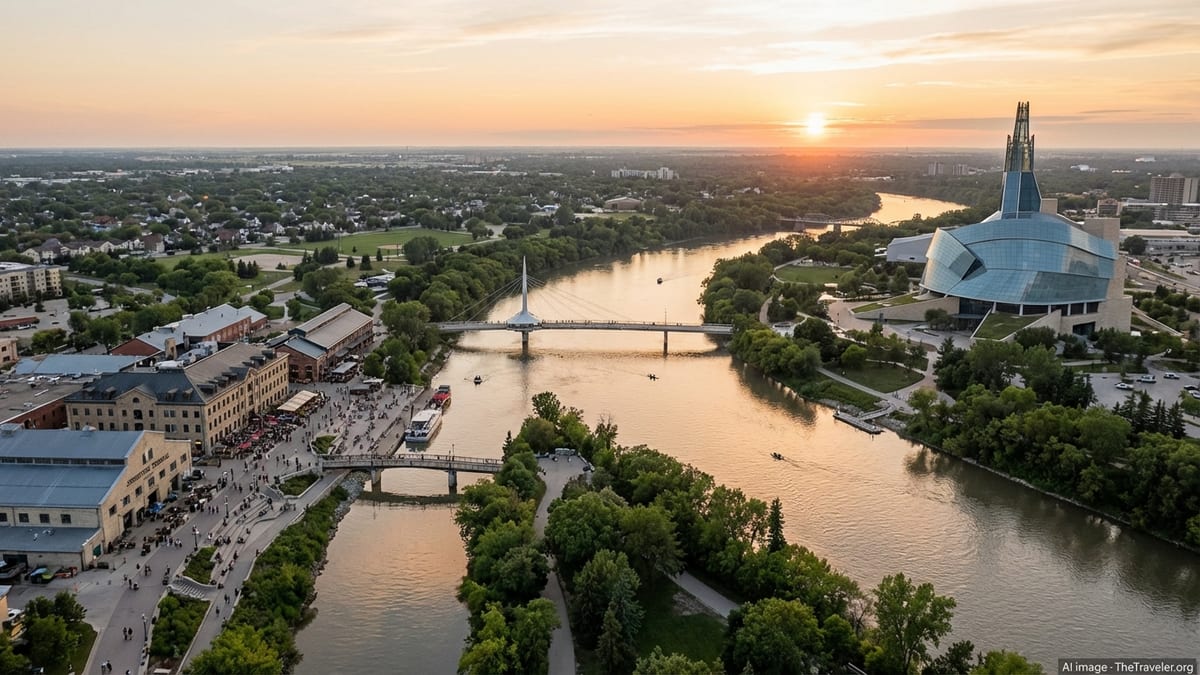
If Prairie Canada has a crossroads, it is The Forks in downtown Winnipeg, where the Red and Assiniboine rivers meet. For thousands of years this has been a gathering place for Indigenous peoples, and today it is the city’s most visitor-friendly hub, with food halls, riverfront walks, and cultural spaces that connect past and present.
The Forks Market and riverfront walks
The Forks Market is the natural starting point for most travelers. Housed in former railway buildings, the market brings together local chefs, coffee roasters, brewers, and makers under one roof. It is an easy place to sample Manitoba-grown ingredients, from bison and pickerel to farm vegetables and creative pastries, while listening to buskers or watching the flow of people from across the city.
Step outside and you are on a network of riverfront paths that make it clear why this confluence has mattered for millennia. In summer, kayaks and water taxis move along the rivers and patios fill with people enjoying the long prairie evenings. Interpretive signs point out archaeological findings and explain how Indigenous communities, fur traders, and settlers all used this site in different eras.
Seasonal activities in every kind of weather
Because Winnipeg fully embraces its four seasons, The Forks offers a changing calendar of things to do that fits neatly into a road trip at almost any time of year. In winter, portions of the rivers often transform into one of the world’s longest natural skating trails, with warming huts designed by architects and artists lining the ice. On very cold days, travelers can simply stick to the indoor market and adjacent attractions, which are connected by short, walkable routes.
Spring and fall tend to be quieter but atmospheric, with migrating birds on the river and cooler weather that suits walking tours. Summer brings outdoor concerts, pop-up events, and frequent festivals, so it is common to stumble across live music or public art without planning ahead. For road trippers wary of winter conditions on the highways, a shoulder-season stop at The Forks still delivers a strong sense of Winnipeg’s character.
2. The Canadian Museum for Human Rights
Few travelers expect to find one of Canada’s most distinctive national museums rising above the rivers in the middle of the prairies. The Canadian Museum for Human Rights, located beside The Forks, is reason enough for many visitors to schedule at least a full day in Winnipeg. Its architecture, exhibits, and stories create a thoughtful counterpoint to the scenic drives that define many Prairie Canada trips.
Striking architecture with prairie views
The museum’s glass and stone design stands out immediately, with its tower visible as you approach downtown by car or on foot. Inside, a series of ramps and galleries gradually lead visitors upward toward a panoramic observation level. Along the way, large windows frame views of the Red River, The Forks, and the skyline, reminding visitors that the subject of human rights is firmly tied to real communities and landscapes.
Even travelers who are not typically drawn to museums often find themselves lingering here. The interplay of natural light, textured materials, and open spaces creates a calm environment that softens the emotional weight of the content without diminishing its impact.
Exhibits that connect global issues to Canadian stories
The Canadian Museum for Human Rights focuses on stories rather than artifacts, using interactive displays, personal testimonies, and multimedia installations to explore both historic injustices and contemporary movements. Exhibits address subjects such as Indigenous rights, the Holocaust, genocides, disability rights, gender equality, and freedom of expression, often through the voices of people directly affected.
For international visitors driving across the prairies, this context can be invaluable. It offers a deeper understanding of Indigenous treaties, residential schools, and current efforts at reconciliation, which in turn helps make sense of the land acknowledgments and signage travelers will see throughout Manitoba and neighboring provinces. The museum also highlights local activism, making it clear that Winnipeg is more than a convenient overnight stop.
3. Distinctive Neighbourhoods and Architecture
Winnipeg’s position as a historic rail and trading hub has left it with an unusually rich urban fabric for a prairie city. Travelers often find that exploring a few neighbourhoods on foot or by bike adds welcome texture to a road trip that might otherwise be dominated by highways and open fields.
The Exchange District: warehouses turned creative hub
Just north of downtown, the Exchange District is a National Historic Site known for its early twentieth-century warehouse buildings. Once bustling with grain traders and wholesalers, these brick and terracotta structures now house design studios, independent boutiques, small galleries, and restaurants. Cobblestone lanes and narrow side streets make it one of the most photogenic areas of the city.
Visitors who time their trip for summer may catch outdoor events, patio culture, or evening performances in and around Old Market Square. Even in colder months, the area’s cafes and bars give road trippers a place to warm up between walks, while heritage plaques and guided tours help explain how Winnipeg’s boom years shaped the entire Canadian West.
St. Boniface and the French heart of the prairies
Across the Red River from downtown, St. Boniface introduces travelers to the largest Francophone community in Western Canada. Crossing the Esplanade Riel pedestrian bridge, with its distinctive cable-stayed design, feels like entering a different city, complete with French-language signage, bakeries, and cultural institutions.
The partially ruined façade of Saint Boniface Cathedral is one of Winnipeg’s most memorable landmarks and a popular photo stop. Nearby, smaller streets lined with cafes and shops invite aimless wandering. For Prairie Canada travelers who may not have time to include Quebec or New Brunswick in their plans, St. Boniface provides a compact but authentic glimpse of French Canadian culture on the plains.
Practical urban comforts on a winter road trip
For road trippers concerned about Winnipeg’s well-known winters, the city’s urban planning offers some relief. A system of downtown skywalks and tunnels connects multiple office towers, shops, and public spaces, making it possible to move around portions of the core while largely avoiding the coldest winds. This infrastructure, combined with reliable transit and plenty of indoor attractions, helps make Winnipeg a viable city stop even on mid-winter prairie drives.
4. Assiniboine Park, Zoo, and Prairie Nature
While the prairies are often imagined as entirely flat farmland, Winnipeg sits within reach of varied urban green spaces and nature experiences that soften long hours on the road. Assiniboine Park on the city’s west side and the adjoining Assiniboine Park Zoo form a major recreational corridor that appeals to families, photographers, and anyone craving trees and walking paths after highway driving.
Assiniboine Park: gardens, art, and open space
Assiniboine Park combines manicured areas and wilder pockets in a way that feels generous but still accessible to first-time visitors. Within a compact radius, travelers can stroll through formal gardens, discover sculptures tucked among trees, or spread out a picnic on open lawns. Seasonal programming, from outdoor theatre to informal festivals, ensures the park remains lively in warmer months.
Even without special events, the park is an inviting place to simply stretch your legs. Paved and unpaved paths suit both casual strolls and longer walks, and there are plenty of benches and viewpoints along the river. For travelers in campervans or rental cars, it can be a welcome break from downtown traffic and an easy place to reorient before continuing west or north.
Assiniboine Park Zoo and Arctic wildlife experiences
The adjacent Assiniboine Park Zoo is particularly noted for its focus on northern ecosystems. Its signature Arctic-themed exhibits give visitors a close-up view of polar bears, seals, and other cold-weather species in settings designed to highlight both their beauty and the environmental pressures they face. Educational signage and interpretive programs emphasize conservation, adding substance to what might otherwise be a quick photo stop.
Because the zoo operates year-round and includes indoor viewing spaces, it can fit into itineraries in any season. Families driving across the prairies often use it as a centerpiece for a full day in Winnipeg, breaking up long stretches of highway with an experience that appeals to children and adults alike.
Beyond the park: wetlands and migratory birds
Travelers with a bit more time can branch out to nearby nature reserves and wetlands on the edge of the city. These sites, some set along major migratory bird routes, reveal a different side of the prairies than the cropped fields visible from the Trans-Canada Highway. Boardwalks, bird hides, and short interpretive trails make it possible to get a sense of the region’s ecological richness without a long detour.
Combined with Assiniboine Park, these natural spaces help Winnipeg feel like more than just another urban stop. They offer the kind of quiet, small-scale encounters with landscape and wildlife that many people seek from a Prairie Canada journey.
5. Festivals, Food, and Year-Round Culture
Unlike some prairie towns that feel seasonal, Winnipeg maintains a lively cultural calendar in every month, anchored by long-running festivals and a food scene that punches above its weight. This energy gives travelers flexible reasons to linger, whatever the time of year their road trip passes through.
Winter festivals that celebrate the cold
Far from hiding from the coldest months, Winnipeg leans into winter with large events that attract visitors from across the region. One of the best known is a February festival that celebrates French Canadian and Métis heritage with ice sculptures, traditional music, hearty food, and outdoor activities like snowshoeing and sledding. Centered largely in St. Boniface, it turns the frosty season into an asset rather than an obstacle.
Travelers willing to pack warm layers can find that a mid-winter stop in Winnipeg offers more atmosphere and local interaction than a quick pass-through in late spring. Bonfires, outdoor performances, and illuminated installations can make sub-zero evenings feel surprisingly convivial, and many events cater to families as well as adults.
Summer events, theatre, and multicultural celebrations
In summer, the city’s festival calendar shifts toward outdoor theatre, live music, and multicultural showcases. A major fringe theatre festival takes over venues in and around the Exchange District each July, bringing performers and audiences from across North America. For travelers who enjoy discovering small-scale productions and street performances, building a Winnipeg stop around these dates can be particularly rewarding.
August often brings an extensive multicultural festival that spreads across the city through dozens of community-run pavilions. Visitors sample foods, dance performances, and cultural displays representing the many communities that now call Winnipeg home, from long-established European groups to newer arrivals from Asia, Africa, and Latin America. For those driving across the prairies, it is an efficient and engaging way to glimpse the diversity that underpins modern Western Canada.
Local food, craft beer, and independent coffee
Winnipeg’s culinary scene reflects this diversity and has grown markedly in recent years. Travelers will find everything from Ukrainian comfort food and Filipino bakeries to contemporary Canadian tasting menus, often at prices lower than in larger cities. The Forks Market, the Exchange District, and residential neighbourhoods all support independent eateries that reward a bit of research and exploration.
Craft breweries and small-batch roasteries are scattered across the city, making it easy to turn an afternoon into an informal tasting tour. Many of these spaces double as community gathering points, with live music, trivia nights, or art events layered onto the basic appeal of good food and drink. For road trippers, this scene offers a welcome change of pace from chain restaurants and highway service plazas.
6. The Royal Canadian Mint and Surprising Attractions
One of the recurring themes for travelers in Winnipeg is surprise. Beyond the better-known downtown sites and parks, the city offers a range of attractions that feel distinctly different from what you might expect to find in a prairie capital. Chief among these is the Royal Canadian Mint facility, located a short drive from the city center.
Inside the Royal Canadian Mint’s Winnipeg facility
The Winnipeg branch of the Royal Canadian Mint is responsible for producing every Canadian circulation coin and also manufactures coins for numerous other countries. Visitors can join guided tours that look down over the production floor, with staff explaining how designs move from concept to millions of coins in pockets around the world. Displays highlight notable commemorative coins and explain the technological and security features built into modern currency.
For travelers driving the Trans-Canada Highway, the Mint’s location on the eastern edge of the city makes it a convenient first or last stop as they pass through. It is particularly popular with families and coin enthusiasts, but the scale of the operation and the global reach of the facility tend to impress even casual visitors.
Quirky and niche museums
Beyond national-level institutions, Winnipeg contains a number of smaller museums and interpretive centers that appeal to travelers with specific interests. These range from railway and aviation histories to cultural centers focused on particular communities or themes. Because many are run in partnership with local volunteers or organizations, they often provide a direct line into community stories that might otherwise be invisible to visitors.
For Prairie Canada road trippers who enjoy unplanned discoveries, allowing a bit of extra time in Winnipeg can lead to serendipitous stops at such places. They add variety to itineraries that might otherwise revolve solely around landscapes and large, well-publicized attractions.
7. A Practical and Cultural Gateway for Prairie Road Trips
Finally, Winnipeg earns its place on a Prairie Canada itinerary because of both its location and its role as a gateway between different regions. It sits close to the geographic center of North America, making it a logical pivot point whether you are driving between Ontario and Alberta, heading north toward Manitoba’s lake country, or looping south into the United States.
Easy connections for multi-province itineraries
Major highways radiate from Winnipeg toward Saskatchewan, northwestern Ontario, and the U.S. border, while regional roads lead to lake districts, small towns, and rural attractions. This connectivity allows travelers to build varied routes that might combine big prairie skies, boreal forests, and freshwater beaches in a single trip, with Winnipeg serving as a supply stop and cultural anchor.
The city’s airport also functions as a practical entry or exit point for those who do not wish to drive the entire distance from Eastern Canada or the United States. Some travelers choose to fly into Winnipeg, rent a car, and then complete a loop through the prairies that ends in another city, or vice versa. In each scenario, Winnipeg’s lodging options, from national chains to independent boutique hotels, provide a comfortable base.
An introduction to prairie history and contemporary life
Beyond logistics, Winnipeg offers context that enriches the rest of a Prairie Canada journey. Museums, public art, and community-led tours explain how the fur trade, railway expansion, immigration waves, and Indigenous treaties all converged here. That understanding makes it easier to read the landscapes, town layouts, and community names encountered later on the road.
Equally important, time in Winnipeg reveals the modern reality of prairie life: a mix of cultures, creative industries, and local initiatives that do not always fit the stereotypes of rural or resource-based economies. Travelers who begin or end their prairie loop here are more likely to leave with a nuanced picture of the region rather than a purely scenic one.
The Takeaway
Winnipeg rewards the curious traveler. It is a city where a national human rights museum rises over an ancient Indigenous meeting place, where French bakeries and Ukrainian churches stand on the same snowy streets, and where polar bears swim in carefully designed habitats only a short drive from grain elevators and open prairie. For those planning a Prairie Canada trip, the temptation can be to treat Winnipeg as a quick fuel stop between longer stretches of highway. Yet the more travelers slow down and explore, the clearer it becomes that this city holds many of the stories, flavors, and ideas that define the prairies today. Building even a couple of nights in Winnipeg into your itinerary can shift a straightforward road trip into something richer, more connected, and more memorable.
FAQ
Q1. How many days should I spend in Winnipeg on a Prairie Canada trip?
Most travelers find that two to three full days in Winnipeg allows enough time to explore The Forks, the Canadian Museum for Human Rights, a neighbourhood like the Exchange District or St. Boniface, and a visit to Assiniboine Park or the zoo. If you want to attend a festival or add several smaller museums and attractions, three to four days is more comfortable.
Q2. Is Winnipeg worth visiting in winter, or should I plan for summer only?
Winnipeg can be rewarding in any season, provided you pack appropriate clothing. Winter brings skating trails, outdoor festivals, and fewer crowds at major attractions, while summer offers patio culture, river activities, and a dense festival calendar. Travelers who dislike extreme cold may prefer late spring or early fall, but winter visits can feel especially memorable.
Q3. Do I need a car to explore Winnipeg, or can I rely on transit and walking?
Downtown Winnipeg, The Forks, and nearby neighbourhoods are walkable, and the city has a public transit system that connects major attractions, so it is possible to visit without a car. However, having a vehicle makes reaching places like the Royal Canadian Mint, certain nature reserves, and some outlying food districts easier, especially if you are already on a broader prairie road trip.
Q4. How does Winnipeg fit into a longer Prairie Canada driving route?
Winnipeg often serves as a central hub on routes linking Ontario, Saskatchewan, and Alberta. Many travelers use the city as a rest and resupply stop when driving the Trans-Canada Highway, then add one or two nights to experience The Forks, museums, and parks. Others structure their itinerary so Winnipeg becomes the start or end point of a loop that also includes lake regions to the north or U.S. border crossings to the south.
Q5. What are the can’t-miss attractions for first-time visitors?
For a first visit, most travelers prioritize The Forks, the Canadian Museum for Human Rights, the Exchange District, St. Boniface and the Esplanade Riel bridge, and Assiniboine Park or the zoo. Depending on interest and timing, the Royal Canadian Mint and a major festival or performance are also strong additions.
Q6. Are there good options for travelers interested in Indigenous history and culture?
Yes. The Forks includes interpretive material related to its role as a longstanding Indigenous gathering place, while the Canadian Museum for Human Rights and other local institutions highlight Indigenous rights and histories. Guided tours, public art, and community-led events also provide insight, especially during festivals or special programming.
Q7. Is Winnipeg a family-friendly stop on a cross-country drive?
Winnipeg works well for families, offering child-friendly highlights such as Assiniboine Park Zoo, playgrounds and open spaces in Assiniboine Park and The Forks, interactive exhibits at major museums, and engaging tours at the Royal Canadian Mint. Many attractions are close together, reducing transit time and making it easier to plan manageable days.
Q8. How expensive is Winnipeg compared with other Canadian cities?
In general, Winnipeg tends to be more affordable than larger Canadian cities like Vancouver or Toronto, particularly for accommodation and dining. Travelers can find a broad range of price points, from budget motels and family restaurants to boutique hotels and higher-end dining, making it relatively easy to align a Winnipeg stay with different budgets.
Q9. Are there safety considerations travelers should keep in mind?
Winnipeg is similar to other mid-sized North American cities in that it has busy, tourist-oriented areas as well as neighbourhoods where visitors should exercise greater caution, especially at night. Sticking to well-lit streets, securing valuables, and following local advice from hotel staff or visitor centers will help ensure a comfortable stay. Most major attractions are in areas that see regular foot traffic and event programming.
Q10. What is the best time of year to combine Winnipeg with other prairie destinations?
Late May through September is often the easiest period for combining Winnipeg with other prairie stops, thanks to long daylight hours, milder temperatures, and frequent festivals. That said, travelers seeking winter activities, northern lights farther north, or quieter roads may prefer a carefully planned cold-season trip, building Winnipeg into the route as a cultural and logistical anchor.