

Mexico’s great cities make perfect bases for day trips, with pre‑Hispanic ruins, colonial towns, agave valleys and coral reefs all within easy reach. Whether you are tracing ancient pyramids outside Mexico City or sailing to an island off the Yucatán coast, these nine scenic excursions showcase the country’s astonishing variety of landscapes and cultures, all doable in a single, memorable day.
From Mexico City: Teotihuacan’s Pyramids and Highland Views
Just outside the capital, the archaeological zone of Teotihuacan rises from the highland plateau in a sweep of stone pyramids and broad ceremonial avenues. The scale of the site is striking, with the Pyramids of the Sun and Moon dominating a fertile valley framed by distant volcanoes. Early morning or late afternoon visits are especially atmospheric, as softer light emphasizes weathered stone and long shadows fall across the Avenue of the Dead.
Most visitors base themselves in Mexico City and travel to Teotihuacan by guided tour or public bus, making it one of the easiest and most popular day trips from the metropolis. At the site, you can wander through plazas, palace complexes and residential compounds decorated with murals, gaining an impression of how life might have unfolded in this influential pre‑Hispanic city. Nearby viewpoints, craft markets and small eateries that serve barbacoa and pulque round out a full day in the highlands.
Those looking to add a different perspective sometimes book sunrise hot‑air balloon flights over Teotihuacan. On clear mornings, the balloons drift above the pyramids and surrounding countryside, revealing the site’s geometric layout against a patchwork of fields. Whether you explore on foot or by air, this excursion pairs well with a stay in Mexico City thanks to its relatively short travel time and reliable year‑round access.
From Mexico City: Volcano Landscapes and Forests Around Puebla
Another rewarding escape from Mexico City leads southeast to the historic city of Puebla and the volcano‑studded landscapes around it. The journey traverses mountain passes with intermittent views of Popocatépetl and Iztaccíhuatl, two of Mexico’s most emblematic peaks. On clear days, snow‑flecked summits and pine forests provide a dramatic backdrop long before you reach Puebla’s baroque churches and tiled facades.
Many day‑trippers divide their time between Puebla’s historic center and the neighboring town of Cholula, famous for its massive buried pyramid crowned by a golden‑domed church. Walking through Cholula’s streets, visitors can see the volcanoes rise beyond church towers and plazas, a reminder of the region’s deep connection to the surrounding landscape. Markets in both Puebla and Cholula showcase regional specialties, from mole poblano to hand‑painted Talavera ceramics.
Travellers with an interest in outdoor scenery sometimes focus more on the mountain environment, arranging brief hikes or scenic stops at viewpoints in the national park between the volcanoes. Weather in this high‑altitude corridor can change quickly, so layers and contingency plans are essential. Combined with Puebla’s cultural attractions and culinary depth, the surrounding forests and peaks make this one of central Mexico’s most scenic day‑trip circuits.
From Guadalajara: Agave Fields and Distilleries in Tequila Country
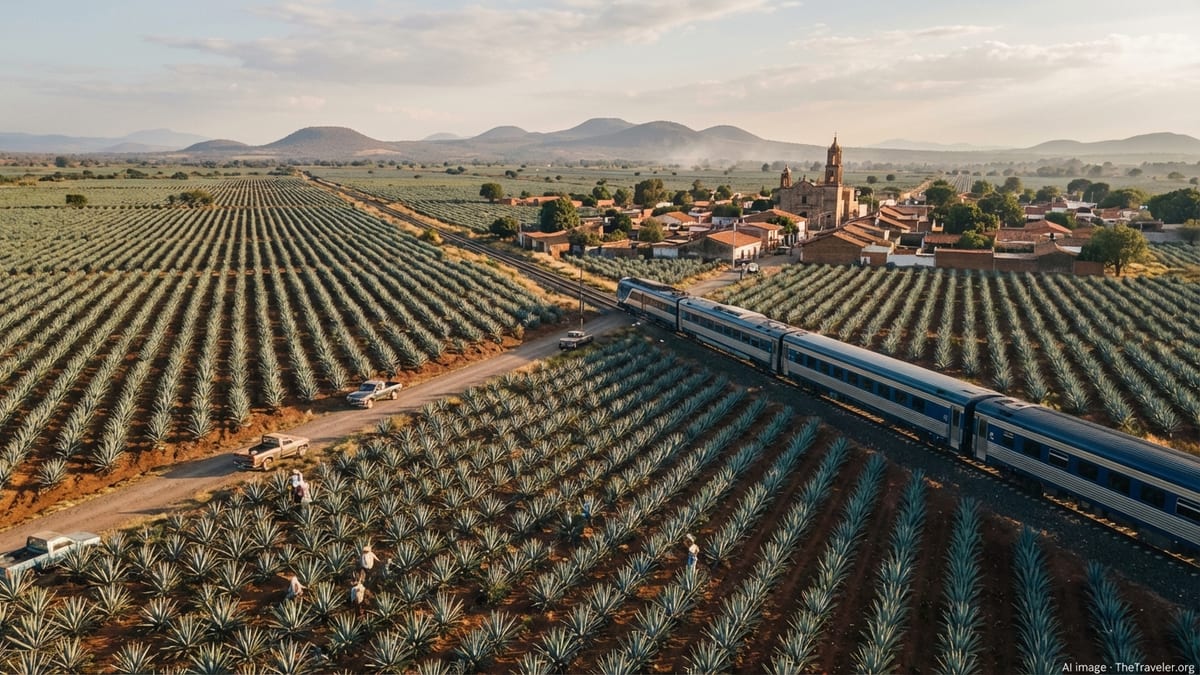
West of Guadalajara, blue agave fields ripple across volcanic slopes on the approach to the town of Tequila, a region recognized on UNESCO’s World Heritage list for both its landscape and its distilling traditions. Neatly planted rows of agave stretch toward low mountains, their spiky blue‑green leaves catching the light at sunrise and sunset. This is one of Mexico’s most distinctive rural vistas, and it lies within straightforward reach of the country’s second‑largest city.
Visitors typically tour working distilleries to see how harvested agave hearts are cooked, crushed, fermented and distilled into the spirit that bears the town’s name. Many producers open their grounds for guided tastings and walks through historic facilities, where old stone ovens, copper stills and barrel rooms convey the craft behind each bottle. Between visits, the surrounding countryside invites slow travel, whether by road, traditional excursion trains or private transfers that pause at viewpoints over the agave valley.
Beyond its famous drink, the town of Tequila itself offers cobbled streets, a central plaza and small museums that explore local history. From shaded benches, visitors can look back toward the agave‑covered foothills and volcanic silhouettes that frame the settlement. With its combination of scenic agriculture, industrial heritage and relaxed small‑town atmosphere, Tequila country is an appealing counterpoint to urban Guadalajara, all within a manageable day’s outing.
From Guadalajara: Lakeside Life in Chapala and Ajijic
South of Guadalajara, Lake Chapala spreads out beneath a rim of low mountains, creating one of western Mexico’s classic waterside retreats. The drive from the city leads through rolling highlands before descending toward the lakeshore, where palm‑lined promenades, piers and small fishing boats set a gentler pace. Towns such as Chapala and Ajijic have long welcomed visitors with a mix of traditional plazas and international influences.
In Chapala, the malecón runs along the water’s edge, offering views of changing cloudscapes reflected on the lake’s surface. Families stroll in the late afternoon, stopping for ice creams and snacks from vendors under the trees. Ajijic, slightly farther along the shore, has become known for its colorful murals, narrow streets and galleries, all framed by mountain ridges that glow at sunset.
Day‑trippers often split their time between lakeside walks, casual restaurants that serve fresh seafood and brief excursions into the nearby hills for broader views of the shoreline. While Lake Chapala has experienced fluctuating water levels and environmental pressures over the years, it remains one of the region’s defining landscapes. For visitors based in Guadalajara, a day by the lake offers cooler breezes and a smaller‑scale setting without demanding complex logistics.
From Monterrey: Canyons, Cliffs and Waterfalls in the Sierra Madre
Monterrey is ringed by the rugged peaks of the Sierra Madre Oriental, giving the city immediate access to some of northern Mexico’s most dramatic scenery. Short drives lead to deep limestone canyons where sheer walls rise above riverbeds, and to viewpoints where the urban skyline appears small against a serrated mountain horizon. These landscapes are particularly appealing for travellers seeking hiking, rock climbing or simply a cooler escape from city streets.
One of the most accessible outings is to Cola de Caballo, a celebrated waterfall located roughly an hour from Monterrey. The falls drop in a white curtain into a forested ravine, and maintained paths and lookouts make it suitable for a wide range of visitors. Nearby, small stalls and eateries serve regional snacks, while trails and viewpoints allow those with more time to explore the surrounding hills in greater depth.
Closer to the city, protected areas such as La Huasteca and the slopes around Cerro de la Silla offer networks of hiking and climbing routes amid high cliffs and distinctive rock formations. Weather conditions and trail difficulty vary, so first‑time visitors often join local guides or organized excursions that prioritize safety. With thoughtful planning and up‑to‑date information on conditions, Monterrey’s mountainous backyard rewards travellers with powerful views and a strong sense of northern Mexico’s wild character.
From Cancún: Isla Mujeres and the Caribbean Sea
Off the coast from Cancún, Isla Mujeres stretches as a narrow island whose rocky shorelines and calm bays showcase the Caribbean at a more relaxed pace. Regular passenger boats connect the city’s hotel zone and downtown piers with the island, making it an exceptionally simple day trip for visitors who want a change of atmosphere without a long journey. As you approach, turquoise shallows and white sand beaches come into view, framed by low‑rise buildings painted in bright hues.
The island’s northern beaches are known for shallow, clear water and soft sand, ideal for swimming and gentle snorkeling. Farther south, rocky promontories and lighthouses face open sea swells, giving a sense of the broader coastline and the barrier reef that runs offshore. Golf carts and bicycles are popular ways to circle the island, allowing frequent stops at overlooks, small coves and informal beach clubs.
Marine excursions from Isla Mujeres typically focus on snorkeling over sections of reef or visiting nearby areas where sea turtles and colorful fish are commonly observed. Water visibility and sea conditions change with the seasons, so operators adapt routes to the day’s forecast. At sunset, many visitors return to Cancún by boat with wide views of the city skyline catching the last light, a reminder of how close this Caribbean retreat lies to one of Mexico’s busiest resort hubs.
From Cancún and Playa del Carmen: Cenotes and Jungle Near Valladolid
Inland from the Riviera Maya, the colonial city of Valladolid and the surrounding countryside offer a different side of the Yucatán Peninsula. Here, low jungle stretches across flat limestone terrain perforated by cenotes, the natural sinkholes that form clear, cool pools. The drive from Cancún or Playa del Carmen crosses this karst landscape before arriving at Valladolid’s pastel‑colored streets and central square.
Many travelers combine a stroll through Valladolid’s historic center with visits to nearby cenotes. Some are open to the sky, encircled by vertical rock walls draped in tree roots, while others are partly enclosed in caverns where shafts of light penetrate from above. Wooden stairways and platforms lead down to the water at most managed sites, and basic facilities usually make them accessible to day visitors.
Because cenotes are part of an interconnected aquifer system, they are both geological curiosities and important water sources, and local communities often play a key role in their stewardship. Respecting posted guidelines, using reef‑safe sunscreen or swimming without it, and avoiding touching rock formations all help preserve these fragile environments. When combined with Valladolid’s churches, small museums and regional cuisine, a cenote‑focused day trip offers a quieter counterpoint to the busier beaches of the Caribbean coast.
The Takeaway
From agave valleys and volcanic skylines to Caribbean reefs and mountain waterfalls, Mexico’s major cities are surrounded by landscapes that can transform a trip in a single day. Using hubs such as Mexico City, Guadalajara, Monterrey and Cancún as starting points, travellers can reach pre‑Hispanic sites, lakeside promenades, canyon trails and island beaches without relocating their base.
Planning around travel times, local weather patterns and seasonal conditions is essential, as is checking the latest safety and transport guidance before setting out. When approached thoughtfully, these excursions reveal how closely urban life in Mexico is intertwined with nearby natural and cultural landmarks. A well‑chosen day trip can add an entirely new dimension to a city stay, turning a short escape into one of the most enduring memories of a journey.
FAQ
Q1. Are these day trips suitable for first‑time visitors to Mexico?
Yes, most of these excursions are popular, well‑established routes often used by first‑time visitors, especially when booked through reputable operators or arranged with guidance from local hotels or tourism offices.
Q2. Is it better to join a tour or travel independently on these routes?
It depends on your comfort level and language skills. Many sites are reachable by public transport or rental car, but organized tours can simplify logistics, especially for non‑Spanish speakers or on routes with limited services.
Q3. How far in advance should I book popular excursions like Teotihuacan or Isla Mujeres?
For peak seasons such as major holidays and winter months, booking several days to a few weeks in advance is prudent. Outside busy periods, many tours and boat transfers can be arranged closer to the travel date.
Q4. What should I pack for highland and volcano‑area day trips?
Expect cooler temperatures and rapid weather changes. Layered clothing, a light waterproof jacket, sturdy walking shoes, sun protection and sufficient water are important for comfort and safety.
Q5. Are cenote and reef excursions suitable for children and less confident swimmers?
Many cenotes and shallow reef sites welcome families and provide life jackets. Conditions and depth vary, so it is wise to choose operators and locations that clearly describe safety measures and adapt to different ability levels.
Q6. How can I minimize my environmental impact on these trips?
Follow local guidelines, avoid single‑use plastics where possible, choose reef‑safe sunscreen or protective clothing, stay on marked trails and support operators and communities that prioritize conservation.
Q7. What is the best time of year for day trips from Cancún and Playa del Carmen?
Dry season months typically offer calmer seas and more predictable weather, though conditions can still vary. Late summer and early autumn may bring higher humidity and a greater chance of storms or rough water.
Q8. Do I need to rent a car to visit Lake Chapala or Tequila from Guadalajara?
Not necessarily. While a car offers flexibility, frequent buses, shared transport and organized day tours connect Guadalajara with both Lake Chapala and the Tequila region, allowing visitors to avoid driving.
Q9. Are the mountain and canyon areas around Monterrey appropriate for beginners?
Certain trails and viewpoints are accessible to beginners, but others involve more demanding terrain. Choosing routes matched to your experience and, when in doubt, hiring local guides improves safety and enjoyment.
Q10. How can I stay informed about current safety conditions for these day trips?
Check recent travel advisories from your home government, consult local tourism offices or accommodation providers, and stay updated through reliable news outlets for any changes affecting specific routes or regions.