

Framed by windswept dunes, crescent bays and quiet cedar forests, Lake Huron’s 3,800-mile shoreline is one of North America’s most rewarding freshwater coasts to explore. Stretching between Michigan and Ontario, the lake’s eastern Great Lakes location brings clear, often turquoise water, pockets of warm, shallow bays and a string of coastal parks where you can swim, hike, paddle and camp within sight of the horizon. From Ontario’s Bruce Peninsula to Michigan’s remote dark-sky preserves, here are 11 of the best things to do around Lake Huron, with a focus on beaches and coastal parks that make the most of this inland sea.
Explore the cliffs and coves of Bruce Peninsula National Park
On the Ontario side of Lake Huron, Bruce Peninsula National Park protects a dramatic stretch of the Niagara Escarpment where limestone cliffs plunge into the glassy waters of Georgian Bay. The park is known for its rugged hiking, rare plants and deep cultural connections for the Saugeen Ojibway Nation, whose traditional territory includes the peninsula. Trails wind through cedar forests to lookouts that feel more like the Adriatic than inland Canada, with the lake shifting from cobalt to pale turquoise in the shallows.
The Grotto, a shoreline cave carved into the escarpment, is one of the park’s signature sights. Reached via the Bruce Trail and other side paths, it opens toward a pool of astonishingly clear blue water. The park manages visitor numbers carefully, especially in summer, and pre-booked parking is often required, so it is worth checking reservation systems and seasonal notices before you go. If you prefer quieter experiences, shoulder seasons in late spring and early fall can still deliver blue-sky days with fewer crowds.
Beyond the famous viewpoints, Bruce Peninsula National Park rewards slower exploration. Inland trails pass through orchid-rich fens and mixed forests, and backcountry campsites along the Georgian Bay coast allow multi-day hikes with constant lake views. At night, minimal development and relatively dark skies create excellent stargazing conditions, particularly outside the peak summer holidays.
Swim and stroll at Pinery and other Lake Huron dune parks
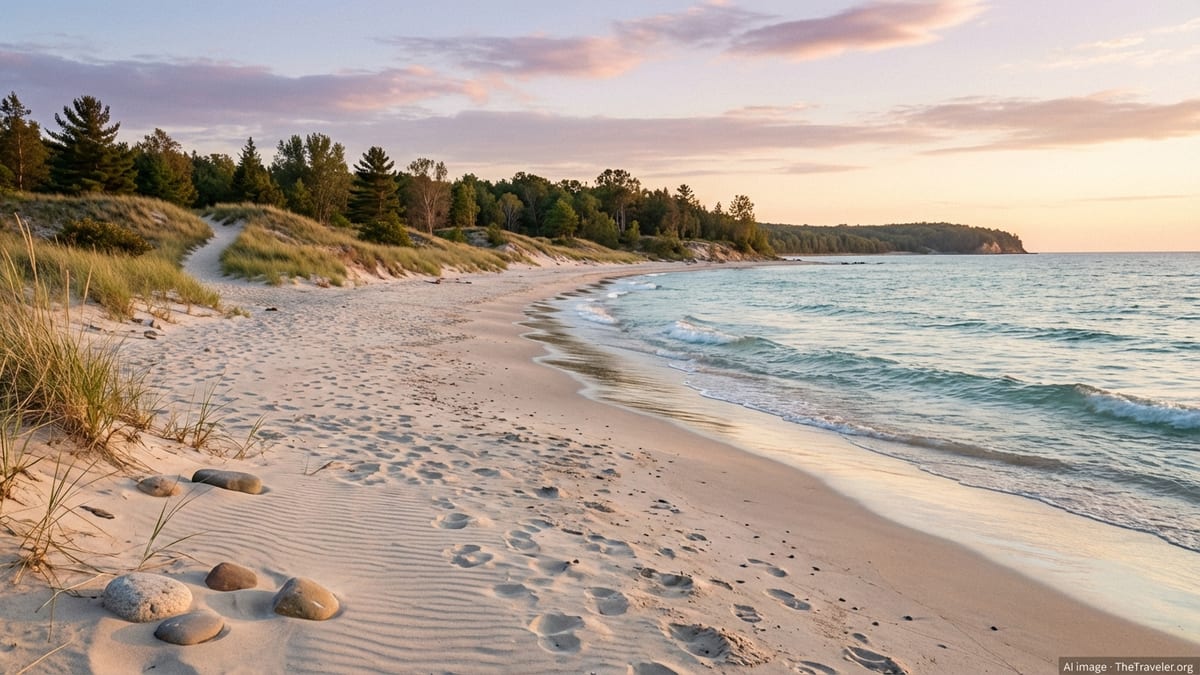
South along Ontario’s Lake Huron shoreline, a string of provincial parks showcases some of the best beaches in the region. Pinery Provincial Park, near Grand Bend, protects rare oak savanna, rolling dunes and a long ribbon of soft sand facing the open lake. The beaches here are famous for sunsets that paint the sky orange and pink far beyond the horizon, and for shallow nearshore waters that warm earlier in the season than much of the Great Lakes coast.
Pinery’s dunes are fragile and actively shifting, so boardwalks and signed access points help protect the sand and vegetation. Visitors can swim, paddle on the Old Ausable Channel, or cycle dedicated bike paths that wind through savanna and forest. Similar dune-backed beaches extend north and south of the park, offering a mix of busy resort towns and quieter stretches where you might share the shoreline with only a few walkers and shorebirds.
Whether you choose Pinery or smaller coastal parks, pay close attention to local conditions before swimming. Water temperatures in Lake Huron can shift quickly with wind events that move surface water offshore, and currents can develop near river mouths or piers. Most managed beaches post daily information on swimming conditions in summer, and many offer marked zones and seasonal lifeguards during peak periods.
Discover undeveloped shorelines in Michigan’s Lake Huron Coastal Preserve
On the Michigan side, the Lake Huron Coastal Preserve in Iosco County offers a very different atmosphere from resort towns and campgrounds. Established in 2020 and now owned by Alabaster Township, the 145-acre preserve protects nearly a mile of natural shoreline along with mature hardwood forest and forested wetlands. Managed in cooperation with the conservation group Huron Pines, it is geared toward low-impact recreation as well as habitat protection for migratory birds and coastal wildlife.
A small parking area near the intersection of US-23 and Dyer Road serves as the main trailhead. From there a network of unpaved paths leads through mixed forest to the lake, where natural beaches and cobble shoreline replace beach umbrellas and concessions. Birders visit during migration seasons, when the preserve’s location along a busy flyway makes it a useful stopover for songbirds and waterfowl moving between breeding and wintering grounds.
Bicycles are allowed on the adjacent paved Alabaster Bike Path but restricted from the preserve’s unpaved trails, helping to maintain a quiet, low-erosion environment. The lack of development means visitors should arrive prepared with water, sturdy footwear and a leave-no-trace mindset. In return, you get one of the more tranquil Lake Huron experiences, particularly at sunrise when the forest is alive with birdsong and the lake is often glassy calm.
Kayak, dive and cruise the shipwrecks of Thunder Bay National Marine Sanctuary
East of Alpena, Thunder Bay National Marine Sanctuary protects more than 4,000 square miles of Lake Huron, safeguarding an estimated 100-plus shipwrecks that span nearly two centuries of Great Lakes history. The sanctuary was established in 2000 and expanded significantly in 2014, creating a vast underwater museum of wooden schooners, steamers and steel freighters resting on the lakebed in varying depths. Many of these wrecks are remarkably well preserved in the cold, fresh water.
For divers, Thunder Bay is a bucket-list destination with charter operators offering guided trips to sites suited to everyone from novice divers to those with advanced technical training. But you do not have to dive to experience the sanctuary. In and around Alpena, glass-bottom boat tours, guided kayaking routes and heritage-themed cruises reveal shallow wrecks and navigation markers while interpreters share stories of maritime trade, storms and rescues on Lake Huron.
On land, the Great Lakes Maritime Heritage Center in Alpena functions as the visitor hub for the sanctuary. Exhibits outline the evolution of Great Lakes shipping, the science of underwater archaeology and ongoing conservation efforts. Families can combine a museum visit with a short walk along the Thunder Bay Riverfront, where outdoor exhibits and viewing platforms connect the working waterfront with the protected waters offshore.
Camp and stargaze in dark-sky Lake Huron state parks
Several of Michigan’s Lake Huron state parks are prized not only for their beaches but also for their night skies. Thompson’s Harbor State Park, north of Alpena, is a largely undeveloped, 5,000-plus-acre protected area with more than seven miles of shoreline. The park was designated a dark-sky preserve by the state in 2016, recognizing its value for stargazing and its relatively low levels of artificial light. Visitors hike or ski a modest trail network, stay in rustic cabins and walk cobble and sand beaches where the Milky Way often stretches overhead on clear nights.
Just to the south, Negwegon State Park offers a similar sense of remoteness. Spread across more than 4,000 acres on the southern tip of Thunder Bay, the park includes long sand beaches, low dunes, meadows and pine forest. With no major facilities and limited signage, it rewards prepared visitors looking for solitude rather than amenities. Hiking trails lead to the shoreline, where you can walk for long stretches with only the sound of waves and wind in the grasses.
Even in more developed coastal parks, Lake Huron’s eastern exposure and relatively low light pollution compared with southern Great Lakes shorelines make for excellent night-sky viewing. On clear, moonless nights, look for constellations arching over the water, bright planets reflected on the lake surface and, during peak periods, meteor showers streaking across the horizon. Always check park opening hours and any nighttime access rules before planning late-evening visits.
Enjoy beaches, birding and lighthouses from Harrisville to Tawas Point
Between Alpena and the Saginaw Bay region, a cluster of accessible state parks pairs sandy beaches with historic lighthouses and rich birdlife. Harrisville State Park, one of Michigan’s older state parks, offers a mile-long sandy beach backed by forest and a campground that keeps you within easy walking distance of Lake Huron. Birders know it as a stopping point for migratory songbirds, particularly warblers, that funnel along the coastline during spring and fall.
North of Harrisville, Sturgeon Point State Park protects the grounds around Sturgeon Point Light, a historic lighthouse and museum complex. The park’s shallow, reef-fringed shoreline extends into Lake Huron for nearly a mile, creating an interesting landscape for paddlers and waders. The lighthouse itself, typically open seasonally, offers insight into 19th-century navigation and life along what was once a very busy shipping corridor.
Farther south, Tawas Point State Park sits on the end of a sand spit that forms Tawas Bay and has earned comparisons to Cape Cod thanks to its curved beaches and classic lighthouse. Shallow, warmer water and a sheltered bay make it especially family-friendly in summer, and the park is renowned as a bird-watching hotspot. Hundreds of species have been recorded in and around Tawas Point, and migration weekends in spring and fall often draw both dedicated birders and casual visitors looking to see flocks moving along the flyway.
Walk wild shorelines at Port Crescent and other sunrise-facing beaches
At the tip of Michigan’s “Thumb,” west of Port Austin, Port Crescent State Park curves along a three-mile stretch of Lake Huron shoreline with wide sandy beaches, dunes and a mix of forest and open habitat. The park has been steadily upgraded in recent years, with work on the campground and day-use facilities funded through state investment programs. Those upgrades have included modernized utilities, improved beach buildings and re-surfaced access roads designed to keep the park resilient under heavy use.
Port Crescent faces east, so early risers are rewarded with wide-open views of the sun climbing over Lake Huron. The park is also known among stargazers and night photographers for dark skies away from larger towns. Hiking trails and a paved pathway connect the campground with dune overlooks and sections of former townsite, where interpretive signs describe the lumber-era community that once stood here before being reclaimed by nature.
Across the broader Thumb and Saginaw Bay region, a series of public access sites, county parks and small towns offers additional sunrise-facing beaches. Many of these are less crowded than better-known Lake Michigan destinations, particularly on weekdays and outside peak holiday periods. Conditions can be breezy and cooler on windy days, but they also produce dramatic clouds and waves that show a wilder side of Lake Huron’s personality.
Pair Lake Huron beaches with heritage towns and coastal culture
One of the pleasures of exploring Lake Huron is the way low-key coastal towns and cultural sites link the beaches and parks. On both the Michigan and Ontario sides, historic downtowns sit just inland from the water, offering cafes, galleries and small museums where you can learn about Indigenous history, the fur trade, commercial fishing and the lumber and shipping booms that reshaped the region in the 19th and early 20th centuries.
Ports such as Alpena, Goderich, Bayfield, Kincardine and smaller Michigan harbor towns combine lakefront promenades with heritage streetscapes. Many celebrate the lake with summer festivals, waterfront concerts and evening gatherings timed around sunset. In several communities, lighthouses and range lights still guide traffic and now serve as focal points for walking tours and photo stops.
When planning a Lake Huron trip, consider mixing long days in the sand with time exploring these towns. Local visitor centers often share up-to-date information on beach conditions, wildlife sightings and seasonal closures or construction in nearby parks. They can also point you toward lesser-known access points, quiet picnic spots and viewpoints where you can watch freighters pass or storms roll across the lake.
The Takeaway
Lake Huron rarely shouts for attention, but its rewards are substantial for travelers willing to look beyond the most famous Great Lakes beaches. From the cliffs and coves of Bruce Peninsula National Park to the quiet trails of the Lake Huron Coastal Preserve and the shipwreck-laced waters of Thunder Bay, the lake’s shoreline offers a full spectrum of experiences. Some parks deliver family-friendly swimming and campgrounds within steps of the sand, while others prioritize solitude, dark skies and undeveloped shoreline where conservation comes first.
Because conditions, operating seasons and reservation systems change, a bit of advance planning is essential. Check park notices for construction updates, trail or beach closures and any new rules around parking or camping. Once you are on the ground, though, the pace slows quickly. Long horizons, steady waves and some of the most underrated sunsets and sunrises in the Great Lakes region provide the backdrop to days spent swimming, hiking, paddling or simply watching the light shift over the water.
Whether you approach from Michigan or Ontario, Lake Huron invites you to explore at human scale, following coastal parks, small towns and quiet inlets as they unfold along the shoreline. With thoughtful travel and a light footprint, you will find that this inland sea feels both expansive and deeply personal, a place you can return to over multiple seasons and still discover something new.
FAQ
Q1. When is the best time of year to visit Lake Huron’s beaches and coastal parks?
The main beach season typically runs from late June through August, when water temperatures are warmest and most services and campgrounds are fully operating. May, early June, September and early October can be excellent for hiking and quieter visits, though swimming can feel cooler and some facilities may have limited hours.
Q2. Is Lake Huron warm enough for swimming?
Lake Huron is a large, deep lake, so water warms more slowly than on small inland lakes. Shallow bays and sand spits such as Tawas Bay or parts of Ontario’s dune-backed beaches generally warm first. Sudden wind shifts can cause upwelling that temporarily cools the water, so it is wise to check local reports shortly before you swim.
Q3. Do I need reservations for parks like Bruce Peninsula National Park or busy state parks?
For popular areas such as Bruce Peninsula National Park and several Michigan state park campgrounds, reservations are strongly recommended in peak season. Some sites also use timed parking or day-use reservation systems for high-demand trailheads and beach areas to manage crowding.
Q4. Are there safety concerns when swimming or paddling on Lake Huron?
As with any large body of water, conditions can change quickly. Wind-driven waves, strong currents near river mouths or piers and cold water can pose risks. Check local advisories, heed flag systems or posted signs, wear life jackets when boating or paddling and be prepared to change plans if the lake looks rough.
Q5. Can I see the northern lights from Lake Huron’s shore?
Occasionally, strong geomagnetic storms produce auroras visible from Lake Huron, especially in darker, less developed areas. There is never a guarantee, but dark-sky preserves and remote state parks along the northeastern Michigan shoreline and sections of the Bruce Peninsula offer the best chances when space weather conditions are favorable.
Q6. What wildlife might I encounter in Lake Huron’s coastal parks?
Common sightings include white-tailed deer, foxes, a variety of songbirds and waterfowl, and in some areas black bears and coyotes. On the Ontario side, the Bruce Peninsula is known for rare plants and a diversity of reptiles and amphibians. Pack out food waste, store food securely in campgrounds and observe wildlife from a distance.
Q7. Are Lake Huron’s coastal parks suitable for families with young children?
Yes, many parks have gentle, shallow areas, marked swimming zones and nearby facilities like restrooms and picnic shelters. However, parents should always supervise children closely near the water and along bluffs or rocky shorelines, and choose beaches with conditions appropriate for their children’s swimming abilities.
Q8. How accessible are Lake Huron beaches and trails for visitors with limited mobility?
Accessibility varies by site. Larger parks and popular beaches increasingly offer accessible parking, paved paths, viewing platforms, beach wheelchairs or boardwalks over sand. More remote preserves tend to have uneven, natural-surface trails. Checking specific park accessibility information in advance can help you choose locations that match your needs.
Q9. Can I camp right on the beach along Lake Huron?
In most managed parks, camping is allowed only in designated campgrounds or backcountry sites, not directly on public swimming beaches. Some parks offer campsites with lake views or short walking access to the shore. Always follow local regulations on fires, quiet hours and campsite locations to protect fragile dune and shoreline environments.
Q10. What should I pack for a multi-day trip around Lake Huron’s coastal parks?
Pack layered clothing for variable temperatures, sturdy footwear, sun protection, insect repellent, a refillable water bottle, basic first-aid supplies and a weather-aware navigation app or map. For camping or paddling, bring gear suited to cool water, changing conditions and leave-no-trace camping practices so you can explore comfortably and responsibly.