

Eating your way across Mexico is one of the richest cultural experiences a traveler can have. From bustling street corners in Mexico City to quiet family-run fondas in small towns, traditional dishes reveal stories of migration, celebration, and everyday life. As you plan your trip, these eight quintessential Mexican foods will help you taste the country’s diversity one unforgettable plate at a time.
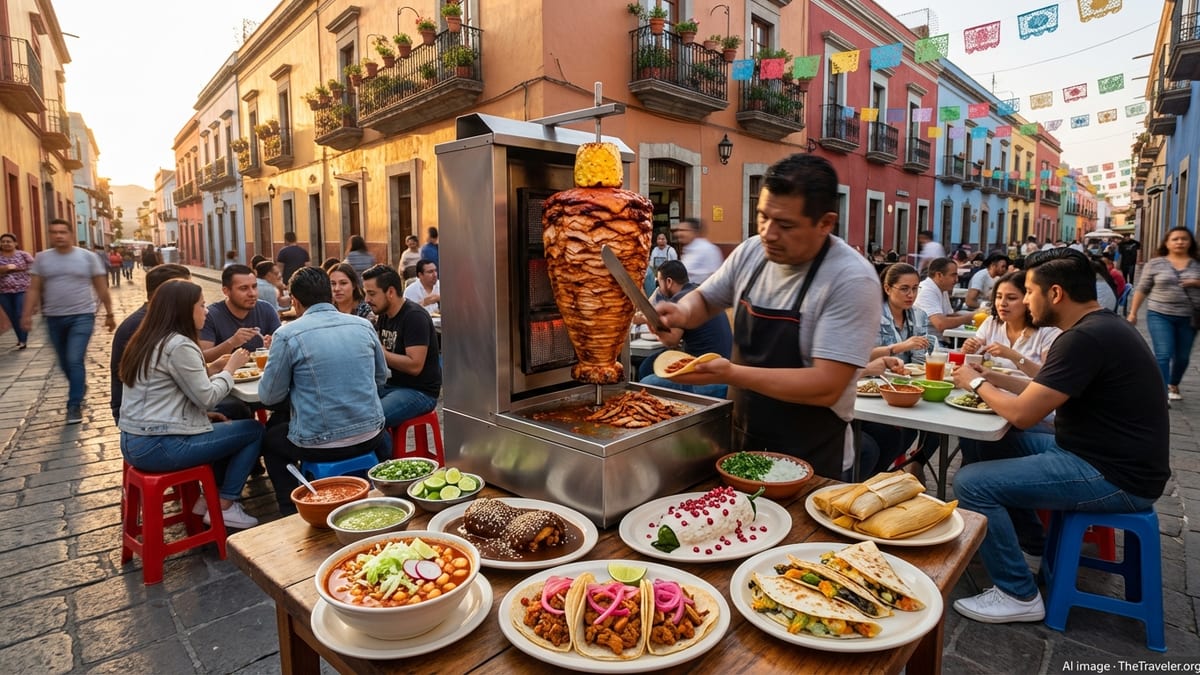
Tacos al Pastor: Mexico City’s Late-Night Classic
Few meals capture modern Mexican life better than a plate of tacos al pastor grabbed from a busy street stand. Inspired by Middle Eastern shawarma brought by Lebanese and Syrian immigrants in the early 20th century, the dish evolved into a Mexico City icon. Thin slices of marinated pork are layered onto a towering vertical spit called a trompo and slowly roasted until the edges turn crisp and caramelized.
The hallmark of al pastor is its deep brick-red color and smoky, slightly sweet flavor, thanks to a marinade of dried chiles, spices, and achiote, often brightened with pineapple juice. At the stand, the taquero shaves slivers of meat directly onto small corn tortillas, then finishes each taco with onion, cilantro, salsa, and a flick of juicy roasted pineapple from the top of the spit. The result is a perfect balance of rich pork, tangy fruit, and fresh herbs.
In major cities like Mexico City, Puebla, and Guadalajara, you will find al pastor stands operating from late afternoon until well past midnight, making this dish a favorite for an informal dinner or a late-night snack. For travelers, following the crowds is a reliable strategy: busy stands usually mean high turnover and freshly shaved meat. Start with two or three tacos, add a squeeze of lime, and do not be shy about sampling the different salsas laid out on the counter.
As you explore different regions, pay attention to small variations. Some places serve al pastor on flour tortillas, others offer it as quesadillas or gringas with melted Oaxaca cheese. These local twists all trace back to the same core idea: marinated pork on a spit, transformed into one of Mexico’s most beloved street foods.
Mole Poblano: Layers of History in a Single Sauce
Mole poblano is one of Mexico’s most emblematic dishes and a powerful expression of its blended Indigenous and European culinary heritage. Originating in Puebla, the sauce is built from a long list of ingredients, often including several types of dried chiles, nuts and seeds, spices, and a touch of chocolate. The exact recipe varies from family to family, but the goal is always the same: a complex, velvety sauce with layers of smoky, spicy, nutty, and slightly bittersweet flavors.
Traditionally, mole poblano is served over turkey or chicken, accompanied by rice and warm tortillas. The sauce itself can take hours to prepare, from toasting and grinding the chiles to slowly simmering everything together until the flavors harmonize. In many households it remains a dish reserved for special occasions, weddings, and religious festivals, which only adds to its cultural weight for visitors encountering it for the first time.
Travelers will find mole on menus across Mexico, but Puebla remains the spiritual home of this dish. In the city’s markets and traditional restaurants, you can compare different interpretations side by side. Some moles lean darker and more chocolate-forward, while others highlight the smoky heat of chiles or the richness of toasted seeds. It is worth ordering a full plate and eating slowly, paying attention to how the flavor evolves from the first bite to the last.
If you are new to mole, do not expect it to taste like a sweet chocolate sauce. The chocolate plays a supporting role, rounding out bitterness and spice rather than dominating them. A good mole poblano is about balance and depth, leaving a lingering warmth and a sense that you have just eaten something with centuries of history behind it.
Pozole: A Festive Hominy Stew With Ancient Roots
Pozole is a hearty hominy stew with pre-Hispanic origins that remains central to holidays and family gatherings across Mexico. Built around large kernels of nixtamalized corn, known as hominy, pozole is typically simmered for hours with pork or chicken until the broth turns rich and aromatic. While there are many local variations, the three classic styles are blanco, rojo, and verde, distinguished by their different chiles and seasonings.
In its most traditional form, pozole arrives at the table as a simple bowl of broth and hominy with tender meat. The magic happens when you customize it with garnishes. Cabbage or lettuce, sliced radishes, onion, dried oregano, chile flakes, and lime are all laid out so each person can build their own perfect bowl. For travelers, this interactive ritual is part of the fun, turning a single dish into a personalized experience.
September celebrations for Mexican Independence often feature pozole, and you will also see it served at Christmas, New Year gatherings, and birthdays. In cities such as Mexico City and Guadalajara, pozolerías specialize in this one dish, offering different broths and toppings. If you are visiting during cooler months or spending evenings at higher altitudes where the air turns crisp, a steaming bowl of pozole is both comfort food and cultural immersion.
When ordering, ask which style is most typical in the region you are visiting. In some areas, green pozole is enriched with tomatillos and herbs, while red versions use guajillo or ancho chiles for a deeper color and flavor. Whichever you choose, give yourself time to savor the tender hominy and the contrast between the warm broth and the fresh, crunchy toppings.
Cochinita Pibil: Yucatán’s Slow-Roasted Treasure
From the Yucatán Peninsula comes cochinita pibil, a slow-roasted pork dish that embodies the region’s Indigenous and colonial influences. Traditionally, pork is marinated with achiote paste and sour orange juice, seasoned with garlic and spices, then wrapped in banana leaves and cooked slowly in an underground pit oven known as a pib. This method yields exceptionally tender, aromatic meat infused with a subtle smokiness.
In modern restaurants and street stands, the cooking method may be adapted to ovens or covered pots, but the flavor profile remains distinctive. The achiote gives the meat an intense orange-red color and earthy taste, while the citrus-based marinade brings bright acidity. Cochinita pibil is commonly served shredded, tucked into soft corn tortillas or crusty rolls, and almost always garnished with vivid pickled red onions and fiery habanero salsa.
Travelers exploring Mérida, Valladolid, or coastal Yucatán towns will see cochinita pibil listed at breakfast as well as later meals, often selling out by midday. Local markets are excellent places to try it in its most everyday form, eaten at simple counters alongside residents starting their day. In more formal restaurants, you may find plated versions accompanied by rice, beans, and fresh salads.
If you are interested in the cultural context, consider seeking out a cooking class or market tour that explains the role of the pib oven and the Maya culinary traditions behind the dish. Even if you do not see the underground oven itself, knowing that cochinita pibil began as a dish prepared for important ceremonies and gatherings adds another layer of meaning to every bite.
Chiles en Nogada: A Seasonal Celebration on a Plate
Chiles en nogada is one of Mexico’s most visually striking dishes and a powerful symbol of national identity. Typically associated with Puebla, it consists of a roasted poblano chile stuffed with a savory-sweet picadillo mixture of ground meat, fruits, and spices. The chile is then cloaked in a creamy walnut sauce and finished with bright red pomegranate seeds and parsley, creating a tricolor presentation that echoes the Mexican flag.
This dish is closely tied to Mexican Independence celebrations and is traditionally eaten in late summer and early autumn when fresh walnuts and pomegranates are in season. For travelers visiting between August and September, spotting chiles en nogada on menus is a sign that you have arrived at a particularly festive moment in the culinary calendar. Restaurants often highlight their own family recipes, emphasizing the quality of the walnuts or the exact blend of fruits in the filling.
Chiles en nogada offers a flavor profile that may surprise first-time visitors. The picadillo balances savory and sweet through ingredients such as apple, pear, and dried fruits, while the walnut sauce is rich but delicate. The burst of pomegranate seeds at the end adds freshness and a touch of acidity. It is a dish best enjoyed slowly, ideally paired with a light drink that allows the nuanced flavors to shine.
Because it is seasonal and relatively labor-intensive, you are most likely to encounter chiles en nogada in central Mexico, especially in Puebla and Mexico City, rather than in more remote beach destinations. If your travels coincide with the season, it is worth going out of your way to try it at least once, as it offers a unique window into how history, agriculture, and national pride all converge on a single plate.
Tamales: Portable Comfort Across the Country
Tamales are among Mexico’s most widespread and adaptable traditional foods, enjoyed at breakfast, as an afternoon snack, or at late-night street corners. At their core, tamales are packets of corn masa filled with savory or sweet ingredients, wrapped in corn husks or banana leaves and steamed until firm yet tender. This simple format allows for tremendous regional variety, making tamales an ideal dish for travelers interested in local differences.
In central Mexico, you will commonly find corn-husk-wrapped tamales filled with red or green salsas, shredded meats, cheese, or beans, often sold alongside steaming atole, a hot corn-based drink. In Oaxaca and parts of the south, tamales may arrive in banana leaves, sometimes filled with complex moles or regional stews. Sweet versions, flavored with ingredients like raisins or pineapple, offer a gentle contrast to the spicy staples of everyday cooking.
Finding tamales is often a matter of listening and looking. In many neighborhoods, vendors walk or cycle through the streets early in the morning or in the evening, calling out that fresh tamales are ready. Markets and bus stations are reliable spots as well, especially on weekends or around holidays when families stock up for gatherings. For a quick, affordable, and filling meal on the move, few options are as authentically local as a hot tamal unwrapped at a plastic table or park bench.
As you travel, ask which tamal styles are most typical in the area. Yucatán, Oaxaca, and central Mexico each have distinct variations rooted in Indigenous traditions and local ingredients. Sampling several types across your trip will give you a practical lesson in how one basic preparation can evolve into dozens of regional specialties.
Enchiladas: Everyday Comfort With Endless Variations
Enchiladas showcase another side of Mexico’s culinary creativity, turning simple tortillas into a deeply satisfying main dish. At their most basic, enchiladas are corn tortillas lightly fried, filled with ingredients such as shredded chicken, cheese, or beans, then rolled and bathed in sauce. The sauces range from bright green tomatillo blends to deep red chile-based versions and, in some regions, rich moles that transform the dish into something celebratory.
Travelers will encounter countless regional styles. In central Mexico, enchiladas suizas feature a creamy green sauce and melted cheese, while in other areas you may find enchiladas rojas built on guajillo or ancho chiles. Street stands often serve simpler versions topped with fresh cheese, lettuce, and raw onion rings, offering a lighter option that still delivers plenty of flavor. The common thread is the interplay of soft tortillas, savory fillings, and a generous amount of sauce.
Enchiladas are especially popular at family-run fondas and market stalls, where they are often part of affordable daily menus. For visitors, these settings are an easy way to share space with local diners, watch plates assembled in front of you, and gain a sense of what an ordinary weekday lunch looks like. Because the dish can be adjusted in spice level and richness, enchiladas are also a good choice if you are easing into Mexican flavors or traveling with companions of varying spice tolerance.
When ordering, do not hesitate to ask how spicy a particular sauce is or whether a milder option is available. Many kitchens will happily adapt a dish slightly for travelers, and their recommendations may guide you toward the version they are proudest of. Over the course of a trip, sampling several types of enchiladas can become a personal tasting journey through the country’s sauces.
Quesadillas and Antojitos: Street-Side Snacks With Serious Flavor
Quesadillas and other antojitos, or little cravings, are central to Mexico’s street food culture and an accessible starting point for many travelers. A typical quesadilla consists of a folded tortilla, either corn or flour depending on the region, filled with cheese and often other ingredients like squash blossoms, huitlacoche (corn fungus), mushrooms, or chorizo. The filled tortilla is griddled until the cheese melts and the exterior crisps slightly, then served with salsas and sometimes cream.
Beyond quesadillas, the family of antojitos includes tostadas, sopes, tlacoyos, and tlayudas, among many others. These dishes often share a base of corn masa but vary in shape, thickness, and toppings. For example, tostadas are crisp, flat tortillas piled with beans, meat or seafood, lettuce, cheese, and salsa, while sopes are thicker rounds with raised edges that hold generous layers of beans, meats, and fresh vegetables. In markets and evening street stands, these snacks function as casual meals and social fuel.
For visitors, exploring antojitos is both culinary and cultural. Eating shoulder to shoulder at a crowded stand, watching tortillas pressed and cooked to order, and choosing from colorful arrays of salsas and garnishes provide insight into daily life in a way that polished restaurants sometimes cannot. It is also one of the most flexible ways to eat: you can try several small items, mix and match toppings, and adjust your order based on appetite and budget.
As you sample quesadillas and other antojitos, pay attention to regional differences in tortillas, cheeses, and fillings. In Mexico City, blue corn masa and fresh cheese might dominate, while in Oaxaca you could encounter giant tlayudas layered with beans, cabbage, and local tasajo. Each variation tells a story about local agriculture, migration, and taste preferences, making even a simple street snack an entry point into broader conversations about Mexico’s diversity.
The Takeaway
Mexico’s traditional foods are far more than a checklist of dishes to photograph and move on from. They are living expressions of history, geography, and community, shaped by Indigenous techniques, colonial influences, and generations of home cooks refining family recipes. From the late-night energy surrounding a tacos al pastor stand to the quiet formality of a carefully plated mole poblano, each meal offers a chance to understand the country a little more deeply.
As you travel, balance famous specialties with regional discoveries. Seek out bustling markets and modest fondas alongside well-known restaurants, and be open to trying both familiar-seeming dishes and new flavor combinations. Ask vendors about their ingredients, notice how locals customize their plates, and give yourself time to linger at the table. By approaching Mexico’s traditional foods with curiosity and respect, you will return not only with vivid memories and new favorites, but also with a fuller appreciation of how central food is to everyday life across the country.
FAQ
Q1. Are traditional Mexican dishes very spicy?
Spice levels vary widely by dish and region. Many traditional foods can be ordered milder, and heat is often adjusted with salsas added at the table rather than cooked directly into the dish.
Q2. What time of day is best for trying street food like tacos al pastor?
In many cities, tacos al pastor stands open in the late afternoon and stay busy into the night. Early evening is a good time, when meat is freshly sliced and crowds are lively but manageable.
Q3. Is it safe to eat street food in Mexico?
Conditions vary, but choosing busy stalls with high turnover, freshly prepared food, and good hygiene practices generally reduces risk. Many travelers enjoy street food without issues by being selective and observant.
Q4. Can I find vegetarian options among traditional dishes?
Yes. While many classics include meat, you will also find vegetarian tamales, cheese or vegetable quesadillas, bean sopes, and dishes built around corn, squash, and fresh cheeses. Asking vendors for meat-free fillings is common.
Q5. When is chile en nogada typically available?
Chile en nogada is usually a seasonal dish served from late summer into early autumn, especially around Mexican Independence celebrations in September, when walnuts and pomegranates are in season.
Q6. How can I recognize a good place to order pozole?
Look for pozolerías or market stalls filled with local diners, with large pots kept at a steady simmer and a wide selection of fresh garnishes. A short, focused menu is often a positive sign.
Q7. Are tamales eaten only during holidays?
Tamales are closely associated with celebrations, but they are also an everyday food. In many neighborhoods you will find vendors selling tamales for breakfast or in the evening throughout the week.
Q8. What is the difference between tacos al pastor and cochinita pibil tacos?
Tacos al pastor feature marinated pork cooked on a vertical spit and usually topped with pineapple, while cochinita pibil comes from Yucatán, where pork is marinated with achiote and citrus, slow-cooked, and served with pickled red onions.
Q9. Do I need to tip at small fondas and market stalls?
At sit-down fondas and market eateries, leaving a modest tip is customary if table service is provided. At quick counter-style stalls, it is less expected but still appreciated, especially for larger orders.
Q10. How can I avoid digestive issues when trying new foods?
Gradually introduce spicy or very rich dishes, stay hydrated, and favor places with good turnover and visible cleanliness. If you have a sensitive stomach, start with milder preparations and cooked foods rather than raw toppings.