

Arkansas rewards curious travelers with wild rivers, quiet Delta backroads, and some of the South’s most underrated small cities. It also surprises first timers who are not prepared for its distances, weather swings, and local regulations. Avoiding a few common missteps will help you focus on mountains, music, and meals instead of mishaps. Here are ten mistakes visitors often make in Arkansas and how to sidestep them.
Ignoring How Big and Rural Arkansas Really Is
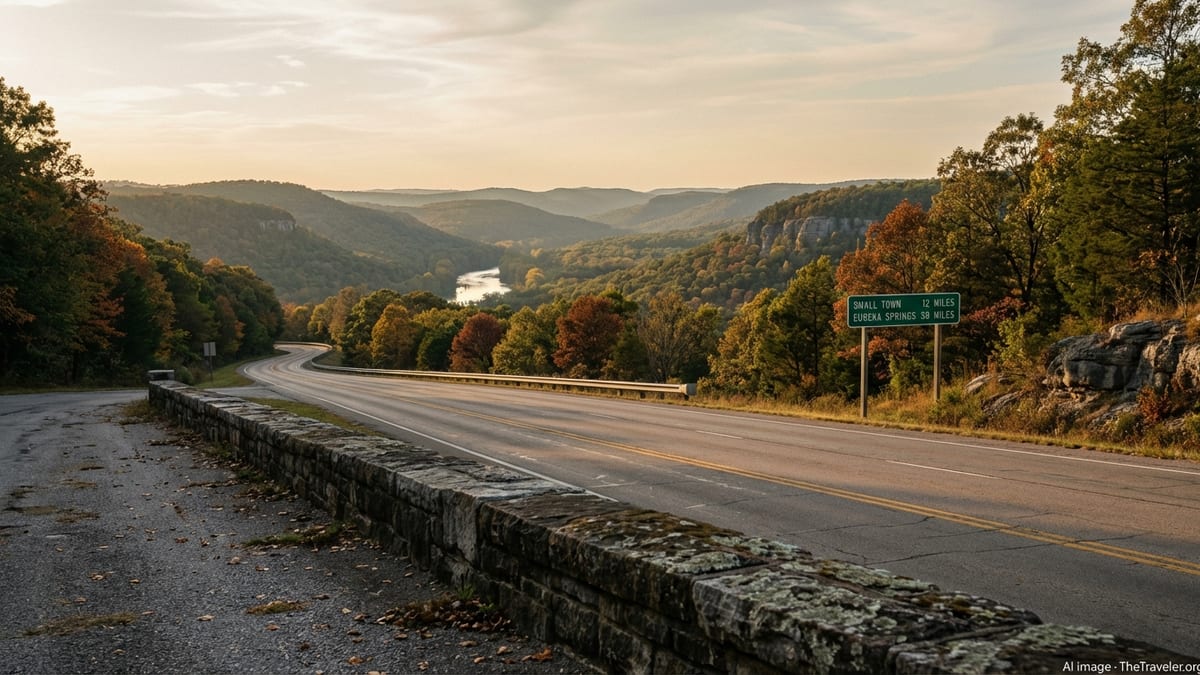
On the map, Arkansas can look compact, squeezed between Texas, Tennessee, and Missouri. On the ground it feels much larger, especially once you leave interstates for mountain roads or Delta two lanes. Travelers routinely underestimate drive times between marquee destinations like Little Rock, Hot Springs, the Buffalo National River, and Bentonville. Winding Ozark and Ouachita roads, logging trucks, wildlife crossings, and small town speed limits all slow the pace. A route that seems like a quick 90 minute transfer often stretches past two and a half hours in real driving conditions.
The mistake many visitors make is cramming too many regions into a short trip. They plan to see Crystal Bridges, float the Buffalo, hike in the Ouachitas, and detour through the Mississippi Delta in a long weekend. The result is rushed mornings, constant packing and unpacking, and more time behind the wheel than on trails or in museums. A better approach is to pick one or two regions, accept the slower rhythm of rural driving, and leave space for scenic pullouts, barbecue stops, and small town detours that appear out of nowhere.
Before you travel, study travel times instead of just distances. Map your route with realistic buffers and look at secondary roads you are likely to take when you head for state parks, mountain overlooks, and river put ins. Plan no more than two major activities in a single day when you also have to drive between regions. That extra margin can be the difference between white knuckle night driving on unfamiliar backroads and a relaxed arrival before sunset with time to settle in.
Underestimating Arkansas Weather and Seasonal Extremes
Arkansas sits in a collision zone of Gulf moisture and continental air, which means the weather changes quickly. Summer can deliver triple digit heat with high humidity, while winter occasionally brings ice storms that glaze hills and bridges. Spring and fall often offer the prettiest days, but they can also bring severe thunderstorms, heavy rain, and abrupt temperature drops of 20 degrees or more over a single afternoon. Travelers who pack only for postcard conditions often end up buying layers, rain gear, or dry clothes on the road.
Another common oversight is not thinking about how weather affects outdoor plans. A clear forecast in Little Rock does not guarantee smooth conditions up in the Ozarks or Ouachitas, where elevation and terrain create local microclimates. Rivers can rise rapidly after upstream storms, trails may turn slick, and some gravel roads become difficult for low clearance vehicles when wet. In dry stretches, park officials sometimes restrict campfires in certain areas to reduce wildfire risk, especially in heavily wooded mountain zones and along popular rivers where visitors congregate.
Pack with layers in mind, even in summer. A light rain jacket, breathable long sleeves for sun and bugs, a warm layer for cool nights, and footwear that can handle mud or rock go a long way. Check regional forecasts rather than relying on a single city report and recheck conditions before long drives or river trips. In shoulder seasons, allow flexibility to shuffle your hiking, floating, and driving days in case a system rolls through. Arkansas shines in all four seasons, but only if you plan for its swings.
Overlooking Local Laws on Alcohol, Sundays, and Dry Counties
Visitors are often surprised by how alcohol rules vary from county to county in Arkansas. Some areas are fully wet with broad retail and restaurant sales, others are dry with limited service inside private clubs or specific establishments, and many land somewhere in between. On top of that, local ordinances can restrict open containers in public parks and rivers, and some city parks prohibit alcohol outright. Travelers who assume statewide uniformity can run into awkward moments when they show up at a picnic spot or trailhead with a cooler that is not allowed.
Sunday rules catch people off guard too. While many of the old blue laws have softened, some communities still limit certain types of retail sales on Sundays. Alcohol sales, especially spirits, may be more restricted on Sunday than on other days, even in counties that generally allow them. Restaurants and bars often operate under a different set of permits than stores, so you may be able to order a drink with lunch but not buy a bottle to take back to your cabin. The practical mistake is planning to stock up or celebrate on a schedule that does not match local rules.
The simplest fix is to ask ahead. When you book a cabin, campsite, or vacation rental, ask about local alcohol rules, nearest full service groceries, and any Sunday limitations. If you plan river trips or lake days, review park and river regulations for glass containers and open containers well before you pack your cooler. Bring beverages in cans or plastic where glass is restricted and be prepared for some areas where alcohol is not allowed in public at all. Planning within the patchwork of local laws is easier than scrambling to adjust once you arrive.
Taking Rivers, Lakes, and Trails Too Lightly
Arkansas is famous for clear rivers, spring fed swimming holes, and hundreds of miles of hiking and mountain biking trails. The same wild character that makes these places special can surprise visitors who treat them like theme park attractions. On rivers, people sometimes underestimate currents, water temperature, and how quickly storms upstream can push levels higher. Gravel bars that look wide and safe one afternoon can be significantly smaller the next morning. Hazards such as submerged logs and changing channels mean that diving or jumping into unfamiliar water is always risky, even where locals gather.
On hiking trails in the Ozarks, Ouachitas, and state parks, the terrain is often steeper and rockier than visitors expect. Roots, loose rock, and narrow paths near bluffs demand more attention than a casual stroll. Cell service can be unreliable in hollows and canyons, and signage may be more basic than in heavily developed national parks. In summer, heat and humidity magnify the strain of climbs, while in cooler months wet leaves and mud can make descents slick. Visitors who wear city sneakers, carry no water, and leave without telling anyone their plans occasionally find themselves far more tired or disoriented than they imagined.
Before heading out, match your route to your experience and fitness. Choose shorter floating sections and half day hikes if it is your first visit or if you are traveling with children. Always carry more water than you think you need, and treat river or spring water if you plan to drink it. Respect closures and warnings from rangers, especially regarding jumping from rocks or structures, swimming near rapids, or entering old mines or fenced historic sites. Arkansas’s outdoors feel relaxed and welcoming, but they demand the same caution you would use in any wild environment.
Disrespecting Private Land and Rural Communities
Many of Arkansas’s most scenic drives and backroads thread through working farms, forest land, and small communities. The line between public and private space is not always obvious to visitors. Travelers sometimes pull off on what looks like an empty field, gravel lane, or river access point without realizing it is on private property. Others wander into barns, sheds, or old house sites that may be structurally unsound or still in seasonal use. Trespassing is taken seriously in rural Arkansas, both for reasons of safety and respect for livelihoods.
Another misstep is assuming that every scenic spot is a free public area. Some swimming holes, caves, and waterfalls are on private land, even if they appear in social media posts or casual online lists. Landowners may tolerate low key use for a time and then close access when trash, noise, or liability worries grow. Unofficial parking along narrow roads can block farm equipment or emergency vehicles. In communities where everyone knows one another, out of state plates that ignore local norms are noticed quickly, even if people remain outwardly polite.
The respectful approach is to assume you are on private land unless signs or maps clearly indicate public access. Use official trailheads, parking lots, and river launches whenever possible, even if that means a small fee or longer walk. Close gates you find closed, avoid blocking driveways or field entrances, and keep noise low near homes and churches. A quick stop at a local store or visitor center is a good opportunity to ask about where it is welcome to swim, picnic, or take photos. Respect for property and people deepens your experience and keeps cherished places open for future visitors.
Forgetting About Wildlife, Insects, and Plant Hazards
Arkansas’s greenery looks inviting, but it hides more critters and irritants than many visitors expect. In warm months, ticks and chiggers are common in grassy and wooded areas, especially where deer and small mammals are active. Mosquitoes linger near standing water from the Delta to the high country. Poison ivy climbs trees and sprawls across the edges of many trails. Visitors who wander in sandals and shorts without insect repellent or any familiarity with local plants often end the day itching or uncomfortable, even when they stuck to established paths.
The state is also home to several snake species, including venomous ones. They are typically shy and avoid confrontation, but they may bask on warm rocks, trails, or boat ramps. Stepping over logs without looking, sticking hands into rock crevices, or walking through tall grass without sturdy shoes increases your odds of an unpleasant encounter. In and around lakes and rivers, snapping turtles, leeches, and other aquatic life are part of the ecosystem, even in clear water. Wildlife should be admired from a distance rather than approached or fed.
Basic precautions go a long way. Wear light colored clothing so you can more easily spot ticks, and use repellent on skin and clothing when you head into tall grass or wooded areas. Learn to recognize poison ivy’s distinctive leaves and avoid brushing against unfamiliar plants. Watch where you place your feet and hands, particularly on rocky bluffs, around old structures, and along the water’s edge. Most animals want nothing to do with you, but giving them space and paying attention to your surroundings keeps both you and them safe.
Assuming Every Park and Trail Is Open and Unregulated
From the Buffalo National River to dozens of state parks and municipal greenways, Arkansas has a dense network of public lands. These areas are not free for all spaces. They come with rules about camping, fires, glass containers, pets, drones, and quiet hours that change with conditions. Visitors sometimes assume that if there is a flat patch of ground by the river or a clearing in the woods, camping is allowed. In reality, some sites are designated day use only, others require reservations, and many limit the number of tents, vehicles, or people per site.
Seasonal conditions can tighten restrictions. In extended dry spells, officials may ban open fires outside of established fire rings or halt them altogether in certain parks to reduce wildfire risk. High water can close portions of trails and river accesses, while damage from storms or heavy use can temporarily shut down campgrounds or backcountry routes. Local parks in cities like Fayetteville or Little Rock may allow certain activities only with permits, such as events, amplified music, or selling goods. Alcohol, glass, inflatables, and even some sports equipment might be restricted in specific areas for safety.
To avoid problems, check the latest regulations for the particular park, river, or trail you plan to visit. Do not rely solely on old blog posts or social media recommendations, which may not reflect current fire bans, closure areas, or reservation systems. Once on site, read posted signs carefully and follow ranger instructions without argument. Pack out all trash, respect quiet hours, and keep pets leashed where required. Treat Arkansas’s public lands as shared spaces that depend on everyone’s care, not just as open playgrounds without limits.
Rushing Through Culture, Food, and Small Town Life
Many travelers see Arkansas primarily as an outdoor playground and miss the depth of its cultural life. They blaze past historic towns in search of the next trailhead or river put in, stopping only for gas and fast food. In the process they bypass thriving art districts in cities like Bentonville and Fayetteville, music venues in the Delta, and small museums that unpack the state’s complex history, from civil rights struggles to the legacy of the timber and rice industries. The state’s culture is not always loud or theatrical, but it rewards those who pause long enough to look and listen.
Food is another area where visitors sometimes default to chains instead of seeking out local flavors. Arkansas barbecue, catfish houses, pie shops, and meat and three restaurants can be unassuming from the outside, tucked in strip malls or side streets. Farm stands and small markets carry seasonal produce that rarely appears on big box shelves. In some rural communities, the town café doubles as an unofficial visitor center, where you can overhear everything from farming news to high school football gossip. That kind of everyday conversation offers a window into Arkansas that no brochure can match.
Give yourself permission to slow down and linger. Browse a local bookstore in Little Rock, catch a high school ball game in a small town, or wander an art walk in Northwest Arkansas. Ask servers, innkeepers, and park staff where they eat on a day off rather than relying only on national review sites. When you drive through a town that looks like it has one café and one hardware store, consider stopping for coffee or a slice of pie instead of pushing on to the interstate. Many of your most vivid Arkansas memories may come from unscripted moments rather than the big marquee attractions.
Misjudging Safety in Cities and On the Road
Arkansas’s biggest cities, including Little Rock, Fort Smith, and Pine Bluff, see the same kinds of safety issues that appear in many American metro areas. Travelers sometimes make two opposite mistakes. One group assumes that the entire state is sleepy and crime free, leaving valuables visible in cars or wandering unfamiliar neighborhoods late at night without much awareness. Another group arrives with exaggerated fears, avoiding downtowns altogether and missing riverfronts, museums, music venues, and restaurants that are central to the state’s modern identity.
The road itself can be a safety concern in both urban and rural settings. Wildlife crossings are common, especially at dawn and dusk, and deer collisions spike in certain seasons. Night driving on winding mountain roads or unlit Delta highways requires extra caution, particularly for visitors unfamiliar with narrow lanes, sharp curves, and the presence of slow moving farm equipment. Sudden heavy rain can reduce visibility quickly, and occasional winter ice events can turn bridges and shaded stretches into slick hazards. Distracted driving, fatigue after long hikes, and the temptation to check maps on the move compound those risks.
Basic travel wisdom applies. In cities, park in well lit areas, keep valuables out of sight, and follow local advice about areas to avoid after dark. Enjoy nightlife and downtown attractions, but use the same common sense you would employ in any unfamiliar urban setting. On the road, slow down on rural highways at night, watch for animals, and plan your drives to finish before midnight when possible. Share your itinerary with someone back home if you are moving between remote areas, and do not hesitate to turn back or wait out bad weather rather than pushing on to keep an arbitrary schedule.
The Takeaway
Arkansas is not a state that reveals itself fully from a car window or in a single long weekend. It invites a slower pace, a willingness to adapt to weather and rural realities, and genuine curiosity about local people and places. The most common travel mistakes here tend to come from rushing, assuming, and imitating what others did on social media instead of paying attention to the particularities of the moment. Distances are a little longer than they look, rules can shift by county line, and the outdoors remain genuinely wild in many corners.
If you respect the land and the communities, prepare for variable weather and real wilderness, and leave space in your schedule for unscripted encounters, Arkansas will reward you many times over. You will find clear water, quiet roads, and conversations that linger long after the trip ends. Avoiding the pitfalls outlined above is less about memorizing rules and more about embracing patience, attentiveness, and humility as you move through the Natural State.
FAQ
Q1. Do I really need a car to explore Arkansas?
Yes. Public transportation is limited outside a few cities, so a car is essential for reaching state parks, small towns, and river areas on your own schedule.
Q2. When is the best time of year to visit Arkansas?
Spring and fall generally offer the most comfortable temperatures and colorful scenery, but summer and winter can be rewarding if you prepare for heat or occasional cold snaps.
Q3. Are Arkansas’s rivers safe for beginners to float?
Many stretches are suitable for beginners in normal conditions, but water levels, weather, and your own skills matter. Check with outfitters or rangers before choosing a route.
Q4. How strict are alcohol rules in Arkansas?
Alcohol laws vary by county and even by city. Some areas are dry and some parks restrict alcohol or glass, so always confirm local rules before you buy or pack drinks.
Q5. Is it safe to hike alone in Arkansas?
Solo hiking can be safe if you pick appropriate trails, carry essentials, tell someone your plans, and pay attention to weather and daylight. Remote routes require extra caution.
Q6. What should I pack for an outdoor focused trip?
Sturdy shoes, layered clothing, rain protection, insect repellent, sun protection, a refillable water bottle, and basic first aid are good starting points for most Arkansas adventures.
Q7. Can I freely camp along rivers and lakes?
Not everywhere. Some areas allow dispersed camping, but many shorelines are private or regulated. Use designated sites or confirmed public areas whenever possible.
Q8. How bad are bugs in Arkansas?
In warm months, mosquitoes, ticks, and chiggers can be bothersome, especially in tall grass and forests. Repellent, proper clothing, and quick tick checks help greatly.
Q9. Are Arkansas cities worth visiting or should I stay in the countryside?
Both are worthwhile. Cities offer museums, music, and food that deepen your understanding of the state, while rural regions showcase its landscapes and small town life.
Q10. What is the biggest planning mistake first time visitors make?
Trying to see too much in too little time. Focusing on one or two regions and building in rest days usually leads to a more relaxed and memorable trip.