

France combines grand monuments, refined culture and quietly beautiful landscapes in a way few destinations can match. From the boulevards of Paris to the lavender-scented hills of Provence and the dramatic Atlantic coast, the country’s most celebrated attractions offer more than postcard views. They tell the story of a nation shaped by art, revolutions, religion and a deep attachment to regional identity. As France welcomes record visitor numbers once again, these ten highlights show why it remains one of the world’s most compelling places to explore.
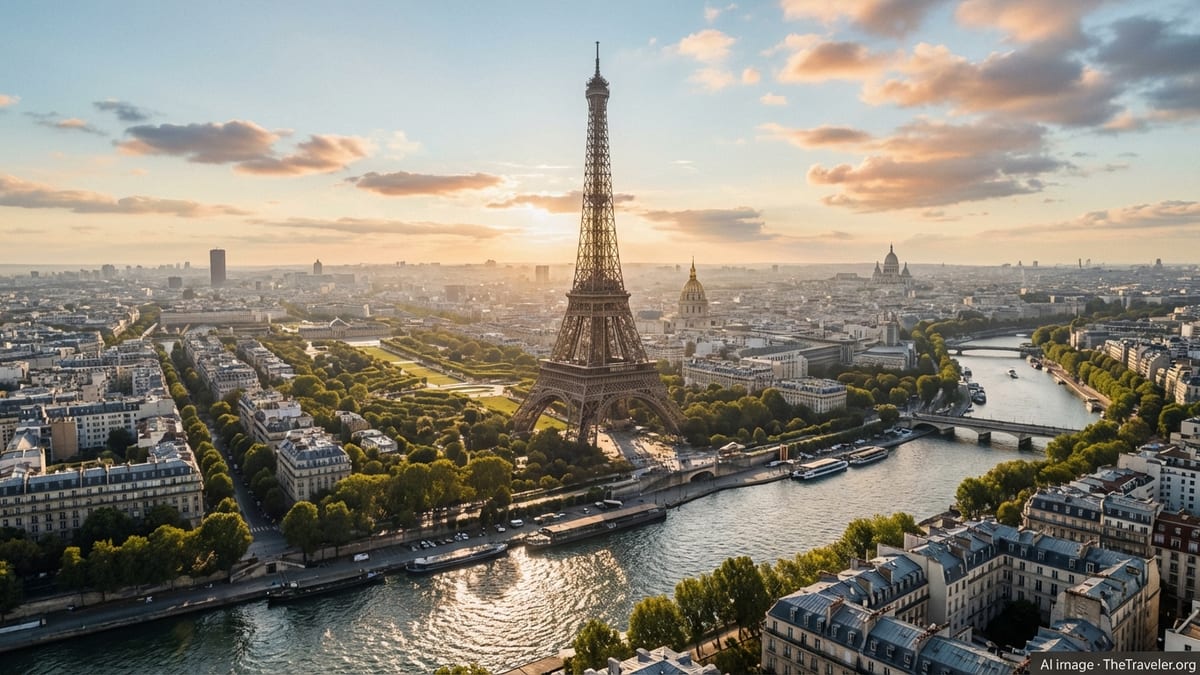
Eiffel Tower, Paris
The Eiffel Tower remains the defining symbol of France and one of the most recognizable landmarks on the planet. Rising above the Seine and the Champ de Mars, the 19th century iron structure was originally built as a temporary centerpiece for the 1889 Exposition Universelle. Today it continues to draw millions of visitors a year, a reflection of its enduring appeal as both an engineering marvel and a romantic icon. Approaching the tower on foot from the Trocadéro or along the riverside path gives you time to appreciate how its lace-like ironwork changes with the light.
Ascending the tower offers a vivid introduction to Paris. From the viewing platforms you can pick out the city’s main sites, from the Arc de Triomphe to the dome of Les Invalides. On clear evenings, the panorama stretches to the suburbs and ring of forests beyond. Timed-entry tickets help regulate crowds, but lines can still be long in peak seasons, particularly at the elevators to the summit. Those who can manage the stairs will often find a shorter queue and a more gradual reveal of the city unfolding below.
Visiting after dark offers a different experience, when Paris lives up to its reputation as the City of Light. The tower itself sparkles for a few minutes at the start of each hour, and the riverboats passing below underline just how central this monument is to the city’s sense of theater. Whether you view it from the ground or from high above the rooftops, the Eiffel Tower is almost impossible to separate from any first-time journey through France.
Louvre Museum, Paris
Few museums can match the breadth and depth of the Louvre. Once a royal palace, it now houses one of the world’s largest and most important art collections, ranging from ancient Near Eastern artifacts to 19th century French masterpieces. Its glass pyramid entrance in the central courtyard has become a landmark in its own right and serves as a striking contrast to the surrounding classical facades. For many visitors, the challenge is not whether to go, but how to navigate such an immense institution without feeling overwhelmed.
Signature works like Leonardo da Vinci’s "Mona Lisa" and the "Venus de Milo" naturally attract heavy crowds, especially during peak hours and school holidays. Yet some of the Louvre’s greatest pleasures are found in the quieter galleries. Winged Assyrian bulls, elegantly carved Egyptian sarcophagi, Renaissance altarpieces and French Romantic canvases can be explored at a more contemplative pace if you are willing to step away from the main flows. Planning a thematic route in advance, such as focusing on a single department or time period, can make the experience far more rewarding than attempting to see everything in a single visit.
Allowing time to step outside between sections of the museum helps prevent fatigue and lets you appreciate the building itself, from its moat-level medieval foundations to the wide courtyards and formal gardens of the Tuileries. Paris continues to refine crowd management and timed entry systems, but the Louvre remains intense at busy times of year. Early morning or late-evening sessions, where available, often provide a more comfortable way to encounter this cornerstone of French culture.
Notre Dame de Paris
The reopening of Notre Dame Cathedral after the devastating 2019 fire has restored one of Paris’s spiritual and architectural hearts. Standing on the Île de la Cité in the middle of the Seine, the Gothic masterpiece has witnessed nearly nine centuries of French history. Its twin towers, flying buttresses and sculpted portals shaped the image of the medieval city for generations of pilgrims and novelists. Today, visitors are once again able to step through the massive doors into an interior that combines painstaking restoration with subtle contemporary interventions.
Inside, the soaring vaults, stained glass and long central nave create a sense of verticality and light that remains deeply affecting, regardless of religious belief. The restoration work has involved expert stonecutters, carpenters and glass specialists from across France, returning the building to stability while preserving the patina of age. Some scaffolding and ongoing conservation activity remain visible, a reminder that cathedrals are living structures that evolve over centuries rather than static museum pieces. Visitor management is carefully controlled, with security checks and timed entry helping to protect the fragile fabric of the monument.
Outside, changes to the surrounding public spaces are altering how people experience the site. Plans for a more pedestrian-friendly forecourt and improved connections to the riverfront are designed to ease crowding and give both locals and travelers a more reflective place to pause and absorb the building’s intricate details. Whether glimpsed from a passing boat, approached via the narrow streets of the Latin Quarter or admired from one of the city’s many bridges, Notre Dame again anchors the historic core of Paris.
Palace of Versailles
A short journey west of central Paris, the Palace of Versailles offers a grand insight into the power and aesthetics of the French monarchy before the Revolution. Originally a modest hunting lodge, it was expanded under Louis XIV into a vast complex of ceremonial halls, royal apartments and perfectly ordered gardens intended to project absolute authority. The mirrored galleries, gilded ceilings and elaborate tapestries that greet visitors today are the result of decades of work by leading architects, painters and craftspeople of the 17th and 18th centuries.
The Hall of Mirrors, where the Treaty of Versailles was signed in 1919, remains the most famous interior space. Its long gallery of windows, crystal and gilded ornament overlooks the gardens, with views that once framed royal pageants and fireworks. Audio guides and exhibitions help visitors make sense of the etiquette and symbolism that governed life at court, from the king’s public rising ceremony to the carefully staged evening entertainments. Even with modern crowd-control systems and timed entries, certain rooms can feel extremely busy at popular times, so advance planning is essential.
Beyond the palace itself, the grounds and ancillary buildings reward unhurried exploration. The formal parterres, tree-lined avenues and ornamental lakes give way to the more relaxed landscape around the Grand Trianon and the Queen’s Hamlet, where Marie Antoinette sought a carefully curated version of rural retreat. Renting a bicycle or small electric vehicle can help cover the distances involved. Seasonal musical fountain shows bring additional atmosphere, though they also draw larger crowds. For many visitors, Versailles offers a vivid counterpoint to modern France, illuminating the social tensions and cultural achievements that shaped the country’s turbulent history.
Mont Saint Michel, Normandy
Rising from the tidal flats of Normandy, Mont Saint Michel looks like something from legend. The rocky island crowned by a medieval abbey has long been one of France’s most atmospheric sights, attracting pilgrims since at least the 8th century. Today, a causeway connects the mainland to the island, but the bay’s powerful tides, among the fastest in Europe, still dominate the landscape. At high tide, the mount appears almost entirely surrounded by water; at low tide, a broad expanse of sand and mudflats is exposed, creating a very different impression.
The village streets spiral steeply up from the entrance gate, lined with stone houses, shops and small restaurants before giving way to monastic buildings and the abbey church at the summit. The climb can be strenuous, particularly in peak season when the narrow lanes are congested, but the reward is a series of terraces and cloisters with sweeping views over the bay. Inside the abbey, stark Gothic halls and quiet chapels recall its former life as a spiritual powerhouse and later, more grimly, as a prison.
Strict safety rules govern walking on the surrounding sands due to the risk of fast-rising tides and pockets of soft ground. Guided walks with licensed local guides are strongly recommended for anyone wanting to explore beyond the island itself. Recent efforts to restore the maritime character of the site have included changes to the causeway and parking arrangements, shifting vehicles back to the mainland and prioritizing shuttle buses and foot access. The result is a setting that again feels more isolated, especially at dawn or dusk, when the day trippers return inland and the abbey bells echo across the water.
French Riviera and the Old Town of Nice
The Côte d’Azur, or French Riviera, captures the sunlit, sea-facing side of France. Among its many resorts, Nice stands out for its blend of Italianate old town, Belle Époque seafront and contemporary culture. The curving Promenade des Anglais traces the pebble beach for several kilometers, offering space for leisurely walks, cycling and people-watching. Out in the bay, ferries, sailing yachts and paddleboarders share the water, underscoring the city’s long-standing relationship with the Mediterranean.
Behind the seafront hotels and palm trees, the old town is a dense patchwork of narrow lanes, ochre facades and shuttered windows. Markets such as the Cours Saleya showcase seasonal produce, local flowers and Provençal specialties, particularly in the mornings. Historic churches, baroque chapels and small galleries are threaded through this urban fabric, alongside cafes and eateries that stay busy well into the evening. Climbing Castle Hill, now a park, rewards visitors with a wide panorama of the bay, port and terracotta rooftops, especially atmospheric around sunset.
While Nice has long been associated with glamorous wintering visitors and film stars, in recent years it has also invested in public transport, pedestrian areas and green spaces to cope with growing numbers of tourists and residents. The city’s tram network and regional trains provide access to nearby coastal towns such as Antibes and Cannes, as well as inland villages. For travelers mapping out the top attractions in France, Nice and the broader Riviera offer an essential contrast to the monuments of Paris and the castles of the interior, adding sea breezes, maritime light and a more relaxed southern rhythm.
Loire Valley Châteaux
Stretching southwest from Paris, the Loire Valley is sometimes described as the garden of France, a region of gentle rivers, vineyards and a remarkable concentration of Renaissance and classical châteaux. Many were built or expanded during the 15th and 16th centuries as royal and aristocratic country retreats, designed as much for pleasure and display as for defense. Today they form one of the country’s most distinctive cultural landscapes, recognized by UNESCO and popular with both domestic and international visitors.
Among the best known are the turreted Château de Chambord, with its double-helix staircase often attributed to Leonardo da Vinci, and the elegant riverside arches of Château de Chenonceau, stretching across the Cher. Other highlights include the more intimate Château d’Azay-le-Rideau, almost floating above its reflective moat, and the historic royal city of Amboise. Each property tells a slightly different story of power, art and architectural experimentation, from hunting lodges to formal gardens influenced by Italian design.
The distances between major sites are manageable, but the region is still best appreciated over several days rather than a rushed day trip. Public transport links exist between larger towns, yet many travelers choose to rent a car or join a guided tour to reach smaller villages and vineyards. Cycling routes have expanded in recent years, with long-distance paths such as the Loire à Vélo offering a slower but rewarding way to connect castles, riverbanks and wine cellars. Visiting in shoulder seasons like late spring or early autumn can mean fewer crowds and softer light on the stone facades.
Provence and the Hilltop Villages of the Luberon
Provence has captivated visitors for generations with its blend of rural charm, Roman heritage and Mediterranean light. In the Luberon, a range of low mountains east of Avignon, hilltop villages cling to ridges and outcrops above patchworks of vineyards, orchards and lavender fields. Places such as Gordes, Roussillon, Bonnieux and Ménerbes each have their own character, from ochre-colored cliffs to stone farmhouses and shaded squares. The slower rhythm of village life, with morning markets and quiet afternoons, contrasts sharply with the bustle of major cities.
While summer lavender blooms and cicadas have become emblematic images of Provence, the region has a more complex identity rooted in agriculture, local dialects and a strong food tradition. Weekly markets overflow with seasonal produce, cheeses and olive oils, while wineries offer tastings of rosé and other regional styles. Small museums and historic sites highlight layers of history that include Roman settlements, medieval fortifications and 20th century artists drawn by the light and landscape.
Tourism has grown steadily in the Luberon and surrounding areas, leading to concerns about congestion on narrow roads and pressure on local services during peak months. Many communities now promote off-season visits, hiking and cycling as ways to spread tourism more evenly through the year. For travelers, choosing to stay in smaller guesthouses and exploring beyond the most photographed viewpoints can provide a richer and more sustainable encounter with this much-loved corner of France.
French Alps and Chamonix-Mont-Blanc
For many, the French Alps represent France at its most dramatic. Snow-covered peaks, deep valleys and glacier-fed rivers provide a playground for outdoor enthusiasts in every season. Chamonix-Mont-Blanc, near the borders with Switzerland and Italy, is one of the region’s most famous bases. The town sits at the foot of Western Europe’s highest peak, Mont Blanc, and has been attracting mountaineers and sightseers since the 18th century.
Today, a network of cable cars and cog railways gives visitors access to high viewpoints without the need for technical climbing skills. The Aiguille du Midi cable car, for example, reaches over 3,800 meters, offering views of surrounding peaks and, in good weather, far into neighboring countries. In winter, Chamonix becomes a major ski destination, with pistes for different abilities and off-piste routes that appeal to experienced skiers and snowboarders. In summer, hiking, trail running, rock climbing and paragliding all come into their own.
As with many mountain areas, the Alps are at the forefront of climate discussions in France. Glaciers have retreated noticeably in recent decades, and local authorities are balancing tourism with environmental protection and safety concerns. Well-maintained trails, public transport links between valley towns and information centers aim to help visitors make more informed choices about their impact. Whether you simply admire the peaks from a café terrace or venture higher into the mountains, the French Alps provide a powerful counterpoint to France’s urban and coastal attractions.
The Takeaway
France’s top attractions form a mosaic of architecture, landscapes and stories that stretch from medieval abbeys to modern museums and high peaks. While Paris understandably dominates many itineraries, the country’s appeal rests just as much on its regional diversity. A single trip might include the iron silhouette of the Eiffel Tower, the quiet nave of a country church, a glass of wine in the Loire Valley and a walk along a Riviera promenade at dusk.
Growing visitor numbers in recent years have raised questions about how to protect the very qualities that make these places special. Crowd management systems, restoration projects and efforts to spread tourism beyond peak months are all part of the response. Travelers can contribute by planning ahead, considering off-season visits and spending time in lesser-known areas alongside the big names. Experiencing France’s celebrated sights with patience and curiosity reveals a country that is constantly adapting while still honoring its layered past.
FAQ
Q1. What is the best time of year to visit France’s top attractions?
The most comfortable periods are generally late spring and early autumn, when temperatures are mild and major sights are slightly less crowded than in peak summer.
Q2. Do I need to book tickets in advance for places like the Eiffel Tower and the Louvre?
Advance booking is strongly recommended for major Paris attractions, especially in high season, weekends and holidays, to secure entry times and reduce waiting in lines.
Q3. Is it still possible to visit the interior of Notre Dame Cathedral?
Yes, the cathedral has reopened to visitors, but access is regulated with security checks and crowd controls, so it is wise to check current conditions and entry procedures before you go.
Q4. How many days should I plan for Paris if I want to see several top attractions?
A stay of at least three to four full days allows time for key sights such as the Eiffel Tower, Louvre, Notre Dame and a few neighborhoods without feeling too rushed.
Q5. Can I visit Versailles and the Loire Valley châteaux on the same trip?
Yes, many travelers combine Versailles as a day trip from Paris with several days in the Loire Valley, using trains, car rental or organized tours to link the regions.
Q6. Is it necessary to rent a car to explore Provence and the Luberon villages?
Public transport connects some towns, but a car or small-group tour offers greater flexibility for reaching hilltop villages, markets and countryside viewpoints on your own schedule.
Q7. Are Mont Saint Michel and the French Riviera suitable for families?
Both can work well for families, although Mont Saint Michel involves steep walks and many steps, while Riviera beaches and promenades generally offer easier terrain and more child-friendly facilities.
Q8. What should I pack for a trip that includes both Paris and the French Alps?
Layered clothing, a waterproof jacket and sturdy walking shoes are useful year-round, with warmer outerwear and gloves needed in the mountains outside the summer months.
Q9. How can I reduce my environmental impact while visiting France’s popular sites?
Using trains and local public transport, traveling outside peak dates, refilling a reusable water bottle and supporting smaller local businesses are all helpful steps.
Q10. Is it realistic to see all ten attractions in a single visit to France?
It is possible on a long, fast-paced itinerary, but most travelers find it more enjoyable to focus on a few regions and leave other highlights for a future trip.