

More news on this day
American Airlines is facing a wave of criticism from premium passengers after reports that business and first class travelers on flights to and from London Heathrow are being served wine from cardboard boxes, a visible symbol of a broader catering breakdown at one of the carrier’s most important international hubs.
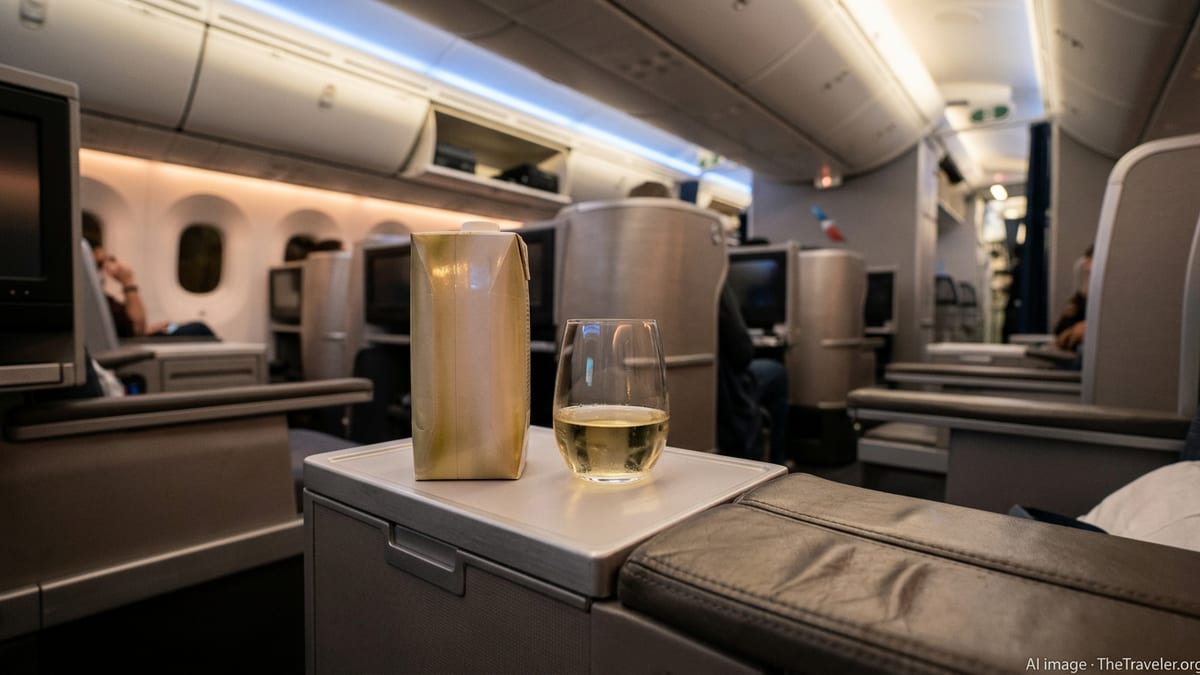
Visible Sign of a Wider Heathrow Catering Meltdown
The boxed wine controversy comes as American Airlines grapples with significant catering disruptions at London Heathrow, where the airline has curtailed local food and beverage loading on safety and hygiene grounds. Aviation and industry reports indicate that the carrier has temporarily halted most catering sourced from its Heathrow supplier, instead loading additional provisions in the United States to cover both outbound and return sectors.
This “double catering” workaround, uncommon on long-haul operations, is straining galley storage and forcing pared-back offerings even in the most expensive cabins. Travelers in Flagship Business and First have reported simplified meal choices, reduced plating, and the disappearance of many of the small touches usually associated with premium long-haul flying, such as multi-course service and expanded dessert options.
What might otherwise have remained a largely behind-the-scenes operational issue became highly visible once photos and eyewitness accounts of boxed wine began circulating online, turning a technical catering problem into a public-relations headache for the airline.
Premium Travelers React to Boxed Wine and Downgraded Service
Reactions from frequent flyers have been swift and unforgiving. On social media, business class passengers departing Heathrow describe flight attendants pouring still and sparkling wine from cardboard boxes directly into glasses for customers who may have paid several thousand dollars for their seats. Some travelers characterize the experience as jarring, particularly on routes long marketed as a flagship transatlantic product.
For many premium customers, the issue is less about the intrinsic quality of the wine and more about what boxed service symbolizes. In an arena where perception and detail matter, cardboard packaging clashes sharply with expectations of a polished international business or first class experience. Commentators have pointed out that competitors on the same routes continue to emphasize curated wine lists, proper bottles, and branding that reinforces a sense of occasion.
The optics are especially awkward given American Airlines’ recent push to attract high-yield corporate and leisure travelers with promises of upgraded cabins, enhanced catering, and a more refined onboard experience. For loyal customers who have heard repeated pledges of a “premium” transformation, the pivot to boxed wine has been seized upon as evidence of a gap between marketing and reality.
Health Concerns and Allegations Around Heathrow Catering
Behind the change in wine presentation lies a more serious concern: food safety. Industry reporting and internal communications indicate that American’s abrupt shift away from loading full catering at Heathrow followed alleged hygiene issues at a third-party catering facility. Among the most widely shared claims are photos purporting to show a dead rodent discovered in bread supplies destined for premium cabins.
While the authenticity of those images has not been independently verified, their circulation has amplified public anxiety and pushed the airline to act quickly. Travel analysts note that alleged contamination within catering operations obliges carriers to adopt extremely cautious measures, even when the evidence is still being investigated, because any lapse in food safety can carry significant health and reputational consequences.
American Airlines has not publicly detailed the specific problems at its Heathrow catering partner, but its decision to suspend most local loading and rely on extra provisions from U.S. kitchens suggests a lack of confidence in the status quo. Until a new arrangement or clean bill of health is secured, the airline appears locked into a constrained, interim model that directly affects the passenger experience.
Operational Workarounds Strain a Critical Transatlantic Market
The disruption hits at the heart of American’s transatlantic network. The airline operates multiple daily flights between major U.S. gateways and London Heathrow, many of them carrying a high proportion of premium travelers. In partnership with British Airways and other transatlantic joint venture members, American has long positioned London as a key connecting point for corporate accounts and frequent flyers.
Because aircraft galleys are designed to hold catering for a single long-haul segment, loading meals and beverages for two sectors in the United States leaves little room for variety or embellishment. Industry observers report that some London-bound flights have reverted to simplified, single-tray service in business class and fewer menu options overall. Space constraints also make it harder to offer the range of wines, spirits, and garnishes that premium passengers expect.
While safety regulators typically do not dictate specific meal standards, they closely monitor how airlines respond to potential contamination risks. In this case, the insistence on centralized catering and pre-loaded supplies is seen as a conservative, safety-first move that nonetheless comes at the cost of service breadth, especially on the critical Heathrow routes where competition from European and Gulf carriers is intense.
Brand and Competitive Implications for American Airlines
The optics of boxed wine in premium cabins raise broader questions about American’s brand positioning at the top end of the market. The airline’s leadership has repeatedly spoken about “reclaiming” a place among the world’s leading premium carriers, investing in new seats, upgraded lounges, and enhanced soft products. The current Heathrow situation, even if temporary, risks undermining that narrative at a moment when travelers have more choice than ever across the Atlantic.
Competitors serving London, including transatlantic joint venture partners and rivals from Europe and the Middle East, have spent heavily to differentiate their onboard service, often highlighting fine wines and elevated dining as key selling points. Passenger accounts from recent American flights suggest that the contrast is particularly stark when high-fare customers compare experiences across alliances and decide where to place their loyalty.
Industry analysts note that, while boxed wine and pared-back meals may be acceptable to many travelers in the short term if clearly explained as a safety-driven contingency, prolonged degradation of the premium product could prompt corporate travel buyers and elite frequent flyers to shift share. As of early March, American has not provided a firm timeline for restoring full catering operations at Heathrow, leaving premium passengers uncertain about what to expect on upcoming trips.
For now, boxed wine in the pointy end of the plane has become a potent symbol of how quickly a behind-the-scenes supply issue can spill into the cabin and shape perceptions of an airline’s commitment to luxury, particularly on its most important international stage.