

Acharavi Beach stretches in a broad golden curve along the north coast of Corfu, a relaxed ribbon of sand and shingle where the sea stays shallow for what feels like forever and the soundtrack is more clinking glasses than blaring speakers. For travelers who want a classic Greek seaside holiday without the crowds of the island’s southern resorts, it is an easygoing base where you can swim safely, linger over seafood with your feet in the sand, and still have all the amenities of a working town just a few minutes’ walk from the water.
Getting Your Bearings on Acharavi Beach
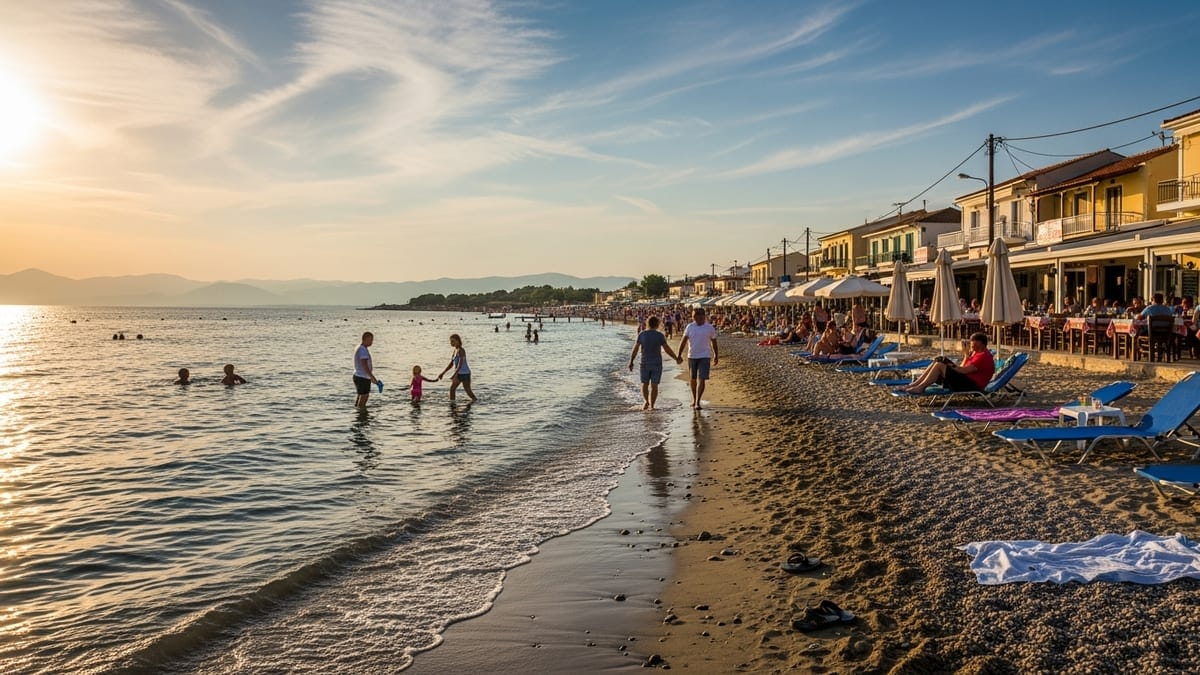
Acharavi Beach runs for roughly 3 kilometers along Corfu’s northern shore, facing the distant mountains of Albania across the Ionian Sea. It is wide, open and gently curving, broken only by the occasional jetty, beach bar or hotel frontage. The beach sits directly in front of the low-rise resort-and-working town of Acharavi itself, which occupies a flat strip of land between the shoreline and the island’s greener interior hills. From most accommodations in town, the walk to the sea is no more than 5 to 10 minutes along short access lanes.
The character of the beach changes subtly along its length. The central section in front of the main access lanes is more organized, with clusters of sunbeds, umbrellas and laid-back beach bars. As you wander east toward Almyros or west toward Roda, the atmosphere becomes progressively quieter and more natural, with long unbroken sections where you may have vast swathes of sand and shingle almost to yourself even in high season. This variety makes Acharavi Beach suitable for both families who like facilities on hand and independent travelers who prefer a more stripped-back seaside day.
Because the village is a year-round community rather than a purpose-built resort, the seafront remains pleasantly low-key. Most buildings are two or three stories high rather than tower hotels, and beachfront businesses tend to be small family-run tavernas and cafes. The vibe is relaxed and friendly. You are unlikely to encounter megaphone-wielding reps or thundering club beats here, although there are a few spots for cocktails and music if you want a livelier evening.
Orientation is simple. A single seafront lane and promenade runs behind much of the beach, connecting clusters of tavernas, bars and small hotels. Inland, the village’s main road runs parallel to the coast and holds the bulk of shops, supermarkets, banks and services. Several signed side lanes link the main road to the beach, so you quickly learn which access points lead to your preferred swimming or sunset-watching spots.
How to Get to Acharavi and the Beach
Acharavi lies about 37 kilometers north of Corfu Town and the airport. By car, the drive usually takes around 45 to 60 minutes depending on traffic. The main route crosses the interior of the island, winding through olive groves and hill villages before dropping gently down toward the flatter northern shoreline. It is well signposted and straightforward, though first-time visitors may want to take their time on some of the narrower stretches through villages.
Public transport is a practical option for beachgoers without a car. Acharavi is a major stop on the A3 Green Bus route that connects Corfu Town with the northern resorts. Buses generally run several times a day in high season and at least a few times daily in shoulder months. From the airport, you can catch a local blue bus or taxi to the Green Bus terminal near Corfu Town, then transfer to the A3 service to Acharavi. The bus stop in Acharavi is on or near the main road, typically a 10-minute walk from the beach along level streets.
During the main summer months, additional regional bus routes sometimes link Acharavi with neighboring resorts such as Sidari, Roda and Kassiopi. These routes can be handy for beach-hopping along the north coast or heading out to nearby attractions without a car, but timetables can change by season, so confirm schedules locally once you arrive. Taxis and pre-booked transfers are widely available and offer a more direct ride to your accommodation, which can be appealing if you are arriving with beach gear and family in tow.
If you are touring the island by car, parking in Acharavi is usually straightforward. There are no large formal beachfront car parks, but on-street parking is widely available along the seafront lane and the side roads leading down from the main strip. In peak August afternoons you may need to look one or two streets back, yet most visitors find a spot within a short walk of the water. The village and beachfront are predominantly flat, which helps if you are rolling luggage or pushing a stroller from car to accommodation or beach.
Beach Conditions: Sand, Sea and Safety
Acharavi Beach is a mix of soft sand and fine shingle, with the proportion of each varying along the shore. In many areas the upper part of the beach is mostly sand, ideal for laying towels or letting children dig and build, while the shoreline itself may have a fringe of smoother pebbles. Water shoes are optional but can be useful if you have sensitive feet or plan to wander far along the coast. Because the beach is long and relatively undeveloped in places, you can usually find a stretch that best suits your preferences for sand texture and space.
The standout feature of Acharavi’s sea is its shallowness close to shore. The seabed slopes gently, so you can wade out quite far with the water still at waist or chest height. This makes it an excellent beach for cautious swimmers, families with younger children and anyone who likes to float or paddle with minimal concern about sudden drop-offs. The water is typically clear, with that luminous turquoise-green color associated with the Ionian, and on calm days you may spot small fish darting around your ankles.
In summer, sea temperatures are comfortable from around late May until October, usually reaching their warmest between July and early September. The north coast of Corfu can experience breezes that freshen in the afternoon, sometimes bringing a line of small waves that are fun for bodyboarding or splashing about but rarely challenging. On particularly windy days the waves can become more energetic, so less-confident swimmers may feel more comfortable staying close to shore or timing their main swim earlier in the day when conditions are calmer.
Like many Greek beaches, lifeguard coverage can vary by season and by specific section of the shore. Some organized areas may have lifeguards on duty in peak summer, while quieter stretches do not. It is sensible to check for flags, signage or local advice about currents or conditions on the day, especially if swimming with children. Basic safety rules apply: avoid swimming alone at dusk, keep an eye on inflatable toys if it is breezy, and respect any warnings about changing conditions. The beach’s gradual slope and general shelter make it safer than many open-coast beaches, but the sea still deserves attention.
Where to Swim: Finding Your Perfect Spot
Because Acharavi Beach is so long, choosing where to swim is largely a matter of what kind of atmosphere you are looking for. The central section directly in front of the main access lanes and seafront tavernas is the most popular. Here you will find organized zones with neat rows of sunbeds and umbrellas, easy access to drinks and snacks, and a sociable, low-key buzz. The sea in this area is typically shallow and calm, with sandy patches underfoot that are comfortable for paddling and swimming without footwear.
If you want space and a more natural feel, walk east from the central zone toward Almyros. The beach becomes progressively quieter, with fewer organized setups and wider areas of open sand and shingle. This side is good for longer swims along the shore, impromptu games, or simply spreading out a towel away from other people. You also gain more of a feeling of being out in nature, with dunes and vegetation behind the beach in places rather than a continuous line of buildings.
To the west, the beach gradually merges into the outskirts of Roda. This direction suits visitors who like to combine a peaceful swim with the option of strolling along the waterline to another resort. You can swim at Acharavi in the morning, then wander west as the day cools, stopping for a drink or another dip along the way. Swimmers who enjoy distance may appreciate the ability to trace the full curve from Acharavi’s center toward Roda and back, always remaining in relatively shallow, sheltered water near the shore.
Timing also affects your swimming experience. Early morning is the quietest period on the beach and often offers the calmest water. Locals and in-the-know visitors are out for peaceful swims as the sun climbs, long before sunbeds fill. Midday brings more families and activity, while late afternoon and early evening often combine warm water with softer, golden light. Some visitors like to take one last swim after an early dinner as the sky turns pink and the mountains across the water darken into silhouette.
Facilities, Comfort and Accessibility
Acharavi Beach offers a balanced blend of organized comfort and simple, open stretches. Many seafront tavernas and bars run their own sunbed-and-umbrella setups. In most cases, renting a pair of loungers and shade for the day involves either a small fixed fee or an informal agreement that you will order drinks or snacks. These organized patches often provide extras like beachside table service, showers, changing cabins and music kept at a background level rather than full-blast, which helps maintain the beach’s mellow ambiance.
Behind the beach, a narrow road or promenade runs for much of the shore, allowing easy vehicle access for deliveries and drop-offs while still feeling pedestrian-friendly. Some areas have paved walkways suitable for strollers and wheelchairs, although the continuity of pavements varies. The terrain is predominantly flat from the village down to the beach, which benefits visitors with mobility challenges, but the last step from promenade to sand can be a minor obstacle depending on where you access the shore. There is generally no dedicated wheelchair ramp into the sea, so travelers with significant mobility needs may wish to check their accommodation’s facilities and nearby access points in advance.
One of Acharavi’s core advantages is its proximity to full town services. A few minutes’ walk from the seafront brings you to supermarkets, bakeries, pharmacies, ATMs and banks on the main road. This means you can easily stock up on picnic supplies or beach toys, deal with practical errands and then be back on your sunbed before your towel cools. The village is not solely reliant on seasonal tourism, so many essential services operate beyond the peak summer months, making Acharavi a practical choice for shoulder-season trips.
For families and longer stays, the combination of on-beach comfort and real-town convenience is particularly appealing. You can spend the day on the sand, return to your apartment for a quick siesta or shower, and then be back at a seafront taverna by sunset with almost no logistical friction. Evening strolls along the promenade are relaxed rather than hectic, with a friendly mix of locals, returning visitors and first-timers all enjoying the relative calm of the northern coast.
Where to Eat and Drink Along the Shore
Acharavi’s seafront is lined with a string of tavernas, cafes and beach bars that make eating by the water the default rather than a rare treat. Many venues have terraces almost level with the sand, so you can dine in the shade while still feeling part of the beach scene. Menus lean heavily toward Greek and Corfiot classics: grilled fish, calamari, moussaka, souvlaki, fresh salads, and slow-cooked meat or vegetable dishes fragrant with herbs and olive oil. Evenings find most tables occupied by couples and families lingering long after sunset over carafes of local wine.
Because Acharavi caters to a mix of international visitors and local residents, you will also find places offering pizza, burgers, pasta and other global staples alongside traditional fare. Cafes along the promenade serve breakfast favorites such as eggs, yogurt with honey, and freshly baked pastries, making it easy to roll straight from morning swim to seaside brunch. Many beach bars remain open throughout the day, transitioning from iced coffees and smoothies at midday to chilled beers, spritzes and cocktails as the sun sinks.
For truly laid-back dining, look for tavernas that manage their own sunbeds. Often, staff will happily bring light meals, salads or shared meze platters directly to your lounger, allowing you to graze without ever leaving the shade of your umbrella. This beachside room service is especially welcome for families whose children are reluctant to abandon their sandcastles and inflatables or for solo travelers engrossed in a book under the sun.
If you prefer a change of scene from the waterfront, head one block inland to the main road. Here, you will find a broader range of eateries, including grill houses, bakeries selling savory pies and sweets, and simple takeaways where you can pick up gyros or souvlaki to eat on a bench overlooking the sea. Prices inland are sometimes a little lower than right on the front, and the atmosphere can feel more local. Strolling back to the beach with dessert in hand to watch the last color drain from the sky is an Acharavi ritual worth building into your stay.
Relaxing Beyond the Sunbed
While many visitors are perfectly content to spend their days rotating between the water and a sunbed, Acharavi offers quieter forms of relaxation that reward even a modest effort to explore. The beach itself is ideal for long, meditative walks at the water’s edge, especially in the early morning and at dusk. The 3-kilometer length allows you to rack up steps with minimal repetition, and you can vary your route by following the damp, firmer sand or detouring higher up the shore where shingle and dunes give a more wild feeling.
Inland, Acharavi’s flat main road may not be postcard scenic at every turn, but it is lined with everyday life: local grocery stores, hardware shops, banks and cafes where residents linger over coffee. Taking a short break from the beach to wander this strip offers insight into the resort’s dual identity as both holiday destination and functioning town. You can pick up local produce, olives, cheese and wine to enjoy back at your accommodation or on the sand as an impromptu meze picnic.
For a cultural interlude, the Folklore Museum of Acharavi is a modest but engaging introduction to Corfu’s social history. Exhibits typically cover traditional tools, furniture, textiles and photographs that trace daily life in rural Corfu over the past centuries. Visiting the museum during the heat of the afternoon makes a pleasant contrast to the brightness of the beach and can deepen your appreciation of the island beyond its scenic coastline.
Nature lovers can use Acharavi as a base for light exploration of the northern wetlands and countryside. To the east lies the Antinioti Lagoon area, where walking paths lead through a protected environment of reeds, dunes and birdlife. Even a short early-morning or late-afternoon excursion here can feel worlds away from sunbeds and tavernas. Returning to Acharavi afterward, you may find the gentle hum of the beachfront all the more relaxing for having briefly stepped into wilder surroundings.
Practical Tips for a Smooth Beach Day
Planning ahead a little can make your Acharavi beach days more comfortable. While sections of the shore are sandy, bringing or buying lightweight beach shoes is wise if you expect to walk long stretches where shingle predominates. A simple foldable beach mat or towel is useful even if you intend to rent sunbeds, since you may decide on a whim to wander to a quieter zone without organized facilities. The sun can be strong from late spring through early autumn, so pack a wide-brimmed hat, reef-safe sunscreen and a cover-up for midday hours.
Hydration is straightforward thanks to the many bars and cafes, but it is also easy to stock up at one of the supermarkets just off the beach. Buying large bottles of water and some fresh fruit or snacks for the day can be more economical than ordering everything from a bar, particularly for families. At the same time, patronizing beachfront businesses supports the local economy and helps keep services running, so a mix of self-catering and seaside indulgence often feels like the right balance.
Cash is still handy in Acharavi despite the widespread use of cards. Smaller tavernas, beach bars and mini-markets may prefer cash payments, especially for sunbed rentals or low-value transactions. Several ATMs are located along the main road, and a bank branch in town means you rarely have to worry about running out. Mobile coverage along the beach is generally good, but if you plan to work remotely between swims, check with your accommodation about Wi-Fi strength and backup options.
Finally, remember that Corfu’s northern resorts can be breezy, particularly in late afternoon. A light sweater or long-sleeve shirt can be welcome if you plan to linger on the beach after sunset or dine outdoors right on the water. Even in peak summer, the contrast between hot daytime sand and a cooler evening breeze can catch underprepared visitors off guard. With a little planning, though, Acharavi’s blend of soft light, spacious shore and easy-going amenities gives you all the ingredients for unhurried, satisfying days by the Ionian Sea.
The Takeaway
Acharavi Beach is not the most photographed shore on Corfu, nor the most glamorous, and that is precisely its appeal. It offers space to breathe, a gently shelving sea that invites even cautious swimmers, and a working village backdrop that keeps life pleasantly grounded. You can swim at dawn in near solitude, take your time over a seafood lunch a few steps from the water, and close the day with a walk along the sand under fading pastel skies, all without battling crowds or complicated logistics.
For travelers who value ease, authenticity and a sense of everyday Greek island life, Acharavi makes a compelling base. The beach is long enough to offer different moods along its length, from softly organized comfort near the tavernas to near-wild quiet at its fringes. The town behind it provides all the services you need without overshadowing the shore. Whether you are planning a week of slow seaside living or a northern Corfu itinerary that combines culture, countryside and coast, Acharavi Beach deserves a serious look. It is the kind of place where your biggest daily decision can happily be where along the sand to spread your towel.
FAQ
Q1: Is Acharavi Beach suitable for families with young children?
Yes. The sea is shallow for a long way out, the beach is wide with plenty of space, and many areas are organized with sunbeds, umbrellas and nearby tavernas for snacks and shade, which all help make it family friendly.
Q2: How do I get from Corfu Airport to Acharavi Beach?
You can drive or take a taxi in around 45 to 60 minutes, or use public transport by taking a local bus or taxi from the airport to the Green Bus terminal near Corfu Town, then catching the A3 bus to Acharavi and walking about 10 minutes from the main road down to the beach.
Q3: Do I need a car to enjoy Acharavi Beach?
No. You can reach Acharavi by bus and walk easily around the flat village and beachfront. However, having a car is useful if you want to explore other beaches and villages in northern Corfu or make frequent trips to more remote attractions.
Q4: Are there showers, toilets and changing facilities on the beach?
Several organized beach sections, usually attached to tavernas and bars, provide access to toilets, outdoor showers and sometimes simple changing areas for their customers, though there are not large public facilities along the entire length of the beach.
Q5: Can I find vegetarian or vegan food options near Acharavi Beach?
Yes. Many tavernas offer vegetable-based Greek dishes, salads, grilled vegetables and bean stews that are naturally vegetarian, and some venues list clearly marked vegan options or are happy to adapt dishes on request.
Q6: What is the best time of year to visit Acharavi for beach weather?
Beach conditions are typically good from late May through October, with July and August bringing the hottest air temperatures and warmest sea, while June and September often offer a balance of warm water, comfortable heat and slightly fewer visitors.
Q7: Is Acharavi Beach crowded in summer?
It can be busy in high season, especially in the central organized sections, but the beach is long and wide enough that you can usually find a less crowded spot by walking a little east or west along the shore.
Q8: Are water sports available at Acharavi Beach?
Yes, depending on the season and exact section of the beach, you may find facilities for activities such as paddleboarding, pedalos, small boat hire and sometimes jet skis, though offerings are generally lower key than at the island’s busiest resorts.
Q9: Is Acharavi Beach accessible for visitors with limited mobility?
The village and beachfront area are mostly flat, making general movement easier, and some parts of the seafront have paved walkways, but access from promenade to sand can vary and there is no widely available fully equipped ramped sea entry, so it is advisable to check specific accommodation and nearby access points in advance.
Q10: Are there supermarkets and ATMs close to the beach?
Yes. Acharavi is a working town with several supermarkets, mini-markets, bakeries and ATMs along the main road just a short walk from the seafront, so it is easy to pick up supplies or cash before or after your time on the sand.