


More news on this day
Aeroitalia’s territorial continuity connection between Cagliari and Rome is again under scrutiny after fresh delays and cancellations on the busy summer route left Sardinian travelers facing disrupted plans and mounting frustration.
Get the latest news straight to your inbox!
Fresh disruption on key Sardinian air bridge
Reports from Sardinia indicate that Aeroitalia’s Cagliari to Rome Fiumicino service has recorded new irregularities in mid-July, adding to a pattern of disruption on the island’s territorial continuity routes. Local news coverage on 13 July described a morning of disruption in which two Aeroitalia flights on the Cagliari–Rome link were cancelled, forcing passengers to seek last-minute alternatives at the height of the holiday season.
These cancellations followed an earlier spell of operational difficulties at the start of July, when regional broadcasters highlighted significant delays on flights operating under the territorial continuity regime, particularly on services between Cagliari and the Italian capital. One Cagliari–Fiumicino departure was reported to have landed more than two hours behind schedule, with knock-on effects for the return flight from Rome the same day.
The renewed disruption comes just months after Aeroitalia expanded its role on Sardinian routes under public service obligations, taking over connections that are considered essential for residents who depend on regular links to mainland hubs for work, healthcare and education.
Operational data aggregators continue to show the Cagliari–Rome link as active, with recent Aeroitalia flights between Cagliari Elmas and Rome Fiumicino recorded as operating, but the recurring instances of significant delay and same-day cancellation have elevated concerns among travelers who rely on predictable schedules.
Territorial continuity under pressure
The Cagliari–Rome corridor is part of Italy’s territorial continuity framework, which guarantees year-round air links between Sardinia and major mainland airports. According to public documentation from the Sardinian regional administration and related notices published in recent months, Aeroitalia is the designated carrier on several of these subsidized routes connecting Cagliari with Rome and Milan.
Under this regime, airlines commit to maintaining specific frequencies and fare ceilings in exchange for public support, with the objective of offering Sardinian residents access to the same level of connectivity as those on the mainland. Publicly available documents outlining the 2026 framework confirm that the Cagliari–Rome Fiumicino link is one of the central routes covered by these obligations, reflecting its importance for both local mobility and the island’s wider economy.
The latest wave of delays and cancellations therefore carries implications that extend beyond individual journeys. Business travelers, students and medical passengers often plan tightly around these flights, and any last-minute disruption can cascade into missed appointments and added costs, especially on days when alternative services are heavily booked.
Observers in Sardinia note that the busy summer season, combined with strong demand for flights in and out of Cagliari, is placing additional strain on territorial continuity operations at precisely the period when reliability is most critical for residents and visitors alike.
Summer schedule and passenger impact
For July and August, Aeroitalia markets the Cagliari–Rome route as a key link for both residents and tourists, with schedules designed to support weekend city breaks and onward long-haul connections through Rome Fiumicino. The short hop, which typically takes under an hour in the air, is frequently used as a feeder by passengers connecting to intercontinental and European flights from the capital.
When services run late or are cancelled, travelers risk missing those onward connections, especially early morning departures from Rome. Recent reports of multi-hour delays on the Cagliari–Fiumicino route have therefore had an outsized impact on itineraries, forcing passengers to rebook across different airlines or accept extended layovers and overnight stays.
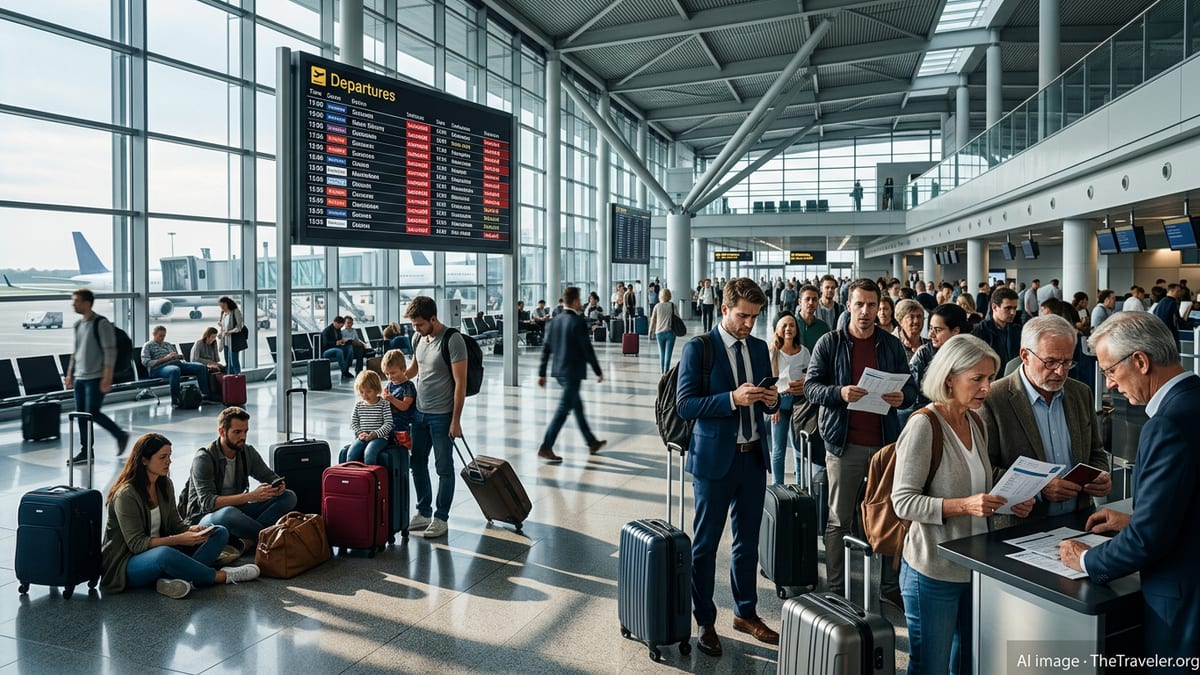
Local coverage has highlighted scenes of crowded check-in areas and long queues at information desks in Cagliari when flights on the Rome route fail to depart on time. For visitors at the end of a holiday, same-day cancellations can mean an extra night on the island, while residents returning to the mainland may face unexpected accommodation costs in Rome if their connecting services are disrupted.
Travel forums and social media discussions in recent weeks have also pointed to difficulties in reaching carrier call centers and obtaining timely updates about schedule changes, adding to the perception among some passengers that the route has become less predictable during the peak season.
Performance trends on Rome–Cagliari operations
Data drawn from airport and aviation analytics portals for Rome Fiumicino suggests that Aeroitalia’s operations on the Cagliari route have experienced a mix of on-time performance and notable delays over the past year. While many daily flights appear to depart and arrive close to schedule, the dispersion of delay times shows significant variability, particularly on certain peak travel days.
Analysis of recent flight histories on the Cagliari–Rome pairing indicates that several July rotations operated broadly on time, yet a minority of flights encountered substantial delays beyond one hour. The early July instance in which a morning Cagliari–Rome flight landed with more than two hours’ delay, followed by a late-running return sector, is one of the clearer examples of this pattern.
A broader review of Aeroitalia’s performance data at Fiumicino for the last closed twelve-month period shows fluctuations in on-time arrival rates by month and by day of the week, with some days recording relatively modest average delays and others exhibiting higher figures. Industry observers note that such volatility can reflect a combination of operational constraints, air traffic management, weather and seasonal congestion across the Italian network.
For passengers, however, the statistical nuances matter less than the practical reality: even a relatively small number of severely delayed or cancelled flights on a lifeline route such as Cagliari–Rome can translate into significant real-world disruption, particularly when aircraft rotations are tightly scheduled and spare capacity is limited.
Looking ahead for Sardinian travelers
The recurrence of delays on the Cagliari–Rome link arrives at a sensitive moment for Sardinia’s connectivity, as the island seeks to balance strong summer tourism demand with the everyday mobility needs of its residents. Publicly available planning documents for 2026 highlight a continued commitment to territorial continuity, with Aeroitalia’s services from Cagliari to Rome and Milan positioned as central pillars of that strategy.
Travel organizations and consumer groups are closely watching how the carrier manages peak-season operations on these routes, particularly in terms of schedule reliability, passenger information and assistance in cases of long delay or cancellation. The recent cancellations and extended delays have renewed calls in local commentary for robust oversight of service quality on subsidized links.
For now, Sardinian travelers using the Cagliari–Rome corridor are advised by travel information outlets to monitor flight status carefully on the day of departure, allow additional time for connections in Rome and familiarize themselves with compensation and assistance rules in the event of long delays. With the busiest weeks of summer still ahead, performance on this route is likely to remain a focus of attention for passengers and analysts alike.