

More news on this day
The skies between Mexico City and Quito are busy once again, as Aeromexico restores nonstop service between the two capitals, a move poised to reshape regional connectivity and long-haul travel options across the Americas.
Get the latest news straight to your inbox!
Direct Capital-to-Capital Flights Return
Publicly available schedule data shows that Aeromexico is resuming its Mexico City–Quito route in late March 2026, reinstating a nonstop link that had been absent since mid-2024. The service restores a direct connection between one of Latin America’s largest hubs and Ecuador’s high-altitude capital, a pairing that has historically supported both tourism and business traffic.
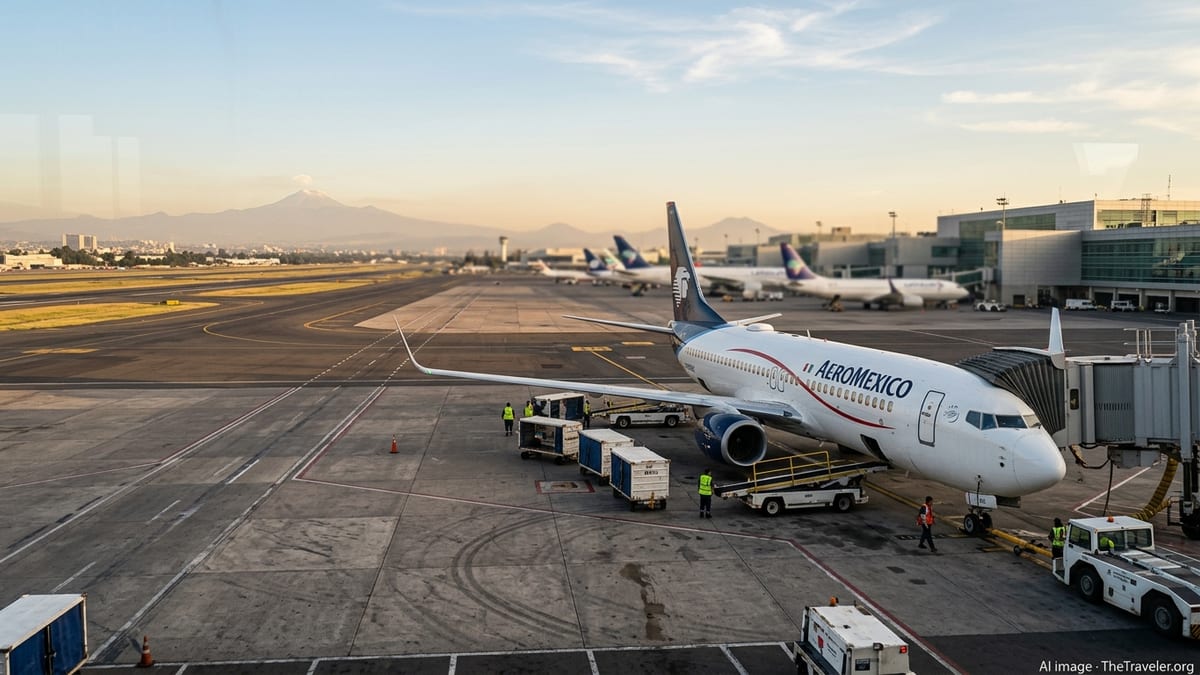
Industry route trackers indicate that the SkyTeam carrier is initially operating four weekly flights between Mexico City International Airport and Quito’s Mariscal Sucre International Airport using Boeing 737 MAX 8 aircraft. The resumption follows a period of suspension during which travelers between the two cities relied on connections through other Latin American or U.S. gateways, often adding hours to total journey time.
The return of nonstop service marks the latest step in Aeromexico’s broader rebuilding and expansion of its international network. In recent seasons the airline has increased long-haul and regional capacity from Mexico City, reflecting renewed demand and stronger competition for Latin American traffic flows.
Faster Links Across Latin America and Beyond
The restored route is expected to significantly shorten travel times between Ecuador and key cities in North America, Europe, and Asia that are already served from Mexico City. With the new schedule, passengers in Quito gain additional one-stop options to destinations such as Los Angeles, New York, Madrid, Paris, and select Asian gateways reachable via Aeromexico and its partners.
Travel analysts note that Mexico City’s role as a bridge between South America and long-haul markets has grown in recent years, supported by a mix of Mexican and foreign carriers. Adding Quito back into Aeromexico’s network strengthens that position, giving Ecuadorian travelers an alternative to traditional routings via Bogotá, Panama City, Lima, or U.S. hubs.
For Mexican travelers, the nonstop flight simplifies access to Ecuador’s main urban and tourism centers. From Quito, domestic connections reach destinations including the Amazon region, the country’s Pacific coast, and gateways used for trips to the Galápagos Islands. The new schedule therefore expands options for multi-country itineraries that link Mexico’s cultural highlights with Ecuador’s biodiversity hotspots.
Tourism and Business Travel Set for a Lift
Tourism bodies in both countries have identified city-pair connectivity as a key factor in diversifying visitor flows and lengthening stays. Nonstop flights between Mexico City and Quito are expected to support city-break tourism, cultural travel, and nature-focused itineraries that combine the historic centers of both capitals with nearby highland and volcanic landscapes.
Business and corporate travel is also likely to benefit. Mexico and Ecuador maintain commercial ties in sectors such as manufacturing, energy, agribusiness, and services, and easier air links typically facilitate trade missions, technical visits, and regional headquarters travel. Additional capacity on a nonstop route can reduce reliance on circuitous connections that increase both travel time and costs.
Industry observers point out that schedule reliability and competitive pricing will be important in determining how quickly demand grows on the reinstated route. However, the use of Boeing 737 MAX 8 aircraft, with a configuration suited to medium-haul regional missions, suggests that Aeromexico is aligning capacity with expected traffic while retaining flexibility to adjust frequencies if the market responds strongly.
Strengthening Mexico City’s Role as a Hub
Mexico City International Airport remains one of Latin America’s busiest hubs, handling tens of millions of passengers annually and serving as Aeromexico’s primary base. The restoration of Quito service fits into a broader pattern of the carrier adding and resuming routes across the Americas and Europe, consolidating its position as a connector between north–south and east–west flows.
Recent seasons have seen the airline adjust schedules on transatlantic routes such as Mexico City–Rome and prepare new or renewed services to destinations including Barcelona and additional U.S. cities. Within this wider network, Quito represents a strategic South American spoke that can feed long-haul flights while also supporting point-to-point demand between the two capitals.
The resumed link also comes at a time when regional competition is intensifying. Other Latin American carriers and global airlines continue to develop their own hubs in Bogotá, Lima, São Paulo, and Panama City. By reintroducing Mexico City–Quito flights, Aeromexico reinforces its claim to a share of the southbound and northbound traffic that might otherwise flow through rival connecting points.
What the Change Means for Global Travelers
For international travelers planning multi-stop itineraries, the reactivation of Mexico City–Quito service introduces fresh routing possibilities. Passengers originating in Europe, North America, or Asia can now more easily incorporate both Mexico and Ecuador into a single trip, often with a single ticket and coordinated connections through Mexico City.
Travel planners highlight that the schedule structure, with four weekly frequencies, may particularly appeal to leisure travelers who are less constrained by rigid weekday patterns. At the same time, the route’s timing and aircraft type are designed to dovetail with banked departures and arrivals at Aeromexico’s hub, improving the viability of same-day connections.
As airlines across the region continue to rebuild and refine their post-pandemic networks, the return of nonstop flights between Mexico City and Quito is emerging as a notable example of how strategic route decisions can reshape connectivity. For travelers, the practical effect is straightforward: fewer stops, shorter travel times, and a wider range of options for discovering two of Latin America’s most compelling capitals and the regions that surround them.