

More news on this day
Afghanistan is moving to digitize its borders with a new national e-visa portal, a high-stakes attempt to streamline travel formalities, signal openness to visitors and cautiously position the country back on the global tourism map.
Get the latest news straight to your inbox!
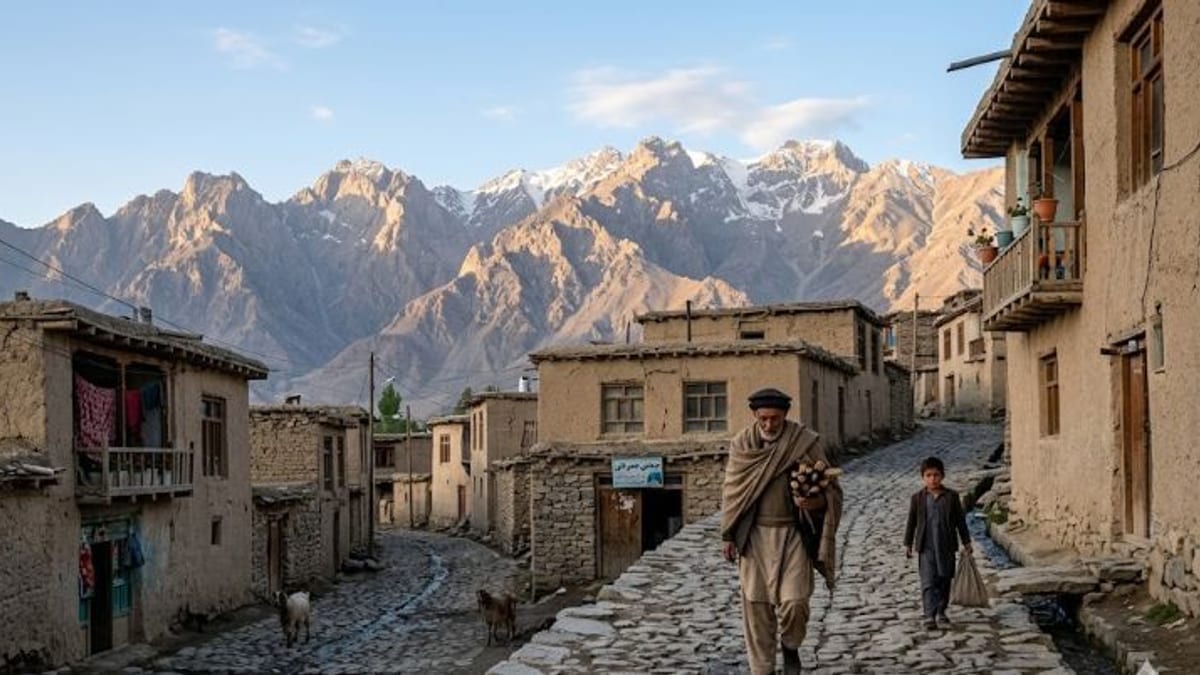
Image by Latest International / Global Travel News, Breaking World Travel News
A Digital Turn for One of the World’s Hardest Borders
Publicly available information from Afghan government planning documents indicates that the e-visa portal is part of a broader national push to put core public services online, including visas, work permits and business registrations. References to a visa-focused e-service appear alongside other priority digital projects, suggesting that authorities see border management as a critical test case for their wider e-government ambitions.
Under the emerging model, travelers are expected to complete visa applications online, upload supporting documents and receive an electronic authorisation before arrival, replacing the older system that relied heavily on in-person visits to consulates or paper-based processing. This approach mirrors e-visa regimes already adopted across much of Asia and Africa, where governments are using technology to cut queues, reduce opportunities for petty corruption and capture more accurate data on who is entering and leaving the country.
The move comes as Afghanistan remains one of the world’s most isolated destinations, both politically and logistically. Transport links are limited, foreign embassies are thin on the ground and many Western governments continue to warn their citizens against all travel due to ongoing security risks. Against that backdrop, the launch of a modern digital visa platform is being viewed by regional observers as a notable, if tentative, step toward normalising cross-border movement.
International travel analysts also point out that electronic visas are increasingly seen as a baseline requirement for countries hoping to attract niche tourism segments such as adventure travelers, heritage tourists and diaspora visitors. Without a reliable, predictable visa pipeline, these groups often opt for destinations where the administrative burden is lower and entry conditions are clearer.
Tourism Hopes in a Challenging Security Environment
The decision to develop an e-visa portal is closely tied to Afghanistan’s parallel effort to stabilise and professionalise its nascent tourism sector. Before decades of conflict, the country featured on overland backpacker routes linking Iran, Central Asia and South Asia, with travelers drawn to its mountain landscapes, historic Silk Road cities and distinctive cultures. Industry commentators now suggest that authorities are seeking to recapture at least a fraction of that market by tackling the bureaucratic obstacles that once made obtaining a visa unpredictable and time-consuming.
Visa policy has become a central lever in this strategy. By simplifying pre-arrival formalities and centralising applications online, Afghanistan aims to project an image of procedural clarity, even as it acknowledges that not all travelers will be eligible for entry. Tourism specialists note that a digital system can make it easier to define eligibility criteria, adjust them in real time based on security assessments and communicate changes quickly to airlines, tour operators and potential visitors.
At the same time, the security context remains complex. Many international travel advisories still highlight the risk of violence, limited consular support and an underdeveloped health-care system for foreign travelers. The e-visa portal does not change those realities, but it offers a controlled framework for vetting who is allowed in, how long they can stay and where they are likely to travel once inside the country. For officials focused on risk management, that level of visibility is seen as preferable to ad hoc, paper-based systems that are harder to monitor.
Industry observers caution that any significant tourism rebound will depend on more than just visas. Reliable air links, clear rules for tour operators, investment in accommodation and a consistent approach to visitor safety will all be needed to turn digital access into actual arrivals. Still, the e-visa rollout is being described as a prerequisite step, without which other reforms would struggle to gain traction.
Regional Context: Following a Global E-Visa Trend
Afghanistan’s pivot to online visas aligns it with a wider global movement toward digitised entry systems. In recent years, countries as varied as Somalia, Thailand and India have launched or expanded e-visa platforms as part of efforts to boost tourism, manage security risks and modernise border infrastructure. These initiatives typically promise faster processing, more transparent requirements and easier data-sharing between immigration, security and tourism agencies.
In South and Central Asia, the trend is especially pronounced. India has overhauled its visa regime for Afghan nationals through a dedicated online module, while Pakistan, Iran and Gulf states have leaned on digital processes to handle high volumes of Afghan travelers, workers and patients seeking medical care abroad. Analysts note that Afghanistan’s own e-visa system can draw on these regional precedents, adopting common technical standards and user-experience patterns that many would-be visitors already recognise.
Tourism economists argue that late adopters of e-visa technology risk losing market share to neighbours that offer simpler, more predictable entry conditions. For Afghanistan, which competes indirectly with destinations such as Pakistan’s northern areas, Tajikistan’s Pamir region and Iran’s historical cities, aligning with global e-visa norms is seen as essential to remaining on the radar of tour operators that specialise in frontier destinations.
The shift is also significant from a policy perspective. By building digital links with airlines, booking platforms and regional tourism boards, an e-visa portal allows Afghanistan to plug into the same data flows that underpin travel planning elsewhere. Over time, that connectivity can help refine marketing strategies, identify which source markets are most responsive and adjust visa categories to match emerging travel patterns, such as religious tourism, trekking or cultural heritage tours.
What the New System Could Mean for Travelers
For travelers who do consider Afghanistan, the most immediate change is likely to be procedural. Rather than navigating inconsistent information from scattered consulates or third-party intermediaries, applicants are expected to submit forms, passport scans and supporting documents through a single online interface. Guidance on required documentation, processing times and applicable fees can be centralised and updated in real time, reducing confusion and the risk of last-minute surprises at the border.
Travel facilitators highlight several potential benefits. Electronic pre-screening can shorten queues on arrival, reduce paperwork for airlines and improve coordination with accommodation providers that must register foreign guests. For visitors, digital confirmation of visa status offers reassurance in a context where in-person embassy support may be limited or absent. For authorities, automated checks and data analytics can help flag high-risk applications while allowing low-risk tourists and business travelers to pass through with fewer delays.
There are also implications for transparency. A clearly structured e-visa portal can reduce reliance on informal brokers who have historically charged high fees to navigate opaque visa processes. With standardised online forms and published requirements, applicants are better placed to judge whether they meet the criteria, how long processing is likely to take and what recourse they might have if applications are delayed or refused.
At the same time, implementation will be critical. Technology rollouts in fragile settings often face challenges ranging from inconsistent internet connectivity to limited digital literacy among users. Observers say the effectiveness of Afghanistan’s e-visa system will hinge on how well it is communicated to airlines, tour operators and prospective visitors, and how quickly technical issues are resolved in the first months of operation.
A Test Case for Afghanistan’s Digital Future
Beyond tourism, the e-visa portal is emerging as a symbol of Afghanistan’s broader digital aspirations. The same national planning documents that reference an online visa service also point to ambitions for a unified government portal, expanded online payment options and integrated databases spanning customs, taxation and civil registration. In that context, the e-visa platform functions as both a practical service and a proof of concept for more ambitious reforms.
Travel and governance analysts see the project as a crucial benchmark. If the visa portal delivers on its promises of faster processing, clearer rules and improved security screening, it could strengthen the case for investing in other digital services that touch foreign visitors and the Afghan diaspora, from online business registration to electronic permits for cultural and sporting events.
Conversely, if the system is plagued by outages, inconsistent decisions or poor communication, it may reinforce perceptions that Afghanistan remains a high-friction destination in both digital and physical terms. That outcome would not only dampen tourism prospects but also complicate broader efforts to reconnect the country to regional trade and transport networks.
For now, travel industry watchers are framing Afghanistan’s e-visa portal as one of the year’s most consequential border-technology stories, precisely because it is unfolding in one of the world’s toughest environments for tourism. Whether it becomes a catalyst for a modest revival in visitor numbers or a cautionary tale about the limits of digital reform in a fragile state will depend on how effectively the system is implemented and how the security landscape evolves in the months ahead.