

More news on this day
New analysis from digital travel platform Agoda for Hari Raya 2026 indicates a strong shift toward short-haul, culturally immersive destinations across Asia, underscoring the growing role of Southeast Asia in driving regional tourism recovery and growth.
Get the latest news straight to your inbox!
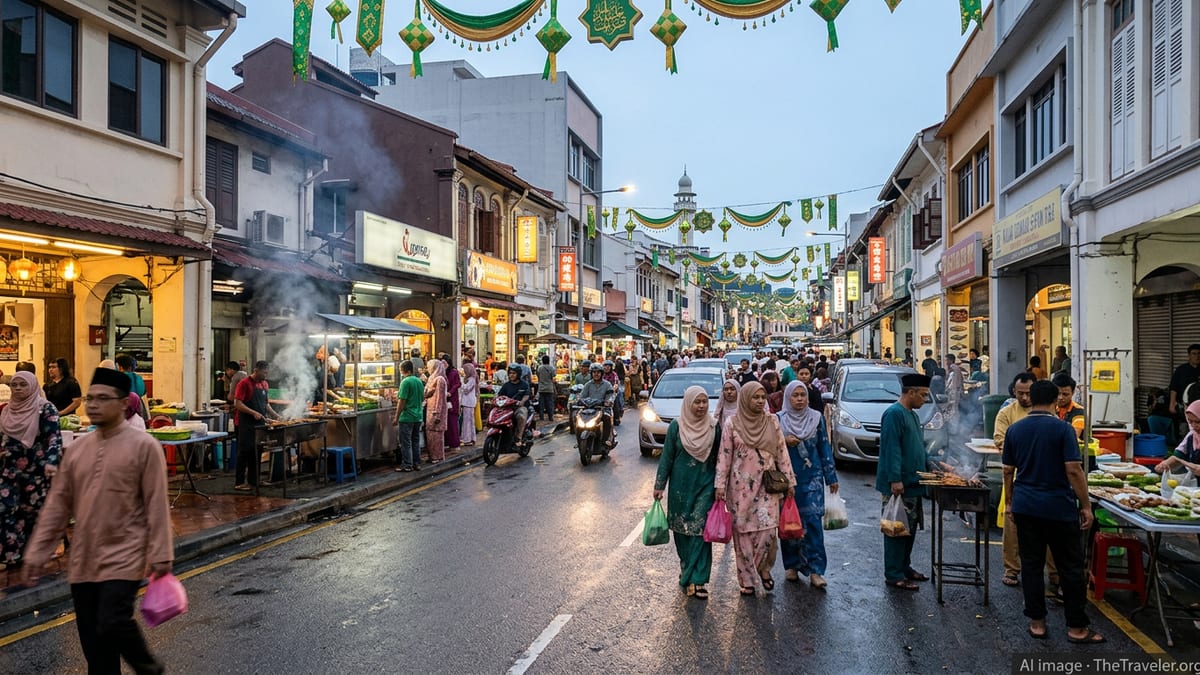
Hari Raya Searches Surge as Travelers Stay Closer to Home
Publicly available booking insights for the Hari Raya festive period in March 2026 show a sharp increase in regional travel intent from core Southeast Asian markets. Agoda has reported a 55 percent month-on-month rise in accommodation searches from travelers in Malaysia, Indonesia, and Singapore for check-ins over the main holiday window of 20 to 23 March 2026, highlighting how the festival continues to anchor one of the region’s busiest travel moments.
The data points to a clear preference for destinations reachable within a few hours’ flight, or even by road, as travelers look to balance reunion trips, spiritual observance, and leisure breaks. Industry coverage of Agoda’s 2025 Hari Raya trends had already flagged strong demand for intra-Asian itineraries, with Thailand and Japan topping the list of most-searched markets among these same origin countries. The 2026 search momentum suggests that pattern is consolidating rather than fading.
Beyond headline growth, the latest numbers underline how Hari Raya has evolved from a primarily domestic or “balik kampung” period into a broader regional travel season. As families blend visits to hometowns with side trips to nearby beach, city, or mountain destinations, short-haul travel within Asia is increasingly becoming part of the festive routine.
Bangkok, Bali and Kuala Lumpur Anchor a Regional Holiday Triangle
Across Agoda’s Hari Raya data sets, a familiar trio of regional hubs continues to dominate traveler attention. Bangkok and Bali stand out as perennial favorites, frequently ranking among the most searched city destinations around major Asian holidays, while Kuala Lumpur retains its dual role as both a primary gateway and a destination in its own right.
For the March 2026 Hari Raya period, Bali remains the single most searched destination among travelers from Malaysia, Indonesia, and Singapore, according to Agoda’s latest festive-season release. Yogyakarta, Bandung, and Kuala Lumpur follow, all of them reachable on relatively short flights from regional capitals and offering a strong blend of culture, cuisine, and nature experiences.
Earlier 2025 Hari Raya figures from Agoda highlighted a similar pattern, with Thailand and Japan leading as top markets and Bangkok named the most searched city for travelers from Southeast Asia. Together, these findings indicate that a small group of high-profile urban and resort centers is acting as a magnetic core for festive travel, even as interest spreads to lesser-known areas nearby.
For tourism boards and local businesses, this concentration of demand during a defined holiday window creates both opportunities and pressure. High-traffic nodes like Bangkok, Bali, and Kuala Lumpur benefit from steady arrivals, but the growing popularity of surrounding secondary destinations suggests that travelers are also looking for ways to escape congestion while retaining easy access to major hubs.
Secondary and Culturally Immersive Destinations Gain Ground
Agoda’s broader consumer reports for 2025 and 2026 point to a notable rise in secondary and emerging destinations across Asia, a trend that is increasingly visible around festival travel. Company analyses released ahead of World Tourism Day 2025 showed that searches for secondary destinations were growing around 15 percent faster than for top-tier cities compared with the previous year, as travelers sought more authentic and less crowded experiences.
In this context, the prominence of places like Yogyakarta and Bandung in the latest Hari Raya rankings is significant. Both Indonesian cities are known for their strong cultural identity, historic sites, and proximity to natural attractions, making them natural fits for travelers who want to weave spiritual reflection, family time, and exploration into a single trip. Similar patterns are emerging in Vietnam, where Sapa has been highlighted in recent Agoda data as one of Asia’s fastest-growing destinations for international travelers, driven in part by interest in community-based and nature-focused tourism.
Industry coverage of Agoda’s market outlooks for Indonesian and Malaysian travelers in 2026 also points to rising enthusiasm for trips that center on food, heritage, and local customs rather than purely shopping or nightlife. As these motivations align with the reflective and communal spirit of Ramadan and Hari Raya, culturally rich secondary destinations are likely to see further gains during the festive season.
For host communities, this shift offers a chance to spread tourism benefits more evenly beyond major capitals. It also raises questions about how to manage capacity, preserve local character, and ensure that fast-growing hot spots are supported with adequate infrastructure and visitor education.
Japan, China and North Asia Extend the Short-Haul Horizon
While Southeast Asia supplies much of the demand and many of the destinations for Hari Raya travel, Agoda’s recent releases show that North Asian markets are playing an increasingly prominent role. Press materials for the 2026 festive period note that Japan and China sit among the top searched markets for travelers from Malaysia, Indonesia, and Singapore, reinforcing a broader trend of strong regional interest in these countries.
Earlier data for the 2025 Hari Raya season placed Thailand and Japan as the top two most searched markets for these same origin countries, with China, South Korea, and Taiwan completing the top five. At the city level, Bangkok, Tokyo, and Seoul featured prominently among the most searched destinations, illustrating how travelers are extending their range without abandoning the short- to medium-haul comfort zone.
Improved air connectivity, streamlined visa policies in parts of the region, and a growing familiarity with Japan and Korea as repeat destinations appear to be supporting this shift. For many travelers, Tokyo or Seoul are now perceived less as once-in-a-lifetime trips and more as accessible, culturally rich city breaks that can be combined with religious holidays or long weekends.
This pattern effectively broadens the definition of “short haul” for Southeast Asian travelers. Four- to seven-day itineraries, identified in Agoda’s 2026 market outlooks as a common trip length for Malaysian and Indonesian travelers, are increasingly being spent in a mix of nearby Southeast Asian locations and slightly farther North Asian gateways that still fit comfortably into festive holiday windows.
What Rising Hari Raya Travel Signals for Southeast Asia’s Tourism Outlook
The surge in Hari Raya searches captured in Agoda’s 2026 data is part of a wider narrative about the maturation of Southeast Asia as both a source and destination market. With Malaysia, Indonesia, and Singapore generating strong outbound interest while simultaneously welcoming visitors from across Asia, the subregion is emerging as one of the world’s most dynamic short-haul travel corridors.
Agoda’s collaboration with national tourism organizations, including recent campaigns tied to Malaysia’s Visit Malaysia 2026 initiative, illustrates how data-led platforms are being woven into long-term tourism planning. By highlighting both established hubs and lesser-known areas, these partnerships aim to spread demand more evenly across regions and seasons, reducing pressure on marquee destinations while spotlighting communities that have historically sat off the main tourist trail.
For airlines, hotels, and local operators, the growing importance of festival-linked travel such as Hari Raya, Lunar New Year, and Diwali adds another layer of seasonality to manage. Yet it also provides relatively predictable peaks in demand, allowing stakeholders to tailor packages, events, and experiences that resonate with travelers seeking meaningful, culturally grounded journeys.
As 2026 unfolds, the evidence from Agoda’s Hari Raya data suggests that travelers in Southeast Asia are likely to keep favoring short-haul routes, secondary cities, and immersive cultural experiences. In doing so, they are reshaping regional tourism flows and reinforcing Asia’s position as a powerhouse for both intra-regional and long-haul travel growth.