


More news on this day
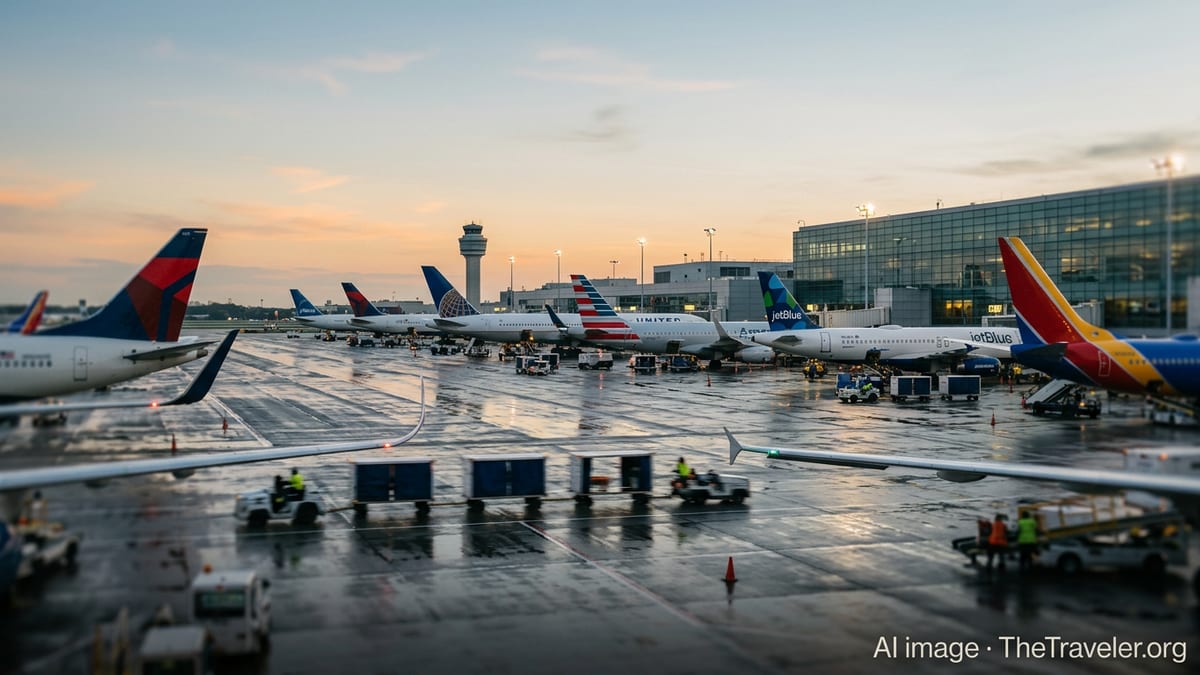
Shares of major US airlines including Delta, United, American, JetBlue and Southwest have been rising sharply in recent sessions, lifted by resilient travel demand and constrained capacity, even as fresh geopolitical tensions and uneven tourism patterns inject new volatility into the outlook for 2026.
Get the latest news straight to your inbox!
Wall Street Bids Up Carriers Despite Mixed Signals
Publicly available trading data and analyst commentary indicate that US airline stocks have staged a strong rebound in early 2026, extending gains that began after several carriers reported solid 2025 earnings and optimistic guidance. Delta Air Lines’ recent quarterly update was widely viewed as a sector bellwether, highlighting the strength of premium travel and loyalty revenue and helping to pull the broader group higher.
Reports from equity research platforms describe Delta’s September 2025 quarter as a key turning point, with the carrier surprising investors on profitability and signaling that corporate travel budgets were stabilizing rather than retreating. That improvement, alongside tight industry capacity, has encouraged investors to rotate back into airline names that had lagged other cyclical sectors.
American Airlines and United Airlines have also benefited from the shift in sentiment. Morningstar analysis shows American’s fair value estimate being raised as expectations firm up for a gradual recovery in its corporate customer base and continued industry-wide discipline on seats and schedules. The same research notes that the big three network carriers are still heavily exposed to macro factors such as fuel costs and household spending, which remain difficult to predict in 2026.
Low cost and hybrid carriers, including Southwest and JetBlue, have participated in the rally but continue to trade against a backdrop of intense price competition on key domestic leisure routes. Discounted fares on high-volume city pairs such as Chicago to Las Vegas and Los Angeles to San Francisco, highlighted in recent promotional material from online travel sellers, underscore how revenue growth still depends on filling aircraft, even as investors focus on margin expansion.
Travel Demand Remains Strong but Uneven
Behind the stock gains is a travel market that remains surprisingly resilient. Industry summaries referencing United Nations World Tourism Organization data point to global international arrivals rising again in 2025 and into 2026, with travel demand projected to remain robust despite weaker global growth. Separate digital travel forecasts published in early 2026 describe “strong” worldwide travel intent, especially for leisure trips and so-called “revenge travel” that has persisted longer than many forecasters expected.
However, this strength is not evenly spread. Research on online travel companies shows analysts trimming fair value estimates in 2025 on concerns that tariffs, softer US consumer sentiment and a more fragile economic backdrop could weigh on outbound travel from the United States. Surveys cited in those notes show a multi-month decline in US consumer confidence, as households reassess budgets in the face of inflation, interest rates and political uncertainty.
Regional data adds further nuance. A June 2025 US hotel market outlook from STR and Tourism Economics noted that domestic travel remained relatively healthy but that international inbound demand into major US tourist hubs had yet to fully normalize. The report projected a more meaningful recovery in 2026 as geopolitical tensions moderate, but also warned that any renewed shock could quickly stall progress.
At the airport level, early 2026 traffic reports underline how competitive dynamics vary city by city. A January 2026 passenger activity release from Norfolk International Airport, for example, shows American, Delta, United, Southwest and JetBlue all active in the market, with American and Delta holding the largest shares. Overall passenger volumes there slipped slightly year over year, reflecting how some regional markets are still adjusting to new airline strategies, route changes and price-sensitive travelers.
Geopolitical Risks Shake Global Tourism Flows
The recent flare-up in conflict involving Iran has introduced a new source of volatility for airlines and tourism operators. A widely cited summary of the economic impact describes large-scale airspace closures across Gulf states, forcing thousands of daily flight cancellations and disrupting long-haul networks that link Asia, Europe and North America. Hubs such as Dubai and Abu Dhabi, normally key connectors for US travelers headed to Africa or South Asia, have suffered sharp drops in traffic.
Published coverage of the conflict’s aviation impact notes that carriers based in the region, including Emirates, Etihad and Qatar Airways, have suspended or curtailed operations during the most intense periods of the crisis, with damages and lost revenue running into the billions. While US airlines have less direct exposure to Gulf sixth-freedom traffic, rerouting, longer flight times and higher insurance and security costs can ripple through their international businesses.
Travel and tourism boards in nearby destinations report sudden declines in bookings as travelers either postpone trips or rebook to alternative regions perceived as safer. Previous episodes of geopolitical tension have shown that such shocks can be highly localized but still drag on overall global tourism growth, particularly if they coincide with economic slowdowns or new travel advisories.
For investors, this overlay of geopolitical uncertainty reinforces why airline shares are often among the most volatile in the transport sector. Stock rallies driven by better-than-expected earnings can be quickly reversed if new events change route economics or prompt widespread itinerary changes, even when underlying leisure demand remains intact.
Costs, Capacity and Pricing Keep Markets on Edge
Even with robust demand, airlines and investors must contend with an intricate cost environment. Analysis from Morningstar in March 2026 emphasizes that fuel prices, labor contracts and aircraft financing terms all remain swing factors for carrier profitability. Rising fuel costs, in particular, can erode margins faster than fares can be adjusted, especially on tickets sold weeks or months in advance.
At the same time, constrained aircraft availability and cautious capacity planning are supporting fares. Aircraft delivery delays and ongoing engine maintenance issues have limited the ability of many airlines to add seats quickly. Industry commentaries on ticket pricing explain that carriers now rely on sophisticated revenue management systems that adjust fares in real time based on demand signals, competition and load factors, contributing to the sharp day-to-day fluctuations that travelers see when shopping for flights.
This discipline on supply is a key reason airline stocks have responded positively to recent earnings reports. Compared with earlier boom-and-bust cycles, carriers appear more focused on defending yields rather than chasing market share at any cost. However, any miscalculation in capacity or a sudden drop in bookings could force more aggressive discounting, particularly on discretionary leisure routes where price sensitivity is high.
Meanwhile, structural cost pressures do not move in tandem with demand. Wage agreements reached during the post-pandemic labor crunch have locked in higher pay scales for pilots, cabin crew and ground staff. Maintenance and airport fees are also trending higher. Public financial presentations from US carriers highlight ongoing efforts to offset these increases through ancillary revenue growth, loyalty partnerships and operational efficiencies, but markets remain alert to any signs that costs are outpacing pricing power.
A Volatile Path Ahead for Airlines and Tourism
Looking ahead to the peak summer 2026 season, forecasts from tourism and travel analytics firms sketch a picture of continued strength in global leisure travel, tempered by region-specific headwinds. Destinations in Europe and parts of Asia that benefit from favorable currency dynamics, such as Japan with its weak yen, are expected to see especially strong inbound arrivals, while long-haul markets exposed to the Iran conflict and other geopolitical flashpoints may experience a slower recovery.
For US airlines, that means navigating a patchwork of opportunity and risk. The large network carriers stand to gain from resilient transatlantic demand and improved corporate travel budgets, but must manage exposure to higher fuel prices and potential route disruptions. Low cost carriers will continue to lean on domestic and near-international leisure traffic, where competition is fierce and travelers are quick to react to fare changes.
Analysts tracking the sector caution that recent stock market gains are built on a delicate equilibrium: strong but not unlimited demand, disciplined but not infallible capacity, and a geopolitical environment that could shift quickly. Any shock that undermines traveler confidence, from new tariffs to security incidents or economic policy changes, could reintroduce the kind of sharp price swings that have long defined airline equities.
For now, the rally in shares of Delta, United, American, JetBlue, Southwest and their peers reflects a market that is willing to bet on another strong year of travel. Whether that optimism can withstand the next bout of turbulence in global tourism remains an open question.