

More news on this day
AIDAdiva has completed its 133-day world cruise and returned to Hamburg, marking the end of AIDA Cruises’ current global voyage while positioning the ship for a season of long-range itineraries to Northern Europe and beyond from German ports.
Get the latest news straight to your inbox!
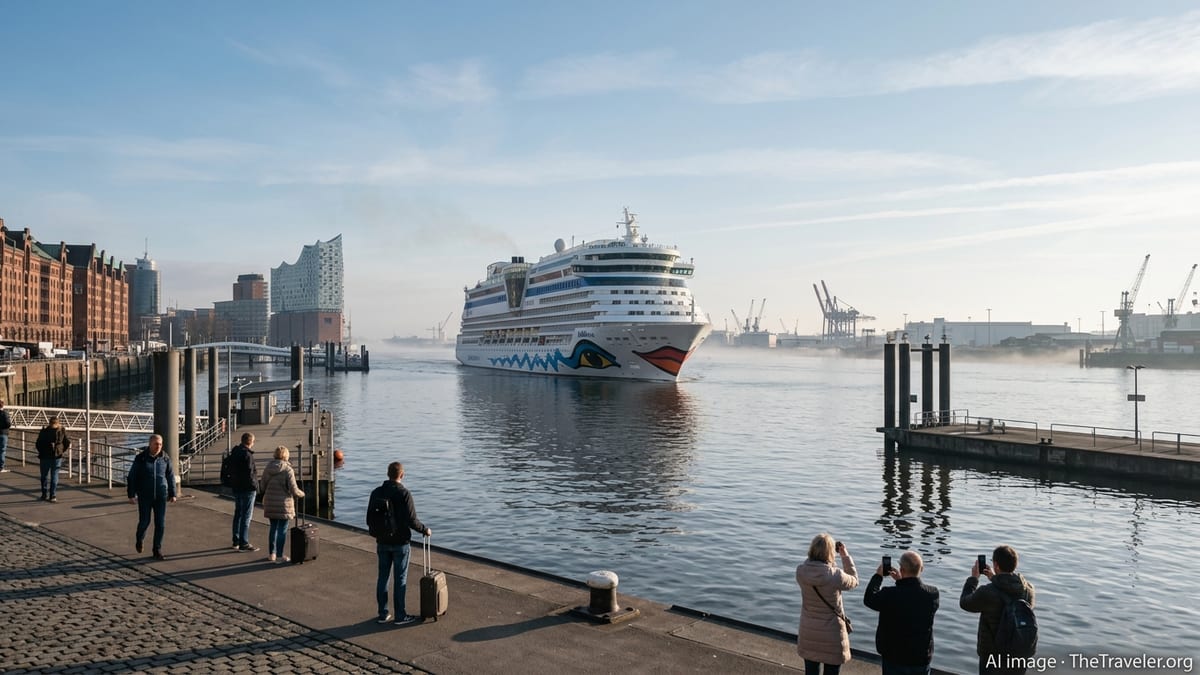
World Cruise Milestone for AIDAdiva and Hamburg
The 69,200-gross-ton AIDAdiva concluded its circumnavigation on March 23, 2026, sailing back into Hamburg after a 133-day itinerary that began at the city’s Cruise Center Steinwerder on November 10, 2025. Public information about the voyage indicates that the ship covered four continents and more than 40 destinations, underscoring Hamburg’s role as a major homeport for long-duration cruises from Germany.
The world cruise formed part of AIDA Cruises’ wider strategy to anchor marquee itineraries in German ports, giving guests the ability to embark on global voyages without long-haul flights. The itinerary followed a westbound route across the Atlantic and Pacific before returning via the Indian Ocean and the coasts of southern Africa, bringing an extended period of international attention to the ship and its departure city.
For Hamburg, AIDAdiva’s arrival adds another data point to the city’s growing profile as a turnaround hub for extended itineraries, including world cruises and long Northern Europe sailings. Cruise calls tied to such voyages typically boost hotel nights, pre- and post-cruise stays, and local visitor spending, reinforcing the economic importance of cruise tourism for the Hanseatic port.
The return also highlights the continued popularity of long-haul, multi-month voyages in the German-speaking source market, where demand has remained resilient despite global economic and geopolitical uncertainties. Industry coverage suggests that AIDA’s world cruises regularly attract a mix of repeat guests and first-time long-voyage travelers, many of whom book well in advance.
Route Highlights Across Four Continents
The completed world cruise was marketed as a new, record-length route for the ship, combining classic world-cruise destinations with several firsts for the AIDA brand. According to published itineraries, AIDAdiva’s journey included calls in North America, Central America, the South Pacific, Asia, the Indian Ocean, and southern Africa before returning to Europe.
North American calls included major ports such as New York City, representing AIDA’s return to the metropolis after several years, as well as West Coast gateways like San Francisco. The ship continued into the Pacific, celebrating the New Year in Honolulu and visiting destinations across Hawaii and onward into Asia, with calls in Japan and Southeast Asia highlighting the cruise’s broad geographic reach.
In addition to high-profile city ports, the itinerary featured classic island and beach destinations in the Caribbean and South Pacific, together with Indian Ocean stops such as the Maldives. The final segment along the coast of Africa, including Cape Town, added a mix of wildlife, wine-country excursions, and coastal scenery before the ship crossed back toward Europe and the North Sea.
The combination of marquee cities, remote islands, and extended sea days reflected a trend in world-cruise design that balances bucket-list destinations with time onboard. Travel trade analysis of similar itineraries indicates that this approach appeals to guests seeking both exploration and extended resort-style relaxation while remaining on a single ship for several months.
From Global Voyage to European Season
With the world cruise now complete, AIDAdiva is transitioning directly into a new program of sailings from German ports, maintaining Hamburg and other homeports as gateways to international travel. Seasonal deployment plans circulated in the trade and in AIDA’s own catalogues show the ship operating a mix of itineraries in Northern Europe, including voyages to Scandinavia, the Baltic region, and the Norwegian fjords.
Schedules indicate that the vessel will offer seven-day and longer sailings from spring and summer 2026, many of them departing from or ending in Hamburg and Warnemünde. Routes feature ports such as Oslo, Skagen, and other North Sea and Baltic destinations, as well as “best of” itineraries combining popular capitals and UNESCO-listed fjord landscapes.
The move from a global circumnavigation to regional cruises is typical of deployment patterns among European lines, which often position ships on high-profile long voyages over the winter months before returning them to core summer markets. For AIDAdiva, this means leveraging the heightened attention generated by the world cruise to attract guests to shorter, yet still experience-rich, itineraries from German waters.
Industry observers note that the strong summer deployment of AIDA ships from Hamburg, Kiel, and Warnemünde reinforces Germany’s status as one of Europe’s largest cruise source markets. The presence of multiple AIDA vessels in Northern Europe in 2026 underlines the company’s focus on serving guests who prefer to start their journeys close to home.
Product Upgrades and the AIDA Evolution Program
AIDAdiva’s return to Hamburg also comes as the ship benefits from product enhancements associated with AIDA’s wider Evolution modernization initiative for its Sphinx-class vessels. Earlier refurbishment work has already refreshed public areas and cabins, while the broader program announced by the brand aims to update design, technology, and guest facilities across several ships of the same class.
Descriptions of the onboard offering for the 2025 to 2026 world cruise highlighted a revised entertainment program, expanded culinary concepts, and refreshed wellness facilities. Special event formats and guest artists were used to differentiate the world cruise from standard itineraries, appealing to guests spending over four months at sea.
As the vessel transitions into its European season, these upgrades are expected to carry over to shorter sailings, giving guests embarking in Hamburg and other German ports access to the same refreshed product. Travel agencies and cruise specialists have pointed to modernized hardware and updated interiors as key factors in maintaining competitiveness in the increasingly crowded Northern Europe market.
The modernization of AIDAdiva is taking place alongside similar investments in sister ships, as the line prepares for additional long-haul deployments, including a future world cruise program that will shift to AIDAsol. Together, these initiatives signal an ongoing effort to keep older tonnage aligned with evolving guest expectations around technology, sustainability, and onboard experience.
Germany’s Expanding Role in World Cruise Itineraries
The completion of AIDAdiva’s world cruise with both departure and return in Hamburg underscores Germany’s growing role in world-cruise deployment for European brands. While global itineraries have long been associated with ports in the United Kingdom or the Mediterranean, more lines are now scheduling full circumnavigations from North Sea hubs to tap into strong demand from the German market.
Data from recent years shows that German ports have steadily expanded cruise infrastructure, including terminal capacity, shore power connections, and public transport links, all of which support the logistical requirements of embarking several hundred or thousand guests for extended voyages. Hamburg, in particular, has developed multiple cruise centers, enabling parallel ship operations and large-scale turnaround days.
For travelers, AIDAdiva’s program demonstrates how global itineraries can be combined with convenient access from domestic rail and air networks, making multi-month cruises more accessible to a broader range of guests. The ability to board in Hamburg and return to the same port after visiting multiple continents remains a strong selling point in AIDA’s marketing of world and long voyages.
With AIDAdiva now positioned for its next chapter in Northern Europe and future world cruises already announced on other ships, industry coverage suggests that the German-led world-cruise segment will continue to develop. Hamburg is expected to remain central to that growth, serving as both a symbolic starting line and a practical embarkation point for travelers looking to see the world by sea.