

More news on this day
Air Arabia will launch a new daily non-stop route between Sharjah and Rome Fiumicino on July 1, 2026, a move expected to strengthen tourism and business links between the United Arab Emirates and Italy while expanding the carrier’s fast-growing European network.
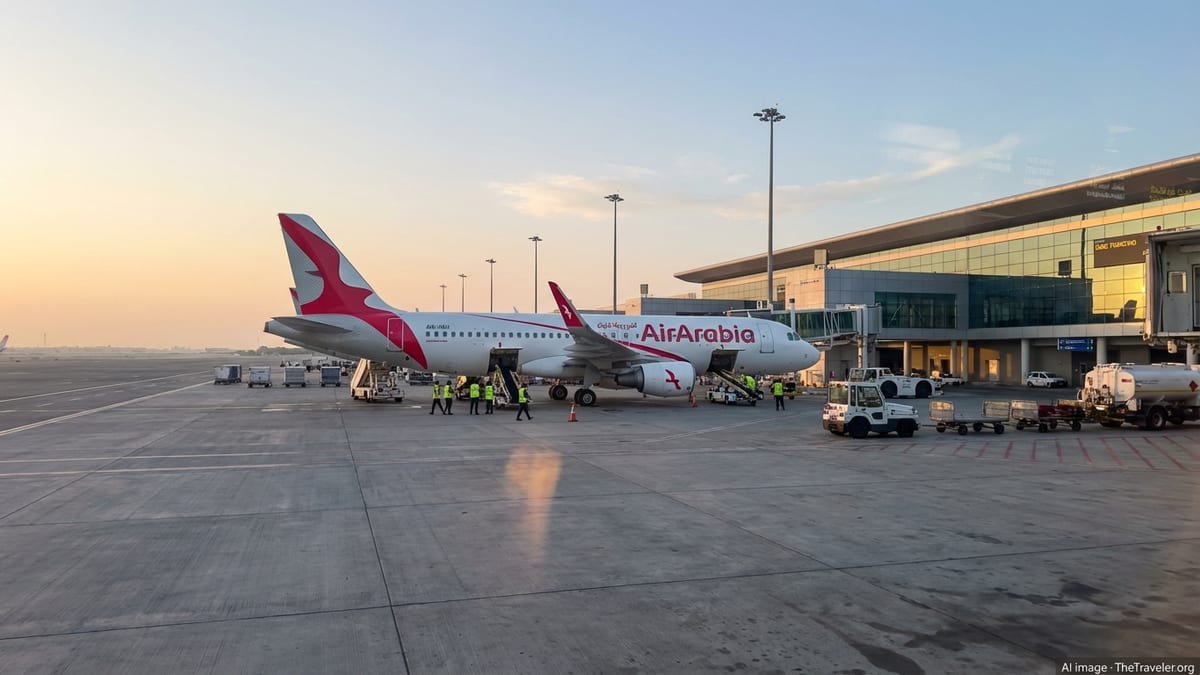
New Daily Link Between Sharjah and Rome
The Sharjah based low cost carrier confirmed that the new service will operate once daily between Sharjah International Airport and Rome Fiumicino, using its latest Airbus A320neo aircraft. The launch positions Air Arabia as the first budget airline to connect the UAE’s third largest emirate directly with the Italian capital, widening affordable access between the Gulf and Southern Europe.
According to the schedule published by the airline, flights will run seven days a week with a split pattern of morning and late afternoon departures from Sharjah and corresponding midday and late evening arrivals in Rome and back in the UAE. All timings are designed in local time to facilitate connections at both ends, with Rome arrivals timed for onward European links and Sharjah arrivals feeding regional services across the Middle East and South Asia.
Rome becomes Air Arabia’s second Italian destination from Sharjah after Milan Bergamo, underscoring the importance of Italy in the carrier’s European growth strategy. The route also builds on a wider expansion across the continent, which in recent seasons has seen new flights from Sharjah to Prague, Warsaw, Munich and other gateways.
Tourism Flows Set for a Lift in Both Directions
Tourism bodies in both the UAE and Italy are expected to benefit from the additional capacity and lower fares that typically accompany new low cost services. Rome remains one of Europe’s most visited cities, and the direct Sharjah connection opens easier access for budget conscious travellers from the wider Gulf and Indian subcontinent who use Sharjah as a convenient transit point.
The route provides non-stop access to the Italian capital’s historic attractions, from the Colosseum and Roman Forum to the Vatican Museums, as well as to Italy’s extensive rail network and domestic air links. Travel agents in the UAE are already positioning Rome as a gateway for multi stop itineraries that combine the Italian capital with coastal destinations such as the Amalfi Coast and islands including Sicily and Sardinia.
For Italian and European visitors, Sharjah serves as both a cultural destination in its own right and a jumping off point to nearby Dubai and other emirates. Sharjah has pushed its own tourism agenda in recent years, investing in museums, heritage districts and eco tourism projects, and the new daily service is expected to feed that growth with more short breaks and winter sun travel.
Business and Trade Connectivity Between UAE and Italy
Beyond leisure travel, the new daily connection is expected to support business and trade ties between the UAE and Italy, which already enjoy strong commercial relations in sectors such as energy, infrastructure, fashion and design. A regular non-stop link between Sharjah and Rome gives executives and small business owners more flexibility for short, high frequency trips, particularly important for industries where face to face meetings remain central.
Sharjah’s diversified economy, which includes logistics, manufacturing, publishing and a growing start up ecosystem, will gain from improved access to Italy’s capital and wider European Union markets. At the same time, Italian firms with operations in the Gulf can use the route to reach Sharjah’s industrial zones and free trade areas without routing through busier and often more expensive hubs.
Airport officials in Rome have welcomed the addition of Air Arabia, noting that the service contributes to Fiumicino’s strategy of diversifying carriers and strengthening links to the Arabian Peninsula. The daily schedule is expected to support both inbound corporate travel and outbound Italian business activity in the UAE and beyond.
Fleet Choice Highlights Efficiency and Comfort
Air Arabia will operate the Sharjah–Rome route with the Airbus A320neo, one of the newest additions to its single aisle fleet. The type is recognised for improved fuel efficiency and reduced emissions compared with earlier generation aircraft, qualities that are increasingly important as airlines and regulators push for lower carbon footprints on medium haul routes.
For passengers, the aircraft offers a relatively spacious single class cabin, with Air Arabia’s configuration providing generous seat pitch for a low cost carrier and overhead storage suited to the growing trend toward hand baggage only travel. The airline’s on board product includes a buy on board dining menu and a complimentary streaming service that allows travellers to access entertainment on their own devices.
By standardising on Airbus A320 and A321 family aircraft, the carrier also benefits from simplified maintenance and crew training, which can help keep operating costs down and support the competitive fares that are central to its model. The Rome service is expected to mirror that formula, positioning price sensitive travellers as the core target market while still attracting business passengers focused on schedule and reliability.
Strengthening Air Arabia’s European Network Strategy
The Sharjah to Rome launch forms part of a broader European push by Air Arabia, which has been steadily adding destinations across the continent from its UAE hub. In recent years the airline has introduced services to cities including Prague, Warsaw and Munich, as well as boosting capacity to existing points such as Milan Bergamo and Athens.
Analysts see the Rome route as a logical evolution of this strategy, tapping a high profile capital with strong year round demand from both leisure and corporate segments. With other new routes such as Sharjah to London Gatwick set to begin in 2026, the airline is positioning Sharjah as a key low cost gateway linking Europe with the Middle East, North Africa and the Indian subcontinent.
For the wider market, the entry of an additional Gulf based carrier on the Rome corridor adds competition at a time when demand for travel between Europe and the region is rebounding. As booking channels open for the July 1 start date, industry observers will be watching how quickly the new flights fill and whether further capacity or additional Italian destinations follow in the coming seasons.