

More news on this day
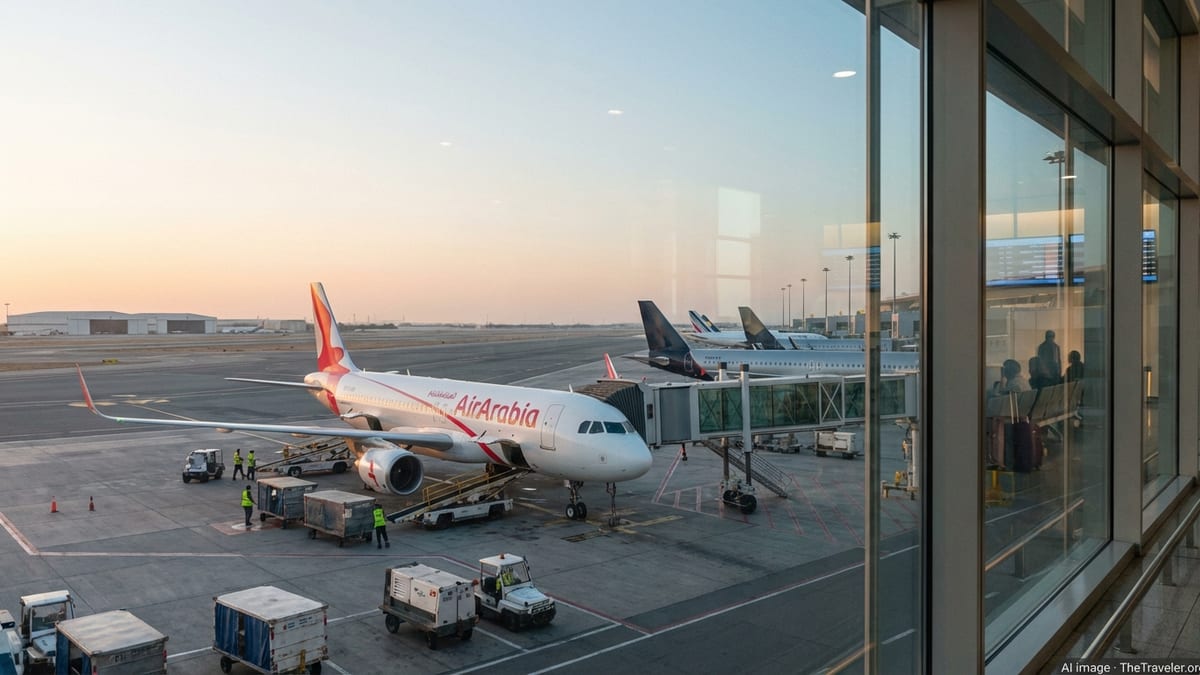
Air Arabia has relaunched a broad schedule of international services from Sharjah, Abu Dhabi and Ras Al Khaimah to 49 destinations worldwide, after the United Arab Emirates General Civil Aviation Authority restored airspace access and key regulatory approvals following recent regional disruptions.
Get the latest news straight to your inbox!
Regulatory green light follows weeks of regional disruption
According to recent aviation updates and industry coverage, the decision by the UAE General Civil Aviation Authority to reopen national airspace and renew operating clearances marks a turning point after weeks of curtailed schedules across the Gulf. Airspace restrictions introduced in late February and early March led to widespread cancellations and temporary suspensions as carriers adjusted routings and frequencies in response to evolving risk assessments.
Publicly available information shows that the latest regulatory steps allow UAE airlines to progressively restore planned operations, subject to ongoing safety reviews. For Air Arabia, the move has enabled a rapid restart of point to point services from its key hubs, reconnecting secondary and regional cities that were among the first to lose links when restrictions took effect.
Travel and aviation reports indicate that the restored approvals cover both overflight and landing permissions for a range of markets in the Middle East, North Africa, South Asia and parts of Europe. While some routings may still be subject to altitude adjustments or corridor changes, the overall framework now supports commercial scheduling at a scale that was not possible only a few weeks earlier.
Industry observers note that the GCAA, established under federal legislation and headquartered in Abu Dhabi, has continued to emphasise adherence to international safety norms while enabling carriers to rebuild connectivity. The current phase is being described in multiple analyses as a managed resumption rather than an immediate return to pre disruption capacity.
Sharjah, Abu Dhabi and Ras Al Khaimah reconnected to 49 cities
According to recent summaries from regional travel platforms and news outlets, Air Arabia’s updated timetable links the three emirates of Sharjah, Abu Dhabi and Ras Al Khaimah to 49 international destinations. The network spans around 17 countries, primarily across the Gulf, wider Middle East, the Indian subcontinent, North and East Africa and selected leisure points in Europe and Central Asia.
Reports indicate that services are resuming to high demand markets such as Bahrain, Oman, Saudi Arabia, Egypt, Jordan and Kenya, alongside key South Asian destinations in India, Pakistan, Bangladesh, Sri Lanka and Nepal. Additional routes are understood to include cities in Iraq and Syria, as well as holiday and expatriate hubs in Greece, Turkey and Thailand.
From Sharjah, the carrier’s largest base, frequencies are being restored on trunk routes that feed both migrant worker traffic and visiting friends and relatives travel. Abu Dhabi and Ras Al Khaimah see a mix of origin and destination demand and inbound tourism, with schedules tailored to airport slot availability and local catchment patterns.
Industry tracking services and booking platforms suggest that initial schedules may feature reduced weekly frequencies on some routes before building up over the coming weeks. Analysts expect that Air Arabia will prioritise sectors with strong year round demand and shorter stage lengths that support efficient fleet utilisation as the restart phase unfolds.
Boost for tourism, trade and expatriate mobility
The restoration of 49 international routes is being interpreted by tourism boards and market commentators as a significant boost to the UAE’s broader visitor economy. With more low cost options now back on sale, price sensitive leisure travellers from South Asia, the Levant and North Africa gain additional access to the country’s resorts, shopping destinations and events calendar during a period of renewed uncertainty elsewhere in the region.
Business and trade flows are also expected to benefit as direct connections return between the UAE’s secondary airports and regional commercial centres. Air Arabia’s network includes a number of cities that are not always served nonstop by full service carriers, providing small and medium sized enterprises with affordable links for meetings, sourcing trips and export activity.
For the UAE’s large expatriate communities, particularly workers based in the northern emirates, the reinstated flights restore essential links to home countries that were disrupted when airspace restrictions took effect. Travel commentators highlight that the ability to depart from Sharjah or Ras Al Khaimah, rather than relying solely on Dubai or Abu Dhabi, reduces travel time and surface transport costs for many residents.
Local tourism stakeholders observe that connectivity from Ras Al Khaimah in particular supports the emirate’s positioning as an outdoor and adventure destination, where hotel and attraction pipelines are geared toward regional short breaks. Consistent low cost capacity is seen as central to maintaining occupancy levels and supporting ongoing investment commitments.
Flexible booking policies aim to rebuild traveller confidence
In parallel with the network restart, Air Arabia has maintained a degree of flexibility in its booking policies, according to travel trade reports and customer advisories. Recent coverage notes that the airline is allowing at least one free date change within a defined window for eligible tickets, enabling passengers to shift travel plans if conditions evolve or personal circumstances change.
These measures follow a period in which many travellers faced last minute schedule adjustments and rolling uncertainty around regional airspace status. Analysts suggest that clear rebooking options, combined with transparent communication on route resumptions and any remaining restrictions, are likely to be important in restoring confidence in medium haul travel across the Gulf and its neighbourhood.
Travel technology platforms and meta search providers continue to urge passengers to monitor flight status in the days before departure, given that operational environments can still change at short notice. However, the breadth of Air Arabia’s reinstated network is being viewed as a signal that regulators and airlines currently assess the risk environment as manageable under existing safeguards.
Carrier level data and public schedules imply that additional destinations could be added or upgraded in frequency if demand strengthens and regulatory assessments remain favourable. Market watchers will be tracking load factors and fare trends closely as the new schedules bed in ahead of the busy summer season.
Regional aviation recovery gathers pace
The resumption of Air Arabia’s three hub operations is unfolding alongside a wider regional recovery, with other Gulf and Middle Eastern airlines also reintroducing flights as airspace corridors stabilise. Recent analytical pieces point out that low cost carriers play a key role in this phase, often being among the first to re enter short haul markets that underpin regional connectivity.
For the UAE, having Sharjah, Abu Dhabi and Ras Al Khaimah once again connected to a broad network of cities enhances the country’s positioning as a multi node aviation hub rather than a single airport gateway. This diversification spreads traffic across infrastructure, supports competition on fares and products, and can provide resilience if future disruptions affect one particular airport or corridor.
Aviation sector commentators note that the present restart is taking place against a backdrop of strong structural demand for travel to and through the Gulf, driven by population growth, ongoing investment projects and expanding tourism offerings. As a result, capacity that was temporarily grounded during the airspace closure period is expected to be absorbed relatively quickly, provided that there are no further escalations.
While the overall pace of normalisation will depend on security assessments and regulatory coordination across multiple states, the decision to reinstate 49 Air Arabia routes from the UAE’s three northern hubs is being viewed as a clear signal that regional aviation is entering a new stabilisation phase. For travellers, the immediate impact is greater choice of departure points, destinations and price points as the network rebuild gathers momentum.