

More news on this day
China and Kazakhstan are tightening their aviation and tourism ties as Air Astana launches a new nonstop route between Almaty and Shanghai, adding fresh capacity on one of Central Asia’s most important corridors to the Chinese mainland.
Get the latest news straight to your inbox!
New Nonstop Service Connects Almaty With China’s Commercial Hub
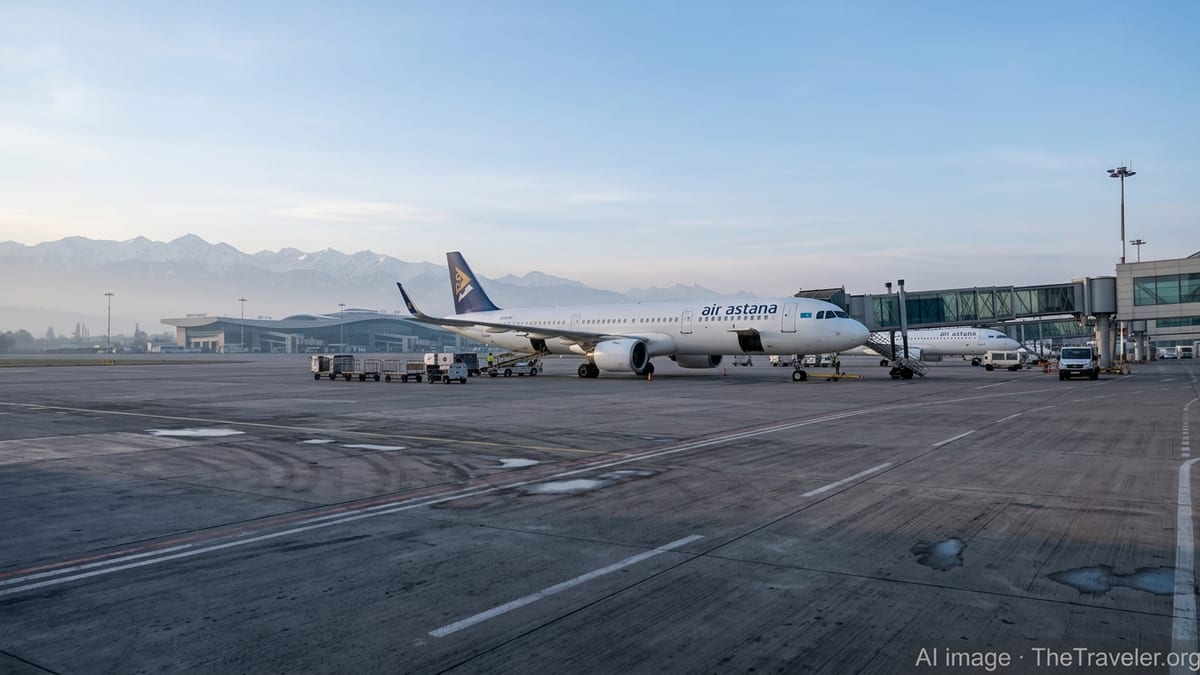
Air Astana is rolling out direct flights between Almaty and Shanghai, expanding the Kazakh flag carrier’s fast-growing network into one of China’s most influential gateway cities. Publicly available information indicates that the service is being marketed as a key link between Kazakhstan’s largest metropolis and Shanghai’s financial and logistics hub, with flight times of just over six hours eastbound and around seven and a half hours on the return leg.
The route adds to a wave of new connectivity between the two countries, following recent launches and announcements of services linking Kazakhstan with Chinese cities such as Beijing, Guangzhou and Yining. Aviation updates from Kazakhstan highlight that authorities have steadily increased the number of permitted weekly flights between the two countries, reflecting a policy shift toward deeper civil aviation cooperation.
Shanghai’s role as a global finance, technology and maritime trade center is expected to make the new connection particularly attractive for business travelers and investors. At the same time, tourism boards and industry reports are positioning the route as a convenient new option for leisure visitors from both sides, especially as Kazakhstan emerges as a regional stopover and adventure destination for Chinese travelers.
Visa-Free Travel and Tourism “Year” Campaigns Lift Demand
Policy changes over the past two years have laid the groundwork for stronger passenger flows on China–Kazakhstan routes. Bilateral visa-free entry arrangements now allow citizens of both countries to make short visits without securing a visa in advance, a measure that tourism authorities describe as a major incentive for spontaneous city breaks and short business trips.
In addition, coordinated tourism campaigns have brought further attention to cross-border travel. Previous designations of special tourism years, including initiatives such as a “Year of Kazakhstan Tourism in China” and a corresponding “Year of China Tourism in Kazakhstan,” have been used to promote cultural events, tour packages and destination marketing across both markets. These efforts, highlighted in regional media coverage, are credited with boosting Chinese visitor numbers to Kazakhstan and raising awareness of Central Asian destinations among outbound travelers from China’s large coastal cities.
Industry commentary notes that pairing liberalized entry rules with new nonstop flights is particularly powerful. Travelers from Shanghai and eastern China can now connect to the mountains, lakes and steppe landscapes around Almaty with a single flight, while Kazakh residents gain easier access to Shanghai’s shopping, cultural attractions and onward international network. Travel agencies in both countries are reported to be packaging the new route into multi-country itineraries along broader Silk Road and Central Asia themes.
Regional Aviation Strategy Puts Kazakhstan at the Center
The Almaty–Shanghai launch fits into a broader strategy by Air Astana and Kazakh policymakers to position the country as a regional aviation hub. In recent seasons, Kazakhstan has added routes not only to major Chinese cities but also to neighboring Central Asian states, the Middle East and Europe, using Almaty and Astana as primary gateways.
Reports on recent civil aviation working group meetings between China and Central Asian states point to agreements that expand permitted flight quotas, open new destinations and encourage code-sharing. These arrangements complement Air Astana’s own partnerships, including a codeshare with China Southern Airlines that extends the reach of Kazakhstan’s carriers deeper into China’s domestic network and offers Chinese passengers more options onward to Central Asia and beyond.
Almaty International Airport’s expansion, including a new international terminal, underpins this strategy by increasing capacity for both passengers and aircraft. Aviation industry documents describe Air Astana as one of the largest airline groups in Central Asia by fleet size and revenue, with a growing portfolio of narrowbody and widebody aircraft ordered to support further route development. The Almaty–Shanghai service illustrates how that capacity is increasingly being deployed into high-growth Asia markets.
Economic and Trade Links Strengthen Alongside New Flights
The deepening of air links comes as China consolidates its position as one of Kazakhstan’s largest trading partners. Recent trade figures cited in bilateral cooperation summaries indicate that total trade volumes reached record highs in 2024 and 2025, driven by energy exports, metals, agriculture, infrastructure projects and logistics partnerships along Belt and Road corridors.
New passenger routes such as Almaty–Shanghai run in parallel with expanded freight rail, road and maritime connections between the two countries. Policy papers on China–Kazakhstan relations highlight multimodal corridors, new bridges and rail upgrades designed to shift more Eurasian trade through Kazakh territory. Better passenger air connectivity, analysts suggest, supports this agenda by facilitating deal-making, site visits and corporate travel tied to logistics, manufacturing and energy projects.
Tourism is increasingly viewed as a significant economic pillar in its own right. Kazakhstan has set ambitious targets to grow international visitor numbers, while Chinese outbound tourism continues to recover and diversify beyond traditional destinations. The new Almaty–Shanghai flights are expected to feed this growth by providing more direct access for mid- to high-spending urban travelers from China and by enabling Kazakh residents to tap Shanghai’s expanding role as a global exhibition, conference and shopping hub.
Competitive Landscape and Traveler Choices Evolve
The launch of Air Astana’s direct Almaty–Shanghai service enters a marketplace that is becoming more competitive and dynamic across Eurasia. Other airlines in the region, including Chinese and Central Asian carriers, have been adding or resuming routes as demand rebounds and as governments encourage greater connectivity within the China–Central Asia economic space.
Route announcements from Chinese airlines, such as direct links between Beijing and Almaty, add further capacity between the two countries’ key cities. Parallel developments include new services by low-cost carriers connecting Almaty with secondary centers in western China, giving budget-conscious travelers more options and spreading tourism benefits beyond the largest hubs.
For passengers, the result is a widening menu of schedules, fare levels and connection patterns. Business travelers may prioritize the timing and comfort of the Air Astana nonstop link to Shanghai, while price-sensitive tourists might seek out alternative carriers or routes that combine different Chinese and Central Asian cities. Travel analysts expect that as these services mature, airlines will refine frequencies, aircraft types and partnerships to match seasonal peaks and evolving demand.
Overall, the introduction of direct Almaty–Shanghai flights illustrates how aviation is increasingly central to China–Kazakhstan relations. By pairing new capacity with supportive policies and tourism promotion, the two countries are turning historical overland links into a modern air corridor that reshapes how travelers and businesses move across Central Asia and East Asia.