


More news on this day
Frankfurt Airport’s new Terminal 3 and Air Astana’s expanded Frankfurt services are reshaping how travelers move between Germany and Kazakhstan, signaling a broader deepening of Europe–Central Asia air connectivity in 2026.
Get the latest news straight to your inbox!
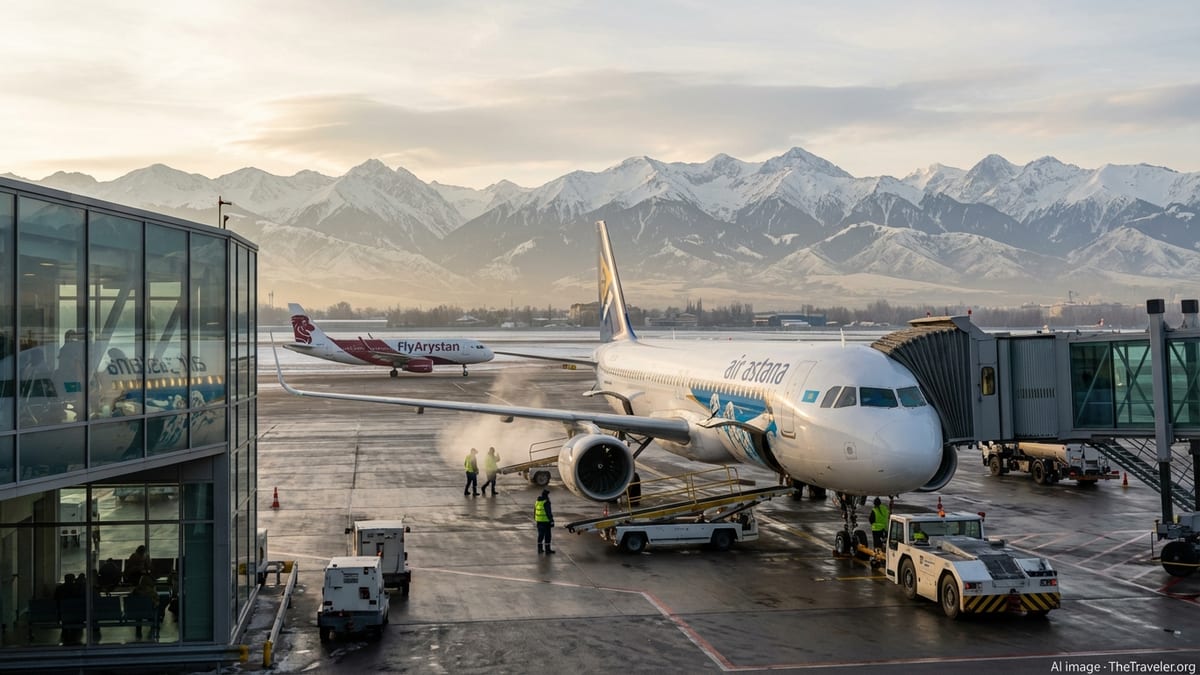
Air Astana Expands Germany–Kazakhstan Capacity
Publicly available schedule data for the 2026 summer season indicates that Air Astana has significantly increased seat capacity between Frankfurt and Kazakhstan, building on its established routes to hubs such as Almaty and Astana. Aviation industry coverage reports that additional weekly frequencies and optimized timings are designed to better align with both European and Central Asian banks of connecting flights, positioning Frankfurt as a more powerful gateway between the regions.
Reports from aviation news outlets describe the expansion as part of a broader strategy by the Kazakh carrier to capture growing demand from business, energy, and diaspora travel, alongside a gradual rise in leisure interest in Central Asia. The move also follows Kazakhstan’s efforts to modernize its aviation sector and promote itself as a regional hub, complementing European initiatives to deepen economic and transport ties with Central Asian states.
Industry analysis suggests that increased Frankfurt services give Air Astana a stronger foothold in continental Europe, where competition from other hubs is intense. With more frequencies into Germany’s largest airport, the airline can offer more flexible itineraries for travelers originating not only in Germany but across neighboring countries who use Frankfurt as their primary long-haul gateway.
For travelers, the expanded schedule translates into more options across seasons, improved chances of same-day connections, and a greater spread of fare classes, from competitive economy tickets to higher-yield premium cabins that target corporate traffic between Europe and Kazakhstan.
Terminal 3: Europe’s Newest Long-Haul Gateway
Frankfurt Airport’s Terminal 3 officially opened in April 2026 after years of construction, with passenger operations beginning on April 23. Airport information shows that the complex is designed for around 19 million passengers annually in its initial configuration, with gates grouped into G, H, and J concourses and room for future expansion as traffic grows.
According to information published by the airport operator, Terminal 3 replaces Terminal 2 as the primary base for dozens of international airlines, including carriers from Asia and the Middle East. An airline relocation plan released ahead of opening outlines a phased transfer of around 57 airlines from April through early June 2026, allowing terminal operations to stabilize while keeping disruption to a minimum for connecting passengers.
Terminal 3 emphasizes automation, with extensive self-service facilities such as self check-in kiosks and fast bag-drop units. Airport documentation notes that the design seeks to shorten dwell time in traditional queues while freeing up space for security, border control, and commercial areas. Travelers transiting between Europe and Central Asia via Air Astana are expected to benefit from faster front-of-house processing and clearer wayfinding around a more compact, purpose-built layout.
The new facility also introduces a refreshed retail and dining mix, including international brands, Central European food concepts, and premium fashion and accessories. Travel industry coverage highlights that the commercial offer is intended to compete with other major European hubs, an important factor for long-haul travelers facing multi-hour layovers en route between Germany and Kazakhstan.
Air Astana Moves to Terminal 3: What Changes for Passengers
Recent coverage from aviation outlets and regional news media confirms that Air Astana has transferred its Frankfurt operations from the older facilities to Terminal 3 as part of the airport’s airline relocation program. The move is timed to coincide with the 2026 summer schedule, aligning Air Astana’s expanded frequencies with the opening phase of the new terminal.
For passengers, the most immediate change is the terminal of departure and arrival within Frankfurt Airport. Travelers heading to Kazakhstan will now check in, clear security, and board from Terminal 3’s new concourses, which are located in the southern section of the airport and linked to the rest of the complex by a dedicated people mover system and highway access. This shift requires careful attention to airport and airline notifications, especially for those accustomed to using the older terminals.
Operationally, the move should streamline Air Astana’s ground handling, as Terminal 3 has been planned to host a large cluster of non-European carriers in one place. Industry commentary suggests that grouping similar long-haul operations can help coordinate boarding, turnaround times, and connections to partner airlines or interline agreements. For travelers, this may translate into more predictable minimum connection times and fewer long transfers across the airfield.
Passengers with existing bookings that were ticketed before the move may find that their terminal details have changed for flights after early May 2026. Booking tools and airline communications are expected to reflect the updated information, but travelers are advised to recheck their departure terminal in the days before travel, particularly if their itinerary includes tight connections or special services such as unaccompanied minors or assistance requests.
Navigating Frankfurt’s New Layout in 2026
Frankfurt Airport’s expansion has reshaped the way passengers move between terminals and transport modes. Airport guidance explains that Terminal 3 is connected to Terminal 1 and the long-distance rail station by a new SkyLine people mover, operating at short intervals and offering transfer times of roughly 8 to 10 minutes between terminals. For travelers connecting from other European cities into Frankfurt by train before flying to Kazakhstan, direct access from rail to the main terminal complex followed by the SkyLine transfer will be a key part of the journey.
In addition to rail connectivity, Terminal 3 sits adjacent to the A5 motorway, with a newly built access road, parking facilities, and a dedicated drop-off zone. For travelers driving to Frankfurt to board Air Astana flights, the new parking garage with several thousand spaces and the clearly signed access routes should help reduce the risk of late arrivals, even as traffic volumes grow with the terminal’s ramp-up.
During the transition period from April to June 2026, multiple airlines are changing terminals, which can create confusion among infrequent travelers. Travel advisories and aviation analysis pieces repeatedly stress that passengers should verify their terminal on the day of travel through airline channels or Frankfurt Airport’s official information, as last-minute operational adjustments can still shift individual flights between terminals.
Inside Terminal 3, the design focuses on intuitive wayfinding, with clear signage for Schengen and non-Schengen flows, transit paths, and security checkpoints. For passengers flying between Germany and Kazakhstan, which are treated as non-Schengen routes, border control will remain a key step in the process, and travelers should factor in extra time for passport checks during peak hours.
What International Travelers Should Expect in 2026
The combined effect of Air Astana’s expanded schedule and the opening of Terminal 3 is a noticeable enhancement of air connectivity between Europe and Central Asia. Travel industry observers note that more frequent nonstop services, a modernized terminal environment, and tighter integration with rail and road links give Kazakhstan greater visibility on European route maps, while offering German and European travelers more direct access to Central Asian destinations.
For individual passengers, these changes translate into practical considerations. Early arrival at the airport is advisable in the initial months of Terminal 3’s operation, when unfamiliar layouts and evolving passenger flows can lengthen walking times and queues. Travelers with close connections into or out of Frankfurt, especially those mixing Air Astana services with other long-haul carriers, may wish to build in extra buffer time until operating patterns settle.
At the same time, travelers can anticipate a more comfortable ground experience compared with older terminals, with upgraded seating areas, modern boarding zones, and a broader selection of retail and dining. For those heading to or from Kazakhstan on overnight or ultra-long itineraries, these amenities can make layovers more manageable, particularly for families and business travelers who need reliable workspaces and services.
Looking ahead through the rest of 2026, analysts expect that the strengthened air link between Germany and Kazakhstan will support broader policy goals around trade, investment, and tourism between the European Union and Central Asia. While further route expansions will depend on demand and regulatory developments, Frankfurt’s Terminal 3 and Air Astana’s enlarged presence position the corridor as one of the key emerging connections between the two regions.