

More news on this day
Air Canada has temporarily halted flight operations to Puerto Vallarta following a rapid security assessment triggered by cartel-linked violence in the Mexican state of Jalisco, stranding hundreds of Canadian travelers at the height of the winter holiday season.
Security Operation in Jalisco Triggers Airline Response
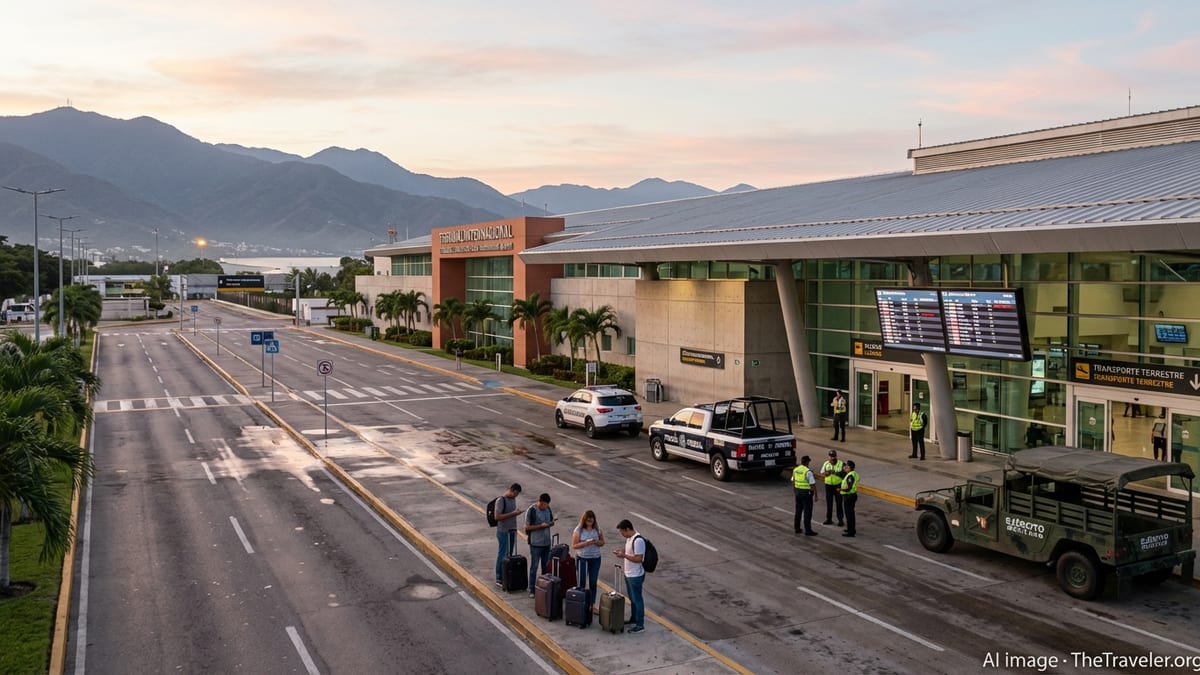
The suspension of Air Canada services to Puerto Vallarta was announced on February 22, 2026, after a Mexican military operation in Jalisco reportedly killed Nemesio “El Mencho” Oseguera Cervantes, the alleged leader of the Jalisco New Generation Cartel. In the hours that followed, criminal groups set vehicles ablaze and erected road blockades near key transport corridors, including routes serving Puerto Vallarta’s Licenciado Gustavo Díaz Ordaz International Airport.
While Mexican authorities stressed that no violent incidents were reported inside the airport terminal itself, footage and eyewitness accounts from the surrounding area showed smoke from burning vehicles and heavy security deployments on main access roads. The unrest prompted airport authorities and local officials to warn travelers of significant disruption to ground access, even as some flight operations continued.
The deteriorating situation led several North American carriers to pause or cancel services to Puerto Vallarta and other western Mexican destinations. Air Canada characterized its own halt in operations as a direct response to the changing security conditions around the airport rather than an aviation safety issue within the airfield.
Canadian and United States government advisories quickly followed, urging tourists in Jalisco to shelter in place and avoid non essential movement. Officials highlighted the risk of getting caught in roadblocks or confrontations between security forces and armed groups, particularly near transport hubs such as airports and bus terminals.
Air Canada Confirms Official Halt After Security Assessment
Air Canada confirmed that it had suspended operations to Puerto Vallarta “due to an ongoing security situation impacting the airport,” following an internal risk assessment carried out in consultation with local authorities and security partners. The airline emphasized that the decision was taken out of an abundance of caution and would remain in place until it could verify that passengers and crew could safely access and depart the airport.
In its public messaging, the carrier urged customers currently in the Puerto Vallarta region to remain at their hotels or accommodations and not proceed to the airport unless their flight was explicitly shown as operating. Air Canada stated that teams were monitoring developments in real time and coordinating with airport operators and Mexican officials regarding the stability of access routes and the broader security picture.
The airline also updated its travel advisory channels and customer alerts, noting that there was no immediate timeline for resuming normal operations. Although the airport itself remained technically open, the combination of highway blockades, reports of gunfire in some municipalities, and the shelter in place guidance from government agencies led the carrier to extend its initial one day suspension into an open ended halt.
Internally, Air Canada’s security and operations teams are understood to be weighing comparative risk indicators, including the presence of federal forces around the airport, reliability of ground transportation, and the potential for renewed flare ups as authorities consolidate control in affected areas of Jalisco. Until those indicators show sustained improvement, the airline is expected to maintain a conservative posture on service restoration.
Stranded Tourists Face Uncertainty and Changing Plans
The sudden halt in Air Canada’s Puerto Vallarta services has upended travel plans for hundreds of Canadian tourists who had flocked to the Pacific resort city to escape winter conditions at home. Many found themselves stranded in beachfront hotels, watching official advisories and airline updates while trying to determine if and when they could safely leave.
Travelers described long queues at hotel front desks and makeshift help desks as guests sought information about rebooking options and extended stays. For those whose vacation packages were nearing their scheduled end, uncertainty over return flights prompted nervous calls to employers, schools, and family members back in Canada.
Some visitors reported that tour operators and resort staff advised guests to remain on hotel grounds, particularly after ride hailing and many taxi services were suspended in response to the unrest. While daily life inside resorts continued in a relatively calm fashion, the atmosphere was tinged with anxiety as guests weighed the risks of independent travel to the airport against the official guidance to shelter in place.
Local tourism operators, already contending with high season logistics, found themselves grappling with a surge of inquiries and last minute changes. Many tried to reassure guests that the violence was occurring away from primary tourist districts, while also stressing the importance of following security advice from both Mexican and foreign authorities.
Rebooking, Refunds and Air Canada’s Flexible Policies
In tandem with its operational halt, Air Canada activated special ticketing and flexibility policies for customers booked on affected flights to and from Puerto Vallarta. The airline announced that passengers whose itineraries were disrupted could rebook travel without change fees, subject to seat availability, or opt to adjust their trips to other Mexican destinations not impacted by the security situation.
Customers who purchased air and hotel packages through Air Canada Vacations were directed to dedicated support lines to explore options such as date changes, alternate destinations, or partial refunds. The company indicated that it was working case by case to accommodate travelers, particularly those with imminent return dates or essential reasons to travel.
Despite the flexible policies, some stranded passengers expressed frustration at limited rebooking inventory, given that other airlines had also trimmed or paused services to Puerto Vallarta and nearby airports. With high season demand and uncertainty about when normal schedules would resume, available seats on alternative routes were quickly snapped up.
Travel agents in Canada reported a spike in calls from clients seeking clarification on their rights under Canadian air passenger protection rules. Industry experts noted that when cancellations are directly tied to security or safety concerns beyond an airline’s control, obligations for fixed compensation are more limited, though carriers are still expected to provide assistance with rebooking or refunds.
Government Travel Advisories Raise the Stakes
Ottawa responded swiftly to the unfolding events in Jalisco, updating its official travel advisory for the Mexican state and issuing a strong recommendation that Canadians in Puerto Vallarta shelter in place. Authorities cited reports of burning vehicles, roadblocks, and clashes with security forces in multiple municipalities, warning that conditions could evolve rapidly.
The advisory urged Canadians to keep a low profile, stay informed through local and international media, and comply with instructions from Mexican authorities, including any shelter in place orders. Officials highlighted the particular risk associated with attempting overland travel during periods of heightened cartel activity, especially on highways connecting tourist corridors to major airports.
Canadian consular services also reminded citizens to register their presence in Mexico through existing traveler enrollment systems, which can facilitate direct communication in emergencies. Consular staff in Mexico were tasked with assisting those facing imminent travel disruptions, providing documentation support where necessary, and liaising with local authorities on security matters.
The reinforced guidance from Ottawa effectively raised the stakes for both travelers and airlines. With the federal government emphasizing caution and restricted movement, airlines such as Air Canada faced additional pressure to ensure that any operational decisions aligned with the overarching priority of passenger safety, rather than simply commercial considerations.
Impact on Puerto Vallarta’s Tourism Economy
The halt of Air Canada flights, alongside cancellations and service cuts from other North American carriers, comes as a heavy blow to Puerto Vallarta’s tourism economy. The Pacific coast city, long popular with Canadian and American visitors, relies heavily on winter season arrivals to sustain local jobs in hospitality, transportation, and entertainment.
Hotel associations and business groups have voiced concern that images of burning vehicles and military convoys, shared widely on social media, could deter potential visitors even after the immediate security crisis subsides. While local leaders have stressed that the violence has been concentrated away from core tourist zones, they acknowledge that perceptions of safety are crucial to the destination’s reputation.
For Canadian businesses tied to the market, including tour operators, travel agencies, and vacation property managers, the temporary loss of direct lift from Air Canada complicates planning for the remainder of the season. Even a short interruption can reverberate through booking pipelines, as cautious travelers consider alternate sun destinations perceived as more stable.
Puerto Vallarta’s dependency on air connectivity from hubs such as Vancouver, Toronto, Calgary, and Montreal means that any prolonged suspension in service could have measurable economic effects. Local authorities are likely to intensify outreach to airlines and foreign governments, emphasizing security measures and the deployment of federal forces intended to stabilize the situation.
What Travelers Should Do if Booked on Affected Flights
For travelers who hold existing bookings on Air Canada flights to or from Puerto Vallarta, the immediate guidance is to monitor their reservation status directly through the airline, avoid heading to the airport unless their flight is clearly confirmed, and be prepared for last minute changes. Customers are encouraged to use digital channels to modify bookings, where possible, to avoid long call center waits.
Those already in Puerto Vallarta are advised to follow the most conservative safety guidance, remaining at their accommodations, staying in close contact with tour operators or hotel staff, and keeping communication devices charged and ready. Travelers should verify local transportation availability before considering any journey to the airport and heed instructions from both Mexican and Canadian authorities.
Insurance specialists suggest that affected travelers review the terms of their travel insurance policies, particularly clauses related to security events, civil unrest, or government travel advisories. In some cases, coverage may extend to trip interruption benefits, additional accommodation costs, or alternative transport arrangements.
Future visitors weighing whether to proceed with upcoming trips may wish to delay final decisions until there is greater clarity around the security situation and airline schedules. Many carriers, including Air Canada, have implemented more flexible change policies in recent years, giving customers some room to adjust plans as conditions evolve.
Prospects for Resumption of Air Canada Service
As of February 23, 2026, there is no firm date for the full resumption of Air Canada’s Puerto Vallarta flights. The airline has indicated that services will only restart once it is confident that airport access routes are secure, local authorities have regained firm control over affected areas, and the risk of travelers being caught in renewed violence has diminished.
Security analysts note that the killing of a high profile cartel leader can produce unpredictable aftershocks, with rival factions and remaining lieutenants jockeying for power. This volatility can manifest in sporadic roadblocks, targeted attacks, or show of force operations intended to signal continued influence, complicating efforts to declare the situation fully stabilized.
Industry observers expect Air Canada and other carriers to take a phased approach to restoration, potentially beginning with limited frequencies and close monitoring of load factors and on the ground conditions. Coordination with airport operators, tourism boards, and local law enforcement will be central to rebuilding confidence among travelers and airline staff.
For now, Air Canada’s official halt to Puerto Vallarta services underscores how quickly security developments on the ground can reshape international travel patterns. The episode serves as a reminder that even well established resort destinations remain vulnerable to broader regional dynamics, and that airlines must balance commercial demand with real time safety considerations when charting their routes.