

More news on this day
Air Canada has struck a new partnership with Turkey’s Pegasus Airlines that will open up streamlined, one-ticket connections to Istanbul and Izmir via key European hubs, in a move poised to significantly expand travel options for Canadian and European tourists heading to Türkiye.
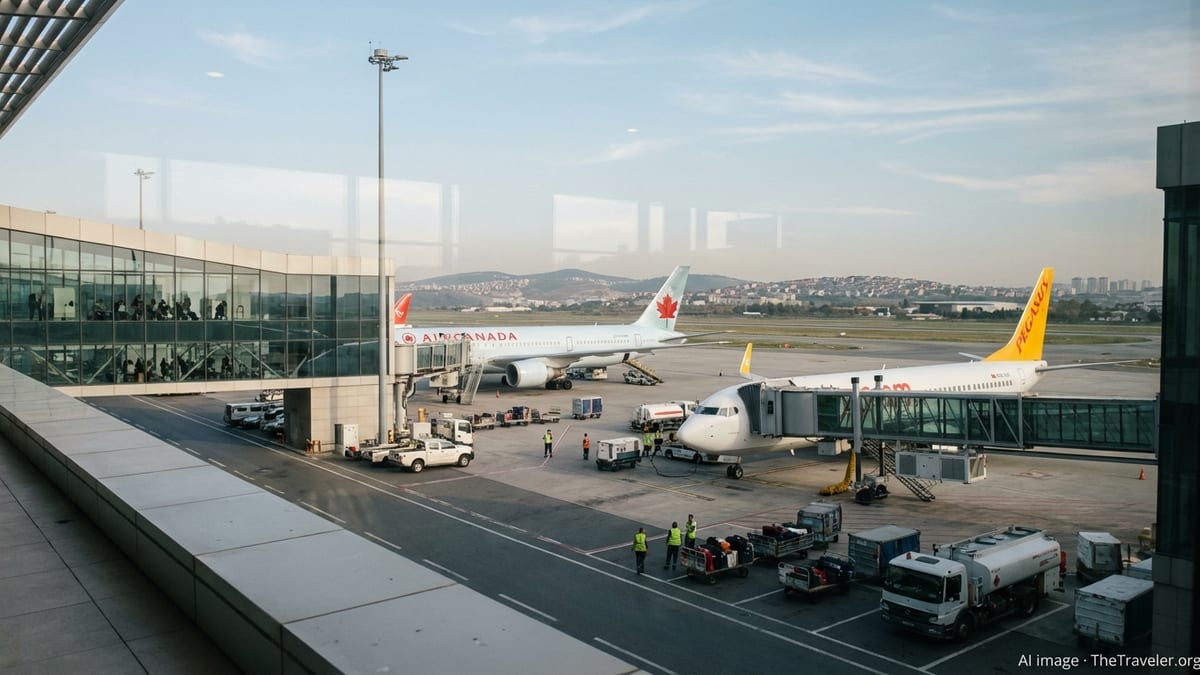
A Strategic New Bridge Into Türkiye’s Hottest Destinations
Announced on February 19, 2026, the interline agreement between Air Canada and Pegasus Airlines gives passengers new ways to reach Istanbul and the Aegean city of Izmir by combining flights from both carriers on a single itinerary. The partnership allows Air Canada customers to connect from the airline’s transatlantic services into nine Pegasus-operated routes, using major European gateways as springboards into Türkiye’s busiest leisure and business markets.
Rather than launching its own new flights deeper into Türkiye, Air Canada is tapping Pegasus’s extensive domestic and regional network centered on Istanbul Sabiha Gökçen International Airport and Izmir Adnan Menderes Airport. For travellers, that translates into far more choice in schedules and routings, as well as access to additional capacity during peak holiday periods when demand to Türkiye surges.
The agreement fits squarely into Air Canada’s broader international strategy of using targeted partnerships to deepen connectivity in high-growth regions. For Pegasus, one of Türkiye’s leading low-cost carriers, the deal brings increased feed from North America via Europe, strengthening its position at a time when interest in Turkish city breaks, beach escapes and cultural tours continues to grow among Canadian and European visitors.
Executives from both airlines have framed the move as the start of a deeper relationship, with plans to evolve from a basic interline into a full codeshare and reciprocal loyalty partnership. If realized, that would further blur the line between the two networks and push even more traffic onto joint itineraries linking Canada, Europe and Türkiye.
How the New Interline Works for Travellers
At the heart of the new agreement is the ability to book a single ticket that covers Air Canada’s long-haul leg to Europe and the onward Pegasus flight into Türkiye. Travellers flying into Air Canada’s European gateways such as Amsterdam, Frankfurt, Copenhagen, Munich, Geneva, Vienna, Zurich and Athens will be able to purchase itineraries that include smooth same-day connections to Istanbul Sabiha Gökçen. From Frankfurt, Pegasus will also operate the onward leg to Izmir, giving the partnership a second focal point on Türkiye’s Aegean coast.
Crucially for passengers, the interline structure means that bags are checked through to the final destination, and missed connections due to delays are handled under a single booking. This simplifies what previously might have required two separate tickets, separate check-ins and the risk of having to retrieve and recheck luggage mid-journey. For families and leisure travellers heading to resort areas, that reduction in stress and complexity can be as attractive as any schedule improvement.
The agreement focuses initially on nine Pegasus-operated routes that dovetail with Air Canada’s existing European network, creating a web of one-stop options from Canadian cities into Türkiye. While the exact mix of flights can evolve with the seasons, the design principle is clear: let Air Canada carry passengers across the Atlantic, then rely on Pegasus’s dense Turkish and regional network to complete the journey.
Travellers will book through Air Canada’s usual sales channels, and their boarding passes for both segments can be issued at check-in. For Pegasus, this integrated selling presence in Canada and across Air Canada’s global markets effectively extends its reach into regions where it does not operate its own metal, while still filling seats on key routes into Istanbul and Izmir.
Istanbul and Izmir in the Spotlight for Canadian and European Tourists
By centering the partnership on Istanbul and Izmir, the two carriers are targeting Türkiye’s most in-demand gateways for culture, cuisine and coastal escapes. Istanbul remains a powerhouse for urban tourism, drawing visitors to its historic peninsula, buzzing neighborhoods along the Bosphorus and rapidly expanding dining and arts scenes. With Pegasus based at Istanbul Sabiha Gökçen on the Asian side of the city, the partnership funnels travellers into an airport that offers quick domestic and regional links along with growing international connectivity.
Izmir, long popular with European holidaymakers, is emerging as a key Aegean base for international visitors. The city serves as the main gateway to destinations such as Çeşme, Alaçatı and Kuşadası, and sits within reach of ancient sites including Ephesus and Pergamon. By adding Izmir into the network via Frankfurt, Air Canada and Pegasus are effectively shortening the journey from Canada and other long-haul markets to the Aegean coast, often eliminating a backtrack through Istanbul for beach-bound travellers.
The timing is significant. In recent years Türkiye has seen robust inbound tourism from both Europe and North America, helped by a favorable exchange rate and a strong global profile as a destination that combines historical richness, contemporary culture and resort infrastructure. The new interline arrangement positions Air Canada and Pegasus to capture a larger slice of that demand, particularly among travellers seeking value-conscious options that still offer seamless connectivity.
For Canadian tourists who may be planning multi-stop trips that blend European city breaks with Turkish beach time or cultural touring, the new options open up fresh combinations. A traveller could, for example, fly from Toronto to Munich with Air Canada, connect to Izmir on Pegasus for a week along the Aegean, then return via a different European gateway, all on a unified itinerary.
Why This Partnership Is a Game-Changer in a Crowded Market
Canada to Türkiye is an increasingly competitive corridor, with carriers such as Turkish Airlines and Air Transat also building their presence and partnerships. Against this backdrop, Air Canada’s move to join forces with Pegasus marks a strategic pivot toward leveraging cost-efficient, regionally strong partners rather than expanding its own direct footprint deep into the Turkish market.
What makes the Air Canada Pegasus pairing stand out is the combination of a full-service global carrier and a large low-cost operator whose home hubs sit at the heart of Türkiye’s domestic and regional network. For passengers, this fusion can mean more departure choices and competitive fares, especially when compared with buying separate point-to-point tickets. For the airlines, it allows more efficient deployment of aircraft, with Air Canada focusing on transatlantic sectors and Pegasus optimizing the shorter legs into Turkish cities.
The partnership also underscores how interline and codeshare arrangements have become central tools for airlines looking to expand reach without the cost and regulatory hurdles of launching their own flights. Air Canada has already used this playbook in markets like Italy and Greece, where partnerships with ITA Airways and Aegean Airlines have extended its network beyond its own operated routes. Adding Pegasus into that ecosystem strengthens the carrier’s hand in the Eastern Mediterranean and Middle East region.
For European travellers, particularly those in countries served by both Air Canada and Pegasus, the collaboration offers more ways to route itineraries that combine North America and Türkiye. A passenger in Germany, for instance, could fly Air Canada to Frankfurt from Canada and then connect to a Pegasus flight, using the Canadian carrier as the first leg of what effectively becomes a hybrid European Turkish travel chain.
From Interline to Codeshare and Loyalty Integration
While the newly announced agreement is an interline arrangement, both airlines have signalled that this is intended as a first step rather than a final destination. Discussions are under way to expand the relationship into a full codeshare, which would allow each carrier to place its flight code on the other’s services and market a broader range of itineraries as if they were their own.
For customers, codeshare status typically brings even more seamlessness, especially when paired with aligned loyalty benefits. In this case, Air Canada has indicated that a future phase of the partnership could see reciprocal frequent flyer earning and redemption on eligible Pegasus flights, as well as the possibility of priority services for elite members when connecting between the two airlines.
If implemented, such enhancements would make the partnership more attractive to higher-yield travellers, including business passengers, long-stay leisure tourists and members of the Canadian and Turkish diasporas shuttling between the two countries and Europe. It would also bring Pegasus closer into the orbit of one of North America’s largest airline loyalty ecosystems.
The roadmap from interline to codeshare and beyond mirrors patterns seen in other Air Canada partnerships, where initial cooperation on ticketing and baggage paves the way for deeper commercial ties and integrated customer experiences. The success of this progression will depend on factors such as schedule coordination, operational reliability and regulatory approvals, but both carriers have made clear they see long-term potential in closer alignment.
What It Means for Canada–Türkiye Capacity and Connectivity
The Air Canada Pegasus tie-up arrives as overall connectivity between Canada and Türkiye is expanding on several fronts. Other Canadian carriers and Turkish operators are also investing in the market through new routes, added frequencies and their own partnership frameworks, giving travellers more choice than ever in how they structure their journeys.
In this environment, the new interline deal functions as both a defensive and offensive play for Air Canada. Defensively, it ensures that the airline can match or better competitors’ one-stop offerings to Istanbul and Izmir without committing additional aircraft to those markets. Offensively, it allows the carrier to build itineraries that capture connecting traffic beyond Istanbul into secondary Turkish cities and Aegean resorts through Pegasus’s network.
The arrangement also strengthens Europe as a key intermediate hub region for Canadian long-haul travel. By leaning on airports such as Frankfurt, Amsterdam, Copenhagen and Zurich as pivot points, Air Canada and Pegasus can tap into existing transatlantic capacity and scheduling while adding Turkish endpoints at relatively low marginal cost. That structure is particularly attractive in shoulder seasons, when demand patterns shift and airlines need flexibility to move capacity between markets.
For Turkish tourism officials and local businesses in Istanbul and Izmir, the additional connectivity should help sustain visitor flows from Canada and broader long-haul markets, complementing nonstop services operated by other carriers. Easier one-stop access can be especially impactful for first-time visitors, secondary Canadian cities and package tour operators bundling flights with hotels and excursions.
Practical Tips for Passengers Booking the New Routes
For travellers looking to take advantage of the new partnership, the main practical change is the ability to search and book integrated itineraries through Air Canada’s usual channels, selecting Turkish destinations such as Istanbul Sabiha Gökçen or Izmir Adnan Menderes as the final stop. The booking engine will surface combinations that pair an Air Canada transatlantic flight with a Pegasus onward connection through the eligible European gateways.
Passengers should pay close attention to minimum connection times and airport layouts, particularly in busy hubs like Frankfurt and Amsterdam, to ensure comfortable transfer windows between flights. Because luggage is checked through, the transfer process is simplified, but security checks and gate changes can still add time. Booking on a single ticket gives the added security that, in the event of disruption, the airlines will work together to rebook the onward segment.
Those with tight itineraries or winter travel dates may also want to monitor seasonal timetable shifts and potential weather-related disruptions at European hubs. As the partnership matures, schedule coordination between Air Canada and Pegasus is likely to improve, but in the early stages, passengers may find that some combinations require longer layovers that nonetheless trade time for convenience and price.
For Canadian and European tourists planning trips that mix European cities with Turkish destinations, the new options invite more ambitious itineraries. Travellers can now more easily route via different gateways on the outbound and return legs, building in stops in cities such as Vienna, Munich or Athens while still enjoying the simplicity of a single itinerary and through-checked bags into Türkiye.