

More news on this day
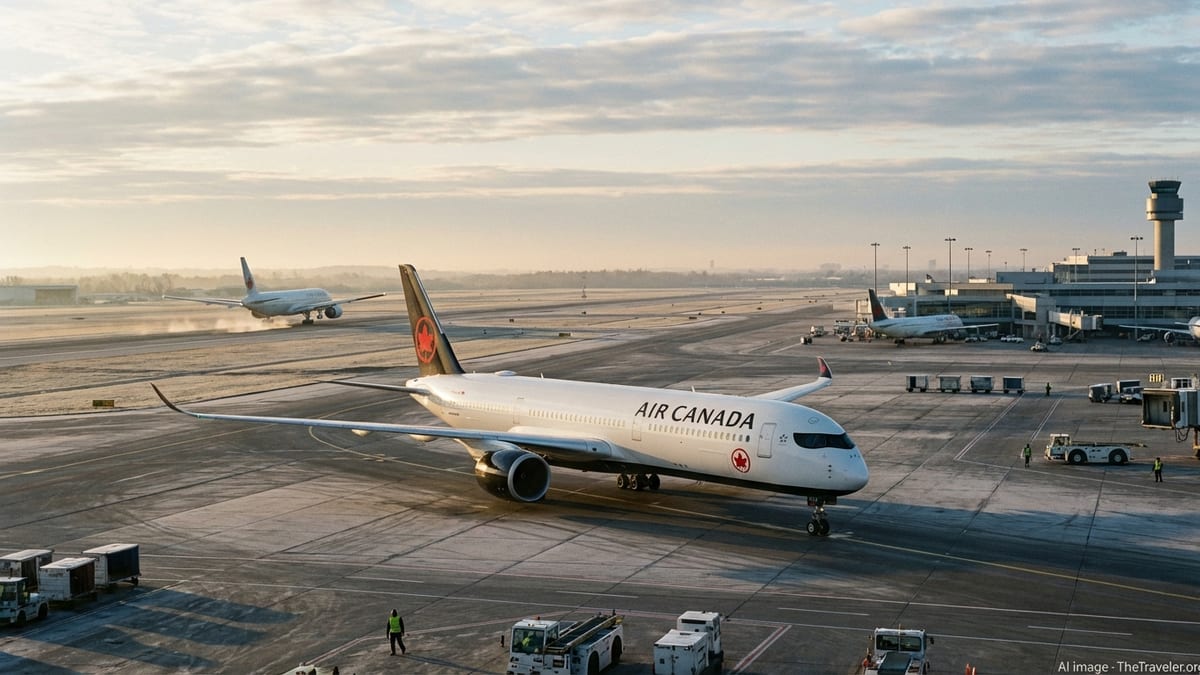
Air Canada has locked in a major long-haul fleet upgrade, confirming an order for eight Airbus A350-1000 aircraft with rights for eight more, a move that positions the carrier to redefine international travel from Canada as global demand climbs into the next decade.
A Strategic Widebody Shift for the 2030s
The February 2026 announcement from Air Canada marks one of the airline’s most consequential long-haul fleet decisions in years. The Airbus A350-1000, a latest-generation widebody, will join the flag carrier’s lineup from the second half of 2030, gradually reshaping how the airline serves high-demand intercontinental markets. While no immediate schedule changes will follow this week’s news, the order offers a clear window into how Canadians and international visitors are likely to travel to and from the country in the early 2030s.
The deal, disclosed jointly by Air Canada and Airbus, covers eight A350-1000s and includes rights to acquire eight additional aircraft. The order had previously appeared in Airbus’s books as an undisclosed customer, underscoring both the long lead times involved in widebody procurement and the competitive sensitivity around such high-stakes fleet choices. For Air Canada, the move signals that its future long-haul backbone will be anchored by a mix of A350-1000s and Boeing 787 Dreamliners, supported by long-range narrowbodies such as the Airbus A321XLR.
Executives describe the A350-1000 as central to the “next era” of Air Canada’s global network. The aircraft’s combination of range, payload and efficiency is expected to allow the airline to open new nonstop routes and upgrade existing ones with a quieter cabin, lower emissions and a refreshed onboard product. For travelers, that will translate into more choice of nonstops from Canada to far-flung destinations, and a more consistent long-haul experience across the fleet.
Range, Economics and the Routes Travelers Care About
The Airbus A350-1000 is designed to fly up to roughly 9,000 nautical miles, placing almost any major global market within nonstop reach of Canadian hubs such as Toronto, Montreal and Vancouver. Air Canada has already highlighted the Indian subcontinent, Southeast Asia and Australia as key growth regions that will benefit from the aircraft’s capabilities. For passengers, that raises the prospect of new or more frequent nonstops to cities such as Delhi, Mumbai, Bangalore, Singapore, Bangkok or Sydney without the need to connect through Europe or the United States.
In practical terms, the A350-1000’s range and payload allow it to operate these ultra-long segments year-round with fewer performance tradeoffs. On some of today’s longest flights, airlines must occasionally impose weight restrictions or seasonal schedule changes due to heat, headwinds or airport constraints. The A350-1000’s more powerful Rolls-Royce Trent XWB engines and aerodynamic design are meant to reduce those compromises, creating more operational reliability and making long-haul routes less vulnerable to disruptions.
Equally significant are the aircraft’s operating economics. Airbus and Air Canada estimate that the A350-1000 can deliver about 25 percent lower fuel burn and emissions compared with older widebodies such as previous-generation A330s and early 777 models. For travelers, stronger route economics matter because they help justify year-round service on thinner routes, support more competitive fares over time and give the airline more flexibility to adjust capacity without abandoning a market altogether.
How the A350-1000 Fits into Air Canada’s Evolving Fleet
The A350-1000 order is not an isolated move but the next piece in a broader fleet renewal puzzle that Air Canada has been assembling over the past few years. Alongside the A350s, the airline is introducing 14 Boeing 787-10 Dreamliners beginning in 2026, expanding its Airbus A220-300 fleet, and preparing to take delivery of 30 Airbus A321XLRs. Together, these aircraft allow Air Canada to fine-tune the size and range of jets it deploys on different types of routes, from regional business flows to ultra-long-haul trunk lines.
As the A350-1000s arrive from 2030, they are expected to replace some of the airline’s older Airbus A330-300s and, over time, could also influence how the Boeing 777 fleet is used. The current long-haul lineup, which includes 777-200LRs, 777-300ERs and 787-8/9s, has carried Air Canada through a period of rapid international expansion. But the arrival of a new generation of long-haul jets reflects rising fuel costs, tightening climate targets and growing passenger expectations for quieter cabins and better onboard technology.
Fleet planners emphasize the flexibility this mix provides. The A350-1000 will likely be deployed on the longest and highest-demand routes where its range and efficiency provide a clear advantage, while the 787-10 will be suited to dense transatlantic and transcontinental flights that do not require maximum range. The A321XLR, meanwhile, will allow Air Canada to add thinner point-to-point services, such as secondary European or Latin American cities, feeding traffic into the long-haul network the A350-1000 will help anchor.
Cabin Experience: A Quieter, More Comfortable Long-Haul
For international travelers, the most tangible benefit of the A350-1000 will be inside the cabin. Air Canada plans to introduce the aircraft with its next-generation interior standard, including new seats, updated inflight entertainment systems and enhanced connectivity. Although exact seating layouts and product specifics have not yet been disclosed, the airline has signaled a strong focus on premium cabins and upgraded economy comfort on its long-haul jets entering service later this decade.
The A350 family is marketed as one of the quietest twin-aisle types in the sky, thanks to a combination of advanced engines, noise-reducing aerodynamics and extensive use of composite materials. The cabin is pressurized to the equivalent of around 6,000 feet, lower than many older widebodies, which is designed to reduce fatigue and jet lag on long flights. Improved air filtration, higher humidity and larger windows also contribute to a more comfortable environment during overnight segments exceeding 12 or 14 hours.
Travelers can expect the A350-1000 to feature large high-definition seatback screens, full-coverage in-seat power and expanded Wi-Fi capabilities consistent with Air Canada’s broader cabin refresh. The airline is also working toward a more unified design language across its newest widebodies, which should mean a more predictable experience whether passengers are flying on a 787-10, A321XLR or, later, an A350-1000. For frequent flyers, that kind of product consistency can be as important as route choice when deciding which carrier to book on complex international itineraries.
Sustainability Pressures and a Lower-Carbon Long-Haul Fleet
Beyond comfort and connectivity, sustainability is a central driver of Air Canada’s A350-1000 decision. The airline has committed to long-term climate goals, including a net-zero ambition by mid-century, and modernizing its widebody fleet is one of the most effective levers it can pull to reduce emissions intensity. New-generation aircraft like the A350-1000 burn substantially less fuel per seat than the aircraft they replace, a critical metric as governments tighten climate-related regulations and travelers pay closer attention to their environmental footprint.
The A350 platform is also certified to operate on blends of sustainable aviation fuel, and Airbus is working toward making its aircraft capable of using higher SAF proportions over the coming years. While SAF remains limited in supply and more expensive than conventional jet fuel, airlines are beginning to integrate it into their long-term planning. By the time Air Canada’s A350-1000s enter service in the 2030s, the expectation is that SAF usage will be more widespread, and aircraft designed to handle these blends will be a prerequisite for credible decarbonization strategies.
For passengers, these developments may not be immediately visible beyond airline marketing or booking-site labels, but they do shape route decisions and fleet choices behind the scenes. A more efficient widebody fleet gives carriers room to grow their networks while keeping overall emissions in check, and may help preserve access to sensitive destinations where local authorities are tightening environmental rules.
What Changes for International Travelers in 2026 and Beyond
While deliveries of the A350-1000 are years away, the 2026 announcement is already influencing how Air Canada plans its international strategy. This year is being described internally as a transitional period, with a significant influx of new aircraft, including the first 787-10s and A321XLRs, as well as additional A220s and 737 Max jets. The A350-1000 order signals where the airline sees demand growth later in the decade and into the 2030s, particularly on long and premium-heavy routes.
In the near term, travelers will see the impact of Air Canada’s broader fleet modernization on transatlantic and transcontinental services as new jets arrive and older narrowbodies are phased out. As the carrier reallocates capacity away from some saturated leisure markets and toward higher-yield international destinations, schedule planners will be able to design hub banks and connections with the future A350-1000 capability in mind. Over time, this can mean more seamless one-stop itineraries between secondary cities in North America and emerging long-haul markets in Asia-Pacific and beyond.
For those mapping out their travel preferences, the A350-1000 introduction will add another layer of aircraft choice alongside existing 787 models. Many seasoned flyers already seek out the A350 on other carriers for its quiet cabin and more forgiving long-haul experience. Air Canada’s decision effectively brings that option into the Canadian market, and once routes are confirmed, aircraft type is likely to become a more prominent factor for passengers booking premium cabins or ultra-long-haul journeys.
Competitive Context: Positioning Canada in the Global Long-Haul Market
Air Canada’s move also has a competitive dimension that stretches beyond cabin upgrades. The A350-1000 is increasingly the aircraft of choice for airlines looking to dominate select ultra-long-haul corridors, and by committing to the type, Air Canada signals its intent to be a serious player on long-range routes linking North America to Asia-Pacific and other distant regions. The aircraft’s size and range provide the scale needed to compete head-to-head with major European, Gulf and Asian carriers on key flows beyond Canada.
For Canada as a whole, the decision supports the positioning of Toronto, Montreal and Vancouver as global connecting hubs rather than primarily origin-and-destination markets. As more travelers from the United States, Europe and Latin America look for efficient routings to Asia and the South Pacific, an Air Canada network built around efficient, long-range widebodies could capture a larger share of transfer traffic. That, in turn, can sustain more frequencies and destinations for local travelers, giving Canadians and visitors a broader menu of nonstop and one-stop options.
The A350-1000 order also sends a signal to airport authorities and tourism boards that Air Canada is planning for sustained growth in long-haul capacity. Investments in terminal infrastructure, lounge space, border processing and ground connectivity at major Canadian gateways will need to keep pace if the airline is to fully capitalize on the new aircraft’s capabilities when they start arriving in 2030.
Looking Ahead to the First A350-1000 Flights
With four years between the 2026 announcement and the start of A350-1000 deliveries, there is ample time for Air Canada to refine cabin layouts, training programs and route assignments. Travelers hoping to be among the first to fly on the new flagship will likely be watching for updates in the late 2020s as the airline reveals initial deployment plans. Historically, carriers have introduced new long-haul types on high-profile routes from their main hubs, often pairing flagship aircraft with key business and government markets.
Until then, the A350-1000 remains a powerful signal of where Air Canada is headed rather than an immediate change to this season’s schedules. For international travelers planning ahead, the message is clear: by the early 2030s, long-haul journeys to and from Canada are expected to be quieter, more fuel-efficient and more comfortable, with new city pairs and more stable year-round service enabled by the capabilities of Airbus’s largest twin-engine jet.
As global demand for long-distance travel continues to recover and evolve, Air Canada’s bet on the A350-1000 suggests that the next chapter of international flying from Canada will be defined as much by aircraft technology as by network maps. For passengers, that combination of extended range, improved economics and upgraded onboard experience could make the difference between viewing ultra-long-haul trips as a necessary ordeal and seeing them as a more manageable, even appealing, part of the journey.