

More news on this day
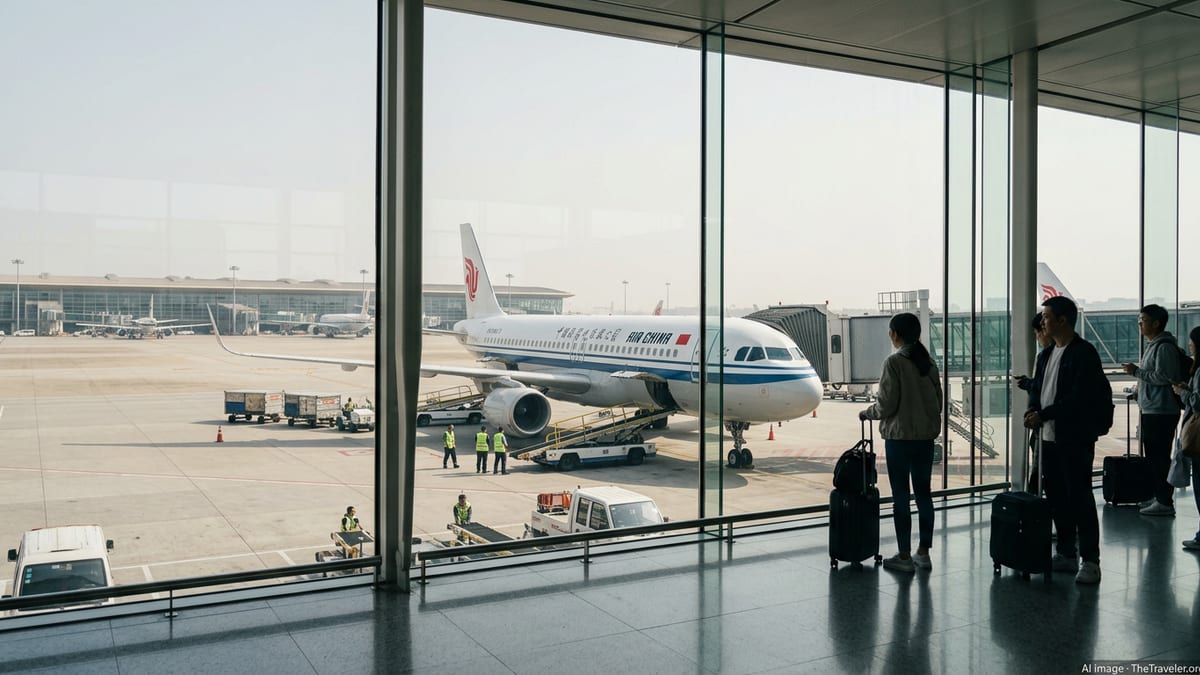
Air China’s decision to relaunch regular passenger flights between Beijing and Pyongyang is reshaping how foreign travelers can once again access North Korea, creating fresh but tightly controlled tourism possibilities after years of pandemic-era isolation.
Get the latest news straight to your inbox!
What Is Known About the Reopened Beijing–Pyongyang Route
Publicly available flight data and recent regional coverage indicate that the long-dormant Beijing–Pyongyang air corridor is operating again on a limited schedule, primarily serving Chinese and regional passengers with an expanding role for organized tourism. Prior to the pandemic, the route was a key gateway into North Korea alongside services from Shenyang and Vladivostok. Services were effectively frozen in early 2020, when North Korea sealed its borders and halted foreign tourism.
Recent reporting on cross-border connectivity between China and North Korea highlights that air links have been restored in parallel with rail and overland traffic. Before passenger trains resumed in March 2026, the Pyongyang–Beijing air route had already returned to operation as part of North Korea’s gradual reopening, underscoring the strategic importance of the Chinese capital as a hub for both trade and carefully managed tourism.
While North Korea’s state airline Air Koryo operates much of the traffic on the route, Air China’s return to the city-pair places a major Chinese carrier back into a niche but symbolically important market. The combined effect is a modest increase in capacity on one of the few viable international access points to Pyongyang, important for tour operators who arrange highly controlled group itineraries for foreign visitors.
Schedules remain subject to change, and frequencies appear significantly lower than pre-2020 levels. Travelers considering the route are advised to monitor airline timetables and booking engines closely, as flights can be added, removed, or consolidated with limited notice based on demand, political considerations, or public health rules.
Who Can Travel and Under What Conditions
Travel into North Korea is not an open, individual tourism market, and the revival of the Beijing–Pyongyang route does not change that core reality. Tourism access is typically restricted to visitors on pre-arranged group or private tours booked through licensed agencies that work with North Korean partners. Independent backpack-style travel is not available, and itineraries are generally fixed and guided from arrival to departure.
For most nationalities that are permitted to visit, the usual pattern remains to secure a North Korea tour package first, then receive documentation to apply for a Chinese visa or rely on permitted transit arrangements to reach Beijing. The tour operator generally coordinates the North Korea visa and the Pyongyang flight segment, whether on Air China, Air Koryo, or a combination, depending on availability and current agreements.
Some countries, notably the United States, maintain strong travel advisories and in some cases restrictions relating to visits to North Korea. These policies can influence whether citizens of those countries may legally join tours using the Beijing–Pyongyang route at all. Travelers must check their own government’s latest advisories and any legal limitations on using their passports in North Korea, as well as insurance exclusions that often apply to sanctioned destinations.
Health and security protocols also remain far stricter than in most destinations. Reports from tour organizers and regional media over the past two years have described temperature checks, tightly controlled movement, and potential last-minute changes if authorities adjust internal policies. The restored air route should therefore be viewed as one element of a broader, still cautious reopening rather than a signal of unrestricted tourism.
Practical Flight and Transit Logistics via Beijing
For travelers, Beijing Capital International Airport remains the primary staging point for journeys into Pyongyang. Air China’s participation in the route provides additional options for connecting from other Chinese and international cities, taking advantage of the carrier’s wider network. In practice, however, most passengers on the Beijing–Pyongyang segment are routed as part of a group block booking managed by tour agencies, rather than as fully independent point-to-point tickets.
Frequent schedule adjustments across Chinese international routes in recent years mean that Beijing connections to and from Pyongyang may not align smoothly with long-haul arrivals and departures. Industry data and traveler reports show that airlines serving China continue to refine post-pandemic timetables, which can create tight or extended layovers. Many tour providers therefore recommend arriving in Beijing at least one day before the Pyongyang departure to avoid missing the limited-capacity flight.
Visa and transit rules for China add another layer of planning. Some passengers may be able to use visa-free transit policies when passing through Beijing on their way to a third country, but eligibility depends on nationality, itinerary, and length of stay. Others will require a pre-arranged Chinese visa, especially if an overnight stop is needed. Because rules have evolved in recent years, travelers are urged to verify current entry conditions with official sources and plan additional time for any document checks at Beijing airport.
Onboard experience on the Beijing–Pyongyang leg is functional rather than luxurious, reflecting the short flight time and limited market size. Service levels, cabin layouts, and in-flight amenities may differ between Air China and Air Koryo, but on both carriers passengers should expect a straightforward regional flight, with little flexibility around seat changes or special requests once group allocations are set.
Tourism Opportunities and Limitations Inside North Korea
The reopening of the air route has renewed interest among niche travelers who are drawn to North Korea’s tightly curated tourism offerings. Typical itineraries focus on Pyongyang’s monumental architecture, major political sites, the demilitarized zone, and selected regional cities or scenic areas, all under constant escort by state-approved guides. Photography and interaction with locals are heavily controlled, and access to many everyday spaces remains off-limits.
Despite these restrictions, tour programs have in the past included cultural performances, visits to museums, rides on the Pyongyang Metro, and seasonal excursions such as mountain hikes or coastal trips. The restored connectivity from Beijing makes it easier for agencies to rebuild such programs for small groups, especially from China, Russia, and a handful of other markets where demand has historically been strongest.
However, capacity is expected to remain limited. North Korea’s infrastructure and policy priorities favor small, manageable tour groups over mass tourism, and recent coverage of the country’s post-pandemic reopening suggests authorities are proceeding cautiously. Travelers booking months in advance may still find that tour dates shift if flights are consolidated or internal requirements change.
Costs also tend to be higher than in many Asian destinations, given the bundled nature of tours, the need for specialized guides, and the scarcity of transport options. The reintroduced Air China service may marginally improve pricing and flexibility for itineraries routed through Beijing, but travelers should still budget for a premium, all-inclusive package rather than expecting low-cost, à la carte arrangements.
Safety, Ethics, and Responsible Travel Considerations
Beyond logistics, travel to North Korea raises complex safety and ethical questions. Many foreign ministries continue to advise against all nonessential travel, citing risks associated with arbitrary detention, broad legal restrictions, and limited consular support. Emergency medical care and evacuation options are constrained, and travel insurance policies frequently exclude coverage for trips to sanctioned or high-risk countries.
Ethically, prospective visitors often grapple with the implications of spending tourism revenue in a highly controlled state. Analysts and human rights organizations have long debated whether such trips provide valuable first-hand exposure and cultural contact, or whether they mainly deliver hard currency to a government with an extensive record of abuses. The restoration of the Beijing–Pyongyang air link is likely to renew these discussions as more travelers consider joining organized tours.
Responsible travel in this context typically involves careful research, transparent conversations with tour providers about where money flows, and a clear-eyed understanding of the limitations on interaction with local people. Travelers are encouraged to respect local regulations and guides’ instructions while also remaining aware that what they see on curated itineraries is only a narrow slice of life in the country.
For those who decide to go, the revived Air China route offers a comparatively direct and logistically manageable gateway. Yet it does not diminish the need for thorough preparation, strong risk awareness, and thoughtful reflection on the broader implications of visiting one of the world’s most closed nations.