

More news on this day
Air travelers are being warned to brace for higher ticket prices and extra fees as airlines grapple with jet fuel costs that remain elevated even after a ceasefire agreement eased some pressure on global oil markets.
Get the latest news straight to your inbox!
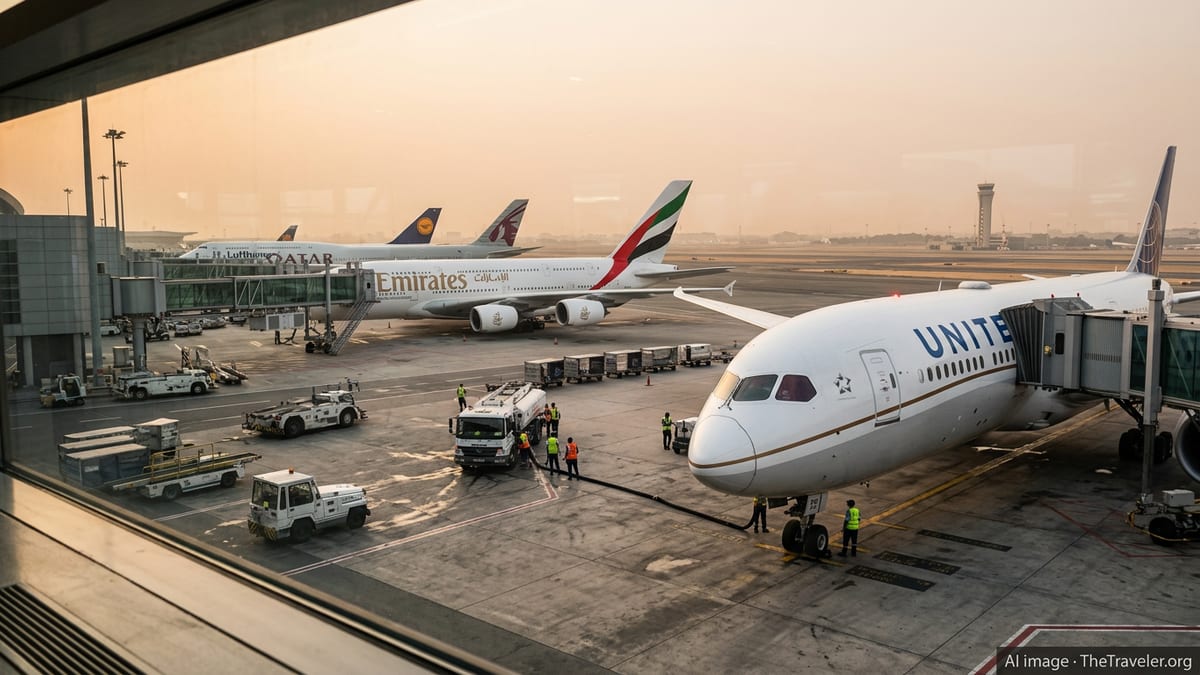
Ceasefire cools crude, but jet fuel stays expensive
The two-week ceasefire between the United States and Iran and the partial reopening of the Strait of Hormuz have triggered a sharp pullback in crude benchmarks, with oil prices sliding back toward double-digit territory after briefly trading well above 100 dollars a barrel earlier in March 2026. Equity markets have rallied on hopes that the risk of a broader energy shock has receded.
Yet refined products are telling a more complicated story. Industry data for late March and early April indicate that jet fuel prices remain far above levels seen at the start of the year, reflecting earlier supply disruptions and the lag between moves in crude futures and retail aviation fuel. Some tracking indices show global jet fuel benchmarks nearly doubling compared with 2025 averages, with North American prices up by close to 20 percent in March alone.
Aviation analysts note that while crude prices can adjust quickly to changes in geopolitical risk, it takes longer for physical jet fuel markets to rebalance. Refineries that shifted output during the crisis, shipping bottlenecks, and the need to rebuild inventories near major hubs are all keeping jet fuel costs elevated even as headline oil prices retreat.
Reports from fuel price monitors suggest that these dynamics are not confined to one region. Export-focused hubs in the Middle East and Asia are still dealing with backlogs and alternative routing, while European buyers are paying a premium to secure supplies for the busy summer travel season, reinforcing pressure on airlines’ operating budgets.
Airlines start to pass costs to passengers
With fuel accounting for one of the largest line items in airline budgets, carriers are beginning to pass higher costs directly to travelers. In the United States, several major airlines have raised checked baggage fees in recent days, citing higher operating expenses and global uncertainty. New fee schedules announced this month add around 10 dollars to the cost of the first and second checked bags on many domestic and short-haul international routes.
Industry coverage of recent earnings calls and investor presentations indicates that airlines have limited room to absorb surging fuel prices. Executives at large network carriers have warned that, if jet fuel remains elevated, base air fares could rise by mid-teens to as much as 20 percent on some routes compared with recent levels. Analysts point out that ticket prices had been running below broader inflation trends in the years before the current conflict, giving airlines scope to increase fares without immediately crushing demand.
Travel industry reports show that fare adjustments are already underway. Dynamic pricing systems allow airlines to tweak prices multiple times a day, and experts say travelers are likely to see small but frequent upward moves on popular routes, particularly around peak travel dates. Budget carriers, which rely heavily on high aircraft utilization and thin margins, are considered especially exposed to fuel spikes and may resort to targeted surcharges or reduced promotional sales.
Alongside headline fares and baggage fees, passengers are also encountering more granular charges. Some carriers are experimenting with higher seat-selection fees, changes to basic economy conditions, and new tiers of so-called “unbundled” premium products aimed at recouping costs without advertising large jumps in base prices.
Fuel surcharges and rerouting ripple through global networks
The impact of persistent jet fuel inflation is particularly visible on long-haul international routes. Several major European and Asia-Pacific airlines have recently introduced or expanded fuel surcharges on long-distance tickets, adding flat fees per segment on top of existing base fares. Public statements from carriers in France, the Netherlands and Australia in March detailed surcharges of the equivalent of several dozen euros per long-haul ticket, with higher amounts for premium cabins.
At the same time, conflict-related airspace closures and risk zones over parts of the Middle East have forced airlines to reroute many flights, increasing flight times and fuel burn. Aviation tracking and route-mapping services show long-haul services between Europe and Asia, and between parts of Oceania and the Middle East, following more southerly or northerly corridors that add up to an hour or more of flying in some cases.
These additional miles come on top of elevated per-unit fuel costs, compounding the strain on airline finances. Specialist travel advisories estimate that, for certain networks, the combination of rerouting and higher jet fuel prices is adding millions of dollars in monthly costs, prompting carriers to weigh capacity cuts, frequency reductions, or seasonal suspensions of marginal routes.
Industry risk assessments published in recent weeks suggest that, as long as uncertainty persists around regional security and shipping lanes, airlines will err on the side of conservative planning. That could mean fewer backup aircraft and tighter schedules, which in turn leaves less room to absorb disruptions and makes it harder to offer discounted fares.
Regional disparities and pressure points for travelers
Not all markets are affected equally. Data released this month from airports and fuel suppliers in Southeast Asia and Indonesia point to particularly steep jumps in local jet fuel prices, in some cases exceeding 70 percent compared with earlier in the year. Carriers in these regions, many of which operate on tight budgets and rely on robust domestic demand, face difficult choices between raising prices, trimming frequencies, or cutting back on less profitable routes.
In North America and Europe, the picture is somewhat more mixed. Larger airlines often hedge a portion of their fuel needs months in advance, softening the immediate blow of market spikes. However, as those hedges roll off, executives and analysts expect the higher spot prices now filtering through to refueling contracts to be reflected more clearly in tickets sold for late summer and autumn travel.
Travel demand remains relatively resilient in many regions, supported by strong labor markets and pent-up appetite for international trips following years of disruptions. But consumer surveys cited in recent coverage suggest that a sustained period of higher fares could begin to shift behavior, encouraging travelers to shorten trips, opt for closer destinations, or trade down to lower cabin classes.
Some low-cost carriers are attempting to frame the current environment as an opportunity, arguing that price-sensitive travelers squeezed by rising full-service fares may gravitate toward budget options. Yet analysts caution that these airlines are just as vulnerable to fuel price shocks and may have less flexibility to absorb costs without compromising service or reliability.
What travelers can expect in the months ahead
Forward-looking assessments from aviation consultancies and travel industry groups converge on a similar theme: unless jet fuel prices retreat significantly and stay lower for an extended period, higher air fares are likely to persist through at least the peak summer 2026 season. Even if crude oil remains below recent highs thanks to the ceasefire, the structural tightness in refined products and ongoing routing challenges are expected to keep airlines’ fuel bills elevated.
For leisure travelers, that could translate into fewer last-minute deals, more restrictive advance-purchase conditions, and a greater emphasis on ancillary fees. Experts recommend booking early for key holiday periods, monitoring fare changes frequently, and remaining flexible on dates and departure airports where possible.
Corporate travel managers are also reassessing budgets. Industry briefings suggest many companies are bracing for mid- to high-single-digit increases in average ticket prices compared with last year, and some are updating travel policies to encourage rail or virtual meetings on shorter or discretionary trips.
While a durable de-escalation in the region could eventually filter through to lower fuel costs and more stable schedules, the experience of the past several weeks has underscored how quickly geopolitical shocks can upend the economics of global aviation. For now, the ceasefire has eased the immediate risk of a deeper oil crunch, but it has not yet been enough to spare passengers from the fallout in the form of higher air fares.