

More news on this day
Air France has become the latest major carrier to raise fuel surcharges on long-haul flights, joining airlines including Delta, United, Virgin Australia, IndiGo and Cathay Pacific in responding to a sharp jump in jet fuel costs that is rapidly transforming the price of international air travel.
Get the latest news straight to your inbox!
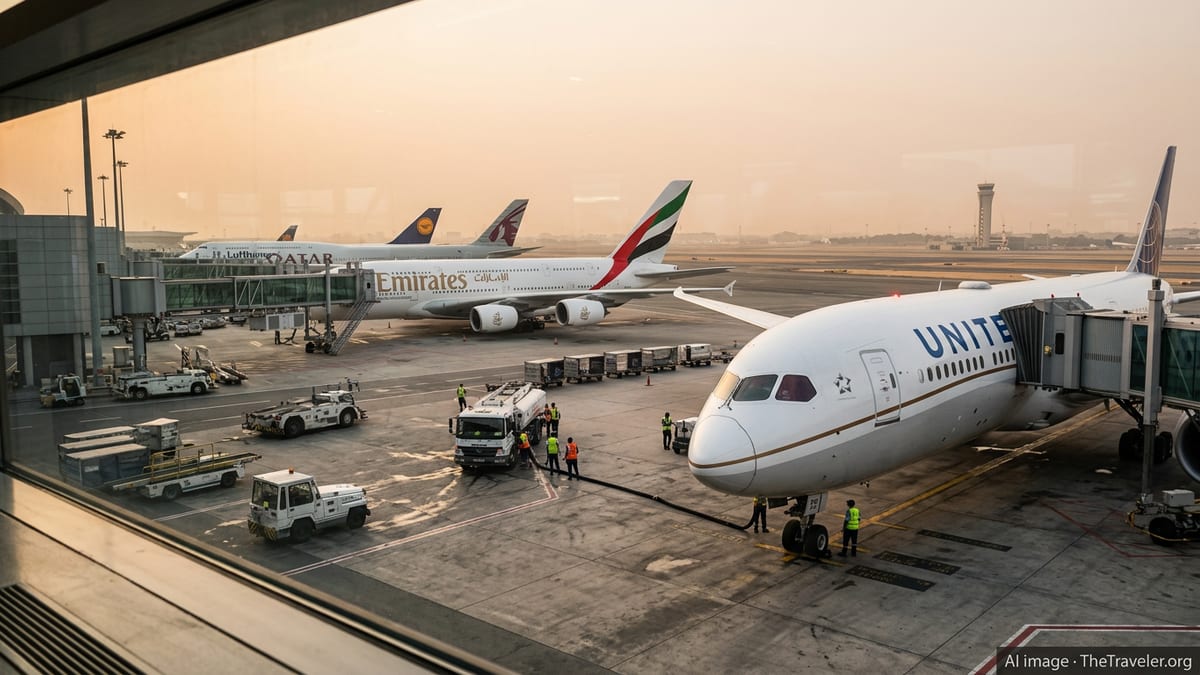
Jet Fuel Shock Pushes Airlines to Raise Surcharges
Jet fuel prices have surged in recent weeks amid conflict-driven volatility in global energy markets, with industry trackers indicating benchmark costs at levels not seen since the early 2020s. Publicly available analyses suggest airlines in North America, Europe and Asia are facing fuel bill increases of roughly 9 to 14 percent for 2026, with the steepest impact concentrated in the second quarter of the year.
As fuel typically accounts for up to a third of an airline’s operating expenses, carriers have moved quickly to protect margins. Rather than cutting capacity outright, many are turning to targeted fuel surcharges and fee increases that can be adjusted or withdrawn as markets shift. Analysts note that surcharges are especially attractive to airlines because they can be layered on top of base fares and, in some cases, applied to both cash and frequent flyer award tickets.
For travelers, the result is a sudden and often opaque rise in the total cost of a ticket, particularly on long-haul routes where fuel is a larger share of an airline’s expenses. Industry commentary indicates that some intercontinental journeys now carry hundreds of dollars in extra charges compared with early 2026 pricing.
Air France Joins the Global Wave of Fuel Surcharge Hikes
Within this fast-moving environment, Air France and the wider Air France KLM group have begun rolling out specific long-haul fuel surcharges for 2026. Travel industry reports describe increases in the region of 50 euros added to round-trip economy tickets on intercontinental routes, with higher amounts likely for premium cabins. Separate coverage of the group’s frequent flyer operations notes that carrier-imposed surcharges on Flying Blue award tickets have also risen, effectively making long-haul redemptions more expensive even when travelers use miles.
The moves come on top of earlier communications from Air France KLM highlighting the sensitivity of its fuel bill to oil prices and the limits of financial hedging in a period of abrupt price swings. While hedging can cushion some of the impact, the recent spike has been sharp enough that additional charges on tickets are now viewed as necessary across a wide portion of the network.
Air France’s actions place it firmly in a growing club of global airlines using fuel surcharges as a primary tool to navigate the current fuel crisis. The carrier’s decision is particularly significant for transatlantic and Europe to Asia routes, where it is a major player and where higher surcharges can meaningfully shift what travelers pay at checkout compared with just a few months ago.
From Delta and United to Cathay and IndiGo: A Truly Global Trend
Air France is far from alone in recalibrating prices. In North America, large network airlines such as Delta Air Lines and United Airlines are facing billions of dollars in additional annual fuel costs, according to industry estimates. While both have focused public attention on higher baggage fees and ancillary charges in recent weeks, specialized airfare monitors and trade publications report that base fares and carrier-imposed surcharges on long-haul itineraries are also trending higher as the fuel spike feeds through to pricing systems.
Across the Pacific, Hong Kong based Cathay Pacific has implemented some of the most visible changes, lifting fuel surcharges by roughly one third across its network and substantially increasing fees on long-haul services. Coverage from Asia focused outlets indicates that Cathay’s long-distance routes have seen fuel surcharges climb by the equivalent of dozens of US dollars per ticket in a matter of weeks, with the airline citing intense pressure from higher jet fuel and refinery margins.
In the fast growing Indian market, IndiGo has introduced a structured fuel charge ranging from a few hundred to more than two thousand rupees per sector, depending on distance. That move, effective from mid March, applies across its network and comes alongside similar surcharge decisions by other Indian and regional carriers. Meanwhile, trade and tourism reports highlight Virgin Australia among the airlines in the Asia Pacific region that have been steadily adjusting surcharges and long haul fares as their own fuel bills rise.
Additional examples from Europe, North America and the Asia Pacific region underscore how widespread the response has become, with airlines of all sizes either explicitly labeling new fuel surcharges or quietly embedding higher fuel related costs into their pricing models.
Long-Haul Travelers Face Steeper Bills and Fewer Bargains
The immediate impact of these changes is being felt most acutely on long-haul routes, where higher fuel burn and more complex routings magnify the cost shock. Aviation analysts estimate that transatlantic and transpacific fares are now running materially above levels seen before the latest fuel spike, with some specialist fare trackers suggesting increases in the range of 15 to 20 percent on selected corridors between North America, Europe and Asia Pacific.
Published guides to current surcharges show that on certain premium long-haul itineraries, fuel and related fees alone can add several hundred dollars to the cost of a round-trip ticket. In some documented cases, charges on specific routes have climbed by the equivalent of 100 to 800 US dollars per booking compared with late 2025, depending on cabin and distance.
For price sensitive leisure travelers, these developments translate into fewer genuine bargains on intercontinental trips, even during traditional shoulder seasons. Business travelers, who often book close to departure and rely heavily on long-haul services, may find their companies under renewed pressure to rein in travel budgets or shift some meetings online as airfares rise.
Travel consultants also point out that surcharges can hit frequent flyer redemptions especially hard. Because many airlines pass carrier imposed fees directly to passengers even on award tickets, the rising fuel line items at Air France, Cathay Pacific and other full service carriers are eroding some of the value of loyalty points on long distance routes.
A New Pricing Era: Volatility, Surcharges and Capacity Shifts
Beyond the immediate price hikes, industry observers see the current fuel crisis as ushering in a new era of more volatile and surcharge driven pricing for long-haul air travel. Commentaries from aviation analysts highlight how airlines are increasingly using flexible, route specific fuel fees and ancillary charges to respond to sudden cost swings rather than relying solely on base fares.
Some large carriers are pairing surcharge increases with selective capacity adjustments, trimming flights on the least profitable long-haul routes while prioritizing high demand city pairs where higher prices are more easily absorbed. Reports on recent schedule changes indicate that certain North America to Europe and Asia services have been modestly reduced, while capacity on core trunk routes has been maintained or even reinforced despite higher fuel costs.
At the same time, low cost and regional carriers with shorter average stage lengths may be comparatively insulated, as domestic and short haul services burn less fuel per itinerary and face more intense competition. Analysts caution, however, that if fuel prices remain elevated into the second half of 2026, even short haul operators may be forced to introduce or expand surcharges.
For now, the alignment of Air France with Delta, United, Virgin Australia, IndiGo, Cathay Pacific and others in raising fuel linked charges underlines how universal the pressure has become. Unless jet fuel prices retreat significantly and remain stable, travel industry experts expect elevated surcharges and structurally higher long-haul fares to remain a defining feature of the global air travel landscape for the foreseeable future.