

More news on this day
An Air India service connecting New York with India has sparked anger among travelers after a diversion to Medina left around 280 passengers’ checked bags stranded in Saudi Arabia for days, according to passenger accounts circulating online.
Get the latest news straight to your inbox!
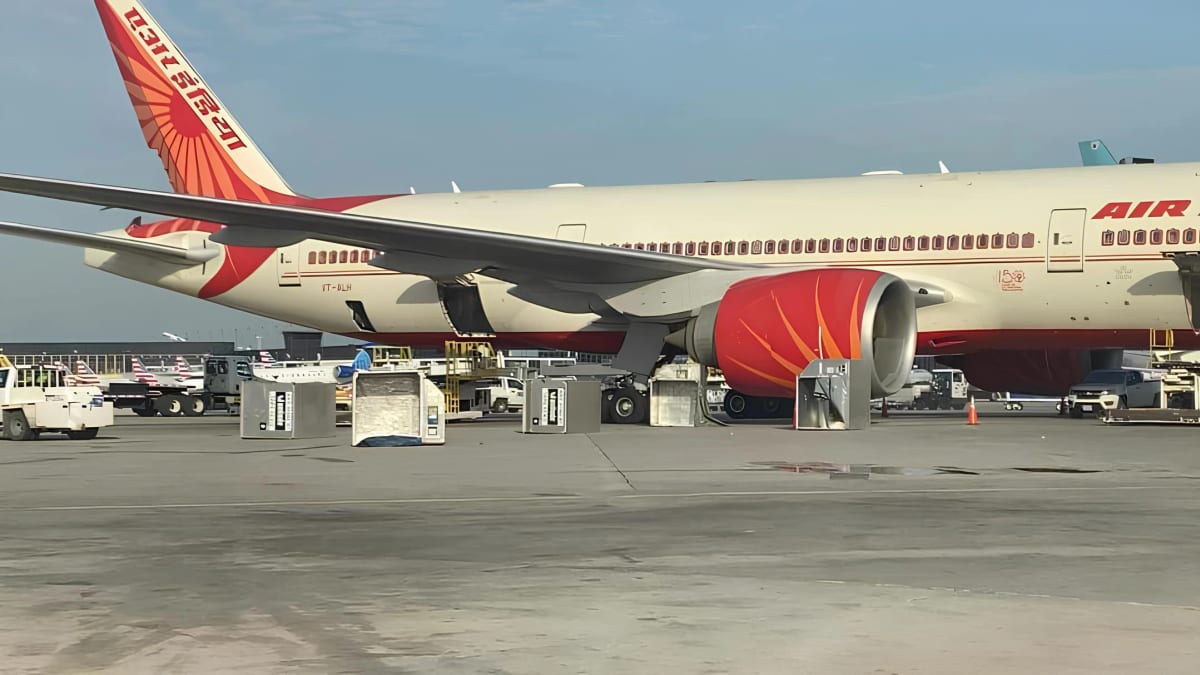
Image by Aviation A2Z
Diversion from New York leads to unexpected Medina stop
Publicly available information indicates that the disruption began when an Air India flight operating between New York and India was diverted to Medina instead of continuing on its planned route. The aircraft ultimately carried passengers onward, but the checked baggage belonging to an estimated 280 travelers reportedly remained behind in Medina.
Posts shared on aviation and travel forums describe a confusing sequence of events in which the aircraft repositioned while bags stayed in Saudi Arabia, leaving customers to complete their journeys without their belongings. Some accounts suggest that the diversion was linked to wider operational and geopolitical constraints affecting flight routings in the region.
While long-haul flight diversions are not uncommon, the scale of the baggage separation reported in this case has drawn particular attention. International rules and standard airline practice generally emphasize keeping passengers and checked luggage together, both for security and for customer service reasons, making such a large volume of stranded bags unusual.
According to published coverage of similar long-haul disruptions, diversions can create complex coordination problems involving multiple airports, ground-handling companies and customs authorities, especially when an unplanned stop occurs in a third country.
Hundreds of bags still in Saudi Arabia days later
Accounts shared by affected travelers indicate that several days after the flight, a large proportion of the checked baggage had yet to be reunited with its owners. One widely circulated account suggests that airline staff later informed passengers their bags were still in Medina because of difficulties in retrieving and forwarding the luggage.
Some travelers say they were initially told that the bags would follow on later flights, only to learn that onward movement from Medina was proving more challenging than expected. Public posts referencing airline interactions describe repeated visits to baggage desks and customer service counters, with little clarity on when the luggage might be delivered.
Reports from the affected passengers describe the practical consequences of the delay, with individuals arriving home or at their final destinations without clothing, medication, gifts and work-related items. For customers on tight travel schedules, the lack of clear timelines for baggage recovery has added to the frustration.
Cases documented in previous aviation incidents show that when bags are left at an intermediate airport, airlines must secure storage, arrange customs clearance and secure space on subsequent flights, which can extend the delay for several days or longer, particularly when traffic rights or political constraints are involved.
Air India under renewed scrutiny over service reliability
The Medina baggage episode has emerged at a time when Air India is already under scrutiny for service reliability during an ambitious transformation program. Recent months have seen online complaints about delays, diversions and onboard conditions appear alongside more positive reports from passengers noting improvements on refurbished aircraft.
Industry commentary notes that Air India is in the midst of a large fleet renewal and cabin retrofit plan as the carrier seeks to reposition itself as a competitive global network airline. However, disruption events, even if relatively rare compared with the airline’s overall schedule, can quickly erode passenger confidence when they involve large groups of travelers and highly visible inconveniences such as missing baggage.
Analysts observing India’s aviation sector have pointed out that long-haul operations from crowded hubs such as New York are particularly sensitive to weather, airspace restrictions and knock-on delays from earlier flights. When irregular operations occur, the quality and speed of the airline’s response often determine whether a situation becomes a routine inconvenience or a reputational flashpoint.
In this case, social media posts and forum discussions suggest that passengers perceived a gap between the scale of the disruption and the level of proactive support they received, particularly regarding updates on the status and location of their luggage.
Passenger rights and compensation questions
The incident has also revived questions about what passengers are entitled to when luggage is delayed for several days after a long-haul journey. International air transport rules distinguish between delayed, damaged and lost baggage, with compensation limits typically based on global conventions and the conditions of carriage of each airline.
According to publicly accessible consumer guidance, travelers whose bags are delayed are generally advised to file a report at the airport on arrival and keep receipts for essential items purchased while waiting for their luggage. Airlines may reimburse reasonable expenses within defined limits, although the exact amounts and processes vary by carrier and by jurisdiction.
In complex cases involving diversions and third-country airports, the process can become more complicated. Responsibility for handling and forwarding baggage often rests with the operating airline, but coordination with local ground handlers and customs can affect how quickly bags can be moved. Published commentary on previous disruptions suggests that claims may take weeks to resolve when large numbers of passengers are affected.
Travel experts routinely recommend that passengers keep critical items such as medication, important documents and at least one change of clothes in their carry-on baggage to mitigate the impact of events like the Medina diversion, where checked luggage may be inaccessible for an extended period.
Growing calls for clearer communication in disruption events
The Medina baggage situation has underscored the importance of clear, timely communication when long-haul flights are diverted or when baggage is separated from passengers. Accounts posted online emphasize not only the inconvenience of being without luggage, but also the uncertainty created by shifting or incomplete information about when bags might be returned.
Recent analyses of airline disruption management stress that transparent updates, realistic timelines and visible support at airports can significantly influence how passengers perceive an incident. Even when operational constraints limit what an airline can do in the short term, well structured communication can help reduce anxiety and confusion.
Observers of India’s rapidly expanding aviation market note that as more carriers add long-haul routes to and from North America, expectations around customer service and irregular operations handling are likely to rise. Episodes such as the reported 280 stranded bags in Medina may intensify pressure on airlines to invest further in baggage tracking technology, contingency planning and staff training.
For travelers, the episode serves as another reminder of how quickly an otherwise routine transcontinental flight can become a multi-day logistical challenge when diversions, airport constraints and checked luggage intersect.