

More news on this day
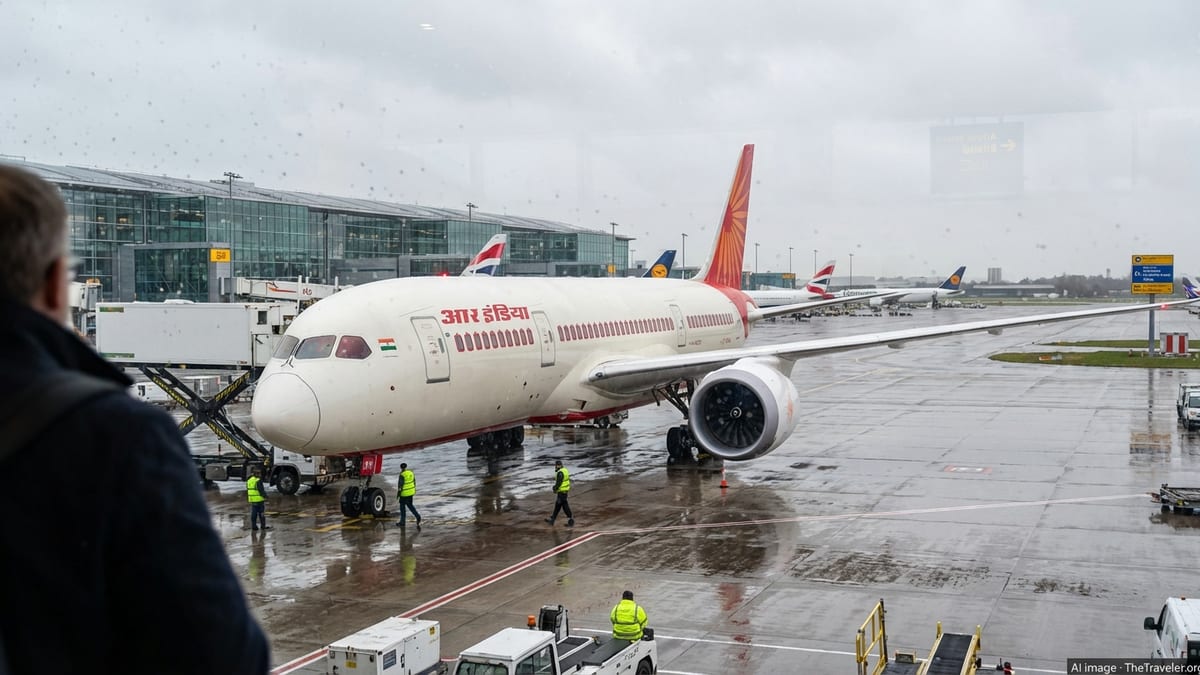
An Air India flight from Mumbai to Bengaluru returned to Chhatrapati Shivaji Maharaj International Airport shortly after takeoff after reports of an engine stall prompted the crew to declare a PAN PAN alert and request priority handling, according to multiple media and aviation reports.
Get the latest news straight to your inbox!
Early-Morning Departure Diverted Back to Mumbai
Publicly available information indicates that the incident occurred in the early hours of 9 April, when Air India flight AI 2812 departed Mumbai for Bengaluru with an Airbus A320neo aircraft. The flight was originally scheduled to leave around 2:05 a.m. local time but reportedly pushed back and took off closer to 2:30 a.m.
Shortly after takeoff, as the aircraft was climbing out of Mumbai, one of the engines is reported to have stalled, prompting abnormal noises and visible sparks near the engine area as described in local coverage. The crew opted to discontinue the climb, stabilize the aircraft, and initiate a return to the departure airport.
Flight-tracking data and press reports indicate that the aircraft was in the air for only a brief period, returning to Mumbai roughly 20 minutes after departure. The landing was completed without further incident, and the aircraft vacated the runway under its own power before being taken out of service for inspection.
Accounts from passengers carried in Indian media describe an unusual sound and vibration during the initial climb, followed by a relatively quick announcement that the aircraft would be returning to Mumbai as a precaution.
PAN PAN Alert Signals Serious but Controlled Situation
In response to the engine issue, the pilots of AI 2812 declared a PAN PAN alert on the radio, according to reports from several Indian news outlets. PAN PAN is an internationally recognized urgency signal used in aviation and maritime operations to indicate a serious problem that requires prompt assistance but is not considered immediately life threatening.
The call is one level below the better-known Mayday distress call. While Mayday is reserved for situations involving imminent danger to the aircraft or people on board, PAN PAN allows pilots to signal that circumstances are abnormal, operational support is needed, and the flight should receive priority handling, yet safety margins are assessed to be under control.
In practical terms, a PAN PAN declaration typically prompts air traffic controllers to give the affected aircraft priority for routing and landing, clear surrounding airspace, and coordinate the positioning of airport emergency services as a precaution. Reports on the AI 2812 event suggest that standard emergency procedures were followed on the ground in Mumbai while the aircraft circled back for landing.
Aviation specialists generally note that such calls are part of a conservative safety culture, allowing flight crews to act early and decisively whenever an onboard technical issue could escalate if not managed quickly.
Technical Checks and Replacement Aircraft for Passengers
According to published coverage citing an Air India statement, the airline described the return of flight AI 2812 as a precautionary action taken in line with standard operating procedures after a suspected technical issue was detected shortly after departure. The aircraft landed safely in Mumbai and was then subjected to detailed engineering checks consistent with the carrier’s internal safety protocols.
Reports indicate that the affected A320neo was grounded for inspection following the incident, with a focus on verifying the condition and performance of the engine that reportedly stalled. No subsequent details about the specific cause of the stall had been made public at the time of writing, and there were no immediate indications of injuries among passengers or crew.
Media outlets in India reported that Air India arranged a replacement aircraft to operate the Mumbai–Bengaluru sector after the unscheduled return. The alternate flight is understood to have departed later in the early morning hours, allowing stranded passengers to continue their journey the same day, albeit with a significant delay.
The airline also issued an expression of regret for the inconvenience caused to travelers, emphasizing that the decision to return to Mumbai was guided by safety considerations and adherence to company procedures.
Context: Engine Events and Safety Focus in Indian Aviation
The AI 2812 occurrence adds to a series of recent technical events involving Indian carriers that have attracted public attention, often amplified by social media posts from passengers. Although in most cases flights have landed safely and resulted only in delays, such episodes have prompted renewed scrutiny of maintenance standards, fleet age, and oversight within the rapidly expanding Indian aviation market.
In the past year, Indian and international media have documented several incidents in which flights diverted or returned to departure airports due to engine warnings, unusual vibrations, or other technical alerts. Regulators and safety organizations typically review these events case by case to determine whether follow-up actions, such as additional inspections, airworthiness directives, or advisory notices to operators, are warranted.
Aviation analysts point out that modern jet engines and aircraft systems are designed with multiple layers of redundancy. Engine stalls or related anomalies can often be contained by reducing thrust, adjusting flight parameters, or shutting down the affected engine, while the remaining systems are engineered to keep the aircraft controllable. The conservative choice to return to the nearest suitable airport, as seen with AI 2812, is widely viewed as consistent with global safety best practices.
Despite the disruptive impact on schedules, such precautionary diversions are generally interpreted within the industry as evidence of crews and airlines acting promptly on technical indications rather than attempting to complete flights under degraded conditions.
Passenger Confidence and Operational Transparency
For passengers, a mid-air return prompted by an engine stall can be a deeply unsettling experience, even when handled professionally and resolved with a safe landing. Accounts circulating in Indian media following the AI 2812 incident suggest a mix of initial alarm followed by relief as the aircraft touched down in Mumbai and passengers were eventually re-accommodated.
Travel observers note that clear communication about what is known, what remains under investigation, and what steps are being taken to prevent recurrence plays an important role in maintaining confidence in air travel. Summaries of the AI 2812 event published by Indian outlets have emphasized that the aircraft returned under control, airport emergency resources were on standby only as a precaution, and a replacement aircraft was provided.
As India’s domestic air traffic continues to grow, operational transparency and prompt reporting of even non-fatal technical incidents are expected to remain central to the aviation safety conversation. The AI 2812 engine stall and PAN PAN alert, while resulting in a safe outcome, underline how quickly routine flights can transition into abnormal situations and how critical rapid, procedure-driven decision-making is to preserving that safety record.