

More news on this day
Travel across Nunavik faced fresh disruption after four Air Inuit flights serving Quaqtaq, Quebec City, Kangirsuk, and Puvirnituq were cancelled, impacting passengers who rely on the carrier as a vital lifeline in northern Quebec.
Get the latest news straight to your inbox!
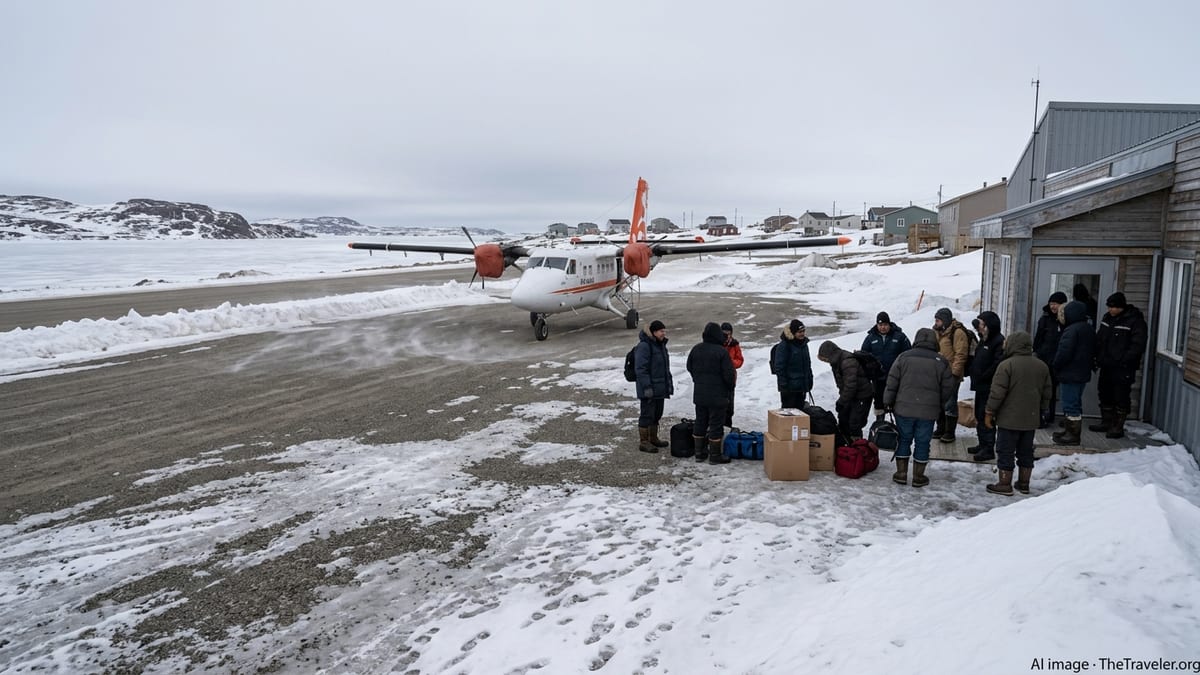
Cancelled Flights Ripple Through Nunavik’s Remote Communities
The latest wave of cancellations has placed a spotlight on how dependent Nunavik’s coastal villages are on a small number of scheduled flights for access to medical care, education, food supplies, and government services. Quaqtaq, Kangirsuk, and Puvirnituq are among several remote airports in northern Quebec where Air Inuit operates frequent services linking communities to regional hubs such as Kuujjuaq, Quebec City, and Montreal.
Publicly available timetable data shows that Air Inuit operates a tightly woven schedule in the region, with small turboprop aircraft like the DHC-6 Twin Otter and Dash 8 connecting Quaqtaq, Kangirsuk, and Puvirnituq with limited daily frequencies. When several flights are cancelled on the same day, there are few immediate alternatives for travelers, particularly those whose trips depend on onward connections in Quebec City or Montreal.
For communities such as Quaqtaq, which rely heavily on a short gravel airstrip exposed to harsh Arctic conditions, any prolonged disruption can have outsized impacts. Even a handful of cancellations can delay time-sensitive travel, from medical appointments in the south to essential resupply flights carrying groceries and household goods to local co-ops.
While details surrounding the specific cause of the four cancelled flights have not been fully outlined, the situation reflects a broader pattern in northern aviation, where operational issues, tight fleet capacity, and severe weather can converge to create sudden, cascading disruption across multiple communities in a single day.
Weather, Operational Constraints, and the Fragility of Northern Air Links
Northern air services routinely contend with challenges uncommon at larger southern airports. Winter storms, high winds, poor visibility, and blowing snow can quickly make small gravel runways unusable or unsafe. In Nunavik, airports such as Quaqtaq, Kangirsuk, and Puvirnituq are owned or overseen by provincial and regional authorities, while daily operations are heavily shaped by local weather, maintenance conditions, and limited ground infrastructure.
Air Inuit’s published accessibility plan notes that many of the airports the carrier serves in Nunavik are more difficult to access during winter, particularly when infrastructure and terrain limit the ability to clear snow or ice efficiently. The plan highlights that Air Inuit operates at facilities controlled by government and regional entities, which can create additional layers of complexity when it comes to addressing infrastructure bottlenecks and accessibility obstacles.
In such an environment, even minor operational disruptions can have disproportionate effects. Small fleets of regional turboprops allow airlines to reach isolated airstrips, but they also limit flexibility; if an aircraft goes out of service or becomes stuck by weather at one community, it can trigger knock-on delays and cancellations across several routes on the same day.
The resulting fragility leaves travelers in Nunavik with little redundancy. Unlike in southern Canada, where multiple carriers and road or rail options can provide a fallback, residents of Quaqtaq, Kangirsuk, and Puvirnituq often have no practical alternative when a scheduled flight is cancelled, forcing them to wait for the next available departure or seek complex rerouting through other northern hubs.
Human and Economic Impact on Quaqtaq, Kangirsuk, and Puvirnituq
When four flights are cancelled in rapid succession across a small regional network, the consequences reach far beyond the immediate inconvenience of delayed leisure travel. In Nunavik, air transport underpins almost every aspect of daily life, from grocery prices to the availability of medical specialists and the movement of teachers, construction crews, and public servants.
Travelers heading from Quaqtaq, Kangirsuk, and Puvirnituq toward Quebec City or Montreal often rely on tightly timed connections. Missed flights can mean days of delay, last-minute accommodation costs at hub airports, and the risk of forfeiting appointments and reservations that are difficult or costly to rebook. For medical travelers in particular, rescheduling appointments can lead to longer waits and additional travel uncertainties later in the season.
Local businesses also feel the strain when air services falter. Cancellations can disrupt the arrival of perishable goods, drive up prices on store shelves, and delay the delivery of equipment and spare parts needed to keep community infrastructure functioning. Contractors and seasonal workers may be forced to adjust project timelines, with short construction seasons in the North leaving little room for error.
For residents, recurring disruptions can also affect trust in the reliability of the air network itself. While many accept that weather and geography impose unavoidable limits on aviation, repeated cancellations and tight capacity can make it harder for communities to plan travel with confidence, particularly during periods of heavy demand such as school breaks, hunting seasons, or key cultural events.
Stranded Passengers Face Limited Options and Long Waits
For passengers already in transit, same-day cancellations at Quaqtaq or connecting hubs can leave them in a difficult position. The small size of northern terminals, limited hotel capacity, and sparse ground transportation options often mean that stranded travelers must wait at airports that were never designed for extended stays.
Public reports and traveler accounts from across the Canadian North frequently describe overnight waits on plastic chairs, limited food availability, and few play areas or quiet spaces for families with children. While conditions vary between airports, many communities have modest terminal facilities that serve their main purpose well during regular operations but offer little comfort when schedules unravel.
Rebooking options can also be constrained. With only a handful of weekly flights on some routes and high seat demand across Nunavik, passengers affected by cancellations may find that the next available seat is days away. Those with onward connections through Quebec City, Montreal, or other southern hubs may need to rebook entire itineraries, incurring additional costs or relying on travel insurance to recover some expenses.
For some travelers, particularly those travelling for work or on fixed schedules, these delays can have knock-on effects at home and on the job. Employers may face unexpected absences, while families must juggle childcare, school commitments, and other responsibilities around much longer journeys than originally planned.
Calls for Greater Resilience in Nunavik’s Air Network
The disruption surrounding the four cancelled Air Inuit flights is likely to fuel ongoing debates about how to build greater resilience into Nunavik’s air links. Regional planners, aviation observers, and community leaders have long highlighted the need for sustained investment in runways, navigational aids, and terminal facilities to help airlines operate more reliably in harsh conditions.
Carrier documents already point to collaboration with federal, provincial, and regional authorities as a key pathway to improving airport accessibility and passenger experience. Better infrastructure, more robust de-icing and snow-clearing capabilities, and upgraded terminal spaces could help reduce the number of weather-related cancellations and make it easier to accommodate travelers when disruptions do occur.
At the same time, the incident underscores the challenges of expanding capacity in remote markets where demand is essential but relatively small compared with major urban centers. Additional aircraft or backup flights can be costly, and airlines must balance financial realities with their role in supporting northern communities that have few other transportation options.
As Nunavik’s population grows and travel needs evolve, pressure is likely to increase for solutions that can protect residents from the most severe impacts of service interruptions. The latest cancellations at Quaqtaq and across the Air Inuit network serve as a reminder that, in northern Quebec, aviation reliability remains a central quality-of-life issue rather than a mere matter of convenience.