


More news on this day
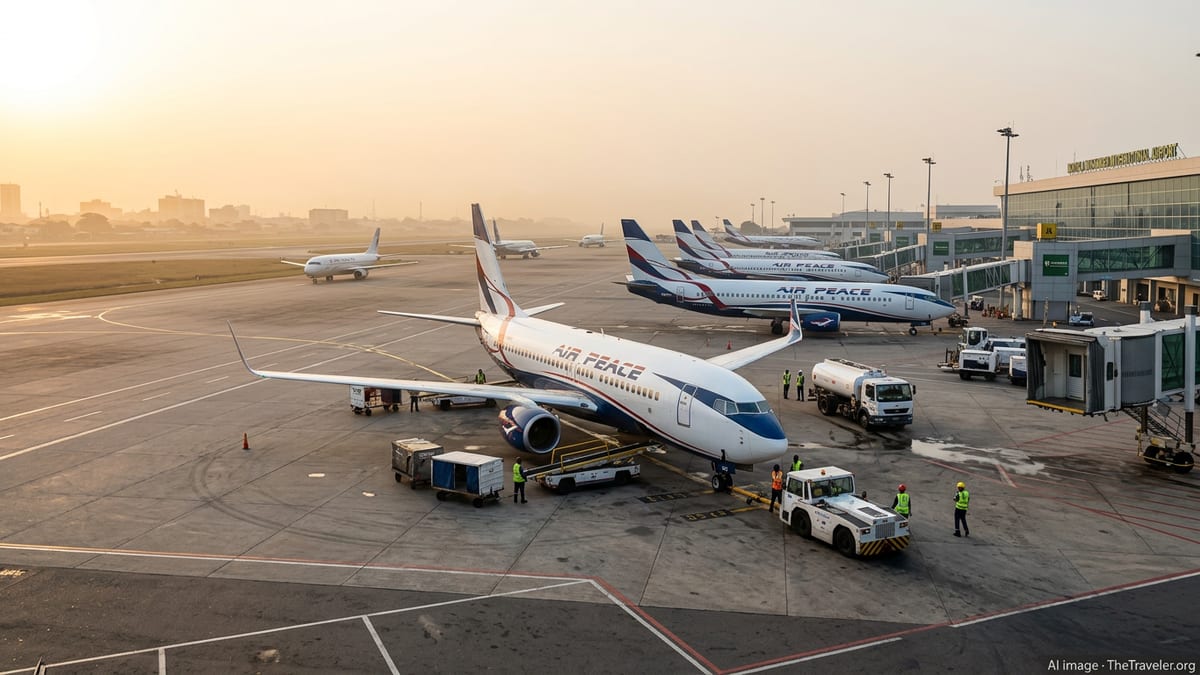
Domestic passengers booked on an Air Peace service out of Lagos were left waiting overnight at Murtala Muhammed Airport after a prolonged delay and late-night cancellation, according to multiple reports that have reignited debate over airline reliability and passenger protections in Nigeria.
Get the latest news straight to your inbox!
Long evening delay ends in late-night cancellation
Published coverage indicates that passengers holding evening tickets with Air Peace at Lagos’ Murtala Muhammed Airport faced hours of uncertainty as departure times were repeatedly pushed back before the flight was ultimately cancelled close to midnight.1 Accounts cited in recent reporting describe an initial scheduled departure in the early evening, followed by notification of a later time, and then further rolling delays as travelers remained inside the domestic terminal.
One passenger account referenced in investigative reporting describes waiting roughly six and a half hours in the airport before receiving confirmation that the flight would not operate that night, leaving travelers to make last-minute arrangements for accommodation or to remain in the terminal until morning.1 Social media posts shared in that coverage show crowded waiting areas, with travelers seated on airport benches and floors as they awaited new information.
Flight-tracking platforms show that some Air Peace services from Lagos on comparable domestic routes have experienced significant departure delays in recent weeks, though not every affected operation results in an overnight disruption.2 The incident has nevertheless resonated widely with travelers who see it as part of a broader pattern of schedule disruptions across Nigeria’s domestic aviation market.
Stranded at Murtala Muhammed: a recurring frustration
Murtala Muhammed International Airport, Nigeria’s busiest aviation hub and Air Peace’s main base, regularly handles dense traffic on popular domestic connections such as Lagos–Abuja, Lagos–Enugu and Lagos–Asaba.3 When delays cascade into the late evening, options for rebooking or switching carriers often narrow rapidly, particularly on routes with just a handful of daily frequencies.
In this latest case, passengers reported remaining in the terminal into the early hours, mirroring previous episodes in which Air Peace travelers on domestic routes have been left in airport lounges and boarding areas overnight following prolonged delays and rescheduling.4 Earlier coverage from Abuja documented travelers waiting more than 12 hours after an evening departure time, with the disruption stretching into the following morning.
Similar scenes have been reported at other Nigerian airports served by the carrier, where frustrated passengers have staged small protests or confronted ground staff after day-long delays and late-notice changes to flight timings.5 Commenters on social platforms frequently cite unpredictable departure times as a key concern when flying domestically, especially for those connecting same day to international flights out of Lagos.
Operational pressures and infrastructure constraints
Industry commentary suggests that domestic airlines in Nigeria, including Air Peace, are currently operating under a mix of operational and infrastructure pressures. Recent reporting links schedule disruptions to issues such as ground-handling incidents involving airport service vehicles, temporary unavailability of aircraft due to maintenance or damage, bird strikes and periodic aviation fuel shortages.5
Travel and business outlets have highlighted a recent case at Lagos in which an Air Peace aircraft on the ground was damaged by a handling company’s equipment, requiring it to be taken out of service for repairs and reducing fleet capacity during a busy period.6 Such events can contribute to a domino effect where subsequent flights in the schedule face delays or consolidations.
Air Peace, which has grown into Nigeria’s largest carrier by fleet and network, also operates international services alongside a dense domestic schedule.3 Analysts note that balancing aircraft utilization, maintenance planning and route expansion in this environment leaves little margin when unexpected technical or infrastructure issues arise, increasing the likelihood that evening flights bear the brunt of disruptions.
Consumer protection, communication and passenger expectations
The overnight delay in Lagos has renewed attention on how Nigerian carriers communicate with passengers and what forms of redress are realistically available when flights are heavily disrupted. Consumer-protection advocates in Nigeria have previously raised concerns about inconsistent notification, limited compensation and the lack of standardized care for stranded travelers.7
A 2024 advisory from Nigeria’s competition and consumer protection commission publicly cautioned Air Peace in connection with wider inquiries into airline consumer-rights practices, underscoring growing regulatory scrutiny of how delays, cancellations and fare policies are handled.7 Commentaries in local media argue that more predictable frameworks for refunds, rebooking and basic welfare support could reduce tensions when delays extend through the night.
Travelers posting about the latest Lagos disruption and earlier overnight waits in Abuja frequently highlight communication gaps as a central complaint, pointing to rolling rescheduling updates, limited proactive information on causes of delay and uncertainty over whether a flight will eventually depart or be cancelled.4 For many passengers, the inability to plan for accommodation, onward connections or ground transport is as disruptive as the lost time itself.
What the Lagos incident signals for domestic flyers
While overnight strandings remain a relatively small share of total domestic operations, the latest reports from Lagos illustrate how a single delayed flight can quickly become a high-stakes event for travelers navigating tight business schedules, medical appointments or onward international journeys.
Analysts quoted across Nigerian media suggest that consistent on-time performance, transparent delay management and timely passenger updates are becoming competitive differentiators among domestic airlines. Incidents like the recent Air Peace delay in Lagos tend to reverberate beyond the affected passengers, shaping broader perceptions of reliability on some of the country’s most important routes.
For now, public information shows that Air Peace continues to operate a full schedule from Lagos to multiple domestic destinations, even as past and present disruption episodes remain a reference point in ongoing discussions about aviation standards and consumer rights in Nigeria.2 Travelers and regulators alike will be watching how carriers respond to these concerns as passenger volumes continue to grow on Nigeria’s busiest corridors.
Detailed report on six-hour delay and midnight cancellation
Coverage of earlier overnight Air Peace delay incident
Report on passenger protest over prolonged delay
Nairametrics update on stranded Air Peace passengers at Lagos terminal