

More news on this day
North American aviation is bracing for a jolt this spring as Canada’s Air Transat prepares to halt all remaining flights to the United States by June 2026, just as Millennials and Gen Z from Canada, the United States, Mexico and France pivot in large numbers toward “sun and sand” destinations further south for Spring Break.
Get the latest news straight to your inbox!
Air Transat Draws Curtain on U.S. Network by June 2026
Publicly available scheduling data and industry analyses indicate that Montreal-based Air Transat has now removed its last remaining U.S. routes from sale, effectively exiting the American market by early summer 2026. Reports highlight the wind down of core leisure links from Montreal and Quebec City to Florida, with Quebec City–Fort Lauderdale flights ending in late May and Montreal–Fort Lauderdale services following in mid-June. Earlier adjustments had already targeted Montreal–Orlando, one of the carrier’s most recognizable holiday routes, which is expected to cease operations in early May ahead of the peak summer period.
The withdrawal marks a sharp turn for a leisure airline that, as recently as March 2025, was operating up to nine routes into the United States. Industry coverage notes that those flights, heavily oriented to winter and spring leisure traffic, became increasingly marginal as demand patterns shifted and operating costs rose. Data compiled by aviation consultancies and schedule trackers shows a progressive thinning of Air Transat’s cross-border timetable through late 2025 and into 2026, culminating in the current decision to redeploy aircraft.
Aviation analysts describe the move as part of a broader optimization strategy rather than an isolated retreat. With constrained fleets and rising labor and fuel costs, carriers are under pressure to focus on higher-yield markets. In Air Transat’s case, that appears to mean doubling down on long-haul leisure routes into Europe, Mexico, the Caribbean and parts of Latin America, where load factors and package-tour partnerships remain comparatively strong.
Published coverage also situates the decision within a wider softening of Canada–U.S. travel. Industry data for early 2026 indicates reduced seat capacity and fewer frequencies on several transborder city pairs, a trend that has coincided with lingering economic uncertainty, fluctuating exchange rates and a preference among many Canadian travelers either to stay domestic or seek guaranteed warm-weather escapes in Mexican and Caribbean resorts.
Millennials and Gen Z Push Spring Break Further South
While Air Transat turns away from the United States, demand among younger travelers is shifting in the opposite geographic direction. Travel trend reports for the 2025–2026 winter and spring seasons show Millennials and Gen Z in Canada, the United States, Mexico and France increasingly prioritizing warm-weather destinations such as Cancún, Los Cabos, the Riviera Maya and Caribbean islands for Spring Break 2026. Research commissioned by major travel insurers and tourism boards points to Mexico and the broader Caribbean as standout favorites among under-40 leisure travelers.
Recent snapshots from online travel agencies and fare aggregators indicate that international airfare heading into Spring Break 2026 is slightly lower on average than the previous year, even as hotel prices drift higher. Analysts suggest that comparatively affordable flights to Mexico, the Dominican Republic and other resort-heavy markets are reinforcing a long-running shift from traditional U.S. beach hubs toward all-inclusive stays further south. The appeal of packaged deals, bundled transfers and perceived value for money resonates strongly with budget-conscious students and young professionals.
In Canada, publicly available consumer polling shows a notable decline in intent to travel to the United States for leisure compared with pre-2025 levels, with many respondents instead naming Mexico and domestic escapes as top priorities. Younger respondents are especially likely to cite “guaranteed sun,” nightlife and social media–friendly experiences as motivators. That aligns with reports from destination marketing organizations in Mexico and the Caribbean that point to robust booking pipelines from Canadian, American and French youth segments for March and April 2026.
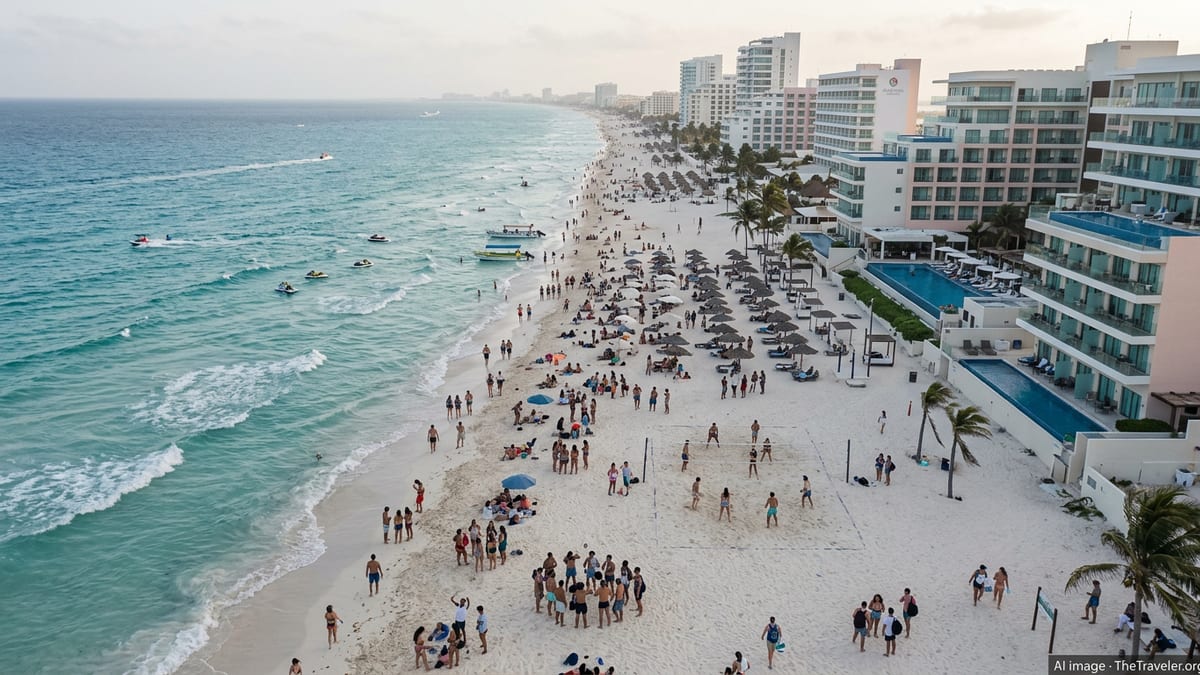
In Mexico’s resort corridors, particularly Cancún’s Hotel Zone and stretches of the Riviera Maya, travel trade briefings suggest that Spring Break 2026 could rival or surpass some pre-pandemic peaks in youth visitation. Similar momentum is being tracked in Caribbean hot spots favored by European and North American students, creating a competitive landscape in which U.S. coastal destinations must work harder to maintain their slice of the Spring Break market.
United States Tourism Faces Cross-Border and Domestic Headwinds
For U.S. destinations, Air Transat’s departure is symbolically significant despite involving only a handful of Florida routes by the time the final cuts take effect. Tourism and aviation observers note that Canadian visitors have long formed a reliable base for American theme parks, coastal resorts and winter golf markets, particularly in Florida and other southern states. The removal of a leisure-focused carrier reduces direct connectivity from key Quebec gateways, which could complicate travel plans for price-sensitive “snowbirds” and families accustomed to nonstop holiday flights.
Published analyses of transborder capacity show that Air Transat’s exit follows earlier cuts announced by WestJet, which has trimmed or suspended several Canada–U.S. routes for the 2026 summer season. Schedule data compiled by aviation analytics firms indicates an overall decline in available seats between the two countries compared with early 2025, even as some U.S. carriers maintain or modestly grow their own offerings. The net effect, according to these reports, is a leaner network that may translate into fewer options and higher prices on certain city pairs.
Domestic U.S. travel is also navigating new challenges as Spring Break approaches. A major North American winter storm in late January 2026 led to widespread flight cancellations and rail disruptions from northern Mexico through large portions of the United States and into Canada. Transport statistics and news coverage from that period describe one of the most disruptive winter events since the early pandemic years, forcing thousands of travelers to rebook or abandon winter getaways and tightening seat availability heading into the early Spring Break booking window.
Some analysts argue that these disruptions, combined with perceptions of crowding and higher on-the-ground costs in U.S. coastal markets, may be nudging a slice of younger travelers toward perceived “simpler” international alternatives. In that calculation, an all-inclusive week in Mexico or the Dominican Republic, sold at a fixed price and often bundled with airport transfers, can appear more predictable than piecing together separate accommodations and activities in crowded American beach towns.
Canada, Mexico, United States and France Intersect in a New Youth Travel Map
The Spring Break 2026 story is increasingly transatlantic, linking Canada, Mexico, the United States and France in a shared youth travel ecosystem. Market research on traveler segments shows that Millennials and Gen Z in both North America and Europe are more likely than older cohorts to prioritize experiences over possessions, and to chase a mix of nightlife, outdoor adventure and authentic local food. For French travelers in particular, Mexico and select U.S. cities continue to feature prominently on long-haul wish lists, even as competition from closer Mediterranean options remains strong.
Air service patterns support this evolving map. While Air Transat exits the United States, other transatlantic and transborder carriers are refining their networks to tap into youth demand for affordable long-haul leisure. Schedule filings and airline announcements for the first quarter of 2026 show Canadian and European operators strengthening links from Montreal and Toronto to secondary cities in France and southern Europe, as well as to resort zones in Mexico and the Caribbean. Some of these services cater directly to package tourists, while others rely on independent travelers booking flights and accommodation separately.
From the U.S. side, low-cost and hybrid airlines continue to expand point-to-point links to Mexican resort airports, often timed to school and university breaks. Industry reports describe solid bookings from major American metro areas into Cancún, Puerto Vallarta and Los Cabos through March 2026, helped by targeted marketing to college students and young professionals who view these destinations as both aspirational and attainable. For Mexico, this inflow complements strong regional demand from Canada and emerging interest from younger French travelers.
The result is a complex, multi-directional flow: Canadians and Americans fly south to Mexico and the Caribbean, French travelers cross the Atlantic for both U.S. city breaks and Mexican beach escapes, and Mexican resort hubs position themselves as the neutral meeting ground for an international Spring Break crowd. Air Transat’s decision to prioritize “sun and sea” routes over its shrinking U.S. footprint fits squarely within this broader pattern.
What Air Transat’s Move Signals for Spring Break 2026 and Beyond
For travelers, the most immediate impact of Air Transat’s U.S. exit will be felt in Quebec and eastern Canada, where customers lose direct leisure links to Florida just as Spring Break and summer planning reaches its peak. Consumer-focused guidance circulating online urges affected passengers to verify their bookings, weigh refund options against rebooking, and compare remaining choices from rival airlines, particularly when traveling with nonrefundable hotel or theme-park reservations in the United States.
For destinations, the move underscores how quickly airline strategies can respond to changes in youth demand. With Millennials and Gen Z increasingly booking southbound beach vacations, carriers that once depended on cross-border U.S. traffic are now redirecting aircraft toward Mexico, the Caribbean and select European leisure markets. Analysts suggest that this redeployment could further amplify the southward pull for Spring Break 2026, as easier access and competitive fares encourage more young travelers to follow their peers to tropical resort zones.
Industry observers will be watching closely to see whether U.S. destinations and airlines respond with targeted promotions or new partnerships aimed at retaining Canadian and European youth travelers. For now, publicly available data points to a clear storyline: as Air Transat shutters its last U.S. routes by June 2026, the gravitational center of Spring Break for many Millennials and Gen Z travelers is shifting decisively toward the beaches of Mexico and the Caribbean, reshaping how Canada, Mexico, the United States and France intersect on the global travel map.