

More news on this day
AirAsia Malaysia has announced a new international route linking Kota Bharu in Malaysia’s northeastern state of Kelantan with Indonesia’s bustling capital Jakarta, a direct connection industry observers say could reshape tourism and business flows along the northern corridor of the Malay Peninsula.
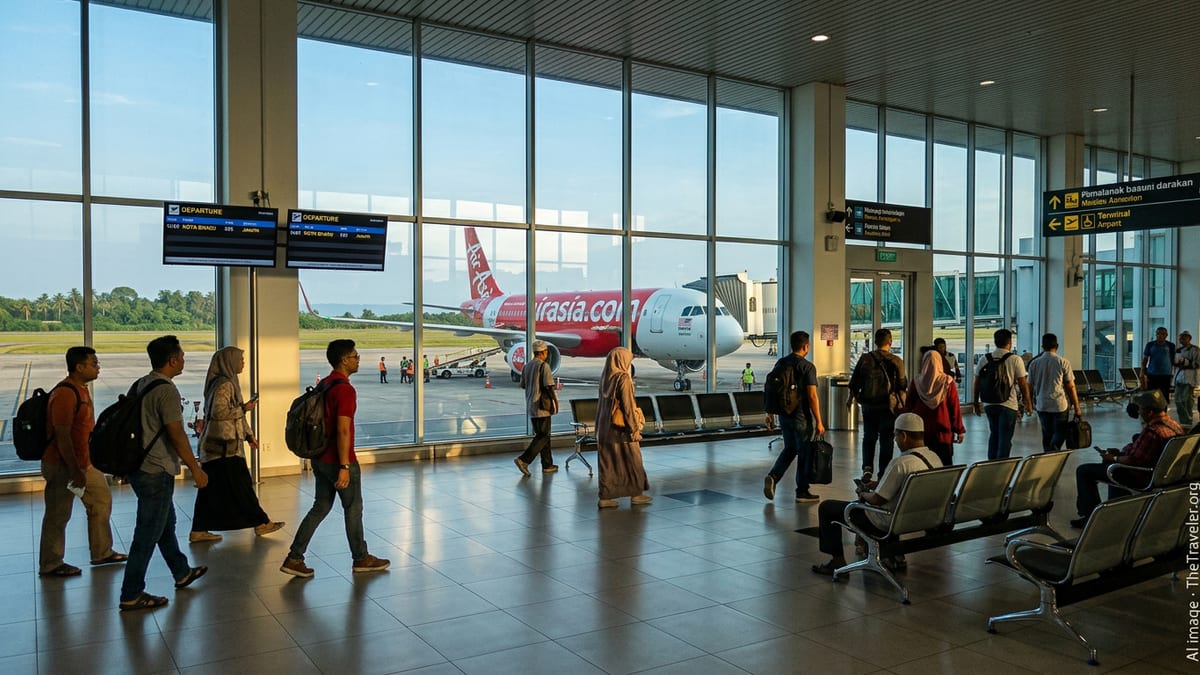
A New Cross-Border Corridor for the East Coast
Announced on March 10 in Sepang, the new Kota Bharu–Jakarta service will begin on June 16, 2026, with four weekly flights operated by AirAsia Malaysia under its AK flight code. The route marks the carrier’s 20th connection into Indonesia and its first direct link between Kelantan and the region’s largest metropolis, significantly expanding international access for travellers from Malaysia’s east coast.
Until now, passengers from Kota Bharu heading to Jakarta typically had to connect via Kuala Lumpur or other regional hubs, adding time and cost to journeys for both leisure and business travellers. The introduction of nonstop flights is expected to shorten travel times considerably and make cross-border trips more attractive for first-time visitors as well as repeat travellers.
The airline positions the launch as part of a broader strategy to deepen its footprint in the Indonesian market while unlocking new demand from secondary Malaysian cities. By directly pairing a growing coastal destination like Kota Bharu with Jakarta’s massive catchment area, AirAsia is betting on pent-up interest in alternative routes that bypass the country’s already busy main gateways.
Executives say the new service will also support government ambitions to diversify tourism flows beyond Malaysia’s traditional hotspots and strengthen regional connectivity within ASEAN, where low-cost carriers have been key drivers of cross-border movement.
Boost for Kelantan’s Tourism and Creative Economy
Local tourism players in Kelantan are welcoming the new flights as a timely opportunity to showcase the state’s cultural and natural assets to a wider Indonesian audience. Kota Bharu has been steadily upgrading its appeal as a gateway to the East Coast’s beaches, riverfront villages and traditional crafts, yet has remained comparatively under the radar among international travellers.
With direct access from Jakarta, travel agencies expect rising interest in Kelantan’s famed batik and songket weaving communities, traditional markets, and family-friendly coastal resorts along the South China Sea. The easier connection could spur new themed itineraries centred on heritage crafts, food culture and slow-paced coastal escapes, tailored to Indonesian travellers looking beyond established Malaysian destinations such as Kuala Lumpur, Penang and Langkawi.
Industry stakeholders also anticipate spillover benefits for the state’s meetings, incentives, conferences and exhibitions segment, particularly for small and mid-sized corporate groups from Indonesia seeking more affordable, niche destinations. Improved air access often serves as a catalyst for investment in hotels, tour operations and supporting services, which can create jobs and diversify local economies.
Tourism officials in Kelantan have in recent years emphasized the importance of broadening international reach for Sultan Ismail Petra Airport, which has seen upgrades to its terminal facilities and ground infrastructure. The new flights provide a concrete test of how far the airport can grow its role as an international gateway for the region.
Jakarta Travellers Gain a New Coastal Getaway
On the Indonesian side, the route offers Jakarta residents and businesses a direct line to a less crowded but culturally rich part of Malaysia. Travel consultants note that short international breaks have grown steadily in popularity among Jakarta’s expanding middle class, who increasingly seek destinations that combine value, convenience and distinct local character.
Kota Bharu and the surrounding Kelantan coast fit that profile, promising lower costs than some of Malaysia’s more saturated tourism centres while offering an authentic experience rooted in traditional Malay culture. The new flights could appeal to families, small groups of friends, and religious travellers interested in visiting coastal mosques, local markets and traditional food stalls.
The connection may also encourage more two-centre itineraries that pair Kota Bharu with other Malaysian east coast destinations reachable by road, such as the islands off Terengganu and Pahang. For Jakarta-based tour operators, the route broadens the range of Malaysia packages they can sell, creating fresh product lines at a time when travellers are increasingly seeking lesser-known destinations within familiar countries.
Business travellers from Jakarta stand to benefit as well, particularly those in sectors such as retail, textiles, food supply and small-scale manufacturing that already maintain informal trade links with Malaysia’s northern states. Reduced travel time and simplified routing can make it easier to hold meetings, inspect production sites or participate in small trade fairs along the east coast.
Strengthening ASEAN Connectivity and Secondary Hubs
The Kota Bharu–Jakarta route fits within a broader trend of Southeast Asian carriers tying secondary cities directly to regional capitals, rather than routing all international traffic through primary hubs. For AirAsia, the move complements its existing Malaysia–Indonesia network, which already connects major cities such as Kuala Lumpur, Penang and Johor Bahru with key Indonesian destinations.
Aviation analysts point out that such point-to-point routes are particularly well suited to low-cost carriers, which thrive on high aircraft utilization and strong regional demand. By spreading capacity beyond its main bases, AirAsia can tap new segments of travellers who may have found multiple connections or long surface journeys a deterrent in the past.
The decision also underscores growing confidence in demand from both sides of the Malacca Strait. Jakarta’s status as a political and economic hub provides a large pool of outbound travellers, while Kelantan’s developing tourism infrastructure and unique cultural positioning give it clear differentiation among Malaysian destinations.
For ASEAN policymakers, each new cross-border route that links emerging cities rather than just capital hubs supports the bloc’s long-stated goal of more balanced regional development. Increased frequency of direct flights can encourage small and medium-sized enterprises to look beyond their domestic markets and participate in regional value chains.
Flight Details and Market Outlook
According to the announcement, the Kota Bharu–Jakarta service will operate four times a week starting June 16, 2026, using AirAsia’s single-aisle fleet. Flight times are expected to be scheduled to suit both leisure and business travellers, with timings designed to allow for easy onward connections within each country’s domestic network.
Travel trade insiders say introductory promotional fares are likely to play a key role in stimulating initial demand, especially among price-sensitive leisure travellers and first-time visitors. The airline is expected to leverage its digital platforms and regional marketing channels to highlight the route’s convenience and the distinctive experiences offered on both ends of the journey.
While competition on the specific city pair is limited, the route enters a broader market where travellers can still opt to connect through Kuala Lumpur or other hubs. AirAsia will need to emphasize time savings and direct access, alongside its established low-fare positioning, to ensure sustained load factors beyond the launch phase.
For now, tourism boards and local businesses in both Kota Bharu and Jakarta are framing the new flights as a fresh bridge between two cities bound by shared language, heritage and faith, yet offering distinctly different urban and coastal experiences. If demand steadily grows, the route could pave the way for increased frequencies or additional connections linking Kelantan more deeply into the regional travel map.