

More news on this day
Persistent shortages of key jet engines are forcing Airbus to recalibrate its ambitious production plans, raising concerns that the world’s largest planemaker may struggle to meet surging airline demand for new fuel efficient aircraft in the next two years.
Get the latest news straight to your inbox!
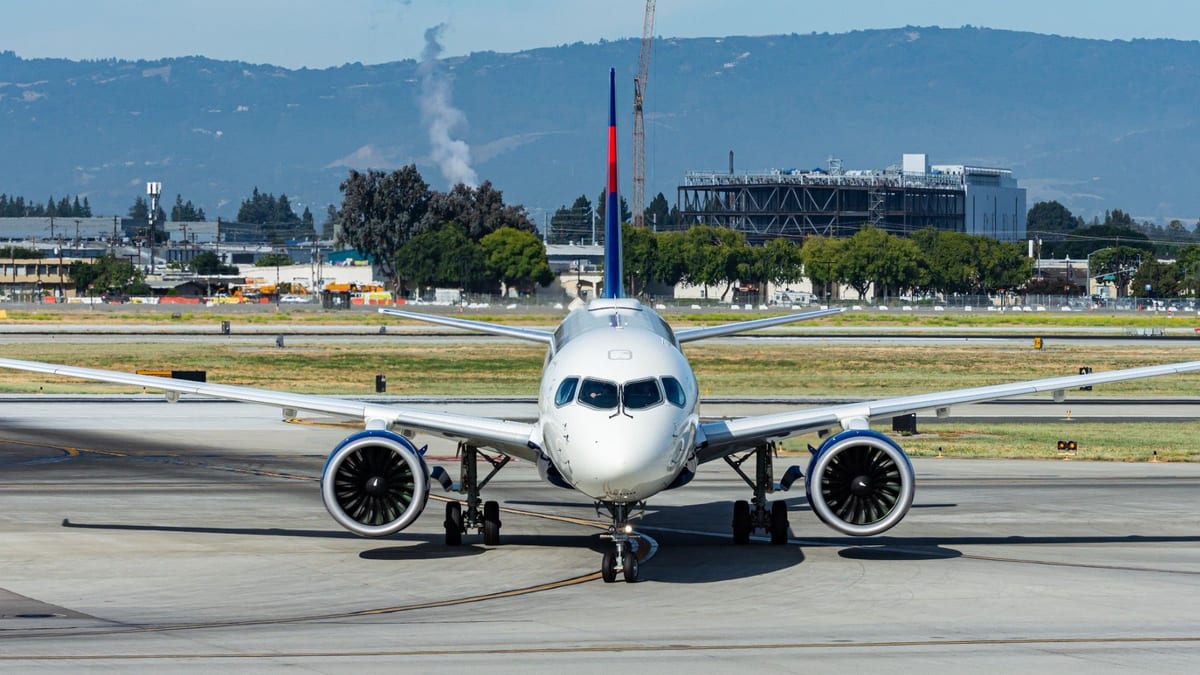
Image by Simple Flying
Engine Supply Woes Cast Shadow Over Record Delivery Ambitions
Publicly available information shows that Airbus is entering 2026 with delivery ambitions at record levels, but with its outlook increasingly tied to the performance of engine makers. The company has guided for around 870 commercial aircraft deliveries in 2026, up from roughly 790 to 800 jets expected in 2025, yet acknowledges that engine availability remains a critical constraint.
Recent annual results presentations indicate that shortages of engines for the A320neo family, particularly units supplied by Pratt & Whitney, have already slowed the narrowbody ramp up. Airbus has pushed back the timing of its goal to reach a monthly production rate of 75 A320neo family aircraft, now targeting the upper end of a 70 to 75 range by the end of 2027 rather than an earlier, firmer commitment to 75.
Executives have described the shortfall in engines as “significant” in recent coverage, noting that the company had to work intensively in late 2025 to meet its reduced delivery target. Even then, the original objective of around 820 jets for 2025 was trimmed to about 790 aircraft as supply chain realities, including engine bottlenecks, became clearer.
The pressure is mounting just as global air travel continues to recover and expand. Airlines across Europe, Asia, and North America are seeking additional single aisle capacity to replace older aircraft and meet demand on short and medium haul routes, leaving little margin for prolonged production disruptions at Airbus or its suppliers.
Pratt & Whitney GTF Crisis Keeps A320neo Fleet Under Strain
At the heart of Airbus’s engine troubles is the prolonged disruption tied to Pratt & Whitney’s geared turbofan program. The PW1000G family powers part of the A320neo fleet and all Airbus A220 aircraft, as well as Embraer’s E2 jets, creating a broad dependency across multiple platforms. A contamination issue in the powdered metal used to manufacture certain engine components has triggered a complex and time consuming inspection and repair campaign.
Industry analyses and regulatory filings from parent company RTX indicate that hundreds of PW1100G engines on A320neo aircraft require removal and inspection through at least the end of 2026. That has translated into a mounting number of aircraft on the ground, forcing airlines to cancel flights, reshuffle fleets, or defer planned growth. Aviation consultancies estimate that hundreds of A320neos globally are currently affected, with the number fluctuating as engines cycle through maintenance shops.
For Airbus, the impact is twofold. On the one hand, engine scarcity has delayed handovers of new A320neo family aircraft waiting on GTF powerplants. On the other, in service reliability issues have weakened confidence in one of the two main engine options available to airlines, complicating future sales campaigns and potentially influencing customer engine choices on new orders.
RTX has reported substantial financial charges tied to compensation for affected airlines and accelerated maintenance work, while also pledging to increase throughput at overhaul facilities and roll out upgraded GTF hardware. However, the pace of recovery remains gradual, and industry forecasts suggest that the knock on effects on capacity and deliveries are likely to persist into 2027.
CFM LEAP Bottlenecks Limit Airbus Flexibility
Compounding the Pratt & Whitney difficulties, Airbus is also constrained by tight supply of CFM International’s LEAP engines, the alternative powerplant for the A320neo family. CFM, a joint venture between Safran and GE Aerospace, must juggle demand from both Airbus and Boeing, as the LEAP also exclusively powers the 737 MAX. This dual commitment has turned the LEAP program into a central bottleneck for global narrowbody output.
Market reports from 2025 and early 2026 describe LEAP production as running below the levels needed to fully support Airbus’s planned ramp up, leading to so called “gliders” factory fresh aircraft completed without engines and stored until powerplants arrive. Some analyses cited dozens of such aircraft waiting for LEAP engines at various points in 2025, underscoring how even small shortfalls can ripple through delivery schedules.
Safran has outlined plans for double digit percentage growth in LEAP deliveries and highlighted ongoing maturity upgrades designed to extend time on wing and reduce unscheduled removals. The company has also announced new supplier agreements to expand the manufacturing base for critical components. Nevertheless, public commentary from engine makers acknowledges that the supply chain for forgings, castings, and high tech turbine parts remains under strain.
The result for Airbus is reduced room to maneuver. With both of its core narrowbody engine options under pressure, the manufacturer has limited ability to offset shortfalls from one supplier by leaning more heavily on the other. Analysts warn that this leaves Airbus vulnerable to further shocks in the engine ecosystem, whether from quality issues, industrial disputes, or shortages of specialized materials.
Delivery Targets Recast as Supply Chain Risks Persist
The evolving engine situation has already reshaped Airbus’s numerical goals. Throughout 2025, the company repeatedly emphasized that its delivery performance was “conditional on engines,” a phrasing echoed across financial press coverage. By early 2026, guidance for 2025 deliveries had been revised down to about 790 aircraft, while the 2026 target of approximately 870 jets was framed against a backdrop of continuing supplier risks.
Financial analysts tracking Airbus note that each adjustment reflects a delicate balance between strong demand and chronic constraints. While order books for the A320neo family and the long haul A350 remain deep, production system fragility reduces the company’s ability to convert those orders into cash flow on the originally planned timeline. Ratings agencies and equity research notes issued in late 2025 highlighted engines as one of the main factors limiting Airbus’s near term growth.
There are also second order effects for airlines and lessors. With delivery slots scarce and subject to slippage, carriers are holding on to older jets longer than intended, deferring cabin refreshes and sometimes investing more heavily in maintenance of aging fleets. Leasing companies, meanwhile, report high demand and stronger lease rates for in service narrowbodies as operators seek short term capacity while waiting for delayed new aircraft.
For travelers, the repercussions can materialize as higher fares and fewer spare aircraft available when disruptions occur. Capacity constraints in key markets, from transatlantic routes to intra Asia services, are already contributing to robust pricing. If engine driven delivery delays intensify over the next two years, the effect could further tighten the global seat supply just as demand remains resilient.
Outlook: Slow Relief and Lasting Structural Changes
Looking ahead, publicly available forecasts suggest only gradual relief on the engine front. Pratt & Whitney aims to complete the bulk of GTF inspections tied to the powder metal issue by the end of 2026, while progressively introducing design improvements intended to boost durability. CFM, for its part, is targeting steady output increases and incremental reliability gains for the LEAP engine family.
Even under optimistic scenarios, however, the lag between engine factory recovery and restored airline capacity is likely to be measured in years. Aircraft grounded for engine work must re enter fleets, maintenance backlogs need to clear, and stored “glider” aircraft require induction into service. This creates a multi year tail during which engine availability will remain a central factor in Airbus’s ability to hit or exceed delivery targets.
The current squeeze is also accelerating longer term structural shifts. Airbus is working more closely with engine suppliers on industrial planning, inventory visibility, and quality control, according to industry briefings, in an effort to avoid surprises that could derail future ramps. Engine makers are diversifying their supplier bases and investing in additional capacity for complex parts, but these projects take time to bear fruit.
For now, the persistent engine shortages underscore how tightly coupled the modern aviation manufacturing ecosystem has become. Airbus’s aspirations to lift production to new highs are ultimately constrained not just by its own assembly lines, but by the ability of a small number of engine manufacturers to deliver highly sophisticated turbofans on schedule. Until that constraint eases, future aircraft deliveries will remain vulnerable to the smallest disruptions deep within the supply chain.