

More news on this day
Persistent shortages of new-generation jet engines are forcing Airbus to scale back its most ambitious production plans, raising fresh doubts over whether the European manufacturer can meet surging airline demand for fuel efficient single aisle aircraft in the second half of the decade.
Get the latest news straight to your inbox!
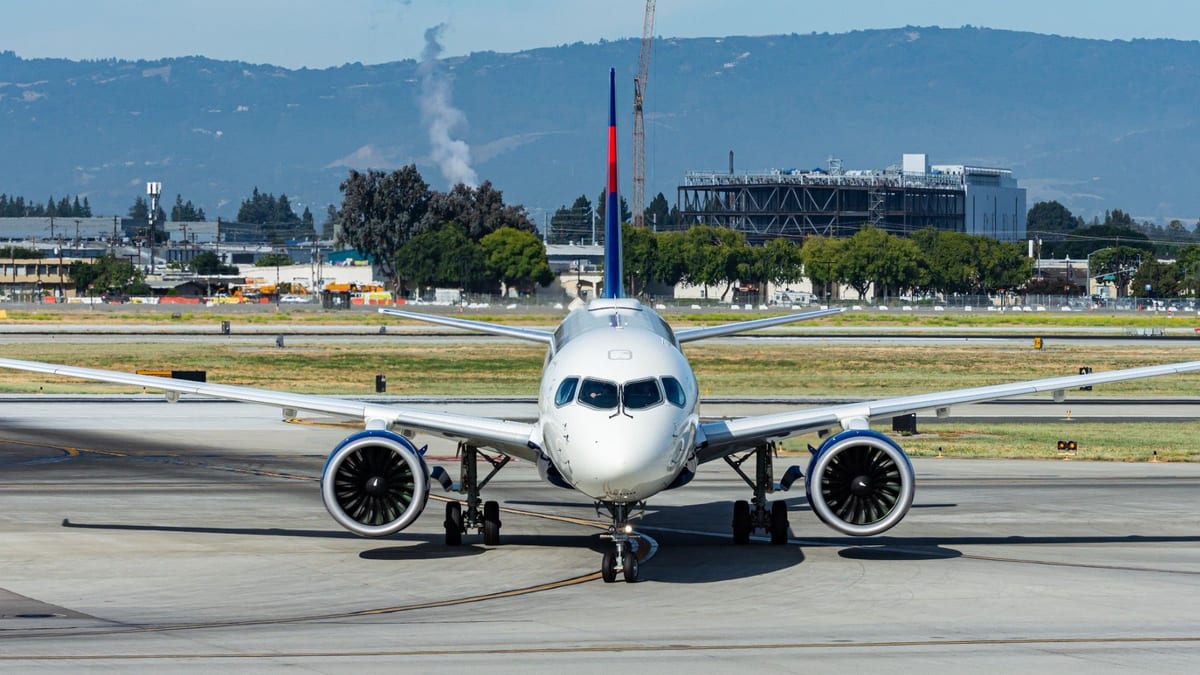
Image by Simple Flying - Aviation News
Revised Delivery Guidance Highlights Growing Pressure
Recent guidance from Airbus indicates the company now expects to deliver around 870 commercial aircraft in 2026, a lower trajectory than earlier ambitions tied to a faster ramp up of its A320neo family lines. Publicly available information shows the slower path is closely linked to constrained supplies of Pratt & Whitney geared turbofan engines and limits on how far CFM International can increase output of its competing LEAP powerplants.
The A320neo family accounts for more than half of Airbus’s commercial backlog, making the health of narrowbody engine programs a critical determinant of future deliveries. Industry data for 2025 showed Airbus falling short of earlier annual delivery targets as engine availability lagged fuselage and systems production, leaving dozens of completed airframes waiting on powerplants at various points in the year.
Financial commentary covering Airbus in March 2026 notes that supply chain bottlenecks in engines and key structures remain the primary headwind to unlocking higher output, despite strong order momentum and robust demand from airlines and lessors. Those pressures have turned what had been a race to add capacity into a struggle to secure enough engines simply to hold the current production pace.
Pratt & Whitney GTF Inspections Keep Jets on the Ground
At the center of the disruption is Pratt & Whitney’s PW1000G geared turbofan family, which powers a significant share of A320neo aircraft. Inspection and repair campaigns linked to powdered metal contamination and premature wear have required large numbers of engines to be removed from service earlier than planned, straining maintenance, repair and overhaul capacity worldwide.
Analyses of the global fleet indicate that hundreds of A320neo jets fitted with Pratt & Whitney engines have spent time parked or lightly utilized while airlines wait for overhauled or replacement powerplants. Industry publications suggest the repair backlog is unlikely to be fully cleared before late 2026, keeping a sizeable portion of the installed base in a cycle of shop visits and temporary groundings.
These reliability challenges do not directly reduce the number of new engines Pratt & Whitney can ship to Airbus, but they indirectly limit availability by diverting hardware and production slots toward replacement units and spare engines. As a result, even with a recovery in manufacturing capacity, the engine maker faces the dual burden of supporting an existing fleet under stress while trying to keep up with new aircraft demand.
For airlines, the cascading effect of this shortage is visible in reduced utilization of affected aircraft, schedule adjustments, and in some markets the temporary reactivation or lease extension of older, less efficient jets to cover capacity gaps that the A320neo family was supposed to fill.
Limited CFM Capacity Undercuts Switch Away from GTF
In theory, Airbus could soften the impact of Pratt & Whitney’s difficulties by shifting more of its order book to the alternative CFM LEAP 1A engine. In practice, reports from early 2026 indicate that CFM International, the joint venture between GE Aerospace and Safran, is already close to the limits of what it can supply in the near term.
Coverage of Airbus’s February 2026 results shows company leadership acknowledging that additional volumes of LEAP engines are unlikely to materialize quickly enough to offset the Pratt & Whitney shortfall. CFM has signaled a planned increase in LEAP deliveries for 2026, but that growth is largely pre-allocated to existing Airbus and Boeing programs and complicated by its own supply chain and durability issues.
Industry data from late 2025 pointed to ongoing maturity upgrades and blade related work on LEAP engines, which, while less severe than the GTF inspection campaign, have still constrained available capacity. CFM also faces the challenge of balancing demand between the A320neo and Boeing 737 MAX lines, both of which rely heavily on LEAP variants.
The net result is that Airbus cannot simply “flip a switch” and replace GTF powered build slots with LEAP powered ones. Technical certification requirements, contractual engine selections, and long lead times for complex components mean any large scale shift would take years, not months, to fully materialize.
Backlog Growth Meets Supply Chain Reality
While supply constraints dominate current headlines, demand for Airbus single aisle aircraft continues to strengthen. Lessors and airlines have announced new A320neo family commitments in 2025 and early 2026, reinforcing a backlog that already stretches well into the 2030s for popular configurations.
In one recent example, a major aircraft leasing company disclosed an order for 100 additional A320neo family jets alongside new LEAP engine agreements, with deliveries scheduled to begin in 2026. Similar transactions across the market underscore that buyers remain confident in the long term economics of the A320neo platform, even as near term availability tightens.
However, the same reports highlight that slot availability, rather than willingness to place orders, is becoming the binding constraint. With Airbus production running in the low 60s of A320 family aircraft per month and ambitions for rate 75 now pushed further out, each additional disruption in the engine supply chain risks sliding deliveries to the right on already distant timelines.
For carriers in growth markets, particularly in Asia and the Middle East, these delays can translate into postponed route launches, reliance on older fleets, or the need to lease capacity at elevated prices. The imbalance between strong demand and constrained supply is also helping to support residual values for existing narrowbody aircraft, including earlier generation models.
Implications for Airlines, Investors and Competing Manufacturers
For airlines, the persistent engine shortages translate into operational complexity and reduced flexibility. Fleet planners must juggle uncertain delivery dates, uneven reliability across engine sub fleets, and the risk that scheduled capacity additions will arrive later than planned. Some operators have diversified their engine selections within the A320neo family or turned to alternative aircraft types to hedge against further slippage.
Investors tracking Airbus and its engine partners are watching how quickly the industrial system can stabilize. Financial analysis in early 2026 points to engine availability as a key variable for revenue recognition, cash flow timing, and the pace at which Airbus can convert record orders into delivered aircraft. Progress on clearing maintenance backlogs and adding engine production capacity will be central themes for the sector over the next two years.
The situation also has implications for competitors. Boeing faces its own production challenges, but constrained Airbus output limits the ability of airlines to switch large orders between manufacturers in the short term. At the same time, the difficulties of scaling new generation engines underscore the technical and financial hurdles any future clean sheet narrowbody program would face, regardless of airframe brand.
With engine makers signaling that supply constraints and inspection programs could extend into 2027, the prospect of a prolonged period of tight capacity is gaining traction. For now, the combination of high demand and limited engine availability suggests that Airbus’s delivery ambitions will continue to be defined as much by what its suppliers can provide as by what its factories can build.