

More news on this day
In a notable shift from years of denser cabins, at least one major North American airline is now removing rows of seats on parts of its fleet to restore legroom, signaling that traveler backlash against cramped cabins is starting to reshape how aircraft are configured.
Get the latest news straight to your inbox!
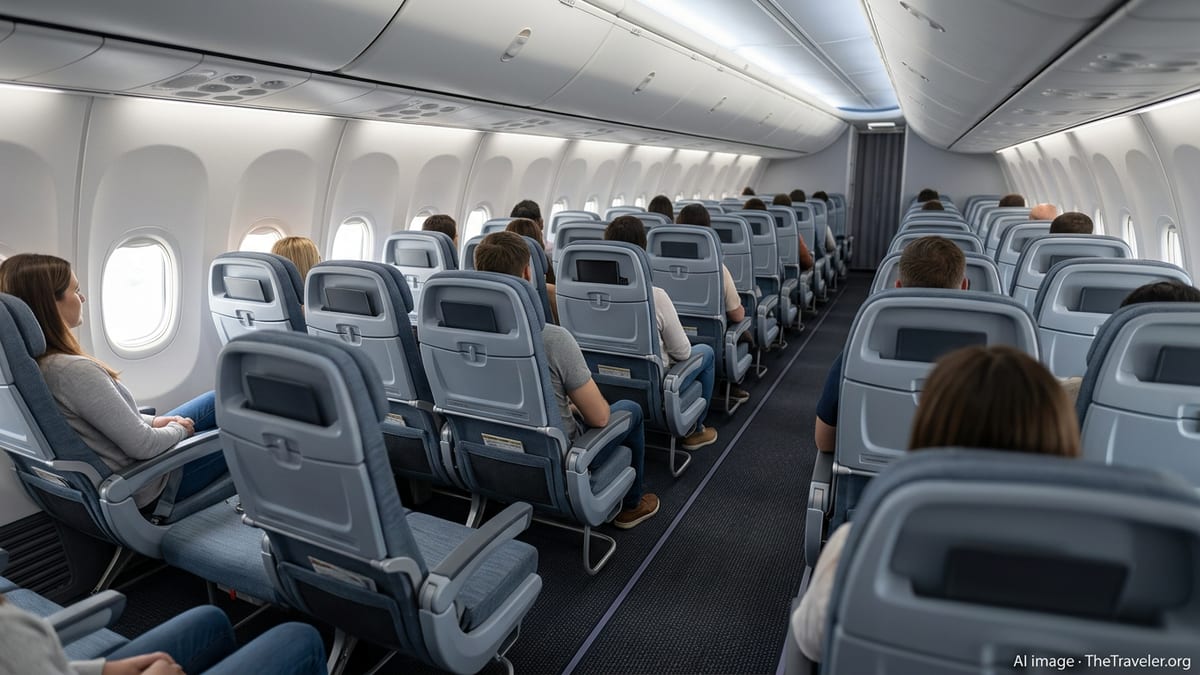
The Airline Behind the Latest Seat Reduction
Recent investor disclosures from Southwest Airlines show that the carrier plans to remove one row of seats on a large portion of its Boeing 737-700 fleet, cutting capacity from 143 to 137 seats in order to create an extended-legroom section in the forward cabin. Publicly available documents describe the change as part of a broader move toward assigned seating and tiered cabin products, scheduled to begin generating value in 2026 after the reconfiguration work ramps up in 2025.
The company’s filings indicate that the lost capacity from removing seats is expected to be offset by new revenue from selling those roomier rows as a premium economy-style product, alongside other ancillary fees. That balance between fewer seats and higher per-seat yields reflects a wider trend in the industry, where airlines are experimenting with ways to respond to passenger comfort concerns without sacrificing profitability.
Southwest is not alone in reconsidering how tightly it packs passengers into narrow-body aircraft. Coverage from major travel outlets in 2025 and early 2026 points to a small but growing group of airlines, including some in Canada and Europe, that are revisiting past densification moves and, in some cases, reversing them after visible customer pushback.
For travelers, the key takeaway is that this seat reduction is not a return to the wide-open cabins of earlier decades. Instead, it is a targeted reshuffling of space to carve out distinct comfort tiers that airlines can price separately.
Passenger Backlash and the Shift Away From Ultra-Dense Cabins
The latest moves come after a period in which some carriers pushed seat density to the limit, trading legroom for more revenue-generating seats. In Canada, WestJet drew intense criticism in 2025 and early 2026 for retrofitting certain Boeing 737 aircraft with a new layout that squeezed standard economy pitch to about 28 inches in some rows and introduced fixed, non-reclining seats on a subset of its fleet.
Passenger videos and social media posts showing knees pressed tightly against seatbacks quickly went viral, and coverage in Canadian and U.S. outlets documented how complaints mounted as the modified jets entered service on busy vacation routes. Reports indicate that WestJet ultimately paused the rollout and then committed to removing the added row, returning affected aircraft to a less cramped configuration and effectively reducing seat count on those planes.
Commentary in travel and consumer publications has framed that reversal as a clear example of how visible backlash can influence airline design decisions. While regulatory minimums for seat pitch remain relatively permissive, the combination of negative publicity and potential safety questions around evacuation standards at very tight pitches has created reputational risk for airlines that go too far in the direction of densification.
The result is a new equilibrium: carriers may still monetize extra space aggressively, but they are becoming more cautious about shrinking the baseline experience to a point that triggers broad public displeasure or threatens brand loyalty.
How Fewer Seats Could Change the In-Flight Experience
For passengers who can secure one of the newly created extra-legroom rows, the experience will feel noticeably different from today’s standard economy seat. Airlines that are adding these sections typically advertise three to five additional inches of pitch, along with redesigned slimline seats that free up knee room by shifting structure away from the lower leg area. In some cabins, the removal of bulky under-seat power boxes and the addition of USB ports higher on the seatback further improves usable space for feet and bags.
Reports from early retrofitted Southwest aircraft, as well as similar products on other North American and European airlines, suggest that the front-of-cabin extra-legroom zones are intended to appeal to frequent flyers, business travelers and families looking for a bit more comfort without paying full business-class fares. On longer domestic segments and medium-haul routes, that extra pitch can make it easier to work on a laptop, stretch, or manage a child sitting in the same row.
Even for those not seated in the premium rows, removing a row from the overall cabin can subtly affect the onboard atmosphere. Slightly fewer passengers translate into marginally shorter boarding queues, less competition for overhead bin space, and somewhat lower lavatory demand, especially on full flights. However, because these changes are often limited to a subset of aircraft types or routes, most travelers will likely experience them as sporadic improvements rather than a systemwide overhaul.
Importantly, the move toward clearer segmentation may also lead to more predictable seat maps. As reconfigurations progress, travelers booking flights in 2026 and beyond should see more consistent layouts within a given aircraft subtype, reducing the chances of unexpected seat changes when aircraft are swapped at the last minute.
Pricing, Fees and Who Stands to Benefit
The decision to cut seats rarely means cheaper tickets. Instead, airlines typically view extra-legroom sections as a new revenue stream layered on top of base economy fares. In Southwest’s case, corporate briefings indicate that the revenue generated from selling premium seating and new boarding products is expected to more than offset the income lost from removing seats on some aircraft.
Travel analysts note that this approach mirrors what many legacy carriers have done over the past decade, carving standard economy into multiple branded fares that vary by seat location, flexibility and included services. For price-sensitive travelers, that can mean more add-on decision points at booking, from whether to pay for extra space to selecting aisle or window seats concentrated in certain rows.
Frequent flyers and higher-tier loyalty members, on the other hand, may stand to gain the most. Many airlines reserve a portion of extra-legroom inventory for elite customers, either as complimentary upgrades at booking or as discounts on premium seats. If Southwest and others follow similar patterns, status holders could find it easier to secure roomier spots without paying the full advertised surcharge.
Families and occasional travelers may feel more squeezed by the new structure, especially on popular leisure routes where extra-legroom seats are heavily promoted. Travel advisors suggest checking seat maps early, watching for equipment changes, and weighing whether paying for extra space on longer flights is worthwhile compared with choosing shorter legs or alternative carriers that still offer relatively generous standard pitch.
What Travelers Should Watch for in 2026 and Beyond
As cabin retrofits accelerate through late 2025 and 2026, travelers can expect a patchwork of experiences depending on the airline, aircraft model and route. Southwest intends to extend its new configuration and assigned seating across its fleet on a rolling basis, meaning some flights will offer clearly marked extra-legroom zones while others continue with older layouts until modifications are complete.
Other airlines are moving in different directions with the same underlying goal of monetizing comfort. Some low-cost carriers are introducing branded extra-space products in exit rows and the first few rows of the cabin, while flag carriers in Europe and Asia are redesigning long-haul economy cabins with slightly increased pitch and new seat shells to differentiate themselves on competitive international routes.
For travelers, the practical advice is to check aircraft type and seat map details before purchase, rather than assuming that all economy seats are equal. Tools from airlines and third-party booking platforms increasingly highlight pitch, recline and seat location, and those details now matter more than ever as carriers experiment with how much space to take away from some rows and give back to others.
In the near term, the trend of selectively reducing overall seat count to add a marketable tier of extra-legroom seats appears likely to grow, particularly in North America. While it may not spell the end of tight quarters in standard economy, it does signal that the long-running race to squeeze in more chairs is facing new limits set not by regulators, but by passengers who have shown they are willing to push back against cabins that feel too cramped.