

More news on this day
Air New Zealand is joining Qantas, Virgin Australia and Singapore Airlines at the forefront of a sweeping travel transformation set to reshape how passengers move around the Asia Pacific region in 2026, with new routes, biometric borders and AI-led services converging into what industry leaders are calling a seamless, door-to-door journey.
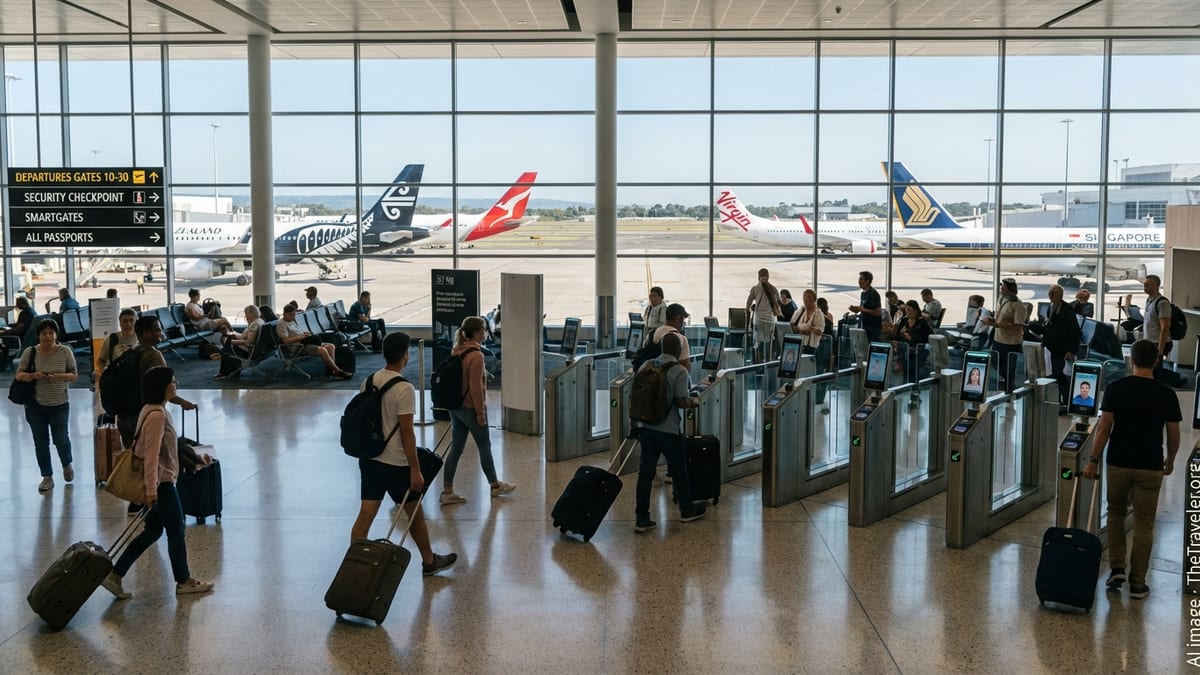
Four Carriers, One Vision for Seamless Journeys
Across Australasia and Southeast Asia, four of the region’s most influential carriers are converging on a remarkably similar vision for 2026: travel that feels more like a continuous digital experience than a series of disjointed check points. Air New Zealand, Qantas, Virgin Australia and Singapore Airlines are each rolling out their own programs, but together they form an emerging ecosystem that promises fewer queues, smarter itineraries and more consistent service across borders.
For Air New Zealand, the focus is on rebuilding long-haul strength while modernising the passenger experience. The airline’s latest outlook confirms that two of ten new Boeing 787 aircraft will arrive later this financial year, helping lift widebody capacity by as much as a quarter over the next two years. That added range and efficiency will underpin new premium-heavy long-haul schedules at the heart of its 2026 ambitions.
Qantas, Virgin Australia and Singapore Airlines are moving in parallel. Qantas is pushing ahead with new ultra-long-haul and leisure-oriented links that cut connection times between Australia and North America. Virgin Australia is tightening its web of partnerships with carriers across Asia, the Middle East and North America, effectively turning its Australian hubs into springboards for global trips. Singapore Airlines, meanwhile, is leaning on its role as a technology leader to weave more personalised and friction-light experiences through Changi Airport and beyond.
Industry analysts say that while each airline’s strategy is distinct, the combined effect is a step change in how travellers can expect to move between Australia, New Zealand, Asia and the Americas by late 2026. The emphasis is shifting from isolated flight segments to an integrated, end-to-end journey, supported by shared technologies and aligned standards.
New Routes and Capacity Shape a Rewired Pacific
The most visible sign of this transformation will be in the route maps. Qantas has just confirmed it will launch the first nonstop commercial flights between Sydney and Las Vegas from December 29, 2026, operating seasonal Boeing 787 services through to March 12, 2027. The move trims up to five hours off existing one-stop itineraries and adds another North American gateway for Australian travellers, particularly those heading to major tech conventions and sporting festivals that cluster in the Nevada city.
Air New Zealand’s incoming 787s will similarly unlock new possibilities on the Pacific rim. While the airline remains cautious about outbound long-haul demand, it is already seeing robust premium bookings into New Zealand and the wider South Pacific. Additional widebody capacity will allow it to upgauge key routes and explore more direct links that bypass traditional mega-hubs. That is crucial at a time when travellers are increasingly seeking shorter, more point-to-point itineraries.
Virgin Australia, backing away from some long-haul overcapacity, is refining its timetable to better mesh with partners such as Qatar Airways, Singapore Airlines and major North American carriers. The result is a more coherent long-haul network where passengers can book a multi-sector trip that behaves as a single, orchestrated journey, from check-in to baggage delivery.
Singapore Airlines continues to deepen its regional connectivity from Australian cities into Southeast and North Asia, reinforcing Singapore as a natural digital and physical crossroads for the 2026 travel landscape. Together, the four airlines are creating more choice of nonstop and one-stop options on key transpacific and intra-Asia corridors, setting the stage for the technological upgrades that will sit on top of those networks.
Biometric Borders and Digital Identity Go Mainstream
The backbone of this so-called travel revolution is a dramatic shift in how passengers will prove who they are. Australia and New Zealand are accelerating the rollout of biometric border controls and digital identity systems that will, by 2026, make it increasingly normal to pass through security and immigration without ever handing over a passport.
Major gateways such as Sydney, Melbourne and Brisbane are installing extensive biometric gates designed to match a traveller’s face with secure digital records in seconds. New Zealand is upgrading its SmartGate infrastructure, which already links electronic passports with facial recognition technology, and authorities plan tighter integration so that border checks, boarding and even some elements of customs inspection can be handled through the same digital identity trail.
Singapore is moving on a similar timeline, with Changi Airport preparing to support fully passport-free journeys using facial or iris recognition as the primary form of identification. For carriers like Singapore Airlines that anchor their operations at the hub, that means they can increasingly promise a “walk-through” experience from kerb to gate, particularly for frequent flyers and premium customers enrolled in trusted-traveller programs.
Together, these developments will allow Air New Zealand, Qantas, Virgin Australia and Singapore Airlines to plug their check-in systems, mobile apps and loyalty databases directly into airport and border-control technology. In practice, passengers could share verified identity and visa data ahead of time, receive proactive clearance notifications on their phones and then glide through biometric lanes at both ends of their trip with minimal physical document checks.
AI and Data Power a New Level of Personalisation
Running beneath the surface of these changes is a powerful layer of artificial intelligence and data analytics that the four airlines are rapidly expanding. Singapore Airlines has made no secret of its push to embed AI in customer service and operations, using advanced tools to tailor offers, optimise aircraft rotations and help ground staff respond in real time to disruptions.
Air New Zealand has equipped thousands of employees with enterprise-grade AI tools, allowing frontline staff and planners to tap into predictive models when rebooking passengers, assigning crews or managing irregular operations. That investment is already improving efficiency and is expected to play a central role in smoothing journeys as the airline ramps up widebody flying into 2026.
Qantas and Virgin Australia are deploying similar capabilities behind the scenes, from dynamic pricing engines to automated disruption management platforms. As these systems mature, travellers can expect more accurate pre-trip notifications, smarter re-routing suggestions during delays and more consistent handling of baggage and connections across multi-airline itineraries.
Crucially, the four carriers are beginning to align how they handle and share key pieces of data with airports, governments and alliance partners. That paves the way for more joined-up experiences such as single touch rebooking across multiple airlines, integrated digital boarding passes that work seamlessly across borders and more precise predictions of when a passenger will actually reach the gate.
What Passengers Can Expect by Late 2026
For travellers, the combined impact of these moves is likely to become apparent gradually over the next 18 to 24 months, before crystallising into a noticeably different experience by the end of 2026. On flagship routes linking Australia, New Zealand, Singapore and North America, passengers will see more nonstop and optimised one-stop options, often with shorter total journey times and improved schedules around major events and business hubs.
At the airport, biometric gates and digital certificates should shorten queues for many travellers, while airline apps will play a larger role in guiding passengers from home to hotel, surfacing everything from real-time security wait estimates to personalised lounge invitations. For frequent flyers of Air New Zealand, Qantas, Virgin Australia and Singapore Airlines, the combination of AI-driven service and aligned technology standards could mean smoother transfers, better recognition of status benefits and more targeted offers.
There will be challenges, particularly around privacy, data security and ensuring that digital-first systems remain accessible to passengers who are less tech-savvy or cannot use biometric tools. Regulators in Australia, New Zealand and Singapore are already working on frameworks to govern the use of biometric and AI technologies in travel, and airlines will have to demonstrate that the benefits in speed and convenience do not come at the expense of trust.
Even so, the direction of travel is clear. With Air New Zealand, Qantas, Virgin Australia and Singapore Airlines all betting heavily on biometrics, digital identity, AI and reconfigured route networks, 2026 is shaping up as a pivotal year in which the promise of seamless, end-to-end journeys in the South Pacific and Southeast Asian corridors moves much closer to reality.