

More news on this day
Airlines across multiple regions are widening and lengthening flight suspensions to key Middle East destinations as conflict-linked airspace closures persist, leaving passengers facing months of uncertainty and complex rerouting.
Get the latest news straight to your inbox!
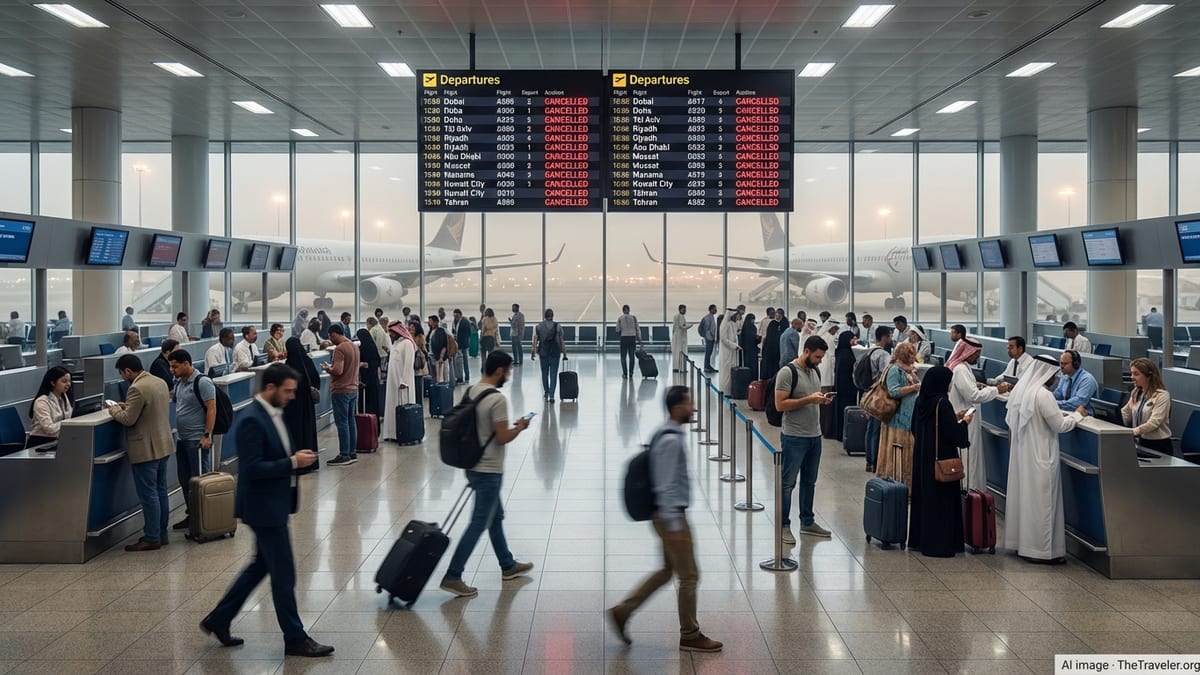
Suspensions stretch from Dubai to Tel Aviv
The latest round of adjustments shows that what began as short-term cancellations has evolved into a longer disruption cycle affecting hubs from the Gulf to the eastern Mediterranean. Recent schedule updates indicate that several international carriers now expect constraints on Middle East flying to last well into the northern summer season.
Reports from Kazakhstan highlight that Air Astana has extended the suspension of flights between Astana and Dubai through the end of April 2026, after initially pausing the route in response to the deteriorating security backdrop. Publicly available information shows the airline is offering refunds and free rebooking to mitigate the impact for affected customers, signalling that it does not anticipate a rapid normalisation of operations.
In parallel, Canadian media coverage notes that Air Canada has again prolonged its halt on services to both Dubai and Tel Aviv, pushing the suspension date out to early September 2026. The extended pause on two strategically important routes for the airline underlines how carriers far beyond the region are recalibrating networks in light of evolving risk assessments.
North American disruption is mirrored by adjustments at other global airlines. Industry-focused reporting shows that Delta Air Lines has lengthened its suspension of flights to Tel Aviv until early September, while maintaining a broad travel waiver for itineraries touching Israel. These decisions collectively point to an expectation that operational stability around key Middle Eastern gateways will not return quickly.
Asian and European carriers redraw their route maps
Carriers based in Asia and Europe are also deepening their cuts to Middle East flying, in many cases on routes that were previously viewed as resilient. Coverage in aviation and travel trade outlets indicates that Singapore Airlines has extended its suspension of flights between Singapore and Dubai through at least late May 2026, following an earlier pause introduced when the conflict intensified.
Reports from South Asia describe how Indian airlines are juggling simultaneous pressures from the Middle East conflict and separate regional airspace issues. Public analysis of schedule data shows that Air India has repeatedly extended cancellations on services to several Gulf and Levant destinations while also rerouting long haul flights to North America via alternative refuelling points in Europe. These longer routings increase flight times and operating costs but are viewed as necessary to maintain connectivity.
European network carriers are similarly adjusting. Documents circulating in the corporate travel sector indicate that Lufthansa Group airlines have suspended services to and from multiple Middle East cities, including Dubai, Abu Dhabi, Tel Aviv, Amman, Beirut, Erbil and Dammam, beyond initial early March cut-off dates. Subsequent regional press reports, including coverage from Bahrain, describe additional extensions by European and Gulf carriers as the situation evolved through March.
Low cost and leisure-focused airlines have also been forced to reconsider their exposure. Industry news from the Gulf shows that Wizz Air has paused flights from mainland European bases to Dubai and Abu Dhabi for an extended period stretching into September, effectively removing a tranche of budget capacity that many price-sensitive travellers had relied upon for connections between Europe and the Middle East.
Patchy resumptions amid ongoing airspace restrictions
Against the backdrop of widening suspensions, some carriers are beginning cautious resumptions on selected routes, creating a patchwork of connectivity that can be difficult for travellers to interpret. Coverage from East Africa notes that Ethiopian Airlines, one of the region’s largest network carriers, has restarted daily services to Dubai, Abu Dhabi and Sharjah, as well as to Dammam, while operating a reduced schedule to Amman.
Corporate advisories and risk briefings circulated in early March emphasised that airspace across several Middle Eastern states, including Iran, Iraq, Israel, Qatar and the United Arab Emirates, remained subject to restrictions and rapidly changing operational notices. Although some of these constraints have been partially eased, travel management bulletins continue to describe conditions as fluid, with capacity subject to short-notice cuts or reinstatements.
Regional business media in the Gulf report that flights at major hubs such as Dubai and Abu Dhabi are gradually regaining pace, but delays and rolling schedule changes persist. Reminders from local carriers urge passengers not to travel to the airport without a confirmed booking and to monitor flight status closely, reflecting the potential for last-minute adjustments even on routes that appear to be operating normally.
This evolving patchwork means that travellers may find some Middle East destinations accessible via indirect routings, while others remain largely cut off from regular commercial service. For airlines, the challenge lies in scaling back into the region without overcommitting capacity that might once again need to be withdrawn if airspace conditions deteriorate.
Spillover effects across Asia, Africa and Europe
The operational impact of Middle East airspace disruptions extends far beyond point to point services into the region itself. With important corridors partially closed or constrained, long haul flights between Asia, Europe, Africa and North America are having to detour, increasing block times and fuel burn. Travel and aviation analysts warn that this can create knock-on schedule pressure even on routes that do not touch Middle Eastern airports directly.
In South Asia, local media coverage stresses that airlines serving West Asia are balancing safety considerations with significant commercial stakes, given the size of migrant and business travel flows between India and Gulf states. Detailed scheduling data for early April 2026 indicates that major Indian carriers are operating reduced but still substantial numbers of flights to West Asia under “calibrated” plans that can be adjusted quickly as airspace notices change.
Elsewhere, national carriers are signalling that higher fuel costs tied to the conflict are feeding into route decisions. Reporting from Southeast Asia highlights that at least one flag carrier plans to suspend or sharply reduce hundreds of domestic flight pairs in the second quarter of 2026 if oil prices remain elevated, illustrating how Middle East instability can influence capacity planning in markets far from the conflict zone.
African and European airlines with hub-and-spoke networks are also feeling the strain. Trade publications and consultancy briefings refer to significant congestion on alternative routings, more complex crew and aircraft rotations, and pressure on premium cabins as corporate travellers shift away from suspended Middle East hubs to other connecting points in Europe or Asia.
What travellers should expect in the coming months
For passengers, the widening suspensions and selective resumptions translate into a more unpredictable planning environment. Publicly available airline advisories increasingly emphasise flexible booking policies, with many carriers offering fee-free changes or refunds on affected Middle East and connecting itineraries, sometimes extending eligibility periods for rebooking into late 2026 or beyond.
Travel management companies recommend that travellers with imminent journeys involving the Middle East or overflying nearby airspace check booking status directly with airlines and monitor operational updates up to departure. Sector experts suggest allowing longer minimum connection times, considering alternative hubs in Europe, Africa or East Asia, and being prepared for rerouting that may add hours to total journey time.
Booking patterns are also shifting. Online discussion in traveller communities indicates growing interest in routings that bypass the region entirely, often via Istanbul, Central Asian cities or major East and Southeast Asian hubs. While these alternatives can keep trips viable, they may come with higher fares and more limited flexibility during peak periods.
With no clear timeline for a full reopening of all Middle East airspace, airlines appear to be settling into a medium-term operating posture that blends extended suspensions, targeted resumptions and broad waiver policies. For now, the message emerging from published schedules and advisories is that travellers should plan for continued volatility and treat any itinerary involving the region as subject to change on short notice.