

More news on this day
Indian low-cost carrier Akasa Air has introduced a new fuel surcharge on tickets as aviation turbine fuel prices climb sharply, signalling yet another round of higher airfares for domestic travelers already grappling with rising costs across the aviation sector.
Get the latest news straight to your inbox!
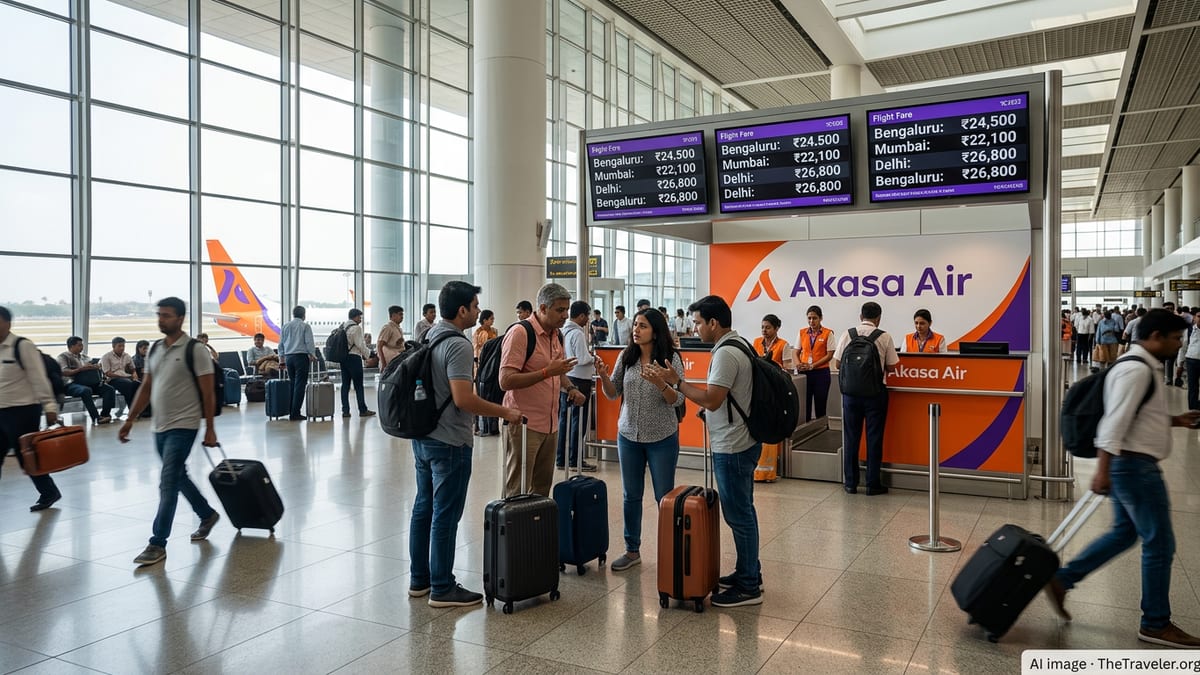
New Fuel Surcharge Lands on Akasa Air Tickets
Akasa Air has become the latest Indian airline to load a dedicated fuel surcharge onto passenger tickets, directly linking a portion of its fares to volatile aviation turbine fuel costs. Publicly available fare displays on major online travel platforms and the airline’s own booking engine indicate that a separate line item for fuel is now being added to base fares on multiple domestic routes.
The surcharge structure mirrors a wider shift in Indian aviation pricing, where airlines are increasingly itemising fuel costs rather than absorbing them within the headline fare. While Akasa Air has not publicly released a detailed sector-wise tariff sheet, travel industry tracking of fares suggests the charge is being applied per sector on a slab basis, with shorter routes attracting a lower add-on and longer routes facing a higher levy.
For leisure and business travelers who have turned to Akasa as a value-focused alternative on busy corridors such as Mumbai to Bengaluru, Delhi to Ahmedabad and regional links out of tier-two cities, the new surcharge erodes some of the price advantage that helped the airline gain market share in a highly competitive environment.
The timing is particularly sensitive as the surcharge appears just ahead of the upcoming peak travel window, when families typically book summer trips and corporate travel demand remains resilient. Fare watchers report that the all-in price of many Akasa domestic tickets has risen by several hundred rupees overnight compared with levels seen earlier in the month.
ATF Prices Surge Again, Squeezing Airline Margins
The decision to impose a fresh fuel surcharge is rooted in a renewed spike in aviation turbine fuel prices since early March 2026. Data published by state-owned fuel retailers and collated by business media outlets show that ATF rates in major hubs such as Delhi and Mumbai have climbed sharply over the past several weeks, reversing earlier periods of temporary relief.
ATF typically accounts for close to 40 percent of an Indian airline’s operating costs, making carriers acutely vulnerable to swings in global crude benchmarks and regional supply disruptions. Recent geopolitical tensions in the Gulf region have tightened supplies, prompting successive upward revisions in ATF prices by oil marketing companies and rapidly inflating fuel bills for Indian airlines.
Analysts tracking the sector note that the latest round of increases comes on top of earlier hikes in late 2025, when ATF prices were already edging back toward the psychological threshold of 100,000 rupees per kilolitre in the national capital. With the new spike, the cost curve has steepened again, leaving airlines with limited room to absorb the shock without passing at least part of it on to passengers.
The pressure is especially acute for younger, fast-expanding carriers such as Akasa Air, which operate lean cost structures but have fewer ancillary revenue streams than full-service rivals. In this context, a clearly demarcated fuel surcharge allows the airline to adjust more nimbly to fuel price movements while keeping base fares relatively stable for marketing purposes.
How Much More Will Travelers Pay on Akasa Routes?
For passengers, the key question is how significantly the new surcharge will affect trip budgets. Based on early fare snapshots captured by travel agents and price-comparison platforms, the impact on domestic flights appears to vary by distance, with shorter hops seeing a modest jump and longer routes facing more noticeable increases.
On many trunk routes under roughly 500 kilometres, the incremental cost being attributed to fuel is broadly in the low hundreds of rupees per sector. On busier medium-haul legs that span over 1,000 kilometres, the additional line item rises further, pushing total one-way fares higher than levels commonly observed just weeks earlier. The cumulative effect can be substantial for return journeys or family bookings involving multiple passengers.
Travel planners observe that the surcharge is being calculated per sector rather than per booking, meaning itineraries involving connections rather than nonstop flights can attract multiple applications of the fee. Budget-conscious flyers may therefore find that routing choices, including the number of stops, have a greater influence on final ticket costs than before.
While the overall fare environment remains dynamic, the pattern emerging across booking channels suggests that the surcharge is no longer confined to a handful of flights but is being progressively extended across Akasa’s domestic network. As inventory in lower fare buckets is sold out, the visible impact on average ticket prices is likely to become more pronounced in the weeks ahead.
Akasa in Step With a Broader Industry Turn to Surcharges
Akasa Air’s move does not exist in isolation. In recent days, the Air India group has publicly announced a phased expansion of its own fuel surcharge on both domestic and international routes, citing a steep rise in jet fuel prices linked to the evolving situation in West Asia. Reports indicate that the full-service carrier has already introduced a flat surcharge on domestic tickets, with higher slabs being rolled out for long-haul international flights.
Industry coverage also highlights preparations by other major players, including IndiGo, to revisit distance-based fuel charges if ATF prices remain elevated. Over the past few years, Indian airlines have repeatedly leaned on surcharges during periods of sharp fuel inflation and rolled them back when prices softened, underscoring how central this tool has become to capacity and revenue planning.
For Akasa, aligning with the broader industry trend serves a strategic purpose. As one of the newer entrants in the domestic market, the airline is seeking to protect yields without appearing to lead fare hikes on base prices. By presenting fuel as a variable, externally driven component of the ticket, Akasa can frame subsequent adjustments as reactive to global energy markets rather than discretionary price increases.
However, the proliferation of separate surcharges across carriers also complicates transparency for passengers trying to compare options. Two itineraries that appear similarly priced at first glance can diverge once taxes, fees and carrier-imposed charges are fully factored in, making it harder for travelers to quickly pinpoint the genuine lowest fare.
What Passengers Can Do to Manage Higher Fares
With fuel surcharges now embedded or expanding across several Indian airlines, travelers have limited ability to avoid the impact altogether. Nonetheless, there are practical steps that can help soften the blow. Monitoring fares several weeks in advance, especially around school holidays and festival periods, is becoming more critical as airlines adjust ticket prices and surcharge levels dynamically in response to both demand and fuel costs.
Flexible dates can make a significant difference. Fare patterns observed on major routes show that midweek departures often remain cheaper than weekend flights, even after surcharges are added. Opting for off-peak timings, such as early-morning or late-night departures, can also yield lower all-in prices, although availability may tighten closer to departure as cheaper fare classes sell out.
Passengers who frequently fly on Akasa and other domestic carriers may also find greater value in co-branded credit cards and loyalty programmes that offer cashback or reward points on flight bookings. While these products do not eliminate surcharges, they can partially offset the increased outlay through statement credits, free add-ons or future flight redemptions.
For now, fare watchers expect Indian domestic airfares to remain under upward pressure as long as ATF prices stay elevated and supply disruptions persist. Akasa Air’s new fuel surcharge is the latest signal that airlines are preparing for a sustained period of higher operating costs, with passengers ultimately bearing a share of the burden in the form of pricier tickets.