


More news on this day
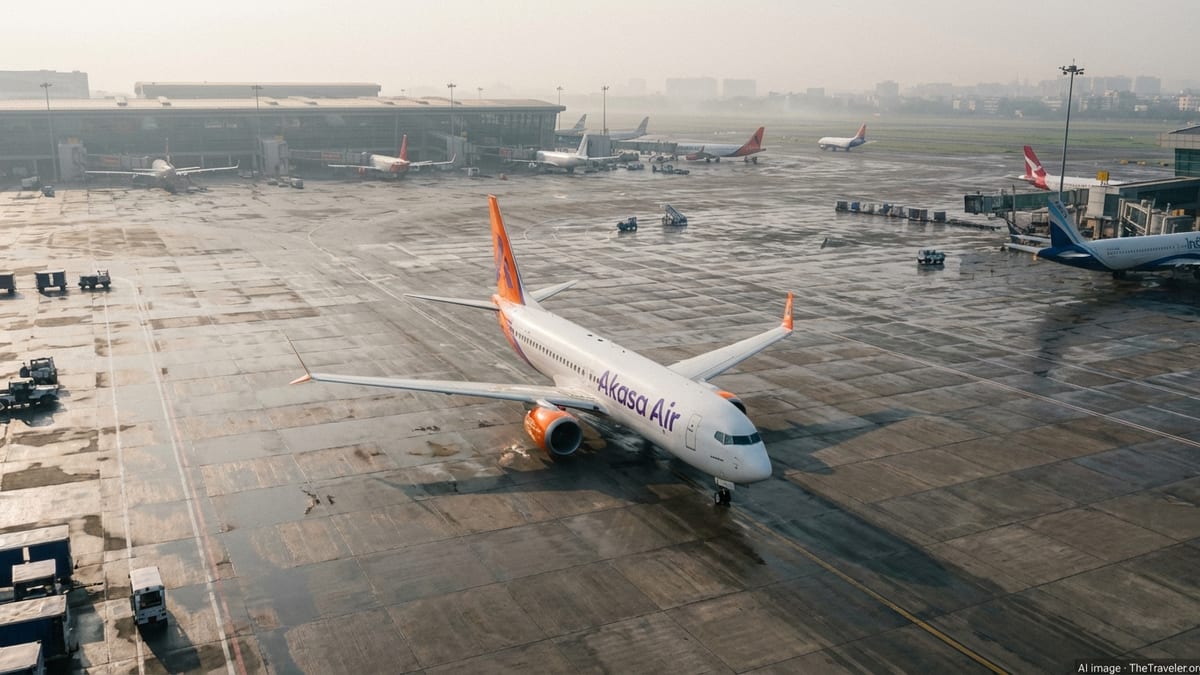
Akasa Air is set to launch daily non-stop flights connecting Noida International Airport with Bengaluru and Navi Mumbai from June 16, 2026, a move that analysts say could reshape traffic flows across India’s busiest aviation corridors and accelerate the rise of the country’s newest greenfield airports.
Get the latest news straight to your inbox!
Noida’s first wave of non-stop metro connections
According to published coverage, Akasa Air will begin operating direct services on the Noida–Bengaluru and Noida–Navi Mumbai routes shortly after commercial operations commence at Noida International Airport in Jewar. The new flights are scheduled as daily services, signaling the carrier’s intent to tap into strong origin-and-destination demand from the western flank of the National Capital Region.
Publicly available information indicates that the flights will start on June 16, 2026, one day after Noida International Airport’s planned commercial launch with initial services from IndiGo. Positioning Akasa as one of the first movers at the new airport gives the airline an early foothold in a catchment area that includes Noida, Greater Noida, Ghaziabad and parts of East Delhi.
Industry observers note that the new routes will effectively create a triangle of high-frequency connectivity linking Bengaluru, Navi Mumbai and Noida. These three hubs are among India’s fastest-growing urban regions, with substantial technology, services and manufacturing clusters that generate consistent business and leisure traffic year-round.
The Noida flights also build on Akasa’s existing presence at major metros, where the airline has steadily added capacity and improved aircraft utilization. The twin launches mean travelers in the National Capital Region will be able to bypass the often-congested Indira Gandhi International Airport when flying to Bengaluru or the Mumbai region.
Navi Mumbai and Noida emerge as next-generation gateways
The announcement comes as both Navi Mumbai International Airport and Noida International Airport advance their positioning as next-generation gateways for their respective metropolitan areas. Navi Mumbai has already begun hosting scheduled commercial services, with Akasa Air among the early operators offering direct flights to key Indian cities, including Bengaluru.
For the Mumbai region, the growth of flights through Navi Mumbai is designed to ease chronic congestion at Chhatrapati Shivaji Maharaj International Airport and distribute traffic more evenly across the metropolitan area. Reports indicate that Akasa has committed a notable share of its domestic network to Navi Mumbai, using it as a western India hub, particularly for routes to southern and eastern cities.
On the northern side, Noida International Airport is being promoted as an alternative gateway to the National Capital Region, with easier access for residents of Noida and nearby districts. The airport’s road and planned rail links are expected to reduce travel times for passengers who currently rely on Delhi’s primary airport, especially those traveling from industrial and residential clusters along the Yamuna Expressway.
Aviation analysts suggest that the combined ramp-up of Navi Mumbai and Noida has the potential to reshape domestic route maps over the next decade. Airlines that establish early operations and build local loyalty at these airports may be better positioned as long-term demand scales up.
Akasa Air’s network strategy and competitive positioning
Akasa Air has been steadily expanding its domestic and international footprint since its launch, with a network that now includes major metros and Tier-II cities as well as select overseas destinations. Recent schedule filings and media reports show the airline deepening its presence in Bengaluru and Navi Mumbai, each acting as critical nodes for south and west India connectivity.
The decision to add Noida links to both these hubs aligns with a strategy of tying new greenfield airports into existing high-demand corridors rather than treating them as purely regional spokes. Direct Noida–Bengaluru and Noida–Navi Mumbai services place Akasa in direct competition with larger incumbents on key business routes while offering a differentiated product for travelers based outside central Delhi.
Akasa’s emphasis on point-to-point connectivity and utilization of new, fuel-efficient aircraft also supports cost-competitive fares on sectors of roughly two hours, such as Noida to Navi Mumbai and Noida to Bengaluru. Airlines typically seek these dense, mid-haul routes to stabilize yields and improve fleet economics, particularly as fuel prices and infrastructure charges fluctuate.
Observers note that the carrier is simultaneously investing in deeper integration with upcoming infrastructure at Noida, including plans for a maintenance, repair and overhaul facility at the airport. This combination of operational presence and back-end capability suggests a long-term bet on the airport’s role in Akasa’s northern India network.
Implications for passengers and regional connectivity
For passengers, the new routes are expected to translate into shorter surface commutes and more choice in departure timings, especially for those living east and south of Delhi. Travelers from Noida and surrounding areas have long faced lengthy and unpredictable journeys to reach the capital’s primary airport, often adding hours to short domestic trips.
Non-stop flights from Noida to Bengaluru and Navi Mumbai are likely to appeal to business travelers shuttling between technology parks, corporate campuses and financial districts in these cities. Published schedules for Navi Mumbai–Noida services show morning departures designed to support same-day business meetings, with evening returns expected to be added as demand matures.
Tourism and visiting-friends-and-relatives traffic may also benefit from improved connectivity. Bengaluru is a key gateway to southern India’s hill stations, heritage circuits and coastal regions, while Navi Mumbai serves as an access point to both the wider Mumbai metropolitan area and, via connections, destinations across western India.
Travel platforms already listing Akasa’s Navi Mumbai–Bengaluru and other related routes suggest that competitive pricing could stimulate additional demand, particularly around weekends and holiday periods. As capacity at Navi Mumbai and Noida ramps up, industry watchers anticipate further fare competition on overlapping corridors, potentially prompting schedule adjustments from rival carriers.
A new phase for India’s dual-airport metropolitan model
The launch of Noida–Bengaluru and Noida–Navi Mumbai flights marks a visible step in India’s shift toward a dual-airport model in its largest metropolitan regions. Mumbai and Delhi are both moving to distribute passenger loads across two major airports, a pattern seen in global hubs where secondary airports often evolve into important low-cost and point-to-point bases.
In this context, Akasa Air’s early adoption of routes linking Noida with Bengaluru and Navi Mumbai signals growing airline confidence in the long-term viability of these new facilities. The airline’s strategy aligns with broader policy efforts to decongest older airports, support regional development and improve connectivity between emerging economic clusters.
How quickly passengers embrace Noida and Navi Mumbai as preferred gateways will depend on factors beyond flight schedules, including ground transport, ancillary services and overall travel experience. However, with daily non-stop routes now on the horizon, the contours of a new aviation geography for India’s north and west corridors are beginning to take shape.
As more airlines finalize their plans for operations at the two airports, competition for prime slots and profitable routes is expected to intensify. For travelers, that could mean more options, sharper pricing and a rethinking of what it means to fly into and out of the Mumbai and Delhi regions in the years ahead.