

More news on this day
Travelers flying to and from Alaska and the U.S. West Coast face higher costs this spring as Alaska Airlines raises checked baggage fees on North American routes, adding fresh pressure to already climbing domestic travel expenses.
Get the latest news straight to your inbox!
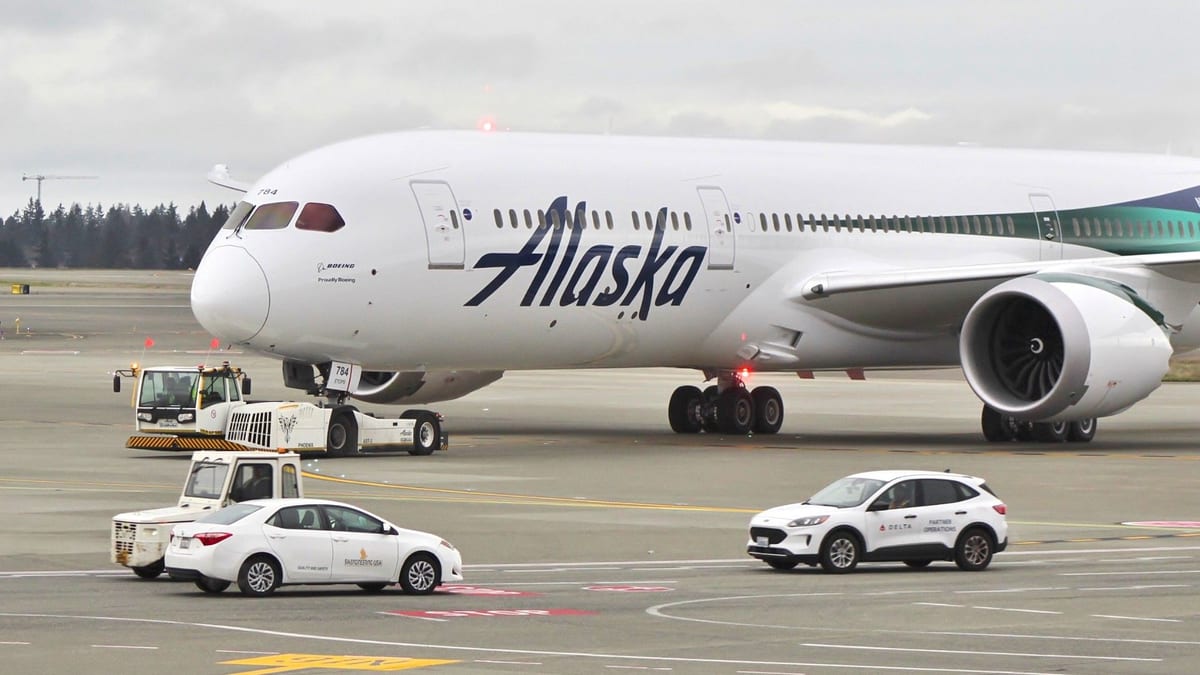
New Bag Fees Hit North American Routes From April 10
Alaska Airlines has introduced higher checked baggage fees on tickets for North American flights booked on or after April 10, 2026. Publicly available information indicates that the carrier is lifting the price of a first checked bag by 5 dollars and a second checked bag by 10 dollars on most itineraries within North America, including routes that connect Anchorage, Seattle and major West Coast hubs.
Across these routes, the new structure brings standard checked baggage costs to about 45 dollars for the first bag and 55 dollars for the second when purchased at the airport, according to multiple industry summaries of the changes. The revised rates apply to travel on Alaska Airlines and codeshare flights operated with Hawaiian Airlines when the ticket is issued by Alaska for North American journeys.
Reports indicate that the timing of the increase is tied to the ticket purchase date, not the travel date. That means travelers who bought tickets before April 10 keep access to the earlier pricing, while anyone booking from that date forward is subject to the higher baggage charges, regardless of when they actually fly.
The adjustment follows a previous step-up in baggage pricing in late 2025, when Alaska raised certain bag fees for travelers who did not prepay online. Taken together, the moves show a steady upward shift in ancillary charges that directly affects what passengers pay to move luggage through key hubs such as Anchorage and Seattle.
Anchorage, Seattle and West Coast Travelers Feel the Pinch
The impact of Alaska’s new fees is particularly sharp in markets where the airline provides essential connectivity. Anchorage relies on Alaska Airlines as a primary link to the rest of the United States, and higher baggage charges effectively increase the baseline cost of travel for residents who often depend on checked luggage for long-distance trips.
Seattle, Alaska’s largest hub in the lower 48 states, also sits at the center of the change. Many West Coast journeys connect through Seattle to reach Anchorage, smaller Alaskan communities or other Pacific Northwest and California destinations. With the new fee schedule in place, a typical round trip with one checked bag on each leg can now add around 90 dollars purely in luggage costs for a single traveler, before considering a second bag or additional services.
For families or travelers carrying outdoor gear common on Alaska-bound itineraries, such as fishing equipment or winter clothing, the increase compounds quickly. Two travelers each checking a bag both ways could see nearly 180 dollars in baggage charges on top of base fares, and that figure rises if both travelers need a second checked bag.
Travel advisors and consumer advocates note that while travelers can still avoid some charges by limiting themselves to carry-on luggage or using co-branded credit cards and elite status benefits, the new baseline underscores a broader trend of shifting more of the total trip cost into fees that sit outside the advertised ticket price.
Part of a Wider Wave of U.S. Airline Fee Increases
Alaska’s move comes amid a wider series of baggage fee hikes by major U.S. carriers in early April 2026. Published coverage from aviation and travel outlets shows that American Airlines, Delta Air Lines, Southwest and several other competitors have also raised the price of checked bags on domestic and short-haul international routes, citing higher fuel costs and global volatility.
Recent analyses of airline fee tables indicate that first checked bags on many large U.S. airlines now cost around 40 to 45 dollars, with second checked bags often priced between 50 and 55 dollars. On some carriers, third checked bags on domestic routes have climbed to 200 dollars, representing a steep charge for passengers who need to move larger amounts of luggage.
Industry commentary suggests that Alaska and its partners are following a pattern of what analysts sometimes describe as fee matching, where one or two airlines initiate increases that are then replicated across the sector. In this environment, travelers on West Coast and Alaska routes face fewer low-fee alternatives, especially on city pairs where Alaska holds a strong network position.
According to summaries of federal transportation data, U.S. airlines collectively generated billions of dollars in baggage fee revenue in 2025, and early 2026 increases are expected to push that figure higher. The new Alaska Airlines pricing feeds into that trend, reinforcing checked bag fees as a key revenue stream rather than a temporary measure linked only to short-term fuel spikes.
Fuel Volatility and Revenue Pressures Drive Changes
Alaska Airlines has pointed to elevated and unpredictable fuel prices as a major factor behind the new baggage fee structure. Coverage from regional outlets in Alaska notes that the carrier referenced ongoing volatility in energy markets and wider global uncertainty as it outlined the latest changes to North American bag charges.
Aviation analysts highlight that for airlines with extensive operations in remote or long-haul domestic markets, such as those linking Anchorage with the lower 48 states, fuel often represents one of the largest and most variable cost items. Raising ancillary fees, including baggage charges, is one way carriers attempt to offset these pressures without pushing base fares so high that demand falls significantly.
Commentary from travel industry observers also underlines that airlines rarely roll back baggage fees after imposing them. Instead, checked bag charges tend to become structural features of the fare system, adjusted periodically as costs rise or competitive conditions shift. In the case of Alaska, the April 2026 hike follows earlier changes to both basic baggage pricing and elite benefits, suggesting a broader recalibration of how the airline prices luggage.
For regular travelers between Alaska and the West Coast, this means that even if fuel prices moderate, there is no clear signal that baggage fees will return to prior levels. Instead, passengers may need to plan for higher luggage costs as a semi-permanent part of their travel budgets.
What Travelers Can Do to Manage Higher Costs
With Alaska Airlines raising checked baggage prices alongside other major U.S. carriers, passengers flying through Anchorage, Seattle and West Coast airports are looking at practical ways to limit the impact. Publicly available guidance from travel experts often highlights steps such as prepaying for bags online when possible, since some airlines offer slightly lower rates for advance purchase than at the airport counter.
Another strategy involves leveraging airline loyalty programs or co-branded credit cards that include a free checked bag benefit. For Alaska Airlines, certain status tiers and specific credit card products continue to provide at least one checked bag at no additional cost for the cardholder and companions on the same reservation, which can significantly reduce total trip expenses for frequent flyers.
Travel planners also recommend reconsidering packing habits, particularly for short or medium-length trips between the Pacific Northwest, California and Alaska. Consolidating items into fewer bags, using carry-on allowances more efficiently and sharing luggage space among family members are increasingly common responses as checked bag fees rise.
Ultimately, the latest Alaska Airlines baggage fee increase underscores how much of the real price of U.S. air travel now sits in ancillary charges rather than the base fare. For travelers across Anchorage, Seattle and the wider West Coast, managing those costs has quickly become an essential part of planning any trip in 2026.