

More news on this day
An Alaska Airlines flight recently drew attention after its pilots requested police to meet the aircraft on arrival, following reports that a passenger used a vaping device onboard in violation of federal non-smoking rules.
Get the latest news straight to your inbox!
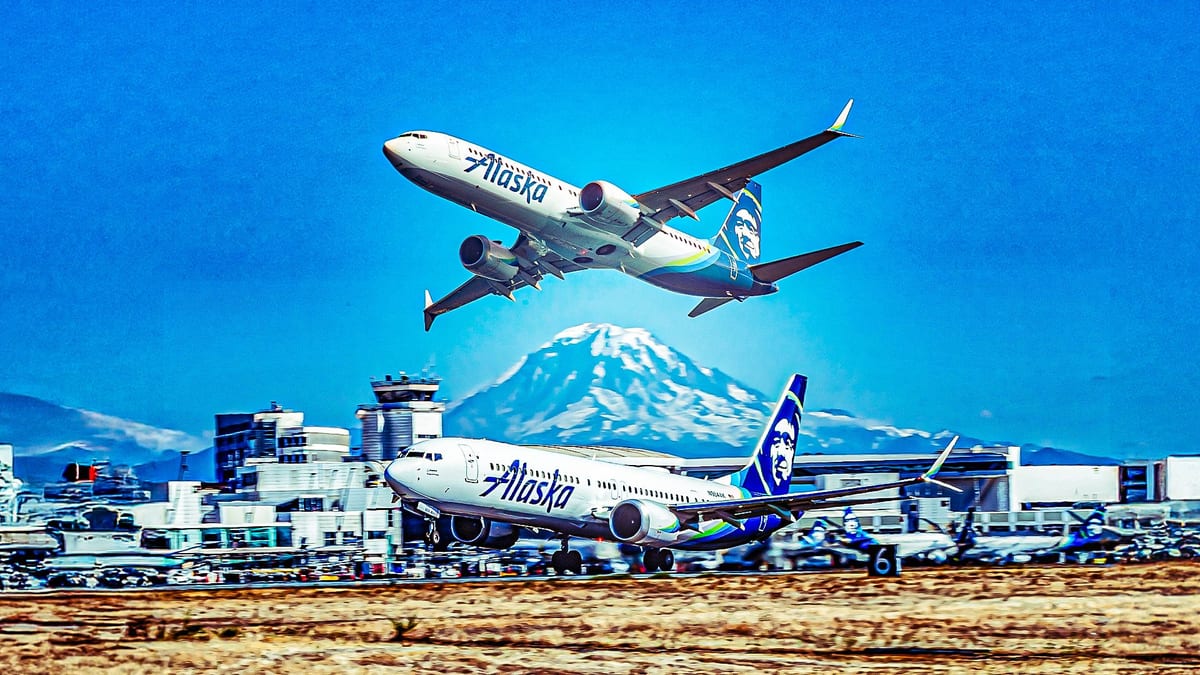
Image by Simple Flying - Aviation News
Incident Highlights Ongoing Tension Over Inflight Conduct
Publicly available accounts indicate that the incident occurred on a domestic Alaska Airlines service when cabin crew detected or were informed that a traveler had been vaping during the flight. Although electronic cigarettes do not produce traditional tobacco smoke, they are treated in U.S. air travel as part of the wider ban on smoking on commercial aircraft.
Reports suggest that the crew notified the cockpit, after which the pilots requested that law enforcement meet the airplane at the gate. That instruction, commonly phrased over the interphone as a request for police to “meet the aircraft,” is a routine step used by airlines when a passenger is suspected of violating federal regulations or has become disruptive.
There is no indication that the flight diverted or that the onboard situation escalated into a broader safety emergency. Instead, the decision to involve police appears to reflect a cautious approach to potential fire risks and regulatory breaches, consistent with how crews are trained to respond to possible smoke or vapor in the cabin or lavatories.
Passenger vaping cases generally remain isolated events, but they add to a wider pattern of confrontations and noncompliance in the cabin that flight attendants and pilots have flagged in recent years. Industry data and congressional testimony have pointed to thousands of unruly passenger reports across U.S. airlines since the pandemic era, prompting calls for tougher enforcement and clearer consequences.
Vaping Treated Like Smoking Under Federal Aviation Rules
Even though e-cigarettes are marketed as smoke-free products, federal rules and airline policies treat inflight vaping as equivalent to smoking. The longstanding ban on smoking on U.S. commercial flights covers the use of traditional cigarettes, cigars and pipes, and has been interpreted by regulators and carriers to include electronic nicotine devices.
Transportation regulations emphasize that any activity which can create smoke, vapor, or the appearance of smoke is a concern on aircraft. Cabin or lavatory smoke detectors are calibrated to pick up particles and aerosols, and vaping can trigger alarms designed to warn crews of potential fire. As a result, passengers who vape in the cabin or attempt to do so in lavatories run the risk of being reported, fined, or removed from future flights.
Alaska Airlines, like most major U.S. carriers, publishes clear conditions of carriage stating that smoking and vaping are prohibited anywhere onboard. The policies typically warn that violations can lead to civil penalties from federal agencies, airline-imposed sanctions such as travel bans, and referral to law enforcement when crews deem it necessary.
In practice, crews have some discretion in how they respond to individual cases, but any activation of smoke alarms or repeated defiance of instructions is more likely to be treated as a serious incident. Requesting police to meet an aircraft allows officials to speak with the passenger, gather statements from crew and witnesses, and determine whether federal interference-with-crew or other charges might apply.
Why Pilots Call for Police to “Meet the Airplane”
According to published coverage of airline operations and court records involving previous disruptions, requests for police to meet an aircraft are not unusual when a passenger is suspected of misconduct. The phrase is used to alert airport law enforcement or security teams that a situation onboard may warrant investigation as soon as the jet reaches the gate.
In cases like onboard vaping, the concern is not only rule-breaking but the potential for hidden fire hazards. Lithium batteries in e-cigarettes can overheat or malfunction, and crew training materials repeatedly stress that any sign of smoke or unusual odor must be treated as a possible safety threat until proven otherwise. Pilots therefore tend to support a conservative response, even if the flight can continue safely to its scheduled destination.
Reports from previous Alaska Airlines flights and industry testimony also show that airlines use law enforcement presence to reinforce cabin crew authority. When passengers see that smoking, vaping, or other violations result in police interviews or removal from the aircraft, it can serve as a deterrent to future incidents.
However, not every case results in arrest or prosecution. Publicly accessible documents from federal proceedings describe situations in which disruptive travelers were questioned and then released without charges. The outcome often depends on whether there was interference with crew duties, threats or physical contact, or damage to aircraft systems.
Broader Crackdown on Unruly Passenger Behavior
The Alaska Airlines vaping episode arrives amid a broader push in the United States to curb unruly passenger behavior. Federal aviation officials have promoted a zero-tolerance stance toward serious disruptions, and government data show a surge of investigations into alleged interference with flight crews over the past several years.
Published congressional hearing transcripts and regulatory updates describe a coordinated effort among airlines, airport police, and federal agencies to standardize how disruptive incidents are reported and pursued. Cabin crews are encouraged to file detailed reports whenever they encounter noncompliant behavior, including smoking or vaping, verbal abuse, or tampering with safety equipment.
Airlines, including Alaska, have also indicated through public statements and policy documents that they may place passengers on internal no-fly or restricted lists following serious incidents. While those lists are not always made public, passengers found to have violated non-smoking rules or to have ignored crew instructions may face difficulties booking future travel with the carrier involved.
Advocacy groups representing flight attendants have argued that stronger enforcement is necessary to protect workers whose jobs place them at the front line of inflight conflicts. They point to examples of alcohol-related disputes, mask confrontations during the pandemic, and smoking or vaping incidents as part of the same pattern of disregard for cabin rules and crew instructions.
What Travelers Should Know Before Boarding
The latest Alaska Airlines case serves as a reminder to travelers that even brief or discreet vaping onboard can trigger a strong operational response. Passengers should assume that any form of smoking or vapor-producing device is prohibited from gate departure until arrival at the destination terminal area.
Air travel guidance from airlines and federal agencies consistently urges passengers to familiarize themselves with carrier-specific policies, including rules about electronic devices, batteries, and smoking. Nicotine users are encouraged to plan ahead by using approved nicotine replacement products or scheduling breaks during airport connections, rather than expecting to vape during flight.
Travelers should also be aware that crew instructions carry the force of federal regulation. Refusing to comply, arguing over policy, or continuing to vape after being warned can escalate a minor infraction into a potential legal matter, including fines or a permanent mark on airline records.
For most flights, adherence to cabin rules means such incidents remain rare and quickly resolved. Yet as the Alaska Airlines pilots’ request for police to meet the aircraft demonstrates, airlines are prepared to involve law enforcement when passengers choose to ignore long-established non-smoking regulations in the air.