

More news on this day
Once a blank spot on the European holiday map, Albania is rapidly turning into Southern Europe’s most watched beach escape, blending low-key luxury, unspoiled landscapes and prices that still undercut its Mediterranean rivals.
Get the latest news straight to your inbox!
From Hidden Corner to Record-Breaking Hotspot
Albania has shifted from relative obscurity to one of Europe’s fastest-growing tourism destinations, with official statistics showing more than 12.4 million foreign visitors in 2025, up from about 11.7 million in 2024. Publicly available data from national and international tourism bodies indicate that arrivals have almost doubled compared with 2019, placing the small Balkan state near the top of Europe’s growth rankings.
This surge is drawing new attention to Albania’s position on the southern edge of the continent, facing Italy across the Adriatic and sharing the Ionian Sea with Greece. Long bypassed in favor of established Mediterranean resorts, the country is now frequently cited in regional travel coverage as a lower-cost alternative to Croatia, Greece and Italy, particularly for beach holidays.
Despite rising demand, spending per visitor remains below that of neighboring countries, which analysts say helps keep the destination in the “affordable” category. Bank of Albania data for 2024 show average expenditures still trailing Greece and Turkey, even as total tourism revenue reaches new records. For travelers, that translates into hotel rates and restaurant bills that are often noticeably lower than across the border.
Industry fact sheets published in early 2025 suggest tourism now contributes more than a quarter of Albania’s gross domestic product, turning what was once a niche sector into one of the country’s main economic pillars. Observers argue that this structural shift is also pushing authorities and businesses to refine their offer toward higher-value, longer-stay visitors.
Peaceful Beaches on the Albanian Riviera
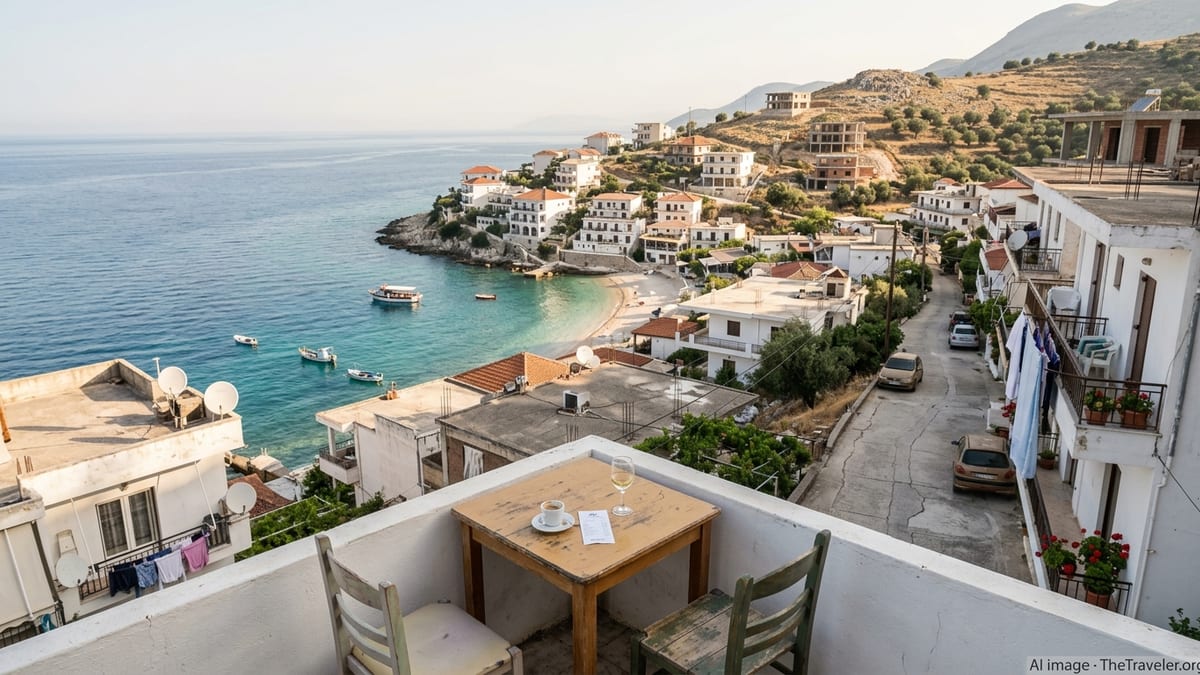
At the heart of Albania’s appeal is the Albanian Riviera, a rugged stretch of coastline along the Ionian Sea running roughly between Vlorë and Sarandë. Travel features describe the area as a mix of white-pebble coves, turquoise water and villages that still feel more residential than resort-driven, especially outside the most publicized spots such as Ksamil.
Unlike some Mediterranean coastlines dominated by long-established hotel strips, much of the Riviera still consists of small bays accessed by winding mountain roads, where family-run guesthouses and compact boutique hotels cluster above the shore. Reports indicate that outside the busiest weeks of July and August, sunbeds are easy to find, traffic is manageable and portions of the coast retain a quieter, almost provincial rhythm.
Infrastructure improvements are making these beaches easier to reach without entirely erasing their remote feel. The opening of the Llogara Tunnel in 2024, which cuts through the dramatic pass above the Riviera, has shortened driving times between Vlorë and the southern resorts. Regional media and tourism operators suggest the tunnel is already redistributing visitors along the coast, allowing travelers to base themselves in less-crowded villages while still day-tripping to better-known beaches.
At the same time, coverage from local outlets highlights growing concerns about overbuilding in certain stretches, with rapid construction of hotels and beach clubs putting pressure on the shoreline. For now, the combination of still-uncrowded coves, relatively low prices and improved access continues to draw visitors seeking a more tranquil Mediterranean experience than they might find in longer-established resorts elsewhere in Southern Europe.
Authentic Culture Beyond the Sand
Albania’s tourism surge is not confined to the coast. National and international reports describe increasing interest in the country’s historic cities, mountain landscapes and village traditions, which offer a contrast to resort-centric travel elsewhere in the region. The stone towns of Berat and Gjirokastër, both UNESCO-listed, routinely appear in travel coverage for their Ottoman-era architecture and hilltop castles overlooking surrounding valleys.
In the north, the so-called Accursed Mountains are emerging as a key destination for hikers, while central highland areas closer to Tirana are promoting agritourism stays that combine home cooking with vineyard visits and traditional music. Surveys and operator feedback cited in regional analysis point to a rise in multi-stop itineraries that pair a few days on the Riviera with time in historic or rural areas.
Observers note that Albania’s late opening to mass tourism has inadvertently preserved much of this everyday culture. Outside the main tourist corridors, many villages still rely on small-scale agriculture, and hospitality is often offered in family homes converted into guesthouses. For visitors, the result is a style of travel that feels more informal and locally rooted than in destinations where international chains dominate.
According to policy reports linked to Albania’s European Union candidacy, cultural heritage and nature-based tourism are seen as essential to spreading visitor flows throughout the year. This includes efforts to restore town centers, signpost hiking trails and support local food producers whose products can be showcased in restaurants and markets frequented by tourists.
Affordable Luxury in a Competitive Market
As visitor numbers rise, Albania is also cultivating a new profile as a site for relatively affordable luxury. Investment reports note a pipeline of high-end projects along the Riviera and on selected islands, including villa complexes and resort compounds marketed at international travelers looking for Mediterranean comfort at lower prices than in more established hotspots.
Travel industry research published in 2024 and 2025 points to hotel rates and restaurant costs that remain significantly below those in Croatia and much of coastal Italy, even after successive years of price increases. Midrange and upscale coastal properties, particularly around Vlorë, Durrës and Sarandë, commonly advertise sea-view rooms and suites that would command far higher nightly rates in Western Europe.
At the same time, Albania’s relatively low overall cost of living has attracted remote workers and long-stay visitors to urban hubs such as Tirana and Durrës. Reports from digital nomad platforms and regional economic studies highlight fast-growing coworking spaces, modern apartments and competitive monthly rents, building a client base for higher-end cafés, bars and boutique hotels that still feel affordable compared with equivalent neighborhoods elsewhere in Southern Europe.
International observers caution, however, that the shift toward “elite” tourism risks pricing out local communities and squeezing smaller operators if not carefully managed. Environmental assessments and investigative coverage have raised alarms about water use, erosion and land speculation around certain luxury developments, prompting debate in Albania about how to balance high-spending visitors with inclusive, sustainable growth.
Can Albania Stay a “Hidden” Southern Europe Gem?
For now, Albania’s rapid ascent is reshaping perceptions of what a Southern Europe beach holiday can look like. Instead of long-established resorts with premium pricing, visitors find a patchwork of small businesses, emerging infrastructure and landscapes that still feel largely untouched by mass tourism, especially beyond a few headline beaches.
Regional comparisons in tourism studies suggest that the country is catching up fast in visitor numbers but remains behind its neighbors in terms of average length of stay and nightly expenditure. This gap is seen by analysts as both a challenge and an opportunity: Albania needs to increase the value of each visit, but travelers still benefit from prices that undercut nearby destinations.
How long the country can maintain its reputation as a value-oriented, relatively peaceful alternative is an open question. Local and international reports already document strains on roads, beaches and utilities during the height of summer, alongside calls from environmental groups for stricter planning rules on the coast.
Even so, with new transport links, a growing mix of beach, culture and mountain experiences, and costs that continue to compare favorably with much of Southern Europe, Albania is positioned to remain one of the continent’s most talked-about “new” destinations. For travelers willing to look beyond the usual Mediterranean circuit, it offers a blend of peaceful beaches, authentic culture and emerging luxury that is still rare at this price point.