

More news on this day
Visitors heading to Alcúdia, one of Majorca’s most picturesque historic towns, are being urged to plan carefully as new pedestrian-focused traffic rules, camera controls and parking limits combine with existing Spanish regulations to create a minefield for drivers, with tourists now facing fines of around £173 for mistakenly entering restricted streets or ignoring local signage.
Get the latest news straight to your inbox!
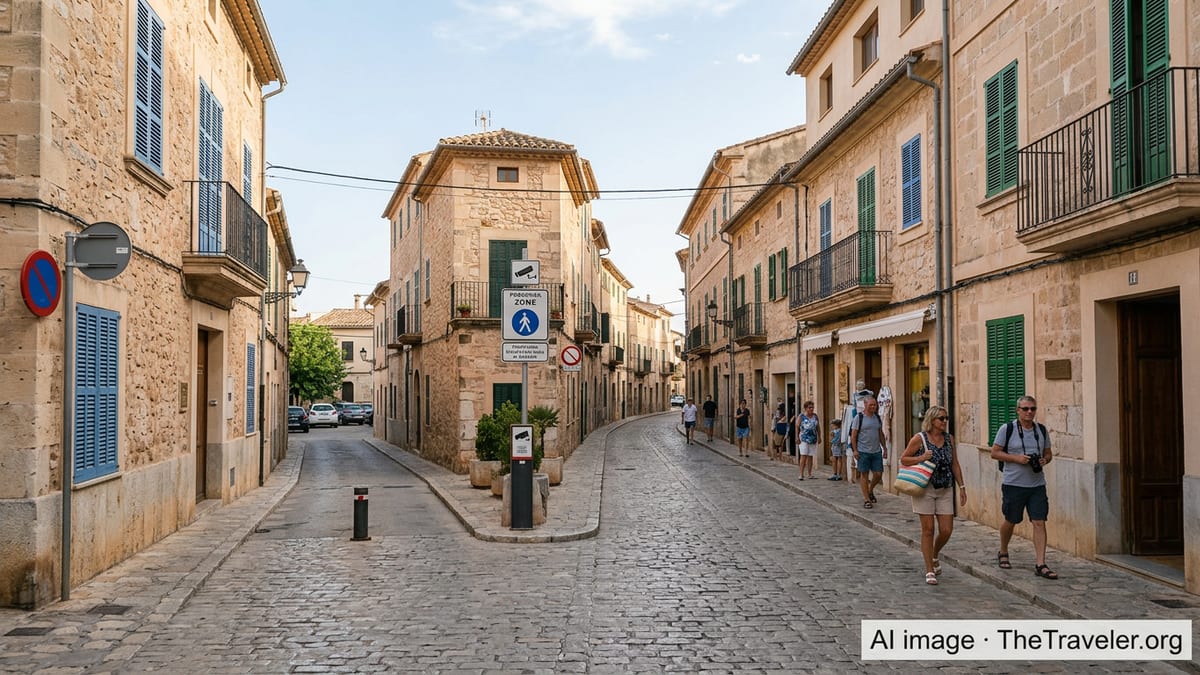
How Alcúdia Fits Into Spain’s Wider Pedestrian Crackdown
Across Spain, local councils are reshaping the way vehicles move through historic centers and popular resorts, prioritising pedestrians, public transport and residents over private cars. Recent coverage of national traffic rules highlights tighter enforcement of Real Decreto 1428/2003, the core Spanish regulation that governs how both drivers and pedestrians must behave on public roads, including where vehicles may circulate and stop.
On the Balearic Islands, this shift is particularly visible in tourist areas. Palma de Mallorca has introduced a civic ordinance that reinforces pedestrian priority in squares, promenades and historic quarters, limits certain types of tourist activity, and penalises vehicles that intrude into pedestrian environments. Other parts of Mallorca, including scenic routes such as Formentor, already rely on cameras and timed access restrictions to control traffic volumes and protect sensitive landscapes.
Alcúdia, with its walled medieval old town and busy resort coastline, sits squarely in the middle of these changes. Reports indicate that local bylaws in and around the municipality are increasingly focused on separating pedestrian movement from motorised traffic, tightening rules for scooters and other personal mobility vehicles, and restricting where cars can enter or park.
New Restrictions, Cameras and the £173 Fine Figure
While the precise layout of Alcúdia’s restricted streets varies by neighborhood, publicly available information about enforcement patterns in Mallorca helps explain why visiting drivers are now being warned about fines of roughly £173, or about 200 euros, for traffic violations linked to pedestrian zones and controlled access streets.
In several Mallorcan municipalities, fines of 200 euros have become a benchmark penalty for entering restricted traffic areas without authorisation, driving into low-emission or resident-only zones, or parking in clearly signed no-parking stretches along protected coastal or natural areas. Travel and local media coverage notes that these fines are often automatically issued using licence-plate recognition cameras mounted at entry points to restricted streets.
In Alcúdia, local reporting shows that municipal regulations have recently tightened around scooters and personal mobility vehicles, with fines of up to 500 euros for breaching rules meant to safeguard pedestrians and regulate how different types of traffic mix in busy resort environments. At the same time, previous bylaws have focused on limiting access by off-road buggies and similar vehicles in protected rural zones close to the town, with sanctions that again start in the low hundreds of euros.
For tourists, the practical outcome is clear: a single mistaken turn into what appears to be a normal street, but is in fact a resident-only or pedestrian-priority zone controlled by cameras, can lead to a penalty close to £173, typically imposed after the trip once rental companies pass driver details to local authorities.
What Visitors Can Expect When Arriving by Car
Drivers arriving in Alcúdia should expect a patchwork of clear but sometimes easy-to-miss signs, painted lines and local symbols that mark where vehicles are and are not allowed. Similar to other historic Spanish towns, Alcúdia’s medieval core is made up of narrow streets, small plazas and residential alleyways that are gradually being shifted toward pedestrian-only status, with vehicular access largely reserved for residents, deliveries and emergency services.
In practice, this often means that approach roads may be open to through traffic and parking, but the final few blocks toward the historic walls or the heart of the old town become restricted zones. These are typically signposted at their entry points, sometimes with additional roadside information in multiple languages, but the signage can be easy to overlook when navigating unfamiliar streets or following a satnav route that has not been updated with the latest restrictions.
Visitors also need to be prepared for controlled or limited parking opportunities. In line with wider trends on the island, reports about local parking practices suggest that surface spaces near beaches and old-town quarters can be tightly regulated, with blue zones, resident-only bays and strict no-parking stretches. Fines for parking violations can be lower than restricted-zone penalties, but they still add up quickly and are actively enforced, particularly in high season.
Travellers using hire cars should assume that any fine issued in Alcúdia will be traced back through the rental company, with administrative fees added on top. Anecdotal reports from across Mallorca indicate that these costs can arrive weeks or months after a holiday, leaving visitors surprised by charges for violations they may not have realised they had committed at the time.
Pedestrian Zones, Scooters and Shared Spaces in Alcúdia
The tightening of rules in Alcúdia is not limited to private cars. Publicly available information indicates that the town has moved to regulate the use of scooters and other personal mobility vehicles more aggressively, in line with broader Spanish and Balearic trends aimed at protecting pedestrians in shared urban spaces.
Media reports from early 2026 describe a new Alcúdia bylaw covering scooters and similar vehicles, designed to ensure that they operate safely alongside both cars and pedestrians. In practice, this means restrictions on where scooters may circulate, park or cross, especially in promenades, seafront areas and narrow streets near hotels and restaurants. Violations can reportedly attract fines up to 500 euros, a level that reflects growing concerns about collisions, congestion and conflicts between fast-moving devices and people on foot.
These local rules sit on top of existing Spanish regulations that already prevent many types of vehicles, including scooters, from using pavements, pedestrian squares and park pathways. For visitors, the effect is to turn Alcúdia’s historic town and seafront promenades into clearly pedestrian-priority environments, where any wheeled traffic is either carefully segregated or tightly controlled.
The message is consistent with measures elsewhere in Mallorca, where councils have sought to preserve the character and safety of old towns while still welcoming large numbers of tourists. In Alcúdia, this means that strolling the ramparts, wandering the market streets or heading to the beach on foot is actively encouraged, while casual or uninformed attempts to drive right into the heart of these areas are increasingly likely to end in a fine.
Practical Tips to Avoid Fines During Your Stay
For travellers planning a visit to Alcúdia in 2026, adapting to the new pedestrian-focused rules largely comes down to preparation and caution. Choosing accommodation with its own parking, or in areas where public car parks are clearly signposted and outside restricted zones, can greatly reduce the need to navigate sensitive streets. From there, most visitors can comfortably explore on foot or by authorised public transport.
Before driving into town, it is advisable to check the latest information from municipal or regional tourism channels about local traffic restrictions, pedestrian areas and low-emission or resident-only zones. While navigation apps are improving, coverage of newly established or seasonally adjusted restrictions can lag behind, so drivers should always defer to physical road signs and markings, especially near the old town and waterfront.
Once in Alcúdia, a cautious approach to signage is essential. Signs indicating pedestrian zones, camera controls, restricted access periods or resident-only streets may appear at the start of a block rather than at busy intersections. If in doubt, it is usually safer to park earlier and walk the remaining distance, rather than risk entering a zone where enforcement is automated and fines are substantial.
As Spain and the Balearic Islands continue to prioritise walkable, resident-friendly centers over conventional car access, Alcúdia’s evolving pedestrian zones are likely to become a defining feature of the visitor experience. For tourists willing to adjust their expectations, the reward is a quieter, more atmospheric town center, provided they stay attentive enough to avoid the costly surprise of a £173 penalty arriving long after the holiday has ended.