

More news on this day
Amadeus River Cruises is preparing to expand into Portugal’s Douro River in 2028 with a newly built vessel, signaling both the brand’s continued fleet growth and the Douro’s status as one of Europe’s most in-demand river cruise destinations.
Get the latest news straight to your inbox!
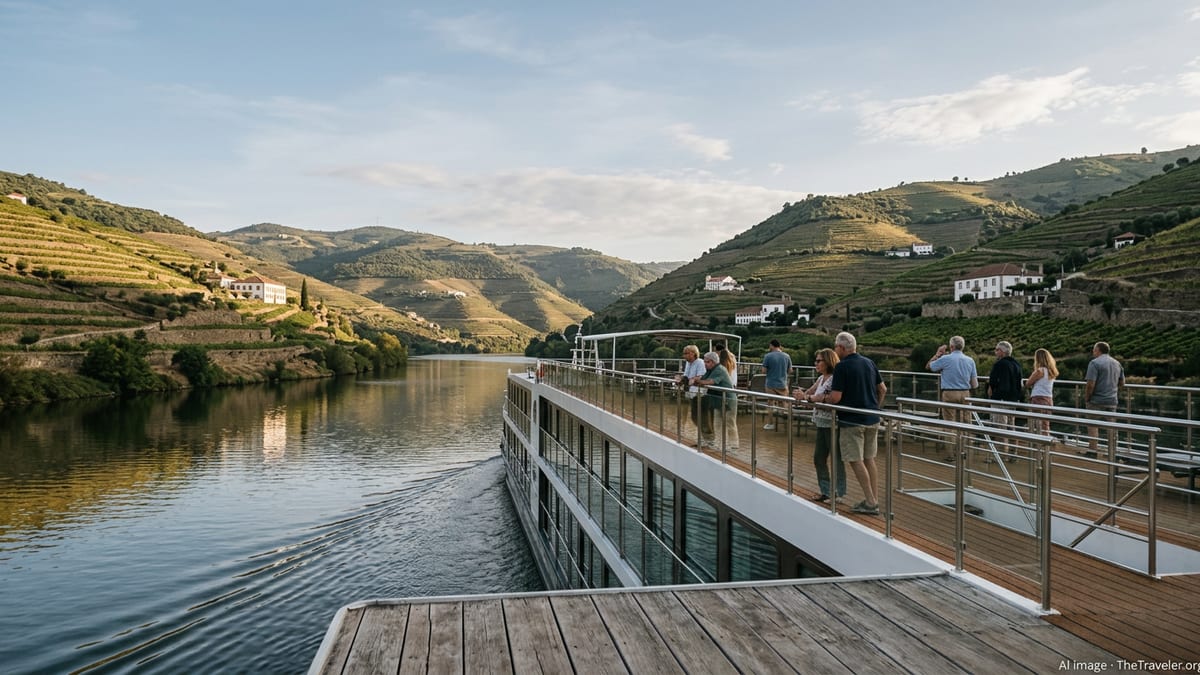
Strategic Expansion into Portugal’s Wine Country
The move onto the Douro marks a significant geographic expansion for Amadeus, which has traditionally concentrated its operations on central Europe’s Rhine, Danube and Main rivers. Industry observers have long viewed the Douro as a natural next step for premium river cruise brands, thanks to steadily rising demand and limited berthing capacity in the region’s narrow valleys and compact ports.
By earmarking 2028 for the debut of a dedicated Douro ship, Amadeus is positioning itself to capture a share of the growing market for weeklong cruises round trip from Porto, typically sailing upriver through the terraced vineyards of the Douro Valley toward the Spanish border. The five-year lead time aligns with the company’s pattern of announcing newbuilds several seasons in advance, following earlier additions such as the Amadeus Nova and the forthcoming Amadeus Aurea on continental routes.
The Douro has seen a surge of investment from rival operators, prompting capacity constraints during peak harvest and summer periods. With a purpose-built ship planned for 2028, Amadeus is expected to target the upper-premium segment of English-speaking markets, particularly travelers from North America and the United Kingdom seeking immersive wine and culture itineraries.
Although detailed itineraries and ship specifications have not yet been published, travel trade sources anticipate classic seven-night routes with overnight stays in Porto and calls at Régua, Pinhão and Vega de Terrón, along with optional overland excursions to Salamanca and the UNESCO-listed vineyard landscapes.
Design Tailored to the Douro’s Challenges
Operating on the Douro requires a different design approach from that used on larger central European rivers. The waterway’s tight locks, winding course and seasonal water-level variations demand compact hulls with carefully calibrated dimensions and draft. Amadeus is expected to draw on its recent design evolution, which has introduced hybrid propulsion and energy-saving technologies on ships like the Amadeus Nova and the Amadeus Aurea, to create a vessel optimized for these conditions.
While official renderings have not yet been released, river cruise analysts predict a three-deck configuration similar in scale to other modern Douro ships, with a capacity likely between 100 and 130 guests. This smaller footprint not only fits the physical constraints of the river but also aligns with guest preferences for a more intimate experience and easier access to small villages along the valley.
Interior design is expected to follow the brand’s contemporary, airy aesthetic, with floor-to-ceiling windows, spacious public lounges and a sun deck that maximizes open-air viewing of the surrounding landscapes. Given Amadeus’s recent focus on wellness and sustainability, the new ship is likely to feature upgraded air-conditioning systems, efficient hull design and low-emission propulsion to meet increasingly strict environmental regulations on the Douro.
Cabin categories will probably include a mix of river-view staterooms with drop-down panoramic windows and a limited number of larger suites at the bow, a configuration that has proved popular on the company’s newest Rhine and Danube vessels and that supports higher-yield pricing without dramatically increasing passenger count.
Strengthening a Rapidly Growing Douro Market
The Douro River has become one of Europe’s most competitive river cruise arenas, with operators from Portugal, Germany and North America all adding capacity over the past few seasons. New ships for brands such as Scenic, Emerald Cruises, AmaWaterways and APT have either recently launched or are scheduled to debut before the end of the decade, reflecting a broad consensus that demand for Douro sailings will remain robust through at least the early 2030s.
Amadeus’s decision to join this crowded field in 2028 suggests the company believes there is still room for differentiated, service-led product in the region. Travel agents report that Douro sailings often sell out well in advance, particularly during the September and October harvest period, and that higher airlift into Porto from major European hubs has made one-week itineraries more accessible to long-haul travelers.
Industry analysts note that the timing of the new ship may work in Amadeus’s favor. By arriving after several competing vessels have already entered service, the brand can refine its onboard product based on evolving guest expectations, with features such as enhanced wine programming, culinary partnerships with local chefs and more flexible excursion options designed to stand out in a maturing market.
The expansion also strengthens Portugal’s role as a cornerstone of European river cruising, complementing the country’s well-established coastal and city-break tourism. For local suppliers and port authorities along the valley, the arrival of another premium international operator in 2028 is expected to bring additional off-season demand and support continued investment in piers and visitor infrastructure.
Implications for Travelers and the Trade
For travelers, the announcement offers an early signal that additional premium capacity will be available on the Douro from 2028, which could help ease pressure on peak-season pricing while broadening itinerary and departure-date choice. However, given the relatively small size of Douro ships and the enduring popularity of the route, experts still recommend booking well ahead, especially for balcony cabins and suite categories that tend to sell out first.
Travel advisors will be watching closely for the release of detailed deck plans, inaugural season dates and early-booking promotions, which typically appear two to three years before launch. Amadeus has historically relied heavily on the trade to distribute its product in markets such as the United States, Canada and the United Kingdom, and the new Douro ship is expected to feature prominently in future brochure cycles and training programs.
The move also underscores a broader trend in river cruising toward deeper regional specialization. As more brands deploy vessels purpose-built for specific rivers, guests are increasingly able to choose not just by line and price point but by how closely a ship’s design and onboard programming are tailored to its home waterway. In this context, a Douro-focused vessel from Amadeus in 2028 would give loyal past guests another reason to stay within the brand while exploring a new region.
With firm details on the ship’s name, technical specifications and onboard amenities still to come, the 2028 Douro project remains in its early stages. But for a river cruise sector that continues to expand despite capacity constraints on Europe’s most scenic waterways, Amadeus’s planned arrival on the Douro is a clear indication that this sun-drenched corner of Iberia will remain at the heart of the industry’s growth story in the years ahead.