


More news on this day
A cargo-configured Boeing 767 operating for Amazon Prime Air overshot a runway at Miami International Airport on Sunday, striking vehicles near an airport service road, killing five people and injuring at least five more, according to initial reports from multiple news outlets and aviation data services.
Get the latest news straight to your inbox!
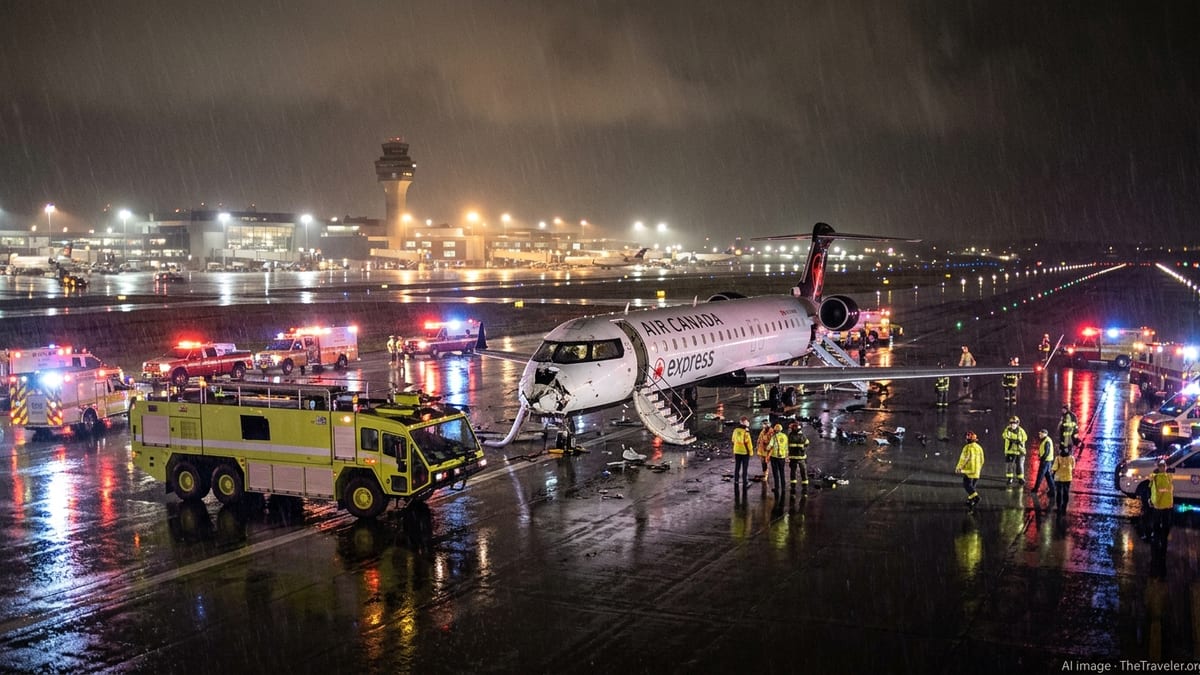
Runway Overrun Turns Routine Cargo Flight into Fatal Crash
The accident occurred on the afternoon of September 6, 2026, when the widebody freighter, operating as Prime Air Flight 7598 from San Juan, Puerto Rico, attempted to land on Runway 30 at Miami International Airport. Publicly available tracking data indicates the aircraft, a Boeing 767-300 series freighter registered N1997A and operated by U.S. cargo carrier 21 Air for Amazon, overran the paved surface and continued off the end of the runway.
Images and video published by local and national outlets show the aircraft coming to rest beyond the runway near airport facilities and service roads, its nose pitched down and surrounded by burning wreckage. Several vehicles, including trucks parked near an airport warehouse and roadway area, were struck and heavily damaged. Fire crews responded as thick black smoke rose from the crash site.
Reports compiled from airport and emergency briefings indicate that five people were killed, with victims believed to include individuals in vehicles on the ground as well as occupational crew linked to the flight. At least five additional people were transported to hospitals, some with serious injuries, according to regional coverage. The crash prompted a temporary full ground stop at Miami International Airport and the continued closure of two runways into Monday as crews cleared debris and investigators documented the scene.
What Is Known About the Flight and Weather Conditions
Flight-tracking platforms show that the 767 departed Luis Muñoz Marín International Airport in San Juan several hours before the accident and approached Miami from the southeast. Data visualizations published by aviation analysis sites indicate that the aircraft touched down significantly farther along Runway 30 than preceding arrivals, suggesting a long landing with less remaining distance available for deceleration compared with earlier 767 operations into the same runway.
Reconstructions referenced in open-source aviation discussions and preliminary media summaries point to a relatively high groundspeed near touchdown and a landing point closer to the runway midpoint than typical, though official performance calculations have not yet been released. Weather observations from the time frame, cited by specialist outlets, describe gusty winds with a notable crosswind and possible quartering tailwind component during the landing window.
The runway involved is among Miami International Airport’s longer strips and routinely handles widebody international and cargo operations. Despite that capacity, a late touchdown combined with a wet surface, tailwind, or delayed braking action can reduce stopping margins. Analysts emphasize that formal determinations about speed control, autobrake settings, thrust reverser deployment, and runway condition will depend on data recorders and field measurements gathered by investigators.
Profile of the Aircraft, Operator and Amazon’s Cargo Network
According to aircraft database information cited by multiple outlets, the jet involved was a 32-year-old Boeing 767-300 that began life as a passenger airliner before being converted to a dedicated freighter in the mid-2010s. Like many cargo-configured 767s, it later entered service carrying parcels for Amazon’s air network under the Prime Air brand while remaining on the operational certificate of a contracted cargo airline.
Amazon Air, often branded as Prime Air, uses a fleet of leased and contractor-operated aircraft rather than holding its own operating certificate. Airlines such as 21 Air, Atlas Air, and others provide flight crews, maintenance, and day-to-day operations, while the aircraft typically wear Amazon livery and are scheduled around the company’s logistics needs. Publicly available fleet data show that Boeing 767 freighters form a core part of this network, connecting Amazon fulfillment centers with key cargo hubs across the United States and abroad.
21 Air, based in the United States, has expanded its widebody freighter services in recent years, including multi-year agreements to fly Amazon-branded aircraft on domestic and regional routes. Aviation trade publications note that the Miami accident aircraft had been operating regular Prime Air cargo services, including flights between Florida, the Caribbean, and other distribution points. The flight from San Juan to Miami on September 6 was a typical cargo sector on a heavily traveled corridor that feeds consumer and e-commerce shipments into South Florida.
Impact on Miami Operations and the Traveling Public
The crash had immediate operational consequences for one of the busiest airports in the United States. A ground stop instituted shortly after the runway overrun halted departures and arrivals for a period on Sunday as responders moved to contain fire, secure the area, and assess structural damage. Two of the airport’s four runways remained closed into Monday morning, according to logistics and aviation industry reporting, forcing traffic to be concentrated on the remaining runways.
Passenger airlines serving Miami reported delays and diversions as air traffic controllers sequenced arriving flights into limited landing capacity. Some international and domestic services were rerouted to nearby airports in South Florida, including Fort Lauderdale and West Palm Beach, to relieve pressure on Miami’s reduced runway configuration. Cargo operators also faced disruptions, with time-sensitive overnight shipments subject to rebooking or diversion to alternate hubs while the accident area stayed cordoned off.
Travelers passing through Miami on connecting itineraries encountered longer taxi times, rescheduled departures, and occasional cancellations as carriers adjusted schedules. Airport-focused coverage notes that terminal facilities remained open, but passengers were advised to check flight status frequently while investigators, recovery teams, and airport engineers evaluated the condition of the affected runway and adjacent infrastructure.
Early Safety Questions and Broader Cargo-Aviation Context
With formal investigations still in the initial evidence-gathering stage, safety specialists caution that it is too early to identify a definitive cause. Nonetheless, the circumstances of a long landing, a runway overrun and significant third-party casualties on the ground have already prompted renewed questions about approach stability, decision-making to go around versus continue, braking performance, and ground safety buffers at major airports.
Analysts and commentators have also drawn comparisons with previous accidents involving Boeing 767 freighters operating under Amazon’s cargo network, including a 2019 crash of an Atlas Air-operated aircraft in Texas that highlighted the importance of training and cockpit resource management in fast-changing approach scenarios. While the Miami event involved a different operator and set of conditions, both incidents underscore how cargo operations, although typically out of public view, carry substantial safety implications for aircrews and communities near airports.
The investigation is expected to examine a broad range of factors, including crew experience and duty schedules, aircraft maintenance history, runway friction measurements, real-time wind conditions, and any potential technical malfunctions affecting braking or thrust reverser systems. Regulators and industry groups typically review such events for lessons that can inform future changes to training, procedures, or airport infrastructure aimed at reducing the risk of runway overruns and ground impact to vehicles and buildings near runway ends.
AP News coverage of the Miami Amazon cargo plane crash
Flightradar24 technical overview of Prime Air Flight 7598
FreightWaves report on operational impact at Miami International Airport
Yahoo Finance summary of the Amazon cargo plane overrun in Miami