

More news on this day
American Airlines will shut down its Santa Maria to Phoenix route less than a year after launch, a setback for Central Coast travelers who had hoped the new flights would permanently restore hub connectivity from the small California airport.
Get the latest news straight to your inbox!
Route Ends After Failing to Meet Performance Expectations
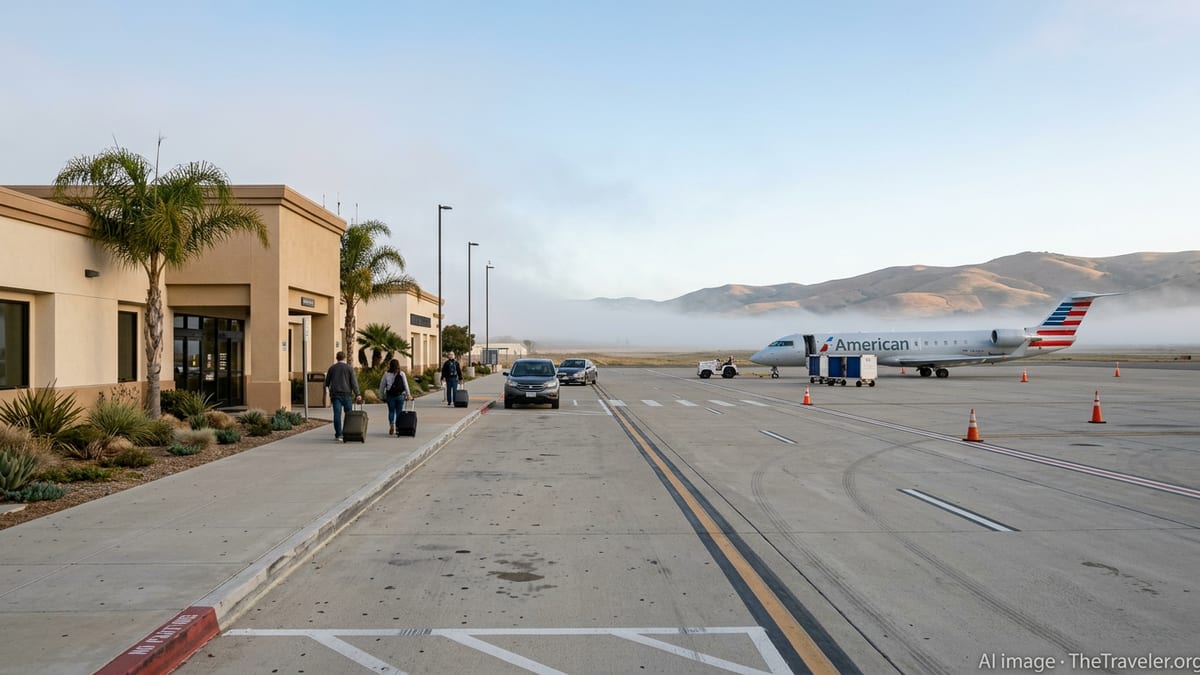
American Airlines confirmed this week that it will discontinue nonstop service between Santa Maria Public Airport and Phoenix Sky Harbor International Airport in May, ending what had been promoted as a transformative connection to a major hub. The Santa Maria to Phoenix flights, operated by American Eagle, began in October 2025 with two daily round trips on 76 seat regional jets, including a small first class cabin. The route was the result of years of lobbying by local officials eager to restore hub access after nearly a decade without it.
According to airport and local media reports, the airline told officials that the Santa Maria flights did not meet performance expectations. Load factors on the route had reportedly lagged behind projections, with many departures leaving significant numbers of seats unsold despite introductory marketing and the appeal of free airport parking and short security lines. For a major carrier balancing fleet constraints and new opportunities elsewhere in its network, those economics became difficult to justify.
The news arrives even as American continues to expand its Phoenix hub with new destinations and added frequencies to other small and midsize markets. That broader strategy underscores a central point for Santa Maria leaders and travelers alike. The decision was not about Phoenix as a hub losing importance, but about this particular local route underperforming in a fiercely competitive regional landscape.
Impact on Santa Maria Travelers and Regional Connectivity
The end of Santa Maria’s Phoenix service will be felt most acutely by local residents who had quickly come to rely on one stop connections through Phoenix to reach destinations across the United States and beyond. For travelers in northern Santa Barbara County and southern San Luis Obispo County, the new flights had briefly offered a way to avoid long drives to larger airports such as Santa Barbara, San Luis Obispo, Santa Maria’s namesake Los Angeles, or San Jose.
With the cancellation, many of those travelers will return to the familiar routine of pre dawn drives, traffic congestion and higher out of pocket costs such as parking and overnight hotel stays near bigger airports. The loss is especially pronounced for business travelers, military personnel linked to nearby Vandenberg Space Force Base, and families who depend on connections to major hubs for work trips, medical appointments and visiting relatives.
Price sensitive leisure travelers are also likely to feel the change. Online fare comparisons in recent months often showed that connecting through Phoenix from Santa Maria could be competitive, particularly when factoring in time savings and free parking offered at the local airport. Once the route disappears, many residents may again find it cheaper to start their journeys from San Luis Obispo or Santa Barbara, even if it means more time on the road and less convenience.
The cancellation also raises questions about air service stability more broadly across California’s Central Coast. Nearby airports have seen a patchwork of gains and losses in recent years, with routes to major hubs periodically launched, suspended or reduced as airlines test demand. Santa Maria’s brief experience with Phoenix highlights how fragile new service can be in smaller markets, even when backed by community enthusiasm.
What the Decision Signals About Airline Strategy
From the airline’s perspective, the Santa Maria cut reflects a network strategy increasingly focused on funneling aircraft toward routes with strong, proven demand. American has recently announced new or expanded service from Phoenix to other small and midsize communities, while also adjusting schedules in response to fleet availability, pilot staffing and broader industry pressures. In that context, every underperforming route is a candidate for removal and every aircraft freed becomes an asset to deploy elsewhere.
Industry analysts note that regional jet flying is under particular scrutiny. Operating costs for 70 and 76 seat jets have risen, and airlines have fewer spare aircraft as they wait for new mainline deliveries and cope with manufacturer delays. That reality raises the bar for smaller markets seeking to retain or attract service. Routes must deliver consistently strong load factors and a healthy mix of higher yielding passengers to compete with other opportunities within the same hub network.
For Santa Maria, the message is clear. While the community demonstrated enthusiasm and some early adoption of the Phoenix flights, it was not enough to secure the route within American’s broader portfolio of cities. The airline has signaled that it will continue investing in other growth markets from Phoenix, underscoring that small airports must make an exceptionally strong business case if they hope to win a long term slot in a major carrier’s schedule.
Future Prospects for Santa Maria Public Airport
The end of American’s Phoenix service is a disappointment, but not necessarily a verdict on Santa Maria’s long term aviation prospects. The airport still benefits from substantial infrastructure, including one of the longest commercial runways on the Central Coast and thousands of acres that support cargo, general aviation and aerospace related activity. Those assets give local leaders leverage as they court future airlines or alternative forms of commercial service.
Airport officials are expected to use data gathered during the Phoenix experiment to refine their pitch to carriers. Detailed information on passenger catchment, booking patterns, seasonal peaks and fare sensitivities can help shape proposals for new routes or different partners. The experience could also inform discussions with low cost or leisure oriented airlines that might view the region as an opportunity, particularly during peak travel periods tied to tourism and regional events.
At the same time, Santa Maria’s leaders will be under pressure to show residents and businesses that the airport remains central to the region’s economic strategy. Maintaining community confidence may require more visible outreach, public briefings and collaboration with chambers of commerce, local employers and the military installation. Demonstrating a unified front and willingness to support risk sharing mechanisms, such as minimum revenue guarantees, could prove essential if the community hopes to attract another carrier.
In the interim, the airport is likely to emphasize its other roles, from supporting air cargo and emergency services to hosting aviation events that draw visitors and underscore its regional profile. While losing a hub connection is a setback, officials argue that the airport remains a critical piece of transportation infrastructure whose value extends far beyond a single route.
How Local Travelers Can Adapt in the Near Term
For travelers holding tickets on future Santa Maria to Phoenix flights after the cutoff date, the immediate priority will be rebooking. American Airlines is expected to offer affected passengers options that may include rerouting via other airports in the region or issuing refunds, depending on individual itineraries and fare rules. Customers are advised to monitor their reservations closely and respond promptly to schedule change notices to secure the most convenient alternatives.
Looking ahead, residents may find themselves weighing new strategies to keep trips affordable and manageable. That could mean planning farther in advance, comparing total trip costs across multiple departure airports and being flexible on travel dates to capture lower fares. Some may choose to mix and match, using Santa Maria when regional carriers or future charters become available, while relying on nearby airports for more complex international or multi stop itineraries.
Travel agents and corporate travel managers in the region will also play a larger role in helping flyers navigate the shifting landscape. Their familiarity with schedule changes, fare classes and contract discounts can be especially valuable for businesses and institutions that move people frequently. For individual travelers, local agencies may again become an important resource rather than an afterthought, particularly for those uncomfortable juggling multiple airport options and carriers on their own.
Ultimately, the end of the Santa Maria Phoenix route underscores a broader reality for small community air service. Connectivity is increasingly dynamic, shaped by airline economics, evolving fleets and shifting demand patterns. For now, Central Coast travelers will need to adjust once more, even as they and their leaders look for the next opportunity to bring robust, sustainable commercial flights back to Santa Maria Public Airport.