

More news on this day
American Airlines is set to invest nearly $1 billion in a sweeping expansion of Concourse D at Miami International Airport, unveiling plans for a new three-level extension that will add 17 modern gates, support larger aircraft and significantly upgrade the passenger experience at the carrier’s biggest Latin America hub.
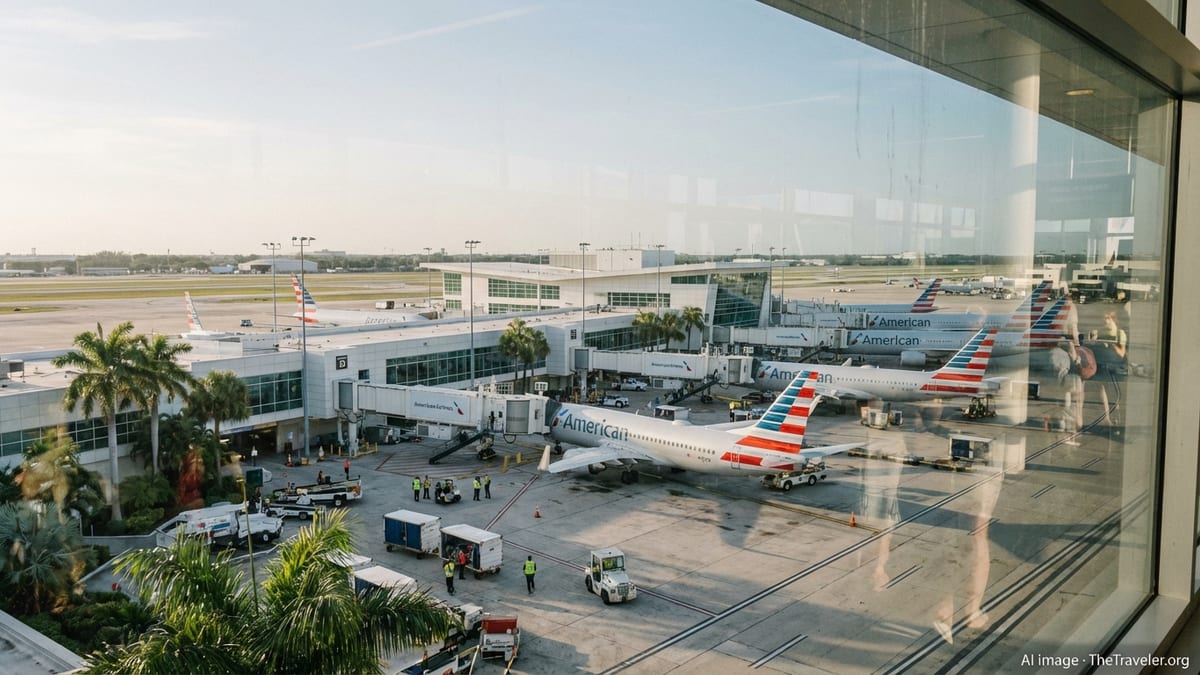
Major Upgrade for Miami’s North Terminal
The multiyear project, centered on the area currently known as Gate D60, will replace today’s ground-level regional operation with a reimagined, three-level concourse designed for modern jets. The existing single shared boarding space and 17 ground-level positions for smaller regional aircraft will be converted into 17 traditional contact gates, each with its own dedicated, more spacious hold room.
Construction is scheduled to break ground in 2027, with work phased to keep American’s busy Miami hub functioning throughout the build. Airport and airline officials describe the expansion as a transformational step for Concourse D, which has long been constrained by tight space, outdoor boarding and congestion at peak times.
The new concourse will also be integrated into Miami International Airport’s broader modernization program, a roughly 9 billion dollar capital plan that includes new parking facilities, major upgrades to elevators and moving walkways, and additional concourse projects across the airport.
New Gates, Seamless Connections and Larger Aircraft
At the heart of American’s investment is a push to handle more and larger aircraft more efficiently. The converted Gate D60 area will be equipped to serve a mix of larger regional jets and narrowbody aircraft, eliminating the need for passengers to walk outside to board flights via ramps or buses.
All 17 gates in the expanded concourse are being designed with future international flying in mind. The project will include direct third-level links to Concourse D’s U.S. Customs and Border Protection hall, allowing certain flights to arrive straight into the customs facility and streamlining connections for travelers coming from Latin America and the Caribbean.
Behind the scenes, the extension will house upgraded baggage systems and other operational infrastructure intended to improve aircraft turn times and schedule reliability. For travelers, the most visible changes will be fully enclosed jet bridges, larger waiting areas and a more intuitive gate layout that replaces one crowded boarding zone with multiple adjoining gate spaces.
Passenger Experience: More Space, Dining and Premium Lounges
The concourse expansion is being framed as a customer-experience project as much as an infrastructure one. Renderings shared by American Airlines and Miami-Dade County feature taller ceilings, bright natural light and open sightlines, along with interior plantings such as indoor palm trees that echo South Florida’s tropical setting.
Plans call for tens of thousands of additional square feet dedicated to dining, retail and other concessions, expanding options for travelers waiting for flights. The design envisions a more relaxed, walkable concourse with a mix of quick-service outlets and sit-down venues located steps from the new gate areas.
American is also pairing the gate project with an upgrade of its premium facilities at Miami. The airline has outlined plans for a new or expanded Flagship Lounge, additional Admirals Club space and more premium seating near departure gates, supported by new self-service kiosks and biometric technology in partnership with federal security agencies to speed up check-in and boarding.
Strategic Bet on American’s Largest Latin America Gateway
Miami International Airport is American’s primary gateway to Latin America and the Caribbean, and one of its most important hubs worldwide. The airline currently accounts for more than half of the airport’s traffic and is planning more than 380 peak daily flights this summer, serving about 155 destinations in 45 countries, many of them uniquely operated from Miami.
By investing nearly 1 billion dollars into Concourse D, American is signaling confidence in sustained demand for Miami as a connecting point between North America, Latin America and the Caribbean. The new concourse capacity is expected to support both additional frequencies on existing routes and flexibility to launch new markets as travel patterns evolve.
Local leaders have welcomed the announcement as a long-term boost to South Florida’s economy, citing the importance of reliable air service for tourism, international trade and corporate travel. The project is also expected to support construction and airport jobs over several years as work ramps up toward the planned 2027 start.
Part of a Wider Modernization Push at MIA
The Concourse D expansion is one of more than 200 projects in Miami International Airport’s airport-wide improvement program, which stretches through the end of the decade. Alongside the North Terminal work, the airport is renovating hundreds of elevators, escalators and moving walkways, upgrading nearly 200 public restrooms and building additional concourse and terminal capacity in other parts of the complex.
Future projects include a new concourse extension on the south side of the airport and a substantial redevelopment of Miami’s older Central Terminal, aimed at refreshing some of the busiest but most dated passenger areas. Together, these investments are intended to keep pace with record traffic growth and position Miami among the leading global hubs in the Americas.
For travelers passing through Miami in the coming years, the scale of construction will likely be visible, particularly once work begins around Gate D60. For American Airlines and Miami-Dade County officials, the promise is that today’s disruption will yield a more efficient, spacious and globally competitive hub, anchored by a reimagined Concourse D that reflects the city’s role as a crossroads of the Americas.