

More news on this day
Transborder travel between the United States and Venezuela is poised for a major reset as American Airlines prepares to resume daily nonstop flights between Miami and Caracas on April 30, ending a six year suspension of direct U.S. carrier service to the country.
Get the latest news straight to your inbox!
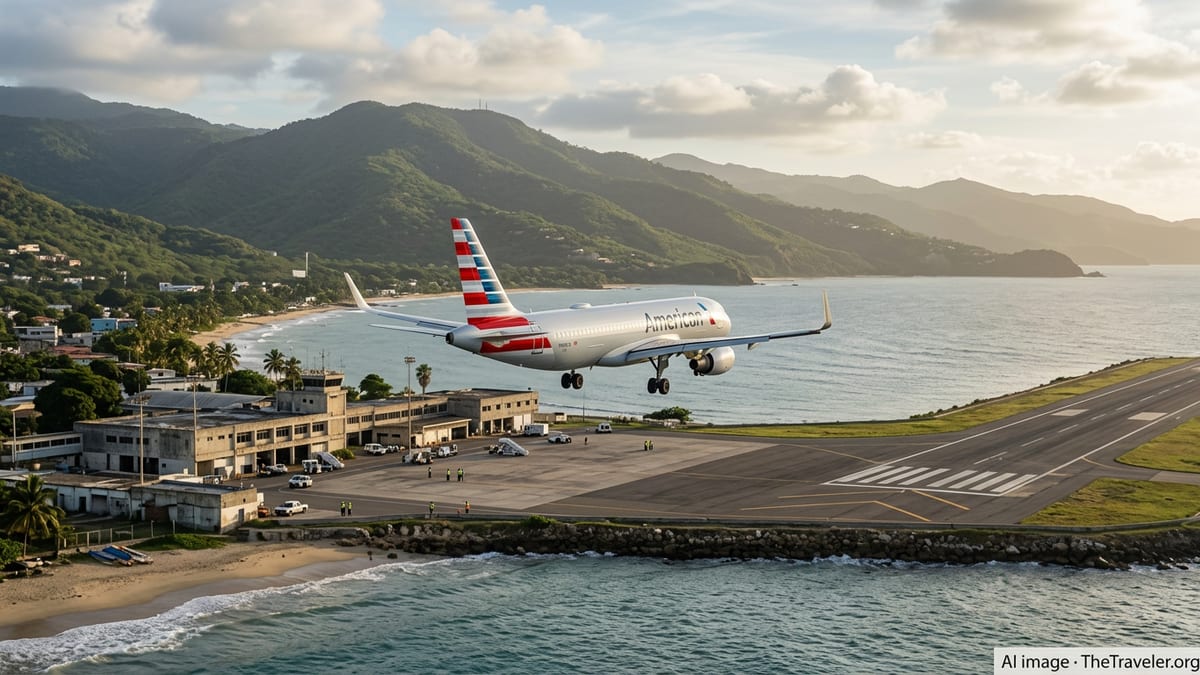
Daily Nonstop Service Set To Restart After Long Hiatus
American Airlines has outlined plans to relaunch its Miami to Caracas route with daily nonstop service operated by Embraer 175 aircraft, subject to final government approvals and security clearances. The first flights are expected to take off as soon as April 30, according to publicly available information from the carrier and recent industry coverage.
The move will make American the first U.S. airline to restore regularly scheduled passenger service to Venezuela since flights were halted in 2019 amid security concerns and regulatory restrictions. Before the suspension, the airline maintained multiple daily frequencies from its Miami hub to Caracas and Maracaibo, serving a mix of business, leisure, and visiting friends and relatives traffic.
Current reports indicate the reinstated operation will focus initially on the high demand Miami–Caracas corridor, with one roundtrip per day. While detailed schedules have not yet been widely published, trade press coverage suggests a morning departure from Miami and a return from Caracas later in the day, aligning with typical connectivity patterns through Miami International Airport.
The return of American Airlines to the route follows months of regulatory steps, including approval from the U.S. Department of Transportation and coordination with aviation authorities overseeing Venezuelan airspace. Recent advisories point to a gradual easing of long standing prohibitions on U.S. civil aviation operations involving the country, clearing a path for scheduled commercial flights to resume.
Symbolic Thaw In U.S.–Venezuela Connectivity
Although the decision is framed primarily as a network and customer connectivity move, the restoration of daily Miami–Caracas flights carries broader symbolic weight for U.S.–Venezuela relations. Direct air links between the two nations have been sharply curtailed for years, reflecting political tensions as well as operational and security concerns.
Published analyses describe the resumption as one of the most visible signs to date that conditions have shifted enough to permit renewed commercial links, even if broader diplomatic issues remain unresolved. Aviation observers highlight that air services tend to be among the first tangible indicators of improved practical cooperation, enabling people to travel and trade even in complex political environments.
At the same time, commentary in specialist outlets underscores that this is not a wholesale normalization of ties. The planned flights are proceeding under close regulatory scrutiny, and American has repeatedly stressed that start dates and schedules remain contingent on ongoing security assessments. The airline’s plans are being interpreted as a calibrated, cautious reopening rather than an unrestricted return to business as usual.
Still, the reactivation of the Miami–Caracas corridor by a major U.S. carrier is expected to help reknit commercial and social links that have been strained by years of limited connectivity. For many travelers, the reappearance of a familiar U.S. airline code on departure boards in Caracas will be a powerful visual sign that cross border movement is becoming easier again.
What The New Flights Mean For Travelers
For U.S. and Venezuelan travelers alike, the planned daily nonstop service promises shorter journeys and fewer logistical hurdles. In recent years, most passengers moving between the two countries have relied on multi stop itineraries via third country hubs in Panama, the Dominican Republic, Colombia, or the Caribbean, often facing lengthy connection times and higher total travel costs.
Industry reporting indicates that American’s return is expected to introduce new competition on fares and schedules, which could ease pricing pressure that has built up under limited capacity. Travel analysts suggest that a daily nonstop from a major U.S. hub may encourage some travelers who had postponed family visits or business trips to reconsider their plans, particularly those based in South Florida or with easy access to Miami International Airport.
Travelers are being advised by consumer facing outlets to monitor the situation closely in the weeks ahead. Because formal approvals and security checks are still in progress, schedules may adjust as the launch date approaches. Booking channels are gradually reflecting the new route as inventory is loaded, but some distributors caution that timetables are subject to change while the operation ramps up.
Practical considerations such as entry requirements, documentation, and travel advisories remain important factors for passengers to review before committing to itineraries. Publicly available guidance from government agencies continues to flag security and infrastructure challenges in parts of Venezuela, and travel planners widely recommend comprehensive insurance and contingency planning, even as direct flights become available again.
Impact On Miami And Caracas As Gateway Airports
The Miami–Caracas relaunch is also significant for the two airports at the heart of the route. Miami International Airport, one of the most important gateways between the United States and Latin America, has long relied on dense short and medium haul connectivity to feed its global network. Industry coverage notes that reactivating Caracas restores a historic spoke that has been absent from Miami’s departure boards for six years.
For Miami, the added daily frequencies are expected to generate incremental traffic in both origin and connecting flows, with passengers from other U.S. cities able to reach Caracas via one stop itineraries on American’s domestic network. Analysts note that this helps reinforce Miami’s position as a central bridge between North and South America, especially as airlines rebuild capacity across the region following years of disruption.
On the Venezuelan side, the return of a large U.S. airline to Simón Bolívar International Airport near Caracas is being watched as an indicator of the country’s reintegration into regional air networks. Over the past decade, multiple international carriers reduced or suspended service to Venezuela amid economic and operational headwinds. The restoration of a daily link to Miami by a top tier U.S. brand is seen in local and international coverage as a potential catalyst for renewed interest from other operators over the longer term.
Airport planners and tourism bodies in both cities are expected to track performance closely once flights begin, looking at load factors, passenger mix, and onward connections to gauge whether demand supports possible future growth in frequencies or additional routes. For now, the focus remains squarely on executing a stable, reliable restart after a prolonged pause.
Broader Regional And Industry Context
The American Airlines move also fits into a wider pattern of airlines recalibrating their Latin American and Caribbean networks in response to shifting political, economic, and security dynamics. Over the last several years, carriers have alternated between reductions and selective expansions as they navigate currency volatility, regulatory changes, and evolving travel demand.
Recent months have seen a series of route resumptions and capacity increases across the region, with airlines re entering markets that were temporarily suspended or sharply downsized. Analysts point out that the Miami–Caracas restart stands out because of the length of the interruption and the geopolitical sensitivities involved, making it a closely watched case for how carriers manage risk in complex markets.
Aviation industry commentary highlights that American’s decision is underpinned by the structural strength of South Florida’s Venezuelan diaspora and long standing trade links between the two economies. Even during years without direct U.S. carrier service, indirect traffic volumes remained meaningful, suggesting a base of demand that could support a carefully structured nonstop operation.
For the wider travel industry, the development is being viewed as a cautiously optimistic sign that some previously off limits markets may gradually reopen under revised frameworks. Tour operators, corporate travel managers, and diaspora focused agencies are assessing how to incorporate the renewed Miami–Caracas link into their offerings, while keeping a close eye on operational reliability and any future regulatory shifts that could affect the corridor.